
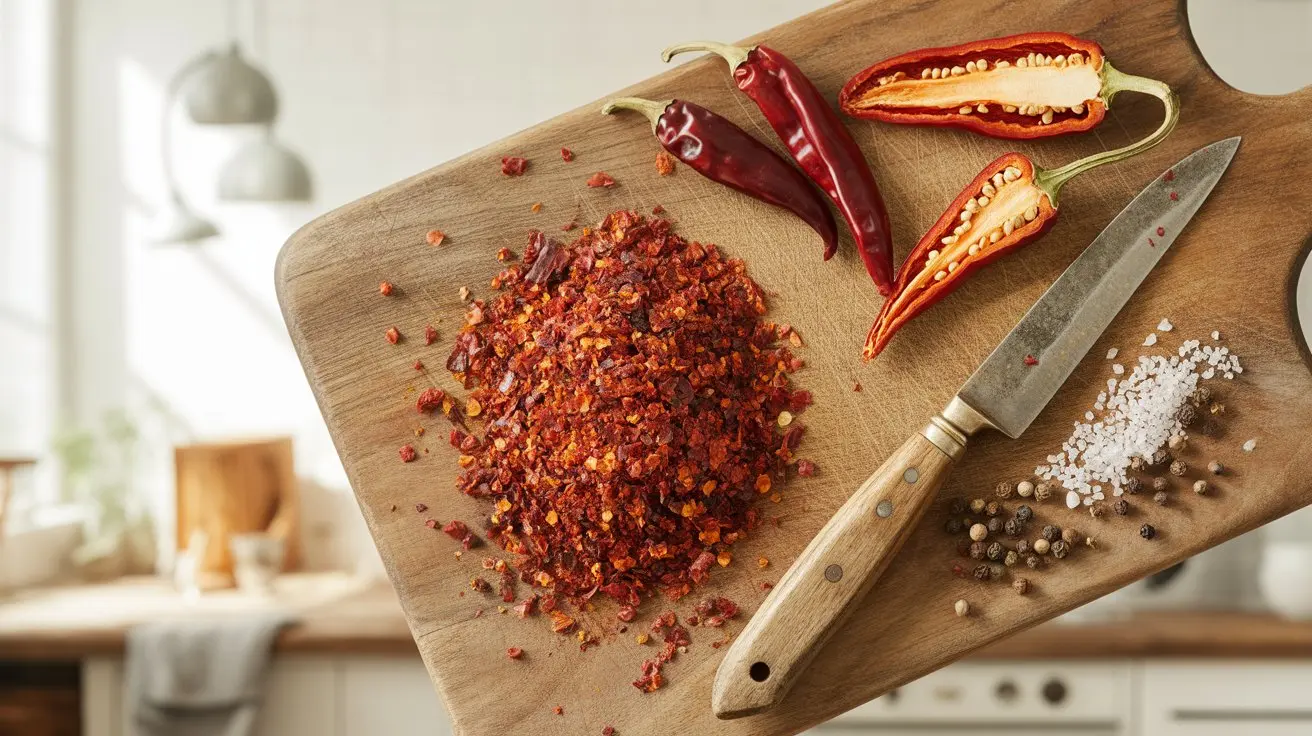
Gochugaru Flakes

Gochugaru flakes are the backbone of Korean cooking — sun-dried, coarsely ground C. annuum peppers with a smoky sweetness and a slow, building warmth. Ranging from 1,500 to 10,000 SHU, they sit in a heat zone that adds real presence without overwhelming. Whether you grow them yourself or source quality flakes, they reward attention to both cultivation and kitchen technique.
- Species: C. annuum
- Heat tier: Hot (10K–100K SHU)
- Comparison: 2x hotter than a jalapeño
What is Gochugaru Flakes?
Pull open a bag of good gochugaru flakes and the smell tells you everything: dried fruit, faint smoke, a whisper of something earthy. The heat follows slowly — not the sharp sting of a fresh chile, but a warm, spreading glow that builds across your palate.
These flakes come from sun-dried Korean red peppers, typically varieties like Cheongyang or traditional long reds grown in Korea's southern provinces. After drying, the peppers are deseeded and coarsely ground into flakes rather than a fine powder, which preserves more of the oils and gives dishes a distinct texture.
The SHU range of 1,500–10,000 reflects real variation across batches and growing regions. Cooler growing seasons produce milder flakes; hotter, drier summers push heat toward the upper end. For reference, a midrange batch sits roughly at half the heat of a serrano — substantial warmth, but manageable even for moderate heat tolerance.
Gochugaru is classified as C. annuum, the same species as bell peppers and jalapeños, though its flavor profile sets it apart from either. The combination of sweetness, mild smoke, and steady heat makes it irreplaceable in kimchi, gochujang paste, and braised dishes.
Substituting other flakes rarely captures the same balance — the smoky depth of pasilla-style dried peppers comes close on aroma but diverges on sweetness.
History & Origin of Gochugaru Flakes
Korean red pepper cultivation dates to the late 16th century, when chiles arrived via Portuguese traders following the Japanese invasions of 1592–1598. Before that, Koreans relied on black pepper, ginger, and mustard for heat.
The integration of chiles into Korean cuisine happened remarkably fast. By the 18th century, fermented chile preparations — the ancestors of modern gochujang and kimchi — were documented in Korean agricultural texts.
Gochugaru as a standardized product emerged as Korean cuisine codified around these fermented traditions. The specific drying and grinding method — sun-drying whole peppers, then removing seeds before coarse grinding — became a regional craft, with Yeongyang County in North Gyeongsang Province still considered a premium growing region.
Today, domestic Korean production supplements significant imports, though traditional cultivation methods remain central to premium-grade flakes.
How Hot is Gochugaru Flakes? Heat Level & Flavor
The Gochugaru Flakes delivers 2K–10K Scoville Heat Units, placing it in the Hot tier (10K–100K SHU). That makes it roughly 2x hotter than a jalapeño.
Flavor notes: smoky and sweet.
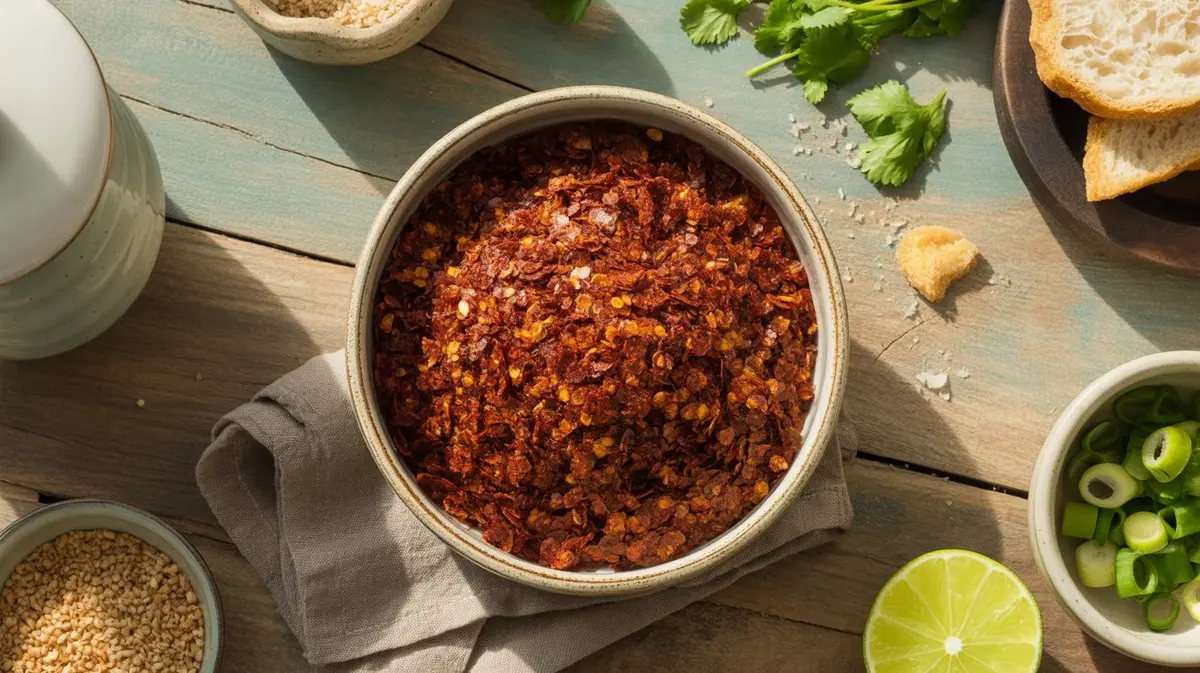
Gochugaru Flakes Nutrition Facts & Health Benefits
A 1-tablespoon serving of gochugaru flakes (about 7g) delivers meaningful nutrition alongside its flavor. Expect roughly 20 calories, 1g protein, 3g carbohydrates, and less than 0.5g fat.
Capsaicin contributes anti-inflammatory properties, and red pepper flakes are a solid source of vitamin C and vitamin A — both present in dried red chiles. Iron and potassium appear in small but useful amounts.
The drying process concentrates nutrients relative to fresh peppers. Understanding the chemistry behind capsaicin's effects on the body helps explain why even moderate-heat flakes like gochugaru can produce noticeable physiological responses despite their relatively low SHU.
Best Ways to Cook with Gochugaru Flakes Peppers
Gochugaru flakes function differently from most dried chiles. The coarse grind means they don't dissolve — they stay visible in kimchi brine, speckle the surface of tteokbokki sauce, and add texture to marinades.
For kimchi, the ratio matters: most traditional recipes use 2–4 tablespoons per pound of vegetables. Less than that and the ferment lacks color and warmth; more and the heat can dominate the sour complexity that develops over weeks.
In non-Korean cooking, gochugaru works anywhere you want warmth without sharp edges. Stir a tablespoon into butter for finishing grilled corn. Mix with sesame oil and soy for a quick noodle sauce. It behaves similarly to the flexible culinary range of a Fresno-style dried flake — approachable heat that layers rather than spikes.
One practical note: blooming gochugaru in oil before adding other ingredients deepens the color and rounds out the smokiness. Thirty seconds over medium heat is enough — longer and the sugars burn.
For dishes where you want smoke without the specific Korean flavor profile, the rich dried smokiness of morita-style peppers offers a useful comparison point, though the flavor trajectories diverge considerably after the first note.
Where to Buy Gochugaru Flakes & How to Store
Quality gochugaru flakes should be bright red — not brown or faded — with visible flake texture rather than fine powder. Korean grocery stores and online Korean food retailers typically stock better product than generic spice aisle alternatives.
Look for labels indicating sun-dried and deseeded. Coarse grind (굵은 고춧가루) suits kimchi; fine grind (고운 고춧가루) works better for sauces.
Store in an airtight container away from light and heat. Refrigeration extends shelf life to 12 months; at room temperature, plan to use within 6 months before the color and aroma degrade. For the SHU measurement context across this heat intensity range, freshness significantly affects perceived heat.
Best Gochugaru Flakes Substitutes & Alternatives
Whether you ran out of gochugaru flakes or just want to try something different, these peppers make solid stand-ins. We picked them based on heat range, flavor overlap, and how well they actually work in the same dishes.
Our top pick: Gochugaru (2K–10K SHU). Same species (C. annuum) and nearly the same heat, so it swaps in at a 1:1 ratio without changing the character of the dish. The flavor leans smoky and sweet, which is close enough that most people won’t notice the difference in a cooked recipe.
How to Grow Gochugaru Flakes Peppers
Growing the peppers behind gochugaru flakes is a genuinely satisfying project, though it demands patience. Korean red pepper varieties need a long season — 120 to 150 days from transplant to full red maturity — which means starting seeds indoors 10 to 12 weeks before last frost.
Soil temperature for germination should hold at 75–85°F. Below that, germination stalls. A heat mat under seed trays makes a real difference.
These plants grow tall — often 3 to 4 feet — and benefit from staking once they set fruit. They prefer well-draining soil with a pH around 6.0–6.8 and consistent moisture without waterlogging. Inconsistent watering during fruit development causes blossom drop and cracked skins.
For anyone comparing cultivation demands, the similarly ornamental and productive nature of black-podded varieties offers useful contrast — both reward similar care but differ sharply in fruit character.
Harvest begins when fruits turn fully red. For drying, lay them on screens in full sun for 2 to 3 weeks in dry conditions, or use a dehydrator at 135°F until completely brittle. Remove seeds before grinding for authentic flake texture.
If you are scaling up your pepper-growing operation, the full seed-starting and transplant guide covers spacing and fertilization in more detail.
Frequently Asked Questions
-
Gochugaru is made specifically from sun-dried Korean red peppers that are deseeded before grinding, producing a coarser, sweeter, and smokier product than the generic red pepper flakes sold in Italian restaurants. Standard red pepper flakes often include seeds and use a mix of hotter varieties, which creates a sharper, less nuanced heat.
-
No direct substitute captures all three qualities — smokiness, sweetness, and moderate heat — simultaneously. The closest approximations combine a mild smoked paprika with a small amount of cayenne, though the texture will differ from authentic coarse-ground gochugaru flakes.
-
A midrange batch of gochugaru sits around 5,000 SHU, which is roughly half the heat of a typical serrano at 10,000–23,000 SHU. The heat also feels different — gochugaru builds slowly and dissipates gradually, while serrano heat arrives sharply and fades faster.
-
Blooming is optional but worth doing for dishes where deep color and rounded flavor matter — stews, sauces, and braised meats benefit noticeably. For kimchi and raw marinades, the flakes go in dry and hydrate during fermentation, which is the traditional approach.
-
Traditional varieties grown in Yeongyang County and Cheongyang-style long reds are considered premium, with their balance of sweetness and moderate heat suited to fermentation. Home growers often have success with seeds labeled 'Korean red' or 'Gochugaru pepper' from specialty seed suppliers, though the culturally rooted flavor profile of Korean green varieties shows how much regional growing conditions shape the final product.
- Chile Pepper Institute — Capsicum annuum Species Overview
- National Institute of Korean History — Food Culture Records
- USDA FoodData Central — Dried Red Pepper Nutritional Data
- Yeongyang County Agricultural Technology Center — Gochugaru Production
Species classification: C. annuum — based on published botanical taxonomy.
