Frost-free
no expected frost during establishment


Plant serrano peppers when soil is about 65°F, frost risk has passed, and nights stay above 50 to 55°F. Count seed starting backward from that real window, then protect the root ball, spacing, and early growth.
The best time to plant serrano peppers is after frost danger has passed, morning soil temperature is about 65°F or warmer, and nighttime lows consistently remain above 50 to 55°F.
A warm afternoon does not cancel cold soil or a run of chilly nights.
The goal is not merely to keep a transplant alive. You want its roots to resume growth quickly enough for the plant to branch, flower, and replace picked pods before cool weather returns.
Use three signals together before moving a serrano outside. Check your local frost risk, measure the bed in the morning, and read several nights of forecast rather than trusting one warm day.
University of Maryland Extension warns that pepper plants set before soil reaches 65°F can simply sit without growing.
Illinois Extension connects nights below 50 to 55°F with slow growth, yellow leaves, and dropped flowers.
That stalled week is not neutral. A small root system takes longer to reach new water and nutrients, while a short-season gardener loses part of the window needed for later flowers to become harvestable fruit.
An early planting can work when black plastic has warmed the bed and a row cover protects the young plant.
Vent that cover when the enclosed air approaches 80°F because a sunny tunnel can change from cold protection to heat stress quickly.
Start seed about 8 to 10 weeks before the likely outdoor transplant date. Count backward from the warm-soil window you just estimated, not automatically from the average last frost.
If your workable transplant window begins around May 20, a normal seed-starting range falls roughly between March 11 and March 25. The exact date matters less than keeping the seedling compact and actively growing until the bed is ready.
A seedling that becomes root-bound two weeks early should move into a larger pot rather than into cold ground.
Give the roots new mix, maintain strong light, and let weather conditions decide the final outdoor move.
A late seedling presents the opposite tradeoff. Plant it once it has a developed root system and several mature leaves instead of waiting for an arbitrary height, because another indoor delay shortens the field season without adding useful structure.
Direct sowing avoids transplant shock but gives away the indoor head start. Utah State University Extension notes that transplants can mature about four weeks earlier than field-seeded peppers in cooler regions, which is valuable when you want some serranos to ripen fully red.
A useful serrano transplant is stocky, dark green, and 5 to 8 inches tall, with roughly 6 to 9 mature leaves and roots that hold the mix together. Those Utah State measurements describe a plant with enough leaf area and root structure to restart outdoors.
Height alone is weak evidence. A tall seedling with long gaps between leaves may be stretching for light, while a compact shorter plant can have a stronger stem and better root balance.
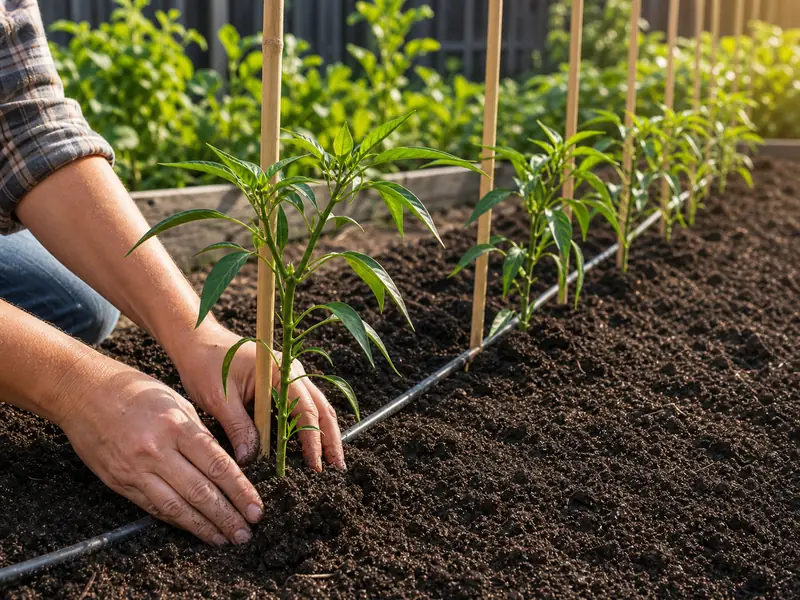
Flowers and tiny fruit do not prove readiness. Utah State reports that pepper transplants already carrying flowers or fruit establish more slowly and yield poorly, so remove those early demands when the plant has not yet occupied its new soil.
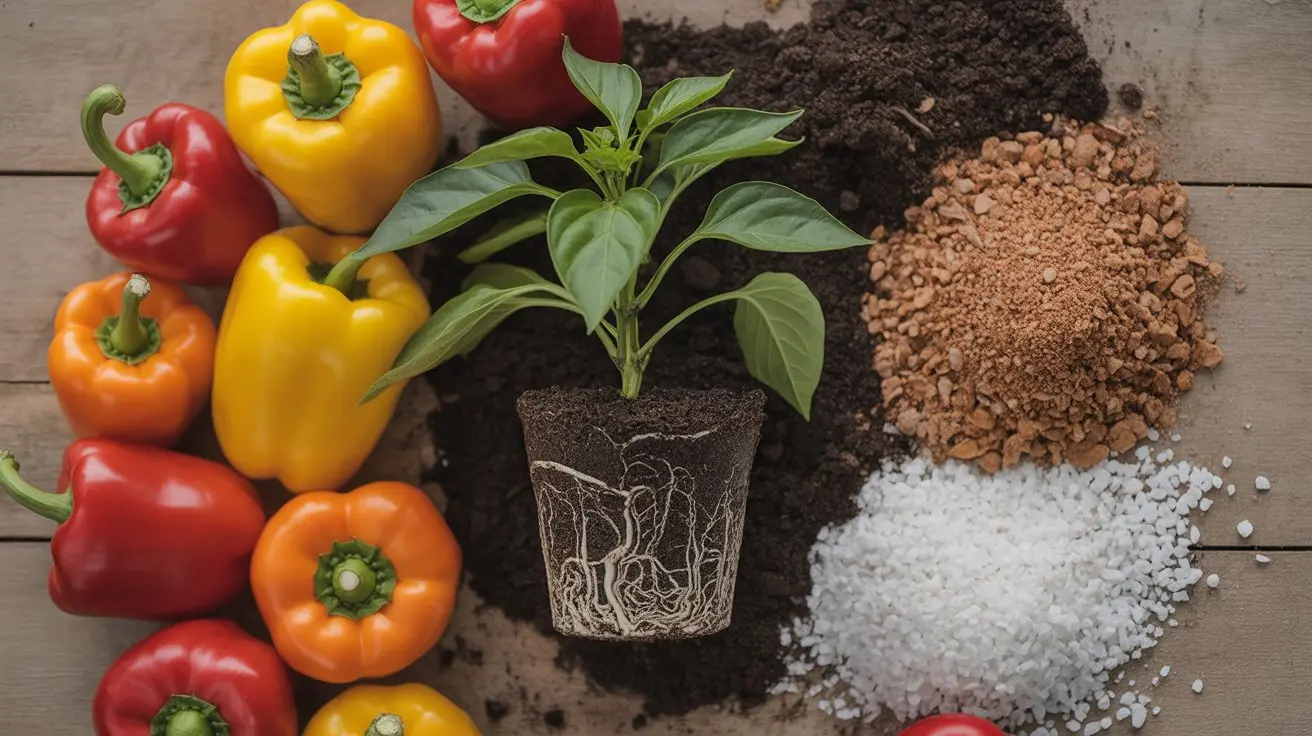
Inspect the root plug before planting. White or tan roots distributed through the mix are useful, but a dense mat circling the bottom means the plant needs gentle loosening or a larger holding pot if outdoor conditions remain unsuitable.
University of Minnesota Extension explains that gradual exposure helps leaves develop a tougher protective surface and prepares the plant for field conditions.
Over-conditioning with cold, drought, or excessive handling can slow growth instead of improving it.
Serranos need a site with at least six hours of direct sun and soil that drains after irrigation or rain.
More sun can support stronger growth where summer heat is moderate, but a west-facing paved corner may need relief from extreme late-afternoon heat.
Choose it when native soil drains and you want the largest moisture reserve. Leave a path that lets you harvest without pressing wet foliage together.
Use added elevation where heavy soil stays wet. A broad amended bed gives roots more usable space than one rich hole surrounded by compacted clay.
Give one plant at least five gallons of potting mix and open drainage holes. Portability gains sun and frost protection, but the smaller root volume needs closer moisture checks.
Do not fill a planting hole with a pocket of loose compost while leaving the surrounding soil dense. Roots need a connected zone they can enter, and water should move through that zone rather than collect around the original plug.
A soil test should decide whether the bed needs fertilizer or a pH correction.
Utah State recommends working a required amendment into the upper 6 inches, which places nutrients across the future root area instead of concentrating them against one transplant.
A pot solves poor native drainage only when its own drainage works. Use container mix instead of garden soil, keep saucers from holding the base in water, and choose a position where you can reach the pot during hot weather.
Start with about 18 inches between serrano plants.
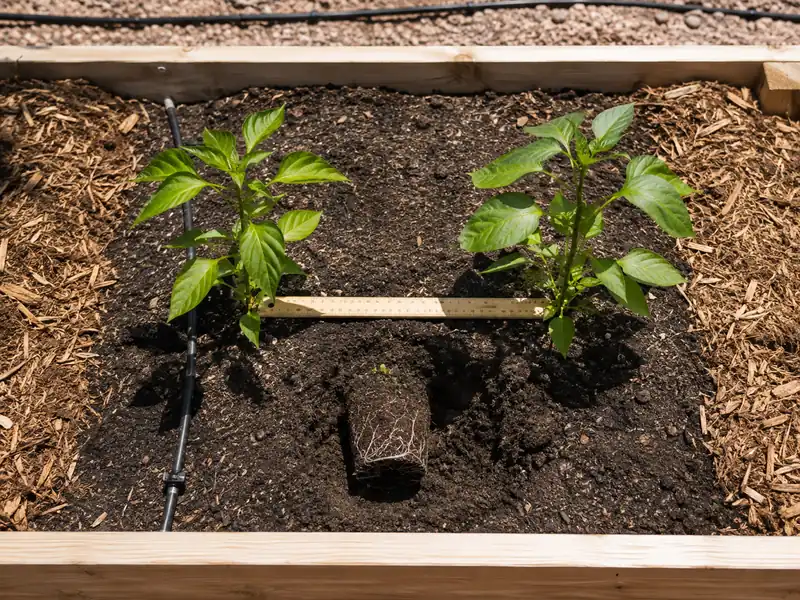
Utah State uses that in-row distance, while Maryland gives a broader 12 to 24 inch range that accommodates different pepper sizes and garden layouts.
| Planting layout | Useful starting point | Reason to adjust |
|---|---|---|
| Single garden row | 18 inches between plants | Widen toward 24 inches in humid, sheltered sites |
| Rows with a picking path | 30 to 36 inches between rows | Preserve access without brushing or breaking branches |
| Wide raised bed | 18 to 20 inches in a staggered pattern | Keep every plant reachable from the edge |
| Container grouping | One plant per 5-gallon pot | Separate canopies enough for light and inspection |
Closer spacing can shade developing fruit, but it also slows leaf drying and hides the inner canopy.
The wider end is the safer choice beside a wall, in humid weather, or where neighboring crops already restrict airflow.
Arrange a staggered bed from the outside inward. If the center plant requires stepping into the bed, the layout sacrifices root protection and picking access even when the tape measure looks efficient.
Container spacing is about canopy rather than pot rims. Two five-gallon pots can touch while young, then need to move apart once leaves overlap and one plant begins shading the other.
Water the plug before removing it and moisten a dry bed before you dig. A hydrated root ball releases more cleanly and is less likely to pull apart while the fine roots are exposed.
Utah State's pepper-specific guidance supports setting soil up to the cotyledons or first true leaf. Its cited research found 26 percent more total fruit weight at that depth than when soil covered only the top of the root ball.
If you use black plastic, keep the stem from touching the hot cut edge.
If you use a biodegradable pot, trim any rim that would remain above the soil because exposed material can draw moisture away from the plug.
Plant late in the afternoon or during a calm cloudy period when possible.
Temporary shade or a vented row cover can reduce the first burst of sun and wind, but remove or open protection before it traps excessive heat.
The first watering should wet both the plug and the surrounding soil. A wet ring outside a still-dry root ball leaves the plant unable to reach the water you just applied.
During establishment, prioritize the root zone in this order: moisture, temperature, then nutrients. Water can change within a day, mulch changes how the bed warms and dries, and fertilizer should answer a measured need or a growth-stage signal.
Check below the surface near the plug. Water when the active root zone is beginning to dry, then wet it deeply enough to encourage outward growth.
Delay straw, leaves, or grass until soil is genuinely warm. Early organic mulch can preserve the spring chill you were trying to escape.
Use a soil test and visible growth rather than a routine heavy dose. Excess nitrogen can build foliage while delaying fruit set.
Utah State gives 1 to 2 inches of water per week as a starting range for garden peppers, applied deeply and infrequently.
Rainfall, soil texture, wind, root size, and a container's limited volume can move the real need above or below that range.
Push a finger or narrow trowel below the dry surface before watering again. Damp soil around the root ball calls for patience, while a dry plug inside moist surrounding soil needs slow application directly over the original root zone.
Drip irrigation and soaker hoses reduce the time foliage stays wet. They also make it easier to apply water to the bed without repeatedly splashing soil onto the lower leaves.
Wait until soil is near 75°F before applying a cooling organic mulch, following Utah State guidance. Once the bed is warm, a loose layer reduces evaporation and weeds, but leave a small open ring around the stem.
Feed only after checking what the bed already contains. Maryland recommends preplant fertilizer when needed and side-dressing after the first fruit sets, while Utah State warns that overfeeding delays fruit set and maturity.
A container may need light feeding sooner because repeated drainage carries nutrients away. A dark green plant making long soft shoots needs less nitrogen, not another scheduled dose.
Do not treat every pause with more water or fertilizer. Begin with the recent weather, then compare root-zone moisture, the location of leaf damage, and whether new growth has appeared.
| What you see | Check first | Best initial response |
|---|---|---|
| Plant stays green but makes no new growth | Morning soil and nighttime temperatures | Hold moisture steady and add safe warmth rather than fertilizer |
| Yellow leaves with cold, wet soil | Drainage and recent rain or irrigation | Let the root zone regain air and postpone feeding |
| Tan or pale patches on upper leaves | Recent jump in direct sunlight | Give temporary afternoon shade and slow the hardening sequence |
| Wilt in a wet container | Blocked holes and saturated lower mix | Restore drainage and stop automatic watering |
| Wilt that recovers overnight | Hot wind, small root volume, and midday soil moisture | Water the root zone if dry and reduce short-term exposure |
| Flowers drop during a cold or hot spell | Night and daytime temperature history | Protect the plant and wait for a suitable flowering window |
Cold-root symptoms usually affect the whole plant and coincide with slow growth.
Sun injury appears on exposed leaf surfaces, while a root ball that dried inside its plug can wilt even though the surrounding bed looks damp.
Give one correction time to work and watch the newest leaves. Old pale patches will not turn green again, but firm new growth shows that the plant has resumed normal development.
Spreading spots, stem lesions, chewing, webbing, or insects point beyond a planting setback. Move to a cause-specific pest or disease diagnosis instead of stacking transplant remedies on a different problem.
A long serrano harvest starts with weeks of uninterrupted root and branch growth. Warm establishment cannot guarantee weather, but it gives the plant more time to build the canopy that supports repeated flowers and fruit.
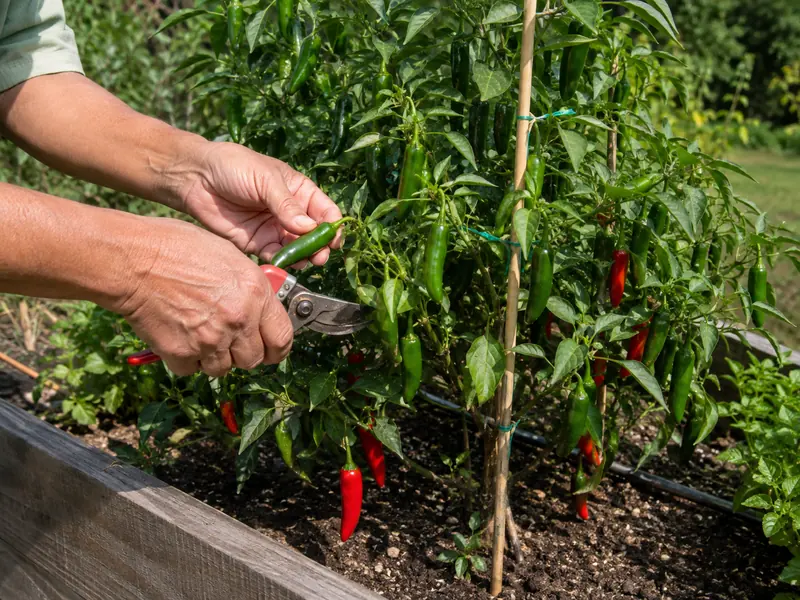
Install a stake at planting when the site is windy or the cultivar grows tall. Early placement avoids driving a support through an established root system, and a loose soft tie protects the main branch without constricting it.
Maryland Extension notes that peppers do not continue ripening after harvest.
A green pod removed from the plant may soften or change slightly, but it will not complete the same on-plant development as fruit left to reach full color.
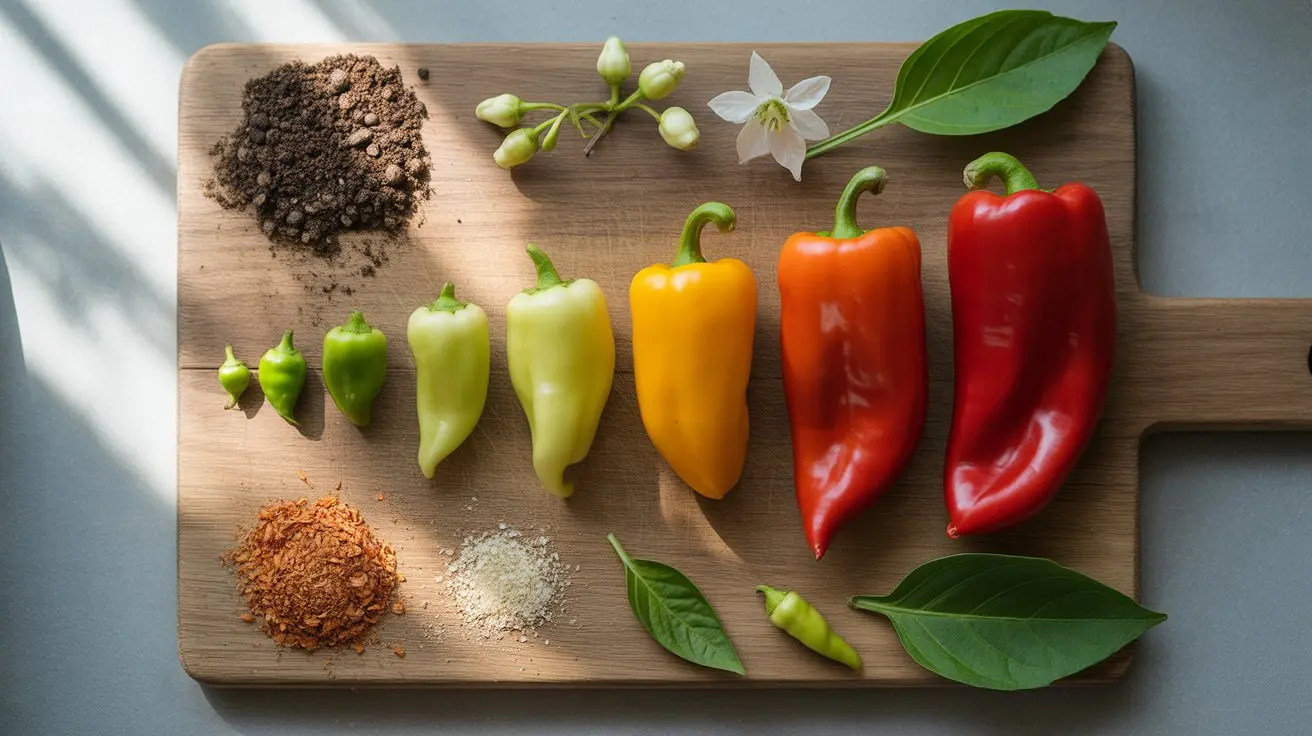
Frequent green harvests and selected red fruit can coexist on one plant. Cut the pods needed now, mark a few well-positioned fruits for ripening, and keep their supporting branch tied where its weight increases.
As the first fall frost approaches, compare the value of more green pods with the time needed for red color. Harvest firm usable fruit before a killing freeze rather than leaving the entire crop to an unlikely late finish.
The greenhouse start, warm planting window, reachable spacing, protected root ball, and supported branches all serve the same outcome.
Each decision preserves a part of the season that the plant can convert into another round of harvest.