
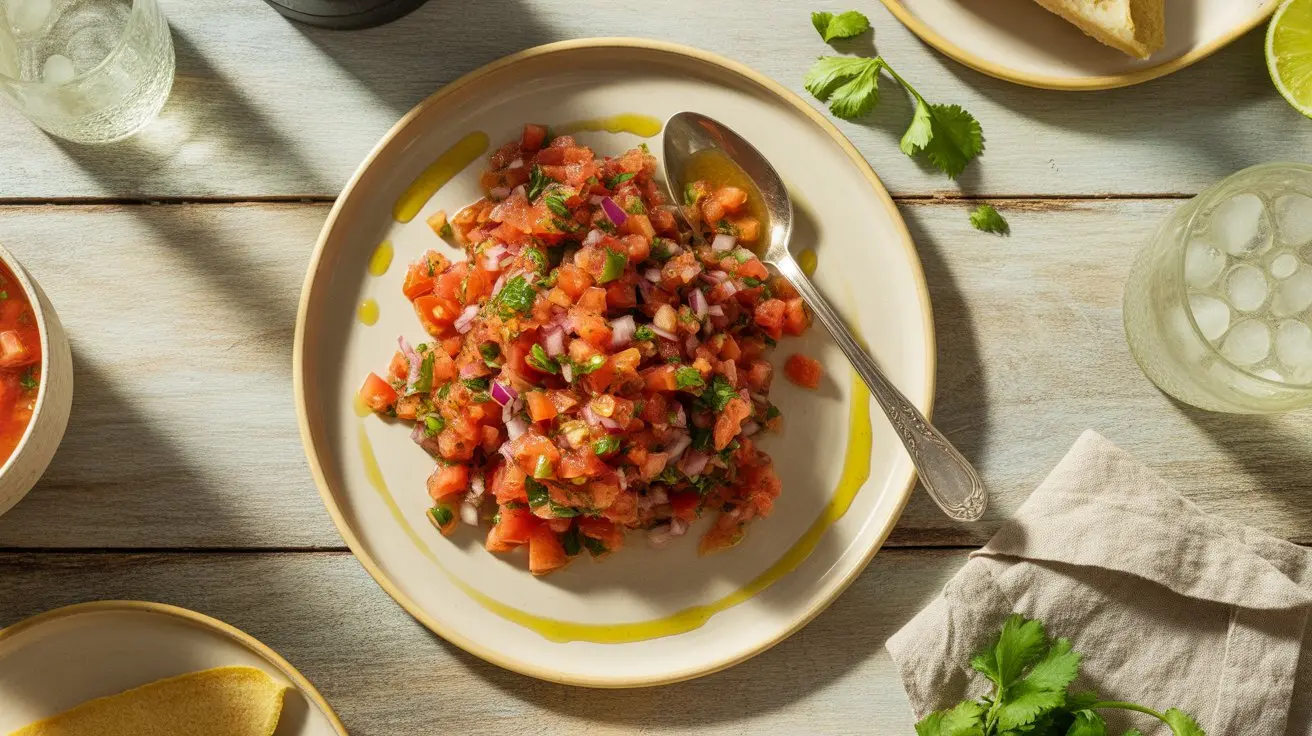
Pico de Gallo
Classic pico de gallo with fresh tomatoes, jalapeño, cilantro, and lime. Find your perfect heat level.

What Makes Pico de Gallo Different
Unlike blended salsas, pico de gallo is a fresh, uncooked condiment where every ingredient stays chunky and distinct. The name translates loosely to "rooster's beak" in Spanish, though the exact origin of that phrase is debated.
The result is brighter, crisper, and more textural than any jarred salsa - and it takes about 15 minutes to make from scratch.
Technique Tips
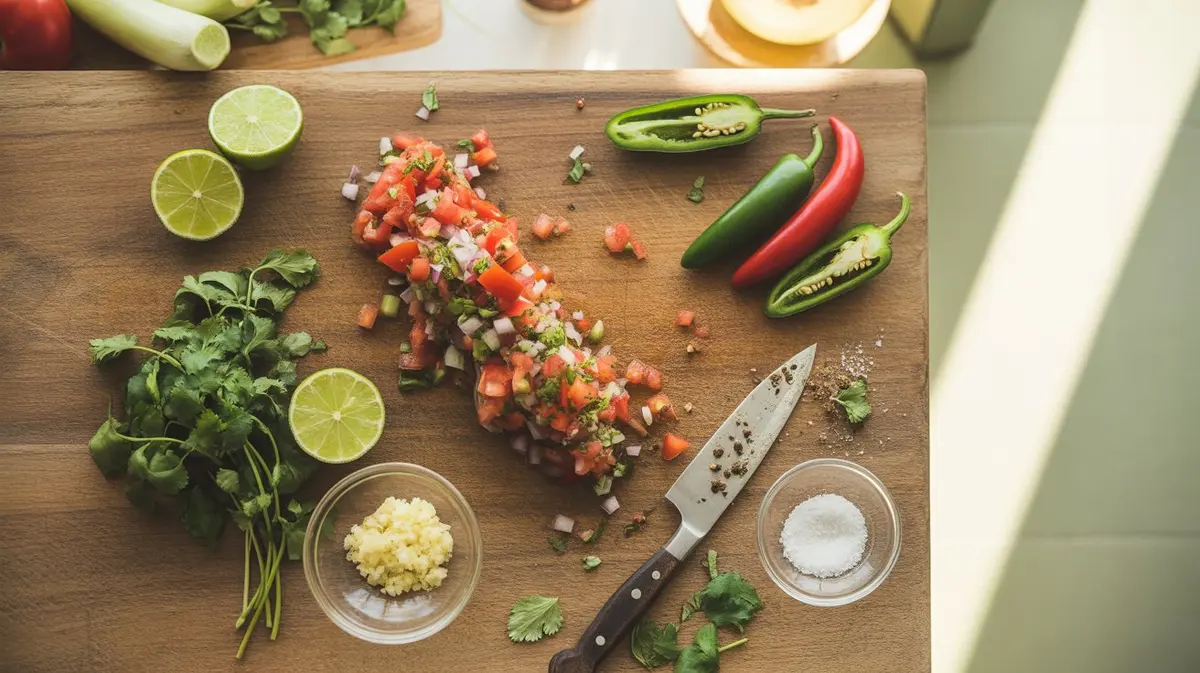
The biggest mistake people make is skipping the tomato de-seeding step. Tomato gel is mostly water, and it dilutes everything once it hits the salt.
Knife size matters. Pico de gallo should be chunky, not minced - pieces around 1/4 inch give you that satisfying bite. If pieces are too small, the texture collapses into something closer to salsa.
White onion is traditional and has a sharper, cleaner flavor than yellow onion. Red onion works in a pinch and adds color, but the flavor profile shifts noticeably.
Fresh lime juice only. Bottled lime juice is noticeably flatter and slightly bitter. The difference is obvious when tomatoes and cilantro are this fresh.
Salt draws moisture - this is intentional. The small amount of liquid that pools at the bottom of the bowl after resting is flavor-packed. Stir it back in before serving rather than draining it.
Heat Variations
Pico de gallo is easy to dial up or down. The standard jalapeño version lands in a comfortable zone for most people, but the pepper swap options are wide open.
- Mild version: Remove all seeds and ribs from the jalapeño, or substitute with a finely diced Anaheim pepper. The gentle heat intensity of Anaheim sits well under 1,000 SHU.
- Medium version: Keep the jalapeño seeds in, or add one serrano's sharper, brighter heat alongside the jalapeño. Serranos run 10,000-23,000 SHU - noticeably hotter than jalapeño.
- Hot version: Use two serranos with seeds, or add a single habanero's fruity, scorching intensity for a completely different heat profile. Habaneros reach 100,000-350,000 SHU, so start with half and taste as you go.
- Extra-hot version: A small piece of ghost pepper's delayed, building burn will transform this into something for serious heat seekers. The extra-hot SHU range starts above 500,000 - use sparingly.
If you're curious how jalapeño and serrano compare side by side before choosing, the key differences between these two Mexican peppers break down flavor, heat, and texture in detail.
Ingredient Variations
The classic four-ingredient formula - tomato, onion, pepper, cilantro - is the foundation, but regional and personal variations are common.
- Mango pico: Replace half the tomato with finely diced ripe mango. Pairs especially well with fish tacos or grilled shrimp.
- Cucumber pico: Add 1/2 cup diced cucumber (seeds removed) for extra crunch and a cooling effect that balances hotter pepper varieties.
- Avocado pico: Fold in one diced avocado just before serving. This edges toward guacamole territory but stays distinct because the tomato ratio stays high.
- Corn pico: Add 1/2 cup roasted corn kernels for sweetness and texture. Charred corn from a cast iron skillet adds a smoky note.
- Tomatillo pico: Swap half the tomatoes for raw tomatillos, diced fine. The result is tangier and slightly more complex - closer to a poblano-style green salsa profile.
What to Serve With Pico de Gallo
Tortilla chips are the obvious pairing, but pico de gallo is more versatile than most people use it.
- Spooned over scrambled eggs or a breakfast burrito
- On top of grilled fish, chicken, or steak as a fresh relish
- Mixed into rice while still hot - the residual heat wilts the tomatoes slightly
- As a topping for black bean tacos or alongside a tangy salsa verde
- Stirred into sour cream for a quick dip
- As a base layer under guacamole
Pico de gallo also makes a decent quick-pickle base if you let it sit overnight in the fridge - the acid from lime juice starts to soften everything and the flavors deepen considerably.
The Pepper Question
Most of the heat variation in pico de gallo comes down to which Mexican pepper tradition you're drawing from. Jalapeño is the default in most American recipes, but serrano is arguably more traditional in central Mexico.
The Capsicum annuum species covers both jalapeño and serrano, which is why their flavor profiles are similar even though their heat levels diverge. Both have that clean, vegetal pepper flavor that works without competing with fresh tomato.
If you want to understand why removing seeds reduces heat, it comes down to capsaicin concentration - the seeds themselves carry little heat, but the white placental tissue they're attached to is where most of the capsaicin receptor science plays out. Removing ribs and seeds together drops heat significantly.
Storage Notes
Pico de gallo is best eaten the day it's made. After a few hours, the salt continues drawing moisture from the tomatoes and the texture softens.
Store leftovers in an airtight container in the refrigerator for up to 2 days. Drain excess liquid before serving and add a small squeeze of fresh lime to revive the brightness.
Freezing is not recommended - the tomatoes turn mushy and watery when thawed, and the fresh character that defines pico de gallo is completely lost.
If you're prepping ahead for a party, chop all ingredients and store them separately. Combine with lime juice and salt no more than 30 minutes before serving for the best texture.
Chef's Tip: The Resting Period
Patience is an ingredient. After mixing, let the dish rest for 10–15 minutes before serving. This allows the flavours to meld and the seasoning to fully penetrate. If making ahead, refrigerate and bring to room temperature before serving.
Shopping List
-
4 medium Roma tomatoesseeds removed, finely diced (about 2 cups)
-
1 medium white onionfinely diced (about 3/4 cup)
-
2 jalapeño peppersseeds and ribs removed for mild heat
-
1/2 cup fresh cilantro leavesroughly chopped
-
2 tablespoons fresh lime juice (about 1-2 limes)
-
1 teaspoon kosher saltplus more to taste
-
1 small clove garlicminced (optional)
Full Recipe Instructions
Halve the tomatoes…
Halve the tomatoes and scoop out seeds and watery gel with a spoon to prevent a soupy result.
Dice the tomato…
Dice the tomato flesh into 1/4-inch pieces for uniform texture.
Dice the white…
Dice the white onion to the same 1/4-inch size. Soak in cold water for 10 minutes if you prefer a milder onion flavor, then drain and pat dry.
Slice jalapeños lengthwise,…
Slice jalapeños lengthwise, remove seeds and inner ribs with a spoon, then dice finely. Wear gloves if sensitive to capsaicin.
Combine tomatoes, onion,…
Combine tomatoes, onion, jalapeño, and cilantro in a bowl. Add lime juice and salt.
Toss gently to…
Toss gently to combine. Taste and adjust salt and lime as needed.
Let the pico…
Let the pico rest at room temperature for at least 10 minutes before serving to allow flavors to develop.
Frequently Asked Questions
-
Watery pico almost always means the tomato seeds and gel were not removed before dicing. Salt draws moisture from tomatoes quickly, so de-seeding is essential. Letting the finished pico drain briefly before serving also helps.
-
Red onion works but changes the flavor - it is slightly sweeter and less sharp than white onion, which is the traditional choice. The color also bleeds into the tomatoes over time, turning the pico slightly pink.
-
Pico de gallo keeps for up to 2 days in an airtight container, though texture softens after the first day. Drain any pooled liquid and add fresh lime juice before serving leftovers.
-
Pico de gallo is always fresh and uncooked with chunky, hand-cut pieces, while salsa can be cooked, blended, or roasted. The texture and moisture content are the clearest distinctions between the two.
-
Yes - flat-leaf parsley is the most common substitute for people who find cilantro soapy, which is a genetic taste sensitivity. The flavor is milder and less citrusy, but the pico still works well.
More Recipes
View allFresh Salsa Recipe
Restaurant-quality fresh salsa in 10 minutes. Proper tomato prep, right jalapeño amount, and the secret to balanced flavor. Find your perfect heat level.
Jalapeno Poppers Recipe
Classic cream cheese stuffed jalapeño poppers that are crispy outside, creamy inside. Find your perfect heat level.
Pickled Jalapenos Recipe
Two methods: 10-minute quick pickle and proper fermented. Both stay crispy. Find your perfect heat level.
Stuffed Peppers Recipe
Classic stuffed peppers with rice and meat, plus vegetarian and Mexican variations. Covers bell peppers, poblanos, and which peppers stuff best.