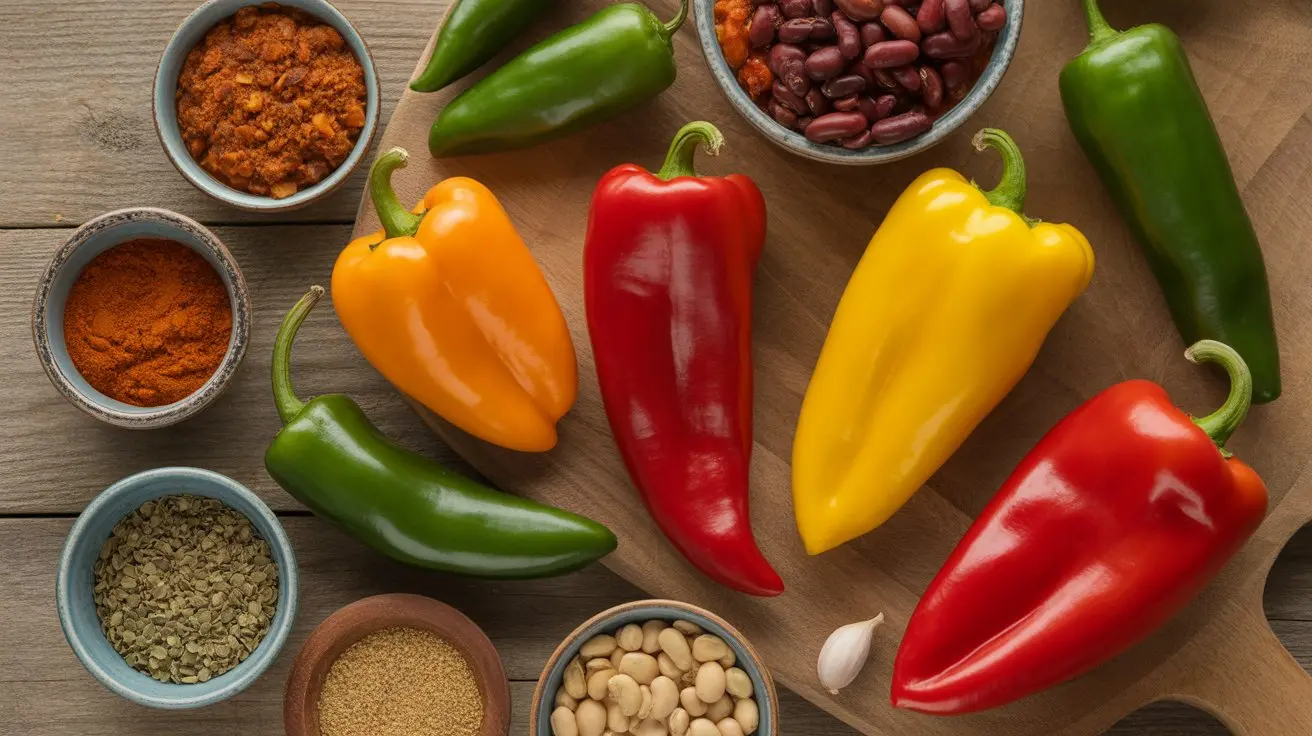
Best Peppers for Chili
The best peppers for chili include ancho, guajillo, and cayenne. We rank 12 options by heat, smoke level, and chili style. Find your perfect heat level.

Why the Right Pepper Changes Everything
The first time I made chili entirely from dried whole chiles - toasting anchos and guajillos in a dry skillet, soaking them in hot water, blending them into a deep brick-red paste - I understood why Tex-Mex canned chili powder felt like a compromise. The depth was incomparable. But that discovery also raised a question I kept returning to: which peppers actually belong in chili, and why?
This guide covers 12 peppers - fresh and dried - ranked by how they perform in the pot, not just on the Scoville scale.
Understanding Heat vs. Flavor in Chili Peppers
Heat and flavor are separate variables. A pepper can be mild with enormous complexity, or scorching with almost no taste beyond the burn. Chili rewards peppers that bring both, and the best recipes layer multiple varieties to build something neither could achieve alone.
The Scoville scale measures capsaicin concentration - you can check the unit definitions and scale positions for exact numbers - but it tells you nothing about smokiness, fruitiness, or the earthy undertones that make a chili linger on the palate. Keep that in mind as you build your pepper selection.
Dried peppers concentrate flavor through moisture loss. Fresh peppers contribute brightness and texture. Most serious chili cooks use at least one of each.
The Dried Pepper Foundation: Anchos, Guajillos, and Beyond
Ancho (dried poblano) is the starting point for most traditional chili. At 1,000-2,000 SHU, it sits comfortably in the mild heat category while delivering chocolate, dried fruit, and a slight earthiness that no spice blend replicates. Toast it dry, soak it, blend it - that paste becomes the backbone of your chili.
Mulato is the underused third in this trio - a darker dried poblano variant with chocolate and licorice notes, sitting around 2,500-3,000 SHU. Add one mulato to every two anchos and the depth increases noticeably.
Pasilla (dried chilaca) brings raisin and berry notes at 1,000-2,500 SHU. It is especially good in black bean chili where its sweetness complements earthy beans.
Fresh Peppers That Build Chili Structure
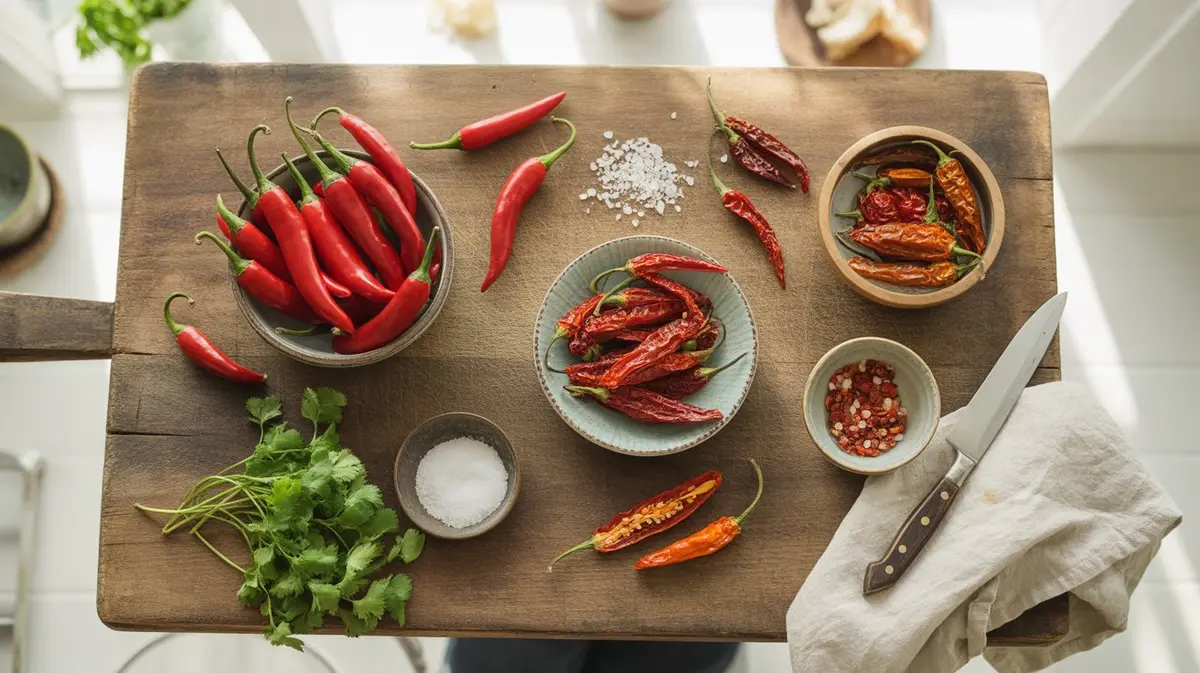
Fresh chiles give chili its body and brightness. They cook down into the base rather than dissolving the way dried peppers do, creating textural contrast and a sharper, greener flavor dimension.
Poblano is the fresh counterpart to ancho - mild, meaty, and substantial enough to hold its shape through a long simmer. At 1,000-2,000 SHU, it is safe for heat-sensitive guests without sacrificing presence.
Jalapeño is the workhorse of American-style chili. Dice it fine and it disappears into the background, raising heat incrementally. Leave it in larger pieces and it becomes a feature. At 2,500-8,000 SHU, it sits right at the entry point of the medium heat range.
For something more interesting than jalapeño without jumping to serious heat, consider the purple-podded jalapeño variant - same heat ballpark but with a slightly earthier flavor and a visual payoff in the bowl before the chili reduces to brown.
Serrano runs about 10,000-23,000 SHU - roughly three to five times hotter than guajillo - and delivers a clean, grassy bite that jalapeño cannot match. Use it when you want forward heat without smoke.
Mid-Heat Workhorses Worth Knowing
The Bulgarian Carrot pepper gets overlooked in chili discussions, but its citrusy Eastern European heat character adds a dimension that is genuinely hard to replicate. At 5,000-30,000 SHU, it brings fruity brightness alongside moderate burn - useful in chicken or turkey chili where lighter flavors need support.
The Lombok pepper from Indonesia sits in a similar range and its tropical fruity heat profile works surprisingly well in chili recipes that incorporate sweet potato or squash. It is not a traditional choice, but it earns its place.
Cayenne at 30,000-50,000 SHU is primarily a heat-adjustment tool. Add it dried and ground at the end of cooking to bring overall heat up without changing flavor direction. It is roughly six to ten times hotter than guajillo, so measure carefully.
High-Heat Options for Serious Chili
Once you cross 50,000 SHU, peppers start demanding respect. These are not background players - they define the character of the dish and require deliberate handling.
De Arbol runs 15,000-30,000 SHU and toasts beautifully. Two or three dried de arbol chiles added to a pot of ancho-guajillo base raises heat significantly while contributing a nutty, slightly smoky quality. It is the most common bridge between mild foundation and genuine burn.
The color-shifting South American aji - a baccatum species pepper - brings fruity heat in the 1,000-5,000 SHU range that pairs naturally with beef and tomato. Its brightness is different from Mexican dried chiles, making it interesting in fusion-style chili.
For heat that crosses into the hot pepper tier, the small but potent Indonesian bird chile at 50,000-100,000 SHU is worth considering. A single dried cabe rawit added to the pot during simmering lifts the entire heat level without adding volume. Remove it before serving or leave it in as a warning to whoever finds it.
The slender Thai-style prik jinda operates in a similar range and is easier to find fresh in Asian grocery stores. It integrates into non-traditional chili styles - particularly those with coconut milk or lemongrass - where its clean burn suits the flavor profile better than smoky Mexican varieties.
When to Use Extra-Hot Peppers
Habanero at 100,000-350,000 SHU - about 70 times hotter than guajillo at peak - belongs in chili only when the recipe is built around it. Habanero chili is its own category: the fruit-forward heat transforms every other ingredient. Use one small habanero per pot as a complexity booster, or build the entire recipe around it.
The extra-hot heat category also includes scotch bonnets, which share the habanero's fruity character but with slightly more tropical sweetness. Either works in chili that leans toward Caribbean flavor profiles.
Above habanero, you are in territory where understanding the heat trigger mechanism matters practically - not just academically. At 500,000+ SHU, a single drop of pepper extract can overwhelm an entire batch. Ghost pepper and beyond are novelty choices for chili unless you are cooking for competitive heat eaters.
Building a Chili Pepper Blend by Style
Different chili styles call for different pepper combinations. Here is how to match peppers to your target dish.
Texas-style beef chili (no beans): Ancho + guajillo + de arbol + cayenne. Toast and blend the dried chiles into a paste. Add cayenne at the end for heat adjustment. This is the classic combination for a reason.
Cincinnati-style: Ancho + cinnamon + allspice. The dried chile is a supporting player here, not the star. Use fewer anchos and let the spice blend carry the dish.
White chicken chili: Fresh poblano + jalapeño + a small amount of serrano. No dried chiles - the lighter color and flavor profile require fresh peppers only. The Bulgarian Carrot's citrusy heat character also works well here.
Vegetarian chili: Ancho + pasilla + fresh jalapeño + chipotle (smoked jalapeño). The smoke from chipotle compensates for the absence of meat fat, and the ancho-pasilla combination provides enough body to make the dish feel substantial.
Competition chili: Typically three dried chiles in a 3:2:1 ratio - ancho:guajillo:de arbol - with a fresh jalapeño or serrano added early and a pinch of cayenne at the finish. Competition rules often restrict ingredients, so check before experimenting.
Toasting, Soaking, and Blending Dried Chiles
The method matters as much as the pepper selection. Dried chiles require activation before they contribute full flavor.
- Remove stems and seeds from dried chiles. Tear into flat pieces.
- Toast in a dry skillet over medium heat, 30-45 seconds per side, until fragrant. Do not scorch - bitter notes from burnt chiles cannot be fixed.
- Transfer immediately to a bowl. Cover with boiling water. Weight down with a plate if they float.
- Soak 20-30 minutes until fully pliable.
- Drain, reserving the soaking liquid. Blend chiles with a small amount of liquid until smooth.
- Strain through a medium-mesh sieve to remove tough skin pieces.
The resulting paste keeps in the refrigerator for five days or freezes well in ice cube trays for portioned use later.
Sourcing and Storage
Dried Mexican chiles - ancho, guajillo, pasilla, mulato - are widely available at Latin grocery stores and increasingly at mainstream supermarkets. Whole dried chiles store better than pre-ground: keep them in an airtight container away from light and they hold flavor for up to a year.
Fresh chiles for chili (jalapeño, serrano, poblano) are available year-round at most grocery stores. If you want to grow your own supply, a step-by-step growing walkthrough covers starting from seed through harvest - useful if you want consistent access to varieties that are harder to find fresh, like Bulgarian Carrot or Lombok.
Chipotle in adobo - canned smoked jalapeños in tomato sauce - is one of the most convenient pantry items for chili. One or two chipotles plus a spoonful of adobo sauce add smokiness, heat, and acidity in a single ingredient.
Quick Reference: 12 Peppers Ranked for Chili
- Ancho - 1,000-2,000 SHU - mild, chocolate, essential dried base
- Pasilla - 1,000-2,500 SHU - mild, raisin, best in bean chili
- Mulato - 2,500-3,000 SHU - mild-medium, licorice, depth builder
- Guajillo - 2,500-5,000 SHU - mild-medium, tangy, brightness layer
- Poblano (fresh) - 1,000-2,000 SHU - mild, meaty, structural
- Jalapeño - 2,500-8,000 SHU - medium, grassy, versatile
- Serrano - 10,000-23,000 SHU - medium-hot, clean bite
- De Arbol - 15,000-30,000 SHU - hot, nutty, heat bridge
- Bulgarian Carrot - 5,000-30,000 SHU - hot, citrusy, non-traditional
- Cayenne - 30,000-50,000 SHU - hot, neutral, heat adjuster
- Cabe Rawit - 50,000-100,000 SHU - very hot, use sparingly
- Habanero - 100,000-350,000 SHU - extra hot, fruity, recipe-defining
Frequently Asked Questions
-
A standard ratio is 2-3 dried anchos plus 2 guajillos per pound of meat. Adjust by adding de arbol or cayenne for more heat. Start conservative - you can always add heat but cannot remove it.
-
Commercial chili powder works in a pinch but lacks the depth of whole toasted and blended chiles. It also contains added cumin and garlic, which limits your control. Whole dried chiles produce noticeably more complex results.
-
Ancho is the clear answer - it delivers chocolate, dried fruit, and earthiness at just 1,000-2,000 SHU. Pasilla is a close second, especially in bean-based recipes. Neither will challenge heat-sensitive guests.
-
Yes for dried chiles used in paste - seeds turn bitter when blended. For fresh chiles added directly to the pot, seeds can stay if you want more heat. Removing them reduces heat by roughly 20-30 percent.
-
Chipotle (smoked jalapeño) delivers the most smoke, followed by pasilla and mulato. Toasting any dried chile in a dry skillet before soaking also adds light smokiness. Combining chipotle with ancho covers both smoke and depth.