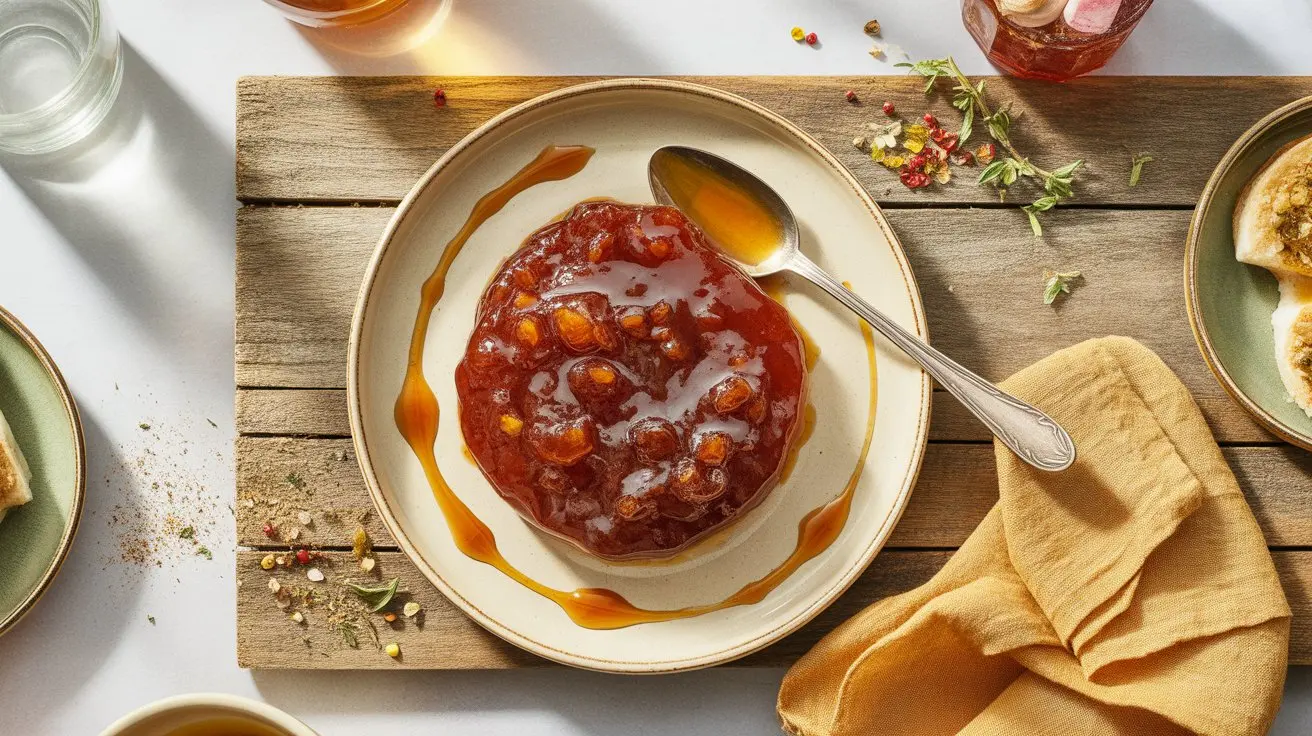
Pepper Jelly Recipe
Sweet-hot pepper jelly for appetizers and glazes. Full recipe with prep times, ingredients, and step-by-step instructions.

What Makes Pepper Jelly Worth Making at Home
Pepper jelly sits at one of the most satisfying intersections in preserving: sweet enough for a cheese board, hot enough to keep things interesting. The store versions are fine, but they tend to play it safe on heat and skimp on actual pepper flavor. Making your own means you control both.
This guide covers a classic jalapeño-based jelly with a habanero variation for anyone who wants more fire. Both use the same base technique, so once you nail one, the other is just a swap.
Choosing Your Peppers
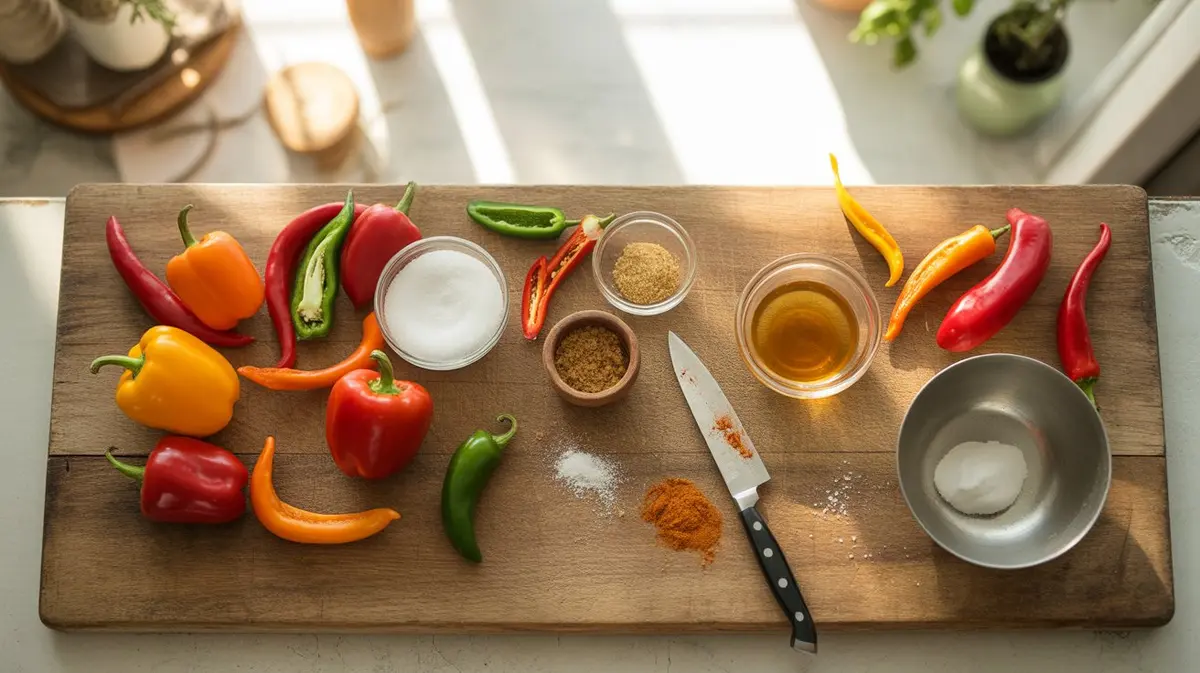
Before reaching for the pectin, it helps to understand what each pepper brings beyond heat. Jalapeños contribute a grassy, slightly vegetal flavor that mellows beautifully when cooked with sugar — the heat stays present but softens into something approachable. They sit in the medium heat bracket, which makes them the crowd-pleasing choice for a jelly that works on everything from cream cheese to pork tenderloin.
Habaneros are a different animal entirely. Their flavor is floral and fruity — almost tropical — before the heat arrives. That fruity character from Caribbean pepper varieties makes habanero jelly genuinely complex rather than just hot. If you want a jelly that surprises people, habanero is the move.
For the jalapeño version, you can seed the peppers to dial back heat or leave seeds in for more punch. For habanero, seeding is strongly recommended unless your guests are pepper enthusiasts — the extra-hot tier heat from habaneros can overwhelm the sweetness if you push too hard.
Bell peppers round out both versions, adding body, color, and a mild sweetness that balances the sharp notes. Red bells make a prettier jelly; green bells keep it looking more rustic.
Equipment You'll Need
- Large heavy-bottomed pot (at least 6-quart)
- Water bath canner or large stockpot with rack
- 6 half-pint (8 oz) mason jars with new lids
- Jar lifter and canning funnel
- Candy thermometer (helpful but not required)
- Food processor or sharp knife
- Rubber gloves for handling hot peppers
Technique Tips
Pectin timing is everything. Boiling the pectin-vinegar mixture before adding sugar activates it properly. Adding sugar too early or too late affects gel strength. Follow the sequence exactly the first time.
The 1-minute hard boil after adding sugar is non-negotiable. Under-boiling gives you syrup; over-boiling breaks down pectin and you also end up with syrup. One full minute at a rolling boil is the target.
If your jelly doesn't set after 24 hours, don't panic. Sometimes pectin takes up to 48 hours to fully gel. If it's still liquid after two days, you can re-process: open jars, return jelly to pot, add a fresh packet of pectin dissolved in 1/4 cup water, bring back to boil, and re-jar.
Color varies by pepper ripeness. Red jalapeños make a gorgeous ruby jelly; green jalapeños produce an olive-green result. Both taste identical, but red looks more impressive on a cheese board. For habanero jelly, orange habaneros give a warm amber color that reads as beautiful rather than alarming.
Variations
- Mango Habanero Jelly: Add 1 cup of finely diced ripe mango with the peppers. Reduce bell pepper by half. The mango amplifies the tropical notes already present in habanero's fruity heat profile and makes the jelly genuinely spectacular on grilled chicken.
- Smoky Chipotle Jelly: Substitute half the jalapeños with 2-3 tablespoons of minced chipotles in adobo. The smoke and depth from chipotle's earthy, smoked heat pairs exceptionally well with sharp cheddar.
- Serrano-Lime Jelly: Swap jalapeños for serranos and replace 1/4 cup of vinegar with fresh lime juice. Add 1 tablespoon of lime zest. Serranos are sharper and brighter than jalapeños — closer to the hot tier range — so this version has noticeably more bite.
- Ghost Pepper Jelly (Advanced): For serious heat, use just 2-3 ghost peppers (seeded, gloves mandatory) combined with 1 1/2 cups bell pepper. Ghost peppers occupy a different category than habaneros — the super-hot range — so a little goes a long way. Label these clearly before gifting.
- Triple Pepper Jelly: Combine jalapeño, serrano, and red bell in equal parts. Layering pepper varieties adds complexity that single-pepper versions can't match.
How to Use Pepper Jelly
The classic application — cream cheese and crackers — earns its reputation because it works. Pour jelly directly over a block of cream cheese and serve with buttery crackers. Takes 30 seconds and impresses reliably.
Beyond appetizers, pepper jelly is a legitimate cooking ingredient. Brush it on pork ribs or chicken thighs during the last 10 minutes of grilling for a glaze that caramelizes beautifully. Whisk it into vinaigrette for a sweet-heat salad dressing. Stir a spoonful into pan drippings for a quick sauce after searing duck breast or pork chops.
It also works as a condiment in unexpected places: on breakfast biscuits with butter, alongside a cheese plate, or spooned over brie before baking. The stuffed pepper recipe method can incorporate pepper jelly as a finishing glaze for a flavor loop worth trying.
For a sharper heat comparison between common options, the jalapeño-to-habanero heat gap explains why the two versions of this jelly taste so different even at similar volumes.
Storage Notes
Properly processed, sealed jars keep at room temperature for up to 1 year. Store in a cool, dark location — a pantry shelf works fine. Heat and light degrade both color and flavor over time.
Once opened, refrigerate and use within 3-4 weeks. The jelly won't spoil immediately after that window, but texture and flavor start declining. Unsealed jars from the canning process should go straight into the refrigerator and be used within 3 weeks.
Freezing is possible but changes texture — the jelly becomes slightly looser after thawing. Fine for cooking applications, less ideal for a cheese board presentation.
Pepper Jelly as Gifts
Homemade pepper jelly makes an excellent gift because it's genuinely useful, keeps well, and looks professional in mason jars. Add a label with pepper type, heat level, and date made. A half-pint jar is the right size — enough to make an impression without overwhelming someone who doesn't know how they'll use it.
If you're making batches for gifts, consider making one jalapeño batch and one habanero batch simultaneously. The process is identical; you're just running two pots. Label them clearly — gifting unlabeled jelly to someone with a low heat tolerance is not the move.
For anyone interested in growing their own peppers for future batches, the full seed-starting guide for home growers covers both jalapeños and habaneros with timeline and variety recommendations. Growing your own means you control ripeness, which directly affects both heat level and flavor in the final jelly.
Understanding why peppers produce different heat levels comes down to capsaicin concentration — the chemistry behind how capsaicin works explains why habaneros hit differently than jalapeños even when used in smaller quantities. And if you want to compare specific pepper heat measurements before choosing your variety, the Scoville testing and measurement tool gives exact SHU ranges for any pepper you're considering.
Chef's Tip: The Resting Period
Patience is an ingredient. After mixing, let the dish rest for 10–15 minutes before serving. This allows the flavours to meld and the seasoning to fully penetrate. If making ahead, refrigerate and bring to room temperature before serving.
Shopping List
-
1 cup jalapeñosfinely minced (about 8-10 medium peppers, seeded or not)
-
3/4 cup red bell pepperfinely minced (about 1 large pepper)
-
1 1/2 cups apple cider vinegar
-
5 cups granulated sugar
-
1 packet (1.75 oz) powdered fruit pectin
-
1/2 tsp butter (optionalreduces foam)
-
1/2 tsp kosher salt
Full Recipe Instructions
Wear gloves and…
Wear gloves and mince jalapeños and bell peppers as finely as possible. Measure after mincing.
Sterilize jars by…
Sterilize jars by running through dishwasher on hot cycle or simmering in boiling water for 10 minutes. Keep jars hot until filling.
Combine minced peppers…
Combine minced peppers and apple cider vinegar in a large heavy-bottomed pot. Stir in pectin until fully dissolved. Add butter if using.
Bring to a…
Bring to a rolling boil over medium-high heat, stirring constantly.
Add all 5…
Add all 5 cups of sugar at once and stir to dissolve. Return to a full rolling boil and boil hard for exactly 1 minute, stirring constantly.
Remove from heat.…
Remove from heat. Skim foam from surface. Test set using cold plate method: drop a teaspoon on a frozen plate, wait 30 seconds, push with finger. If it wrinkles, it is set.
Ladle hot jelly…
Ladle hot jelly into hot jars using a canning funnel, leaving 1/4 inch headspace. Wipe rims clean and apply lids fingertip-tight.
Process jars in…
Process jars in boiling water bath for 10 minutes with at least 1 inch of water covering lids. Remove and cool undisturbed for 12-24 hours.
Check seals after…
Check seals after cooling. Lids should be concave and firm. Refrigerate any unsealed jars and use within 3 weeks.
Frequently Asked Questions
-
The most common cause is not reaching a true rolling boil after adding sugar, or not boiling for the full 1 minute. Pectin also takes up to 48 hours to fully gel, so wait two days before deciding the batch failed.
-
For shelf-stable storage, yes - water bath processing is required to create a proper seal and prevent spoilage. If you skip processing, refrigerate jars immediately and use within 3 weeks.
-
Standard pectin requires the full sugar amount to gel properly. If you want lower sugar
More Recipes
View allFresh Salsa Recipe
Restaurant-quality fresh salsa in 10 minutes. Proper tomato prep, right jalapeño amount, and the secret to balanced flavor. Find your perfect heat level.
Jalapeno Poppers Recipe
Classic cream cheese stuffed jalapeño poppers that are crispy outside, creamy inside. Find your perfect heat level.
Pickled Jalapenos Recipe
Two methods: 10-minute quick pickle and proper fermented. Both stay crispy. Find your perfect heat level.
Stuffed Peppers Recipe
Classic stuffed peppers with rice and meat, plus vegetarian and Mexican variations. Covers bell peppers, poblanos, and which peppers stuff best.