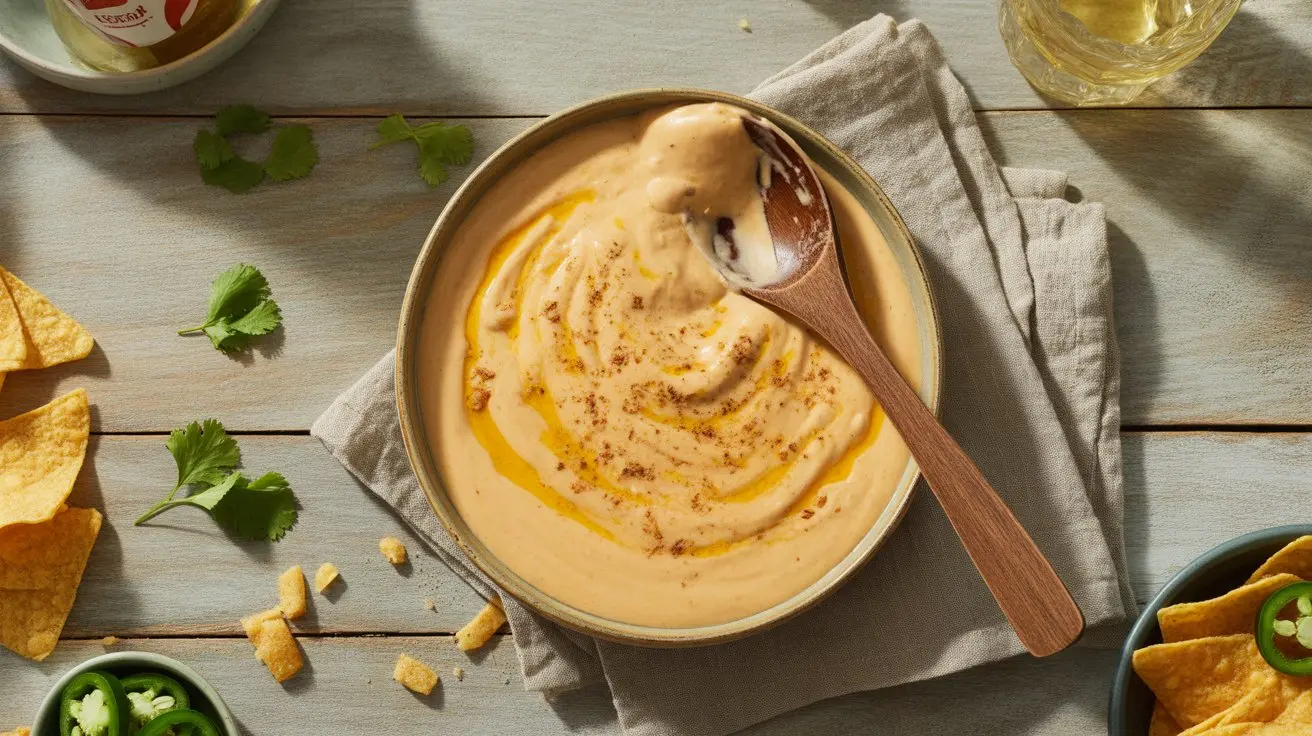
Pepper Jack Queso Recipe
Creamy stovetop pepper jack queso with roasted jalapeños and serranos. Ready in 15 minutes — no Velveeta needed. The secret is evaporated milk and freshly grated cheese.

What Makes This Queso Different
Most stovetop queso recipes fall into two camps: Velveeta-based (easy but plasticky) or all-natural (delicious but broken and grainy). This recipe sits firmly in a third camp — creamy, stretchy, made entirely from real cheese, and ready in about 15 minutes.
The trick is evaporated milk combined with a small amount of cornstarch. This combination stabilizes the proteins in pepper jack so they melt smoothly instead of seizing into a greasy mess. No processed cheese required.
The Peppers
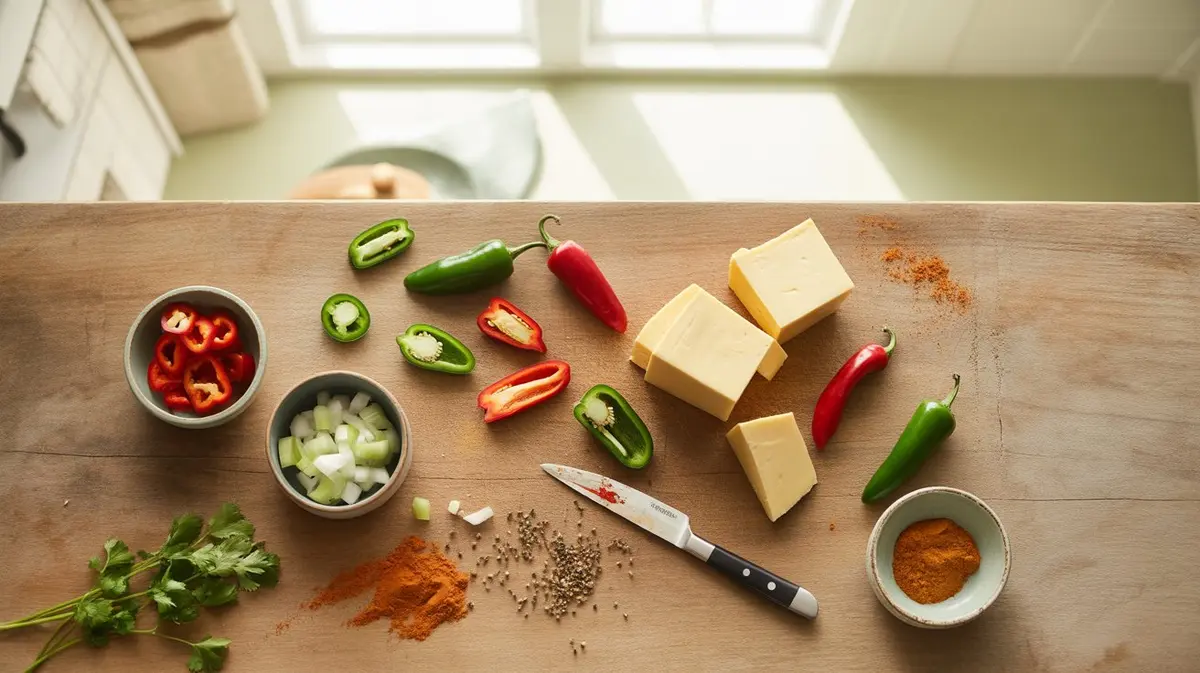
Pepper jack cheese already contains bits of jalapeño's grassy, moderate bite, but the real heat in this queso comes from fresh roasted jalapeños and serranos added directly to the pot.
Serranos run noticeably hotter than Fresnos — that bright, almost citrusy burn that hits the tip of your tongue first. They add a clean, sharp heat that complements the richness of melted cheese without muddying the flavor. If you want to understand where serranos sit on the medium-intensity SHU bracket, they clock in roughly between 10,000 and 23,000 Scoville units.
Roasting both peppers before adding them is non-negotiable. Raw jalapeño and serrano taste sharp and vegetal; roasted, they turn sweet, smoky, and complex. Ten minutes under a broiler changes everything.
Technique Notes
Temperature control is the single most important variable here. Medium-low heat throughout the melting phase prevents the proteins in pepper jack from tightening and separating from the fat. If you see the queso starting to look greasy or grainy, the heat is too high — pull the pot off the burner immediately and stir vigorously.
The cornstarch coating works by creating a physical barrier around the cheese proteins. When the starch granules hydrate and swell in the hot evaporated milk, they form a network that holds everything together even as the fat melts out of the cheese. It's the same chemistry behind a good béchamel, just applied differently.
Evaporated milk outperforms regular milk or cream here because the concentration process removes water and slightly denatures the proteins, making it more heat-stable. Heavy cream works in a pinch but tends to produce a richer, less fluid queso that gets very thick as it cools.
If you want to go deeper on why capsaicin from those serranos and jalapeños feels the way it does — that building warmth that lingers after the first bite — the receptor science behind capsaicin's heat response explains exactly what's happening at the cellular level.
Variations
- Extra-hot version: Swap one serrano for a habanero's fruity, tropical fire and reduce the quantity to half a pepper. Roast alongside the other peppers.
- Smoked queso: Use a cast-iron skillet and finish the entire recipe on a pellet grill or smoker at 225°F for 20 minutes instead of stovetop. The smoke penetrates the queso beautifully.
- Chorizo queso: Brown 4 oz of Mexican chorizo in the saucepan before adding butter and onion. Drain excess fat, then proceed with the recipe. The spiced pork fat adds tremendous depth.
- Roasted tomato addition: Add one roma tomato, roasted and diced alongside the peppers, for a queso that leans more toward a chile con queso style.
- Mild version: Replace serranos with poblano's earthy, low-heat flavor — roasted and peeled the same way. The result is a gentle, vegetal queso that works well for mixed-heat-tolerance crowds.
- Beer queso: Substitute half the evaporated milk with a 4 oz pour of lager or pale ale. The carbonation helps emulsify the cheese and the slight bitterness cuts the richness.
Pepper Substitutions
If fresh serranos aren't available, Fresno's mild-to-medium fruity warmth makes a reasonable substitute — slightly less heat, slightly more sweetness, but the roasted flavor profile is similar enough that most people won't notice the difference.
For a smokier base without roasting fresh peppers, 2 tbsp of canned chipotles in adobo (minced) can replace the jalapeños entirely. The heat lands in a similar range but the smoky, earthy character shifts the queso toward a more Tex-Mex profile. Chipotles are simply smoked, dried jalapeños — both belong to the Capsicum annuum species that dominates North American cooking.
Anaheim peppers, which sit comfortably in the mild end of the heat spectrum, are another option for those who want pepper flavor without significant bite. Roast them the same way and use two full peppers to compensate for the lower intensity.
Cheese Selection Notes
Not all pepper jack is created equal. Look for blocks with visible pepper pieces throughout — these tend to have better melt characteristics than varieties with very fine pepper specks. Tillamook and Boar's Head both perform well in this recipe.
Mixing cheeses is also worth considering. A blend of 8 oz pepper jack and 4 oz sharp white cheddar produces a queso with more pronounced tang and a slightly firmer texture. The cheddar adds sharpness that the pepper jack alone sometimes lacks.
Avoid low-moisture mozzarella, Swiss, or any cheese marketed as a "melt blend" — these contain stabilizers that interact unpredictably with the cornstarch method.
Serving Ideas
The obvious answer is tortilla chips, but this queso is genuinely versatile. It works as a sauce over breakfast burritos, a dip for soft pretzels, a topping for baked potatoes, or poured directly over grilled chicken or steak.
For a full pepper-forward spread, serve alongside roasted tomatillo salsa verde and a bowl of pickled chiles. The acidity from the salsa and pickles cuts through the richness of the queso in a way that makes the whole spread more balanced.
If you're building a game-day spread, pair this with stuffed jalapeño poppers for a table that covers both the creamy and the crispy.
Storage and Reheating
Leftover queso stores well in an airtight container in the refrigerator for up to 4 days. It will solidify completely when cold — that's normal and expected.
To reheat, transfer to a small saucepan over low heat and add a splash of evaporated milk (about 1-2 tablespoons). Stir constantly as it warms. It will look broken and grainy at first, but keep stirring on low heat and it will come back together into a smooth sauce within 2-3 minutes.
Microwave reheating works in a pinch: use 50% power in 30-second intervals, stirring between each, with a small splash of milk added before starting. High microwave power breaks the emulsion and produces greasy, separated queso.
Freezing is not recommended — the texture degrades significantly on thaw, and no amount of stirring fully rescues it.
Chef's Tip: The Resting Period
Patience is an ingredient. After mixing, let the dish rest for 10–15 minutes before serving. This allows the flavours to meld and the seasoning to fully penetrate. If making ahead, refrigerate and bring to room temperature before serving.
Shopping List
-
12 oz pepper jack cheesefreshly grated (block, not pre-shredded)
-
1 can (12 oz) evaporated milk
-
1 tbsp cornstarch
-
2 jalapeñosroasted, peeled, and diced
-
2 serrano peppersroasted, peeled, and diced
-
2 cloves garlicminced
-
1/2 small white onionfinely diced
-
1 tbsp unsalted butter
-
1/2 tsp ground cumin
-
1/4 tsp smoked paprika
-
Salt to taste
-
Fresh cilantrochopped, for garnish (optional)
-
Pickled jalapeño slices for topping (optional)
Full Recipe Instructions
Place jalapeños and…
Place jalapeños and serranos on a foil-lined baking sheet. Broil on high for 8-10 minutes, turning once, until skins are charred and blistered. Transfer to a bowl, cover with plastic wrap, and steam for 5 minutes. Peel, seed if desired, and dice finely.
Grate the pepper…
Grate the pepper jack cheese on the large holes of a box grater. Do not use pre-shredded cheese.
Toss the grated…
Toss the grated cheese with 1 tbsp cornstarch in a bowl until evenly coated.
Melt butter in…
Melt butter in a medium saucepan over medium heat. Add diced onion and cook for 3-4 minutes until softened. Add garlic and cook 30 seconds more.
Stir in the…
Stir in the diced roasted jalapeños and serranos, cumin, and smoked paprika. Cook for 1 minute.
Pour in the…
Pour in the evaporated milk and reduce heat to medium-low. Bring to a gentle simmer — do not boil.
Add the cornstarch-coated…
Add the cornstarch-coated cheese in three or four additions, stirring constantly between each. Wait until fully melted before adding the next addition.
Taste and add…
Taste and add salt as needed. Thin with additional evaporated milk, 1 tablespoon at a time, if needed.
Serve immediately in…
Serve immediately in a warmed bowl or small slow cooker set to warm. Garnish with cilantro and pickled jalapeño slices if desired.
Frequently Asked Questions
-
Grainy queso almost always comes from heat that is too high. The proteins in the cheese tighten and squeeze out the fat when overheated. Keep the burner at medium-low throughout the melting phase and add cheese gradually.
-
Pre-shredded cheese is coated in cellulose or potato starch to prevent clumping in the bag, and those coatings interfere with smooth melting. Always grate from a block for queso.
-
Replace the serranos with roasted poblanos and reduce the jalapeños to one pepper, seeded. The result still has pepper flavor but sits at a much gentler heat level that most people find comfortable.
-
Yes —
More Recipes
View allFresh Salsa Recipe
Restaurant-quality fresh salsa in 10 minutes. Proper tomato prep, right jalapeño amount, and the secret to balanced flavor. Find your perfect heat level.
Jalapeno Poppers Recipe
Classic cream cheese stuffed jalapeño poppers that are crispy outside, creamy inside. Find your perfect heat level.
Pickled Jalapenos Recipe
Two methods: 10-minute quick pickle and proper fermented. Both stay crispy. Find your perfect heat level.
Stuffed Peppers Recipe
Classic stuffed peppers with rice and meat, plus vegetarian and Mexican variations. Covers bell peppers, poblanos, and which peppers stuff best.