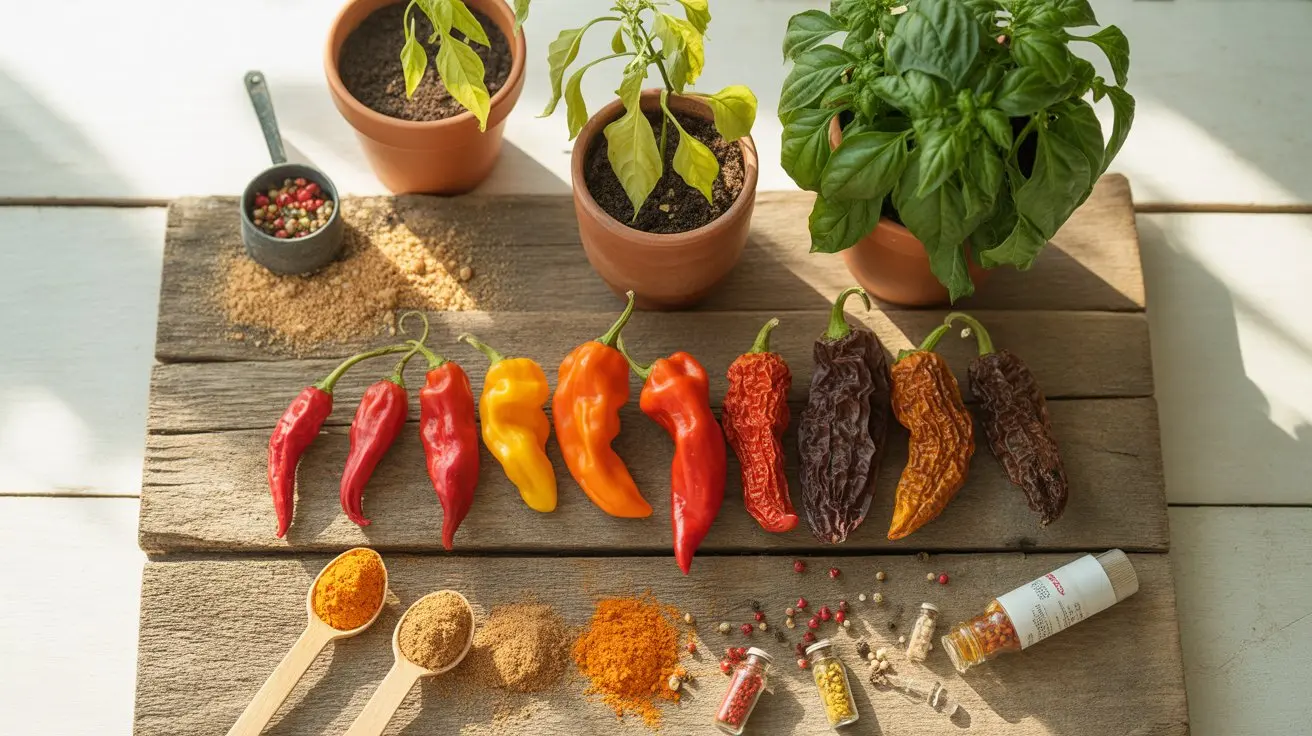
How to Make Peppers Hotter
Stress your pepper plants for more heat: reduce watering, add sulfur, let fruit ripen fully, control nitrogen. Find your perfect heat level.

Why Your Peppers Are Not as Hot as Expected
Capsaicin production is not automatic — it is a stress response. Pepper plants synthesize capsaicinoids when they sense environmental pressure: heat, drought, poor soil, or competition. A well-watered, well-fed plant growing in rich soil will often produce mild fruit even from a variety rated at 50,000 SHU.
The gap between a variety's published heat range and what you actually harvest can be enormous. Understanding which variables control capsaicin output lets you push your plants toward the upper end of their genetic potential.
The Science Behind Pepper Heat
Capsaicin binds to the TRPV1 receptor heat trigger in your mouth and skin, producing the burning sensation we associate with hot peppers. The more capsaicin a fruit accumulates, the higher its Scoville score — measured using the organoleptic titration method and confirmed by HPLC chromatography in modern labs.
Plants produce capsaicin in the placental tissue — the white membrane connecting seeds to the pod wall. Stress signals upregulate the enzymes responsible for capsaicin biosynthesis, which is why environmental manipulation is so effective at increasing heat.
For context, an intensely fruity Panamanian hot pepper like the Aji Chombo sits in a heat range that dwarfs a typical Anaheim by a factor of 30 or more. That difference is partly genetic, but growing conditions determine whether any variety reaches its ceiling.
Method 1 — Water Stress at the Right Moment
Reducing irrigation during the fruit development stage is the single most effective technique for increasing capsaicin concentration. The key is timing: water stress applied too early stunts the plant; applied during pod fill, it triggers maximum capsaicin output.
- Water normally until flowers have set and small pods are visible — roughly 1-2 cm in length.
- Reduce irrigation by about 50% from your normal schedule. The soil should dry out partially between waterings, but never crack or become bone dry.
- Maintain this reduced watering regime through the full ripening period.
- Resume normal watering only after harvest to keep the plant productive for subsequent flushes.
Container-grown plants respond faster to this approach because you control the entire root zone. In-ground plants may need more aggressive reduction depending on your soil's water retention.
Varieties in the upper-bracket superhot range — including the deeply pigmented Trinidad-origin 7 Pot Douglah — are especially responsive to drought stress because their capsaicin ceiling is so high that there is room to climb.
Method 2 — Nitrogen Management
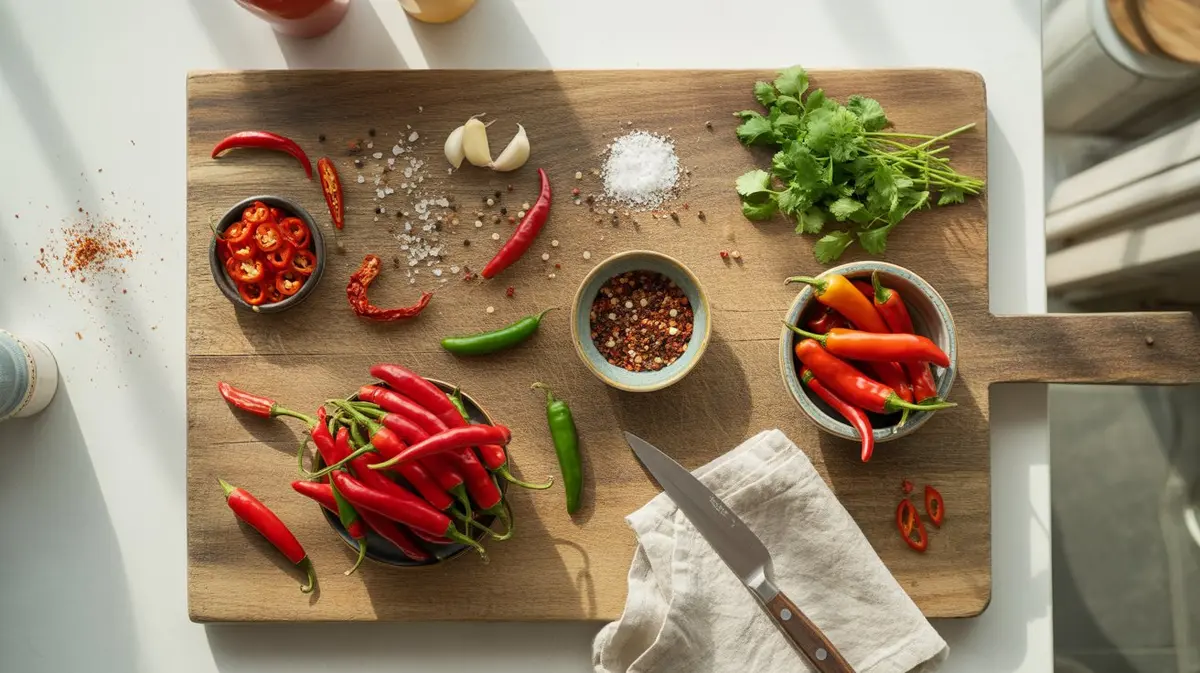
Excess nitrogen is one of the most common reasons home-grown peppers come out mild. Nitrogen drives vegetative growth — leaves, stems, and roots — at the expense of fruit quality and capsaicin production.
Switch to a low-nitrogen fertilizer once your plants begin flowering. A formula with a ratio like 5-10-10 (nitrogen-phosphorus-potassium) supports fruiting without pushing excessive green growth. Phosphorus supports root development and fruit set; potassium improves overall stress tolerance.
Avoid high-nitrogen amendments like fresh compost, blood meal, or lawn fertilizers anywhere near fruiting pepper plants. If your soil test shows nitrogen above 150 ppm, hold off on feeding entirely until after the first harvest.
Method 3 — Sulfur Supplementation
Sulfur is a building block of several capsaicin precursors. Research from the University of California Cooperative Extension has noted that sulfur-deficient soils correlate with reduced pungency in hot pepper varieties. Adding elemental sulfur or a sulfate-based fertilizer can address this deficit.
Apply agricultural sulfur at the rate recommended on your soil test results, or use potassium sulfate as a combined potassium and sulfur source. Foliar applications of sulfate solution (about 1 tsp per gallon of water) can produce a faster response than soil amendments when you need results within a single growing season.
This technique is particularly relevant for gardeners growing in alkaline soils, where sulfur also helps lower pH toward the 6.0-6.8 range that peppers prefer.
Method 4 — Temperature and Sun Exposure
Capsaicin synthesis is temperature-sensitive. Pepper plants produce more capsaicin when daytime temperatures are consistently between 80-95°F (27-35°C). Below that range, enzyme activity slows; above it, plants may abort flowers entirely.
If you are growing in a cooler climate, use black plastic mulch to raise soil temperature, and consider a low tunnel or wall-o-water to extend your season. South-facing walls radiate stored heat overnight, which keeps nighttime temperatures from dropping too sharply.
Direct sun exposure matters too. Peppers need at least 8 hours of full sun daily for peak capsaicin production. Shaded plants consistently produce milder fruit, even from the same seed stock as plants grown in full sun. The bright Caribbean-heat habanero and the pale-fruited intense habanero variant both show dramatic heat differences between shaded and sun-exposed specimens from the same plant batch.
Method 5 — Let Fruit Ripen Fully
This is the simplest fix and the most overlooked. Capsaicin concentration increases as fruit matures. A pepper harvested green — before it has changed color — may be only 40-60% as hot as the same pepper left to ripen fully to red, orange, or brown.
The ripening process also changes flavor. Fully ripe peppers develop more sugars and aromatic compounds alongside the elevated capsaicin, which is why heat from a ripe pod often feels more complex than heat from an immature one.
For varieties like the dark ornamental-to-edible Count Dracula pepper and the deep-purple Royal Black, full ripening means waiting for the final color stage — which can look counterintuitive when the fruit appears almost black at intermediate stages. Leave them on the plant until color development is complete.
Diagnosing Why Your Specific Variety Is Underperforming
Before applying stress techniques, identify the actual cause of low heat. Work through these questions:
- Overwatering? Check if your soil stays wet for more than 2 days between waterings. If yes, reduce frequency.
- Too much nitrogen? Are your plants producing lush, dark-green foliage with few pods? That is a nitrogen surplus signal.
- Immature harvest? Are you picking before color change? Try leaving one pepper on the plant to full ripeness and taste-testing it.
- Insufficient heat? Are daytime temperatures consistently below 75°F? Your plants may not be reaching the thermal threshold for peak capsaicin output.
- Wrong variety? Some peppers are simply mild by nature. An Anaheim tops out around 2,500 SHU regardless of stress. If you want serious heat, you need a variety with the genetic capacity for it.
Cross-pollination can also reduce heat in subsequent generations if you are saving seed. If a hot variety was grown near a mild one and you saved the seed, offspring may express reduced pungency. Always start from verified seed stock when heat is the goal.
Choosing Varieties With Higher Heat Ceilings
Stress techniques can push a pepper toward its genetic maximum, but they cannot exceed it. If your target is serious heat, start with varieties that have the genetics to deliver.
The hot pepper classification starts around 30,000 SHU — already 12 times hotter than a typical Anaheim. Moving up to the super-hot scale position means working with varieties like the 7 Pot Douglah, which can exceed 1.8 million SHU under optimal stress conditions.
Species matters here. Capsicum chinense includes the hottest peppers in the world — habaneros, Scotch bonnets, and most super-hots. Capsicum annuum covers most common garden peppers and rarely exceeds 100,000 SHU. If your current plants are C. annuum and you want habanero-level heat, you need to switch species.
Caribbean varieties tend to produce exceptional heat combined with fruity aromatics. The Caribbean pepper tradition has given us some of the most heat-dense cultivars available to home growers, and they respond well to the stress methods described above.
Combining Methods for Maximum Effect
Individual techniques produce modest gains. Stacking them produces compounding results. A typical combined protocol for maximizing heat looks like this:
- Start with a high-ceiling variety — C. chinense for extreme heat, or a hot C. annuum if you want a more manageable result.
- Grow with a balanced or low-nitrogen fertilizer from transplant onward. Switch to 0-10-10 once flowering begins.
- Ensure 8+ hours of direct sun daily. Use reflective mulch if your site is marginal.
- Apply sulfate supplementation at flowering if your soil is alkaline or has not been amended recently.
- Reduce watering by half once pods are set. Do not let the plant wilt completely — aim for mild stress, not crisis.
- Leave all fruit to full color ripeness before harvesting.
Growers following this protocol with high-heat varieties routinely report fruit that tests at or near the upper end of published SHU ranges. The step-by-step indoor seed starting guide covers the earlier stages of this process for growers who want to optimize from germination forward.
Post-Harvest Heat Preservation
Heat can be lost after harvest if peppers are handled poorly. Capsaicin does not degrade quickly under normal conditions, but prolonged exposure to heat during cooking can alter its profile — not necessarily reducing Scoville rating, but changing how the heat is perceived.
Drying concentrates capsaicin by removing water weight, which is why dried peppers often taste hotter per gram than fresh. Fermenting peppers before making hot sauce also tends to preserve heat while adding acidity and complexity.
Store fresh peppers at 45-50°F — slightly warmer than a typical refrigerator's coldest setting — to slow degradation without chilling damage. Properly stored ripe peppers hold their heat for 2-3 weeks.
Frequently Asked Questions
-
Yes — reducing irrigation during pod development stresses the plant into producing more capsaicin as a defense response. Cut watering by about 50% once small pods are visible, but never let the plant wilt completely.
-
Stress techniques push a variety toward its genetic ceiling, but they cannot exceed it. An Anaheim will never reach habanero heat no matter how much you stress it — you need a variety with higher genetic heat potential.
-
A fully ripe pepper can be 40-60% hotter than the same pepper harvested green. Capsaicin accumulates throughout the ripening process, so leaving fruit on the plant until final color change is one of the easiest heat gains available.
-
Excess nitrogen redirects plant energy toward vegetative growth at the expense of capsaicin production. Switch to a low-nitrogen formula like 5-10-10 once flowering begins to support fruiting without sacrificing heat.
-
Overwatering, excess nitrogen, insufficient sun, or harvesting before full ripeness are the most common causes. Habaneros grown in shade or kept consistently moist can produce fruit well below their published SHU range even from quality seed stock.