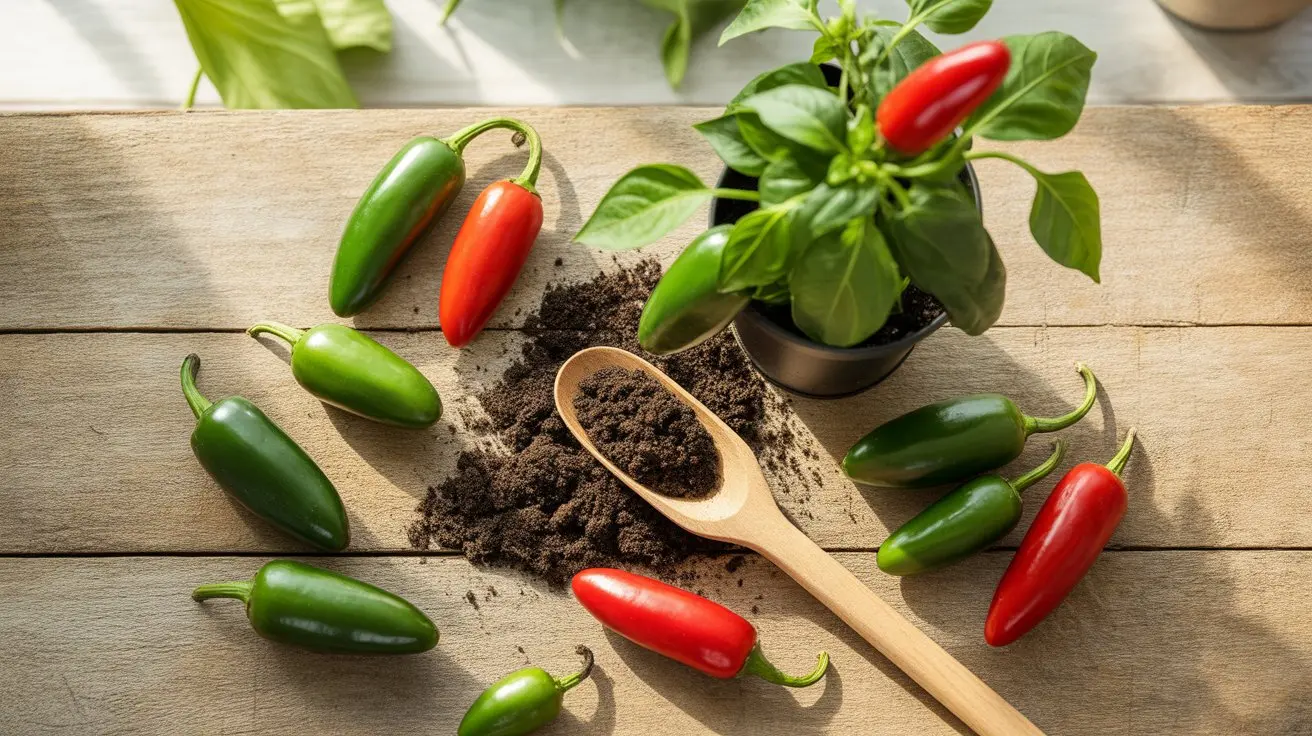
How to Cut Jalapenos
Learn the right way to cut jalapeños without painful burns. Includes glove tips, seed removal technique, and what to do if you get jalapeño hands.

What You Need Before You Start
Cutting jalapeños is one of those kitchen tasks that looks simple until you're rubbing your eye an hour later and wondering what went wrong. The right setup prevents that entirely.
You need a sharp chef's knife or paring knife, a stable cutting board, and — if you're handling more than two or three peppers — nitrile gloves. Latex works too, but nitrile is thicker and gives better grip on slippery pepper skin.
A damp paper towel nearby is useful for wiping the blade between cuts. Keep it accessible, not across the kitchen.
Jalapeños sit firmly in the medium heat bracket — typically 2,500 to 8,000 SHU — which means the capsaicin concentration is high enough to cause real discomfort on sensitive skin and eyes, but not so extreme that casual contact becomes an emergency.
Why Jalapeño Juice Burns Your Skin
The burn comes from capsaicin, the compound concentrated primarily in the white pith (placenta) and seeds of the pepper. When you cut through that tissue, capsaicin transfers to your knife, your fingers, your cutting board — everything it touches.
Capsaicin binds to TRPV1 receptors in your skin and mucous membranes, triggering the same nerve response as actual heat. Your body genuinely cannot tell the difference. For a deeper look at how this burn chemistry works, the mechanism is more interesting than most people expect.
Water doesn't help much because capsaicin is oil-soluble, not water-soluble. Washing your hands with plain water spreads it around. Dish soap, milk fat, or rubbing alcohol are more effective at breaking it down.
The Basic Jalapeño Cutting Technique
Start by rinsing the pepper under cold water and drying it. Wet peppers are slippery and harder to control.
- Remove the stem: Hold the pepper firmly and slice off the top about a quarter inch below where the stem meets the flesh. Discard the cap.
- Halve lengthwise: Stand the pepper upright on the cut end and slice straight down through the center, giving you two equal halves.
- Scrape the seeds and pith: Use a spoon or the tip of your knife to scrape out the white membrane and seeds. This is where most of the heat lives — removing it gives you milder pepper with the same flavor.
- Flatten and slice: Lay each half flat, skin-side down. Slice lengthwise into strips, then rotate and cut crosswise for a dice. For rings, skip the halving step and slice the whole pepper crosswise directly.
Keep your fingers curled in the "claw" grip — fingertips tucked, knuckles guiding the blade. It's the same technique for any vegetable and dramatically reduces the chance of a cut.
How to Cut Jalapeños Into Rings
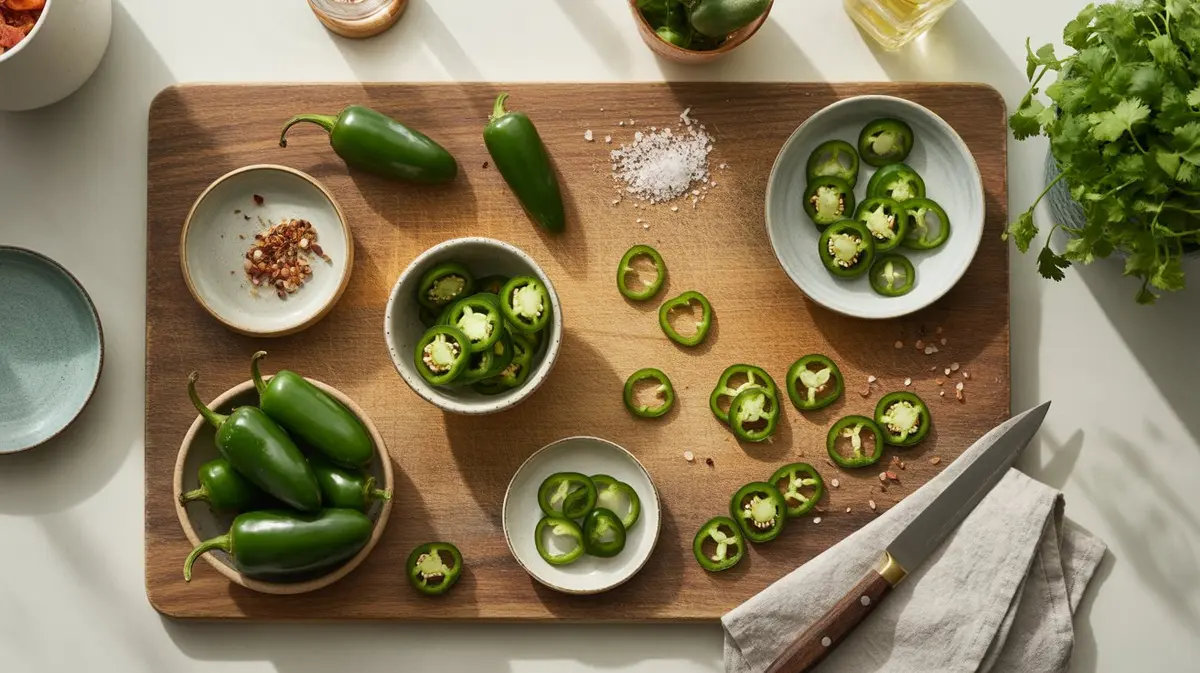
Rings are the go-to for nachos, pizzas, sandwiches, and pickled preparations. The technique is different from dicing because you're working with the whole pepper.
After removing the stem end, hold the pepper horizontally on the board. Slice crosswise at 1/8 to 1/4 inch intervals depending on how you're using them — thinner for pickles, thicker for grilling or roasting.
The seeds will fall out naturally as you cut through the seed cavity. If you want seedless rings, halve the pepper first, scrape it clean, then press the halves back together and slice crosswise. They won't be perfect circles, but they'll be close enough for most applications.
For uniform rings, a mandoline slicer set to 3mm works well, but only if you're using the hand guard. Jalapeño skin is tough enough that the blade can catch unpredictably without it.
Removing Seeds Without Making a Mess
The seed cavity is where most people make things harder than necessary. Trying to scrape seeds out over a cutting board scatters them everywhere — capsaicin on every surface they touch.
A cleaner method: after halving the pepper, hold each half over a small bowl and scrape downward with a teaspoon. Seeds and pith fall into the bowl, not across your workspace. Dispose of the bowl contents directly into the trash — don't rinse them down the sink if you can avoid it, since capsaicin residue can linger in drains.
If you want to keep the seeds for heat — some recipes call for them specifically — set them aside in a separate small dish. Dried jalapeño seeds can also be saved for seed-starting next season, though viability drops if the pepper was store-bought and refrigerated for long.
The amount of heat you retain is directly proportional to how much pith you leave. Leaving a thin layer of white membrane gives noticeably more heat than a completely clean scrape.
Gloves: When They're Worth It
For one or two jalapeños, bare hands are usually fine as long as you wash thoroughly afterward with dish soap. For anything more — batch cooking, pickling a jar or two, making hot sauce — gloves are worth the ten seconds it takes to put them on.
Nitrile gloves (size medium fits most hands) are the standard choice. They're inexpensive, disposable, and don't degrade with capsaicin exposure the way some latex gloves do over time.
The mistake most people make is touching their face before removing the gloves. Take them off by pinching the outside of one glove near the wrist, peeling it inside-out, then using the bare hand to peel the second glove from the inside. That way the contaminated surfaces stay contained inside the turned-out gloves.
Worth noting: if you're moving on to hotter peppers after jalapeños — say, something in the extra-hot range like a habanero's intense fruity burn — always use fresh gloves. Capsaicin accumulates on glove surfaces even when you can't feel it.
What to Do If You Get Jalapeño Hands
It happens to everyone eventually. The burn usually kicks in 15 to 30 minutes after contact, which is long enough that you've forgotten you even touched a pepper.
The most effective immediate treatment is rubbing alcohol or hand sanitizer — it dissolves capsaicin more effectively than water. Apply it, let it sit for 30 seconds, then wash with dish soap and warm water. Repeat once or twice.
Dairy fat also works. Rubbing your hands with a small amount of whole milk, yogurt, or sour cream before washing breaks down the oil-soluble capsaicin. It sounds strange but it's grounded in the same chemistry that makes milk more effective than water for mouth burns.
For eye contact — which is the genuinely unpleasant scenario — flush with clean water for several minutes. Don't rub. The burn will subside on its own within 20 to 30 minutes in most cases. If you wear contact lenses, remove them immediately before flushing.
Vegetable oil applied to the skin before washing can also help by giving the capsaicin something to bind to before the soap carries it away. This is a useful trick for milder exposures.
Cutting Jalapeños for Specific Uses
How you cut the pepper should match what you're making. A few practical breakdowns:
- Salsas and pico de gallo: Fine dice, about 1/8 inch. Seed completely for mild heat, leave some pith for medium. The smaller the cut, the more evenly heat distributes through the finished dish.
- Stuffed jalapeños (poppers): Halve lengthwise, scrape clean, leave the stem on for presentation. The hollow boat shape is the whole point — don't over-trim.
- Pickling: Rings at 1/4 inch. Consistent thickness matters for even brine penetration. Seeds in or out depending on your heat preference.
- Grilling or roasting whole: No cutting needed until after cooking. Roasted jalapeños peel more easily and the flesh sweetens considerably.
- Hot sauce blending: Rough chop is fine — everything goes into the blender anyway. Just make sure pieces are small enough to process evenly.
For dishes where you want jalapeño flavor without much heat, removing all the pith and seeds and soaking the cut pieces in cold water for 20 minutes pulls out additional capsaicin. It's not a complete fix, but it noticeably mellows the result.
Comparing Jalapeño Heat to Other Peppers
Knowing where jalapeños fall on the heat spectrum helps you decide when to substitute and when to reach for something different. The Scoville heat index puts jalapeños at 2,500 to 8,000 SHU — moderate by any standard.
If a recipe calls for something milder, Hungarian hot wax peppers with their tangy mild heat are a natural swap — they're in the same size range and work well in similar applications. At the other end, Scotch bonnet's Caribbean-style fruity intensity hits roughly 100,000 to 350,000 SHU — a significant jump that changes the dish entirely.
For something unusual in the middle range, the datil's sweet-hot Florida character sits around 100,000 to 300,000 SHU and brings a distinctly different flavor profile than jalapeño despite similar culinary applications. And if you're curious about the extreme end of the spectrum, Dragon's Breath's near-record capsaicin levels are genuinely in a different category — handled very differently in the kitchen.
The Peter pepper's moderate heat and distinctive shape is another Capsicum annuum variety that handles similarly to jalapeño in the kitchen, worth knowing if you grow it or find it at a farmers market.
Knife Maintenance and Food Safety Notes
A dull knife is more dangerous than a sharp one — it requires more pressure, which means less control. Jalapeño skin is tough enough that a dull blade will slip rather than cut cleanly.
After cutting hot peppers, wash your knife with hot soapy water before using it on anything else — especially foods that won't be cooked, like salad ingredients. Capsaicin transfers from blade to food easily.
The same applies to your cutting board. Plastic boards can be run through the dishwasher; wood boards should be scrubbed with dish soap and hot water, then allowed to dry completely. Capsaicin can linger on porous surfaces longer than you'd expect.
If you're processing jalapeños alongside other Mexican-origin peppers — serranos, poblanos, chipotles — keep your workspace organized so you don't accidentally cross-contaminate a milder pepper with the pith residue from a hotter one.
Frequently Asked Questions
-
For one or two peppers, gloves are optional if you wash your hands thoroughly with dish soap afterward. For larger quantities — pickling, batch cooking, hot sauce — nitrile gloves are strongly recommended to prevent skin irritation.
-
Rubbing alcohol or hand sanitizer is the most effective first step because capsaicin is oil-soluble and dissolves better in alcohol than water. Follow with dish soap and warm water, repeating once or twice until the burn subsides.
-
Yes, but the bigger factor is removing the white pith (placenta), which contains the highest capsaicin concentration. Seeds carry some heat but far less than the membrane — a clean scrape of both reduces heat significantly.
-
Yes. Store cut jalapeños in an airtight container in the refrigerator for up to five days. The cut surfaces will dry slightly but the flavor holds well, making advance prep practical for meal planning.
-
A sharp chef's knife handles most jalapeño cuts efficiently. A paring knife works better for detail work like scraping seeds or trimming stuffed pepper halves. Sharpness matters more than knife type — a dull blade slips on tough pepper skin.