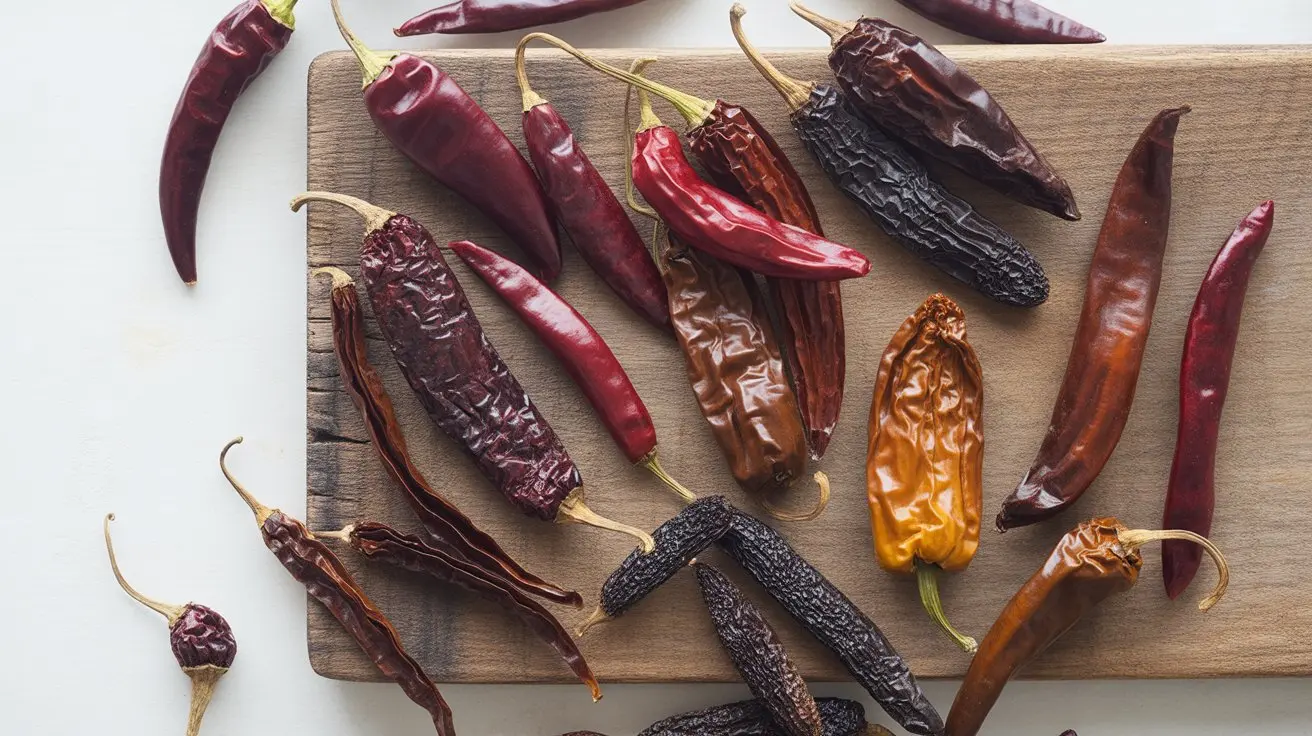
Dried Mexican Chiles Guide
Identify all the dried Mexican chiles: ancho, guajillo, pasilla, mulato, cascabel, and more. Find your perfect heat level.

Why Dried Chiles Are the Backbone of Mexican Cooking
Long before refrigeration, Mexican cooks discovered that drying chiles transformed them into something more interesting than their fresh counterparts. The drying process concentrates sugars, deepens color, and creates entirely new flavor compounds.
The result is a pantry ingredient that forms the foundation of mole, enchilada sauce, pozole, and dozens of other dishes central to Mexican pepper traditions. Understanding these chiles is less about memorizing heat levels and more about recognizing distinct personalities.
The Essential Rule: Fresh Name vs. Dried Name
Many dried Mexican chiles have a completely different name from their fresh form. A fresh poblano becomes an ancho when dried. A fresh mirasol becomes a guajillo. Ignoring this naming convention causes real confusion at the market.
The transformation isn't just cosmetic. Drying a poblano shrinks it, wrinkles the skin, and shifts the flavor profile from grassy and vegetal to raisin-like and chocolatey. Same plant, different ingredient.
Ancho: The Most Used Chile in Mexican Kitchens
The ancho is the dried form of the poblano, and it is arguably the most important dried chile in the Mexican pantry. At 1,000-2,000 SHU, it sits comfortably in the mild heat classification — accessible to almost everyone.
Flavor-wise, anchos lean toward dried fruit, mild chocolate, and a hint of tobacco. The skin is dark reddish-brown, almost black, and should feel pliable rather than brittle when fresh. Stiff, crumbly anchos have been sitting on the shelf too long.
Anchos are the base of most mole negro recipes and show up constantly in enchilada sauces. Their large size — typically 4-5 inches long — makes them easy to clean and rehydrate.
Guajillo: Bright, Tangy, Indispensable
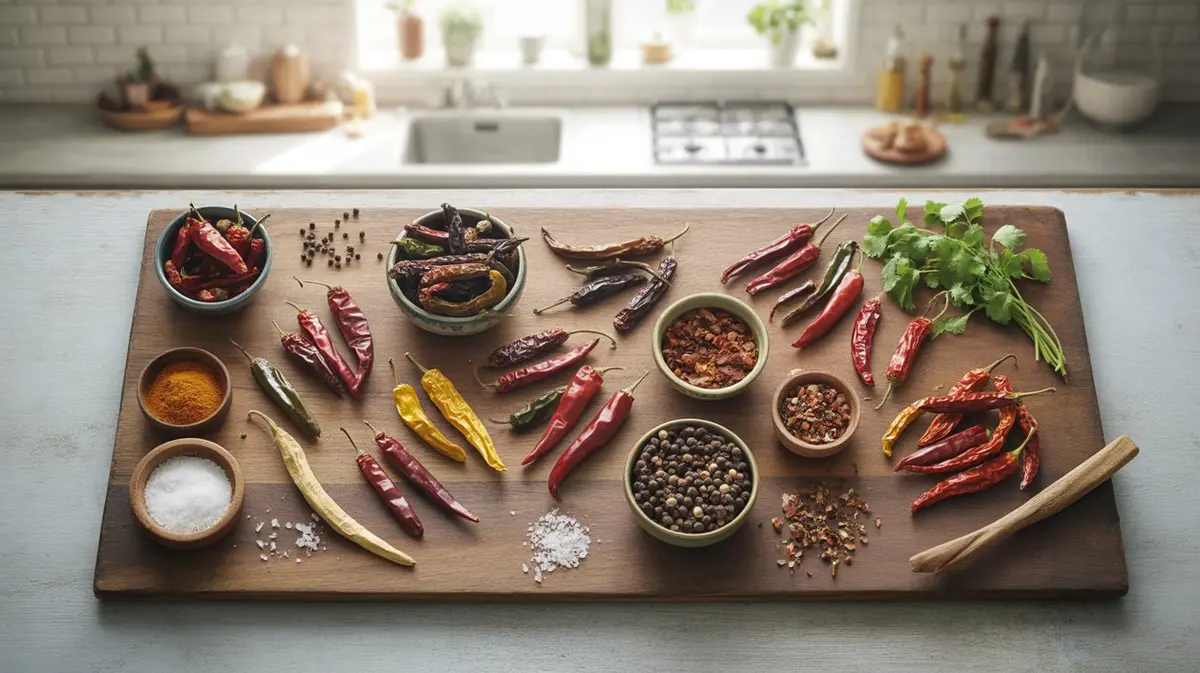
Guajillos are the most widely used dried chile in Mexico by volume, and they bring something anchos don't: a sharp, cranberry-like acidity with mild tannins. At 2,500-5,000 SHU, they land squarely in moderate territory.
The skin is smooth, glossy, and deep red — almost burgundy. When you hold a guajillo up to light, it glows. That visual quality translates to sauces: guajillos produce a vivid red color that makes dishes look as good as they taste.
Birria, carne adovada, and tamale sauces frequently rely on guajillos. They pair especially well with oregano and cumin, which amplify their earthy undertones. Unlike anchos, guajillos have a tougher skin that benefits from longer soaking — at least 20-30 minutes in hot water.
Pasilla: The Underrated Dark Horse
The pasilla — dried chilaca — gets far less attention than ancho or guajillo, which is a mistake. Its flavor is more complex: dried berry, licorice, and a pleasant bitterness that lingers. Heat runs 1,000-2,500 SHU, similar to ancho.
Pasillas are long and narrow, typically 6-8 inches, with very dark, nearly black skin. The name means "little raisin" in Spanish, referencing both the color and the wrinkled texture.
In Oaxacan cooking, pasillas are essential. They appear in mole negro alongside mulatos and anchos, where their bitterness balances sweetness from chocolate and dried fruit. Pasilla de Oaxaca — a smoked regional variety — adds a campfire quality that's genuinely different from standard pasillas.
Mulato: The Chocolate Chile
Mulatos look almost identical to anchos — both are dried poblano variants — but they come from a different poblano phenotype and taste noticeably different. Where anchos lean fruity, mulatos lean toward chocolate, licorice, and coffee.
At 2,500-3,000 SHU, mulatos are slightly hotter than anchos. The color is darker, closer to true black than the reddish-brown of anchos. Hold them side by side and you'll see the difference.
Mulatos are a core component of mole negro and mole mulato. Their deep, slightly bitter flavor adds backbone to sauces that need complexity without additional heat. If you can only find one of the three "mole chiles" (ancho, mulato, pasilla), ancho is the most versatile substitute.
Cascabel: Small, Round, and Rattling
The cascabel's name means "jingle bell" or "rattlesnake rattle" — shake a dried one and the loose seeds inside make noise. This small, round chile (1-1.5 inches diameter) punches above its size in flavor.
Heat runs 1,500-2,500 SHU, but flavor is the real story: nutty, slightly smoky, with a woodsy quality that's distinct from other dried chiles. Cascabels are rarely the primary chile in a sauce but add depth when combined with guajillos or anchos.
Their round shape and tough skin require scoring before soaking to ensure even rehydration. Toast them dry in a skillet first — 30-45 seconds per side — to unlock the nutty aromatics before adding liquid.
Chipotle: Smoke as an Ingredient
Chipotles are dried, smoked jalapeños, and the smoking process is what defines them. At 2,500-8,000 SHU, they cover a wide heat range depending on the individual pepper. Two main varieties exist: chipotle meco (tan, with more smoke) and chipotle morita (smaller, darker, fruitier).
The smoke isn't subtle. Chipotles in adobo sauce — the canned version most home cooks know — add heat and a campfire depth that transforms beans, braised meats, and salsas. A single chipotle in adobo can season an entire pot of soup.
For comparison, the habanero's citrusy, floral heat profile runs 100,000-350,000 SHU — putting chipotle's maximum heat at roughly 1/12th of a habanero's peak. Chipotle is approachable; habanero is not.
Ancho Negro, Chile Negro, and Naming Confusion
Regional naming inconsistencies make dried chile shopping genuinely confusing. In some parts of Mexico, "chile negro" refers to the pasilla. In others, it means something different entirely. California markets sometimes label pasillas as "poblanos," which they are not.
The safest approach: learn to identify chiles by appearance, smell, and texture rather than relying on labels alone. Anchos are wide at the shoulder and taper to a point. Pasillas are long and narrow. Guajillos are smooth-skinned with a slight sheen. Cascabels are round.
Chile de Arbol and Pequin: When You Want Real Heat
Not every dried Mexican chile is mild. Chile de arbol — slender, red, 2-3 inches long — lands at 15,000-30,000 SHU, putting it in the hot heat classification. It's the chile that goes into the oil for drizzling over tacos and soups.
Pequin chiles are even smaller — barely half an inch — but reach 40,000-60,000 SHU. They're used sparingly, typically crushed over finished dishes. Both chiles de arbol and pequins are members of Capsicum annuum, the same species as bell peppers and jalapeños, which shows how wide that species ranges.
For cooks who want heat without smoke or fruity sweetness, chile de arbol delivers a clean, sharp burn. It's the dried chile most similar in character to the Fish pepper's sharp, direct heat expression — straightforward rather than layered.
How to Toast, Rehydrate, and Use Dried Chiles
Toasting is the first step for most dried chile preparations. A dry skillet over medium heat, 30-60 seconds per side, until the chile softens slightly and becomes fragrant. Don't let them blacken — that turns bitter.
After toasting, remove stems and seeds (unless you want maximum heat), then cover with just-boiled water. Weigh them down with a plate to keep them submerged. Most chiles need 15-25 minutes; guajillos with their tougher skins need closer to 30.
The soaking liquid is valuable. It's deeply flavored and can replace stock in sauces — just taste it first, as it can be bitter if chiles were over-toasted. Blend soaked chiles with aromatics (garlic, onion, tomato), strain through a medium sieve, and fry the puree in hot oil until it darkens and thickens. This technique — frying the paste — is the foundation of most Mexican red sauces.
Building Complexity: Blending Multiple Chiles
The real power of dried Mexican chiles comes from combining them. A classic enchilada sauce might use 3 anchos for body and sweetness, 2 guajillos for color and acidity, and 1 chipotle for smoke. Each chile contributes something the others don't.
Mole negro takes this further — some recipes call for 5-7 different dried chiles, each adding a distinct note. The complexity isn't redundancy; it's layering. Anchos provide the base, mulatos add chocolate depth, pasillas contribute bitterness, and chipotles add smoke.
Start with two-chile blends before attempting complex moles. Ancho plus guajillo is the most forgiving combination and produces a balanced, versatile sauce that works for enchiladas, tamales, and braised meats alike.
Buying and Storing Dried Chiles
Quality dried chiles should be pliable, not brittle. Bend one — it should flex without snapping. If it crumbles, it's too old and the volatile flavor compounds have degraded.
Latin grocery stores and specialty markets consistently stock better dried chiles than mainstream supermarkets. Bulk bins at Mexican markets often have fresher stock than pre-packaged bags, and you can inspect them before buying.
Store dried chiles in an airtight container away from light and heat. A cool pantry works; the refrigerator works better. Properly stored chiles last 1-2 years, though flavor is best within the first year. Freezing extends shelf life without significantly affecting quality.
Heat Context: Where These Chiles Sit on the Spectrum
Most traditional Mexican dried chiles are mild to moderate by global standards. Ancho, pasilla, mulato, and cascabel all fall below 5,000 SHU — gentler than a chipotle at its hottest.
For perspective, modern superhot peppers occupy a completely different universe. The Pepper X's record-breaking capsaicin concentration reaches over 2.6 million SHU — more than 500 times hotter than an ancho. Even the Hot Paper Lantern's intensely fruity habanero-type heat runs around 350,000 SHU, dwarfing anything in the traditional Mexican dried chile pantry.
The newer Apollo pepper's extreme superhot heat profile and the Sugar Rush Peach's sweet-fruity heat expression represent a completely different branch of pepper breeding — optimized for maximum capsaicin rather than culinary complexity. Traditional Mexican dried chiles were selected for flavor first, heat second.
Understanding where these chiles fall on the Scoville ranking system helps set expectations when cooking for guests with different heat tolerances. Ancho-based sauces are universally approachable; chile de arbol sauces need a warning label for sensitive palates.
A Practical Starting Point
If you're stocking a pantry for the first time, start with three: ancho, guajillo, and chipotle. Those three cover mild-and-sweet, bright-and-acidic, and smoky-and-moderate. With those in hand, you can make enchilada sauce, adobo marinades, pozole rojo, and a dozen other dishes.
From there, add pasilla for mole projects and chile de arbol for heat. The rest — mulato, cascabel, pequin — come in as you get comfortable with the core five. Dried chiles reward patience and repetition more than any other pantry ingredient.
Frequently Asked Questions
-
Anchos are dried poblanos with a wide shoulder, reddish-brown skin, and fruity-chocolate flavor. Pasillas are dried chilacas - longer, narrower, nearly black, with a more bitter and berry-like profile. Both are mild, but they taste noticeably different in sauces.
-
Toasting is strongly recommended but not mandatory. A quick 30-60 second dry toast in a skillet activates volatile aromatics and deepens flavor significantly. Skip it and your sauce will taste flatter and less complex.
-
Yes, ancho is the closest practical substitute for mulato. The flavor won't be identical - mulatos have more chocolate and coffee notes - but ancho provides similar body and mild heat. Use the same quantity the recipe specifies.
-
The naming convention reflects how dramatically drying changes the chile's character - flavor, color, and texture all shift enough that Mexican culinary tradition treats them as distinct ingredients. A fresh poblano and a dried ancho behave very differently in cooking.