Calcium Deficiency in Pepper Plants: Signs, Causes, and Fixes
Calcium deficiency in pepper plants causes blossom end rot and weak fruit walls. The fix is almost always about water management and soil balance, not just adding more calcium.
Calcium deficiency in pepper plants causes blossom end rot, weak fruit walls, and stunted growth. The fix is almost always water management and soil balance first, not more calcium in the dirt.
Extension guidance frames the problem as a delivery failure.
Uneven moisture, root stress and rapid fruit growth can keep calcium from reaching the fruit even when the soil contains plenty. Start with watering and root-zone conditions before adding calcium products.
Why Pepper Plants Need Calcium
Calcium builds the cell walls that give pepper fruit its structure. Without enough of it, the tissues forming the fruit walls collapse and leak fluid before eventually dying.
That process is what produces the sunken, discolored patches you see on affected peppers.
Pepper plants use calcium during two critical windows.
Root development comes first, then fruit cell formation after flowering. The fruiting stage is when most growers notice problems, because that is when calcium demand spikes and any imbalance in the plant's nutrient uptake becomes visible on the pods.
The connection between calcium and fruit quality goes beyond structure. Healthy calcium levels support thicker walls, better disease resistance, and more consistent flavor.
Thin-walled peppers from calcium-deficient plants tend to rot faster after harvest and handle shipping poorly.
How to Spot Calcium Deficiency
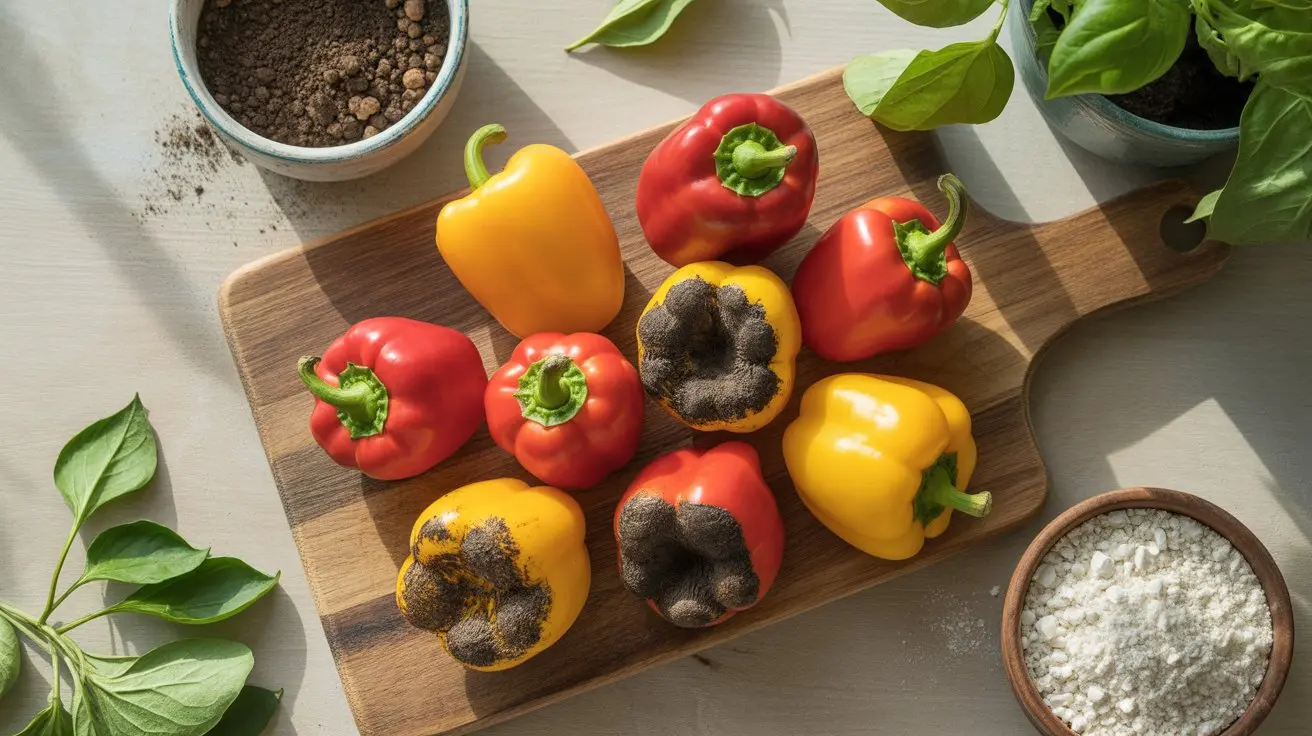
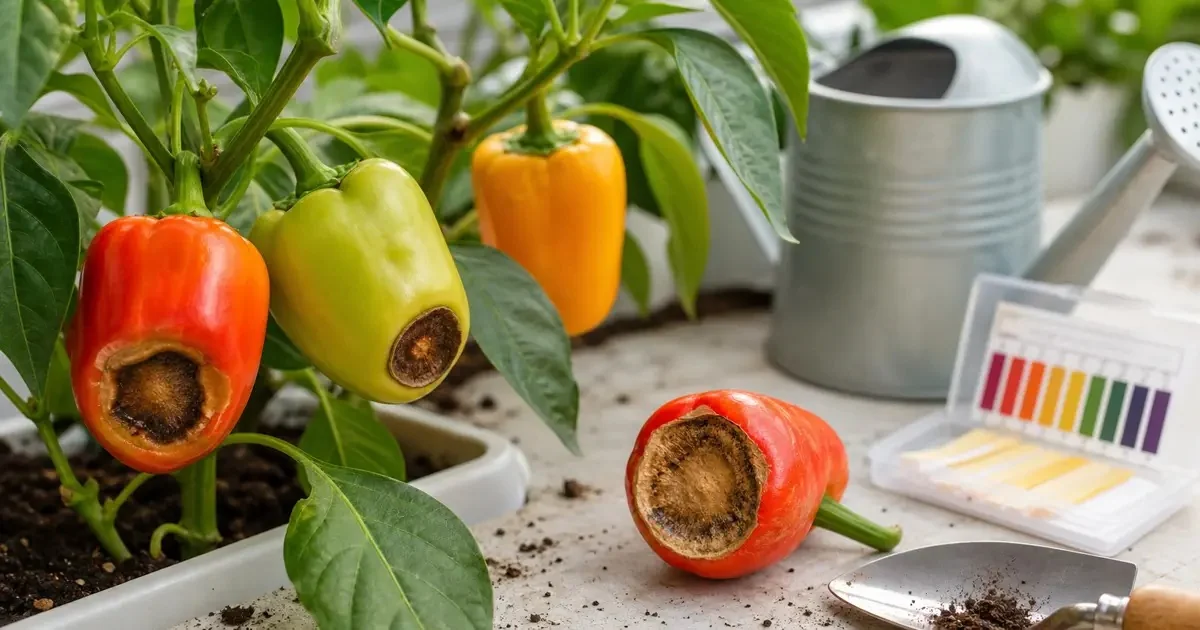
The most recognizable sign is blossom end rot. It shows up as a pale green or yellowish sunken patch on the bottom of the fruit, opposite the stem.
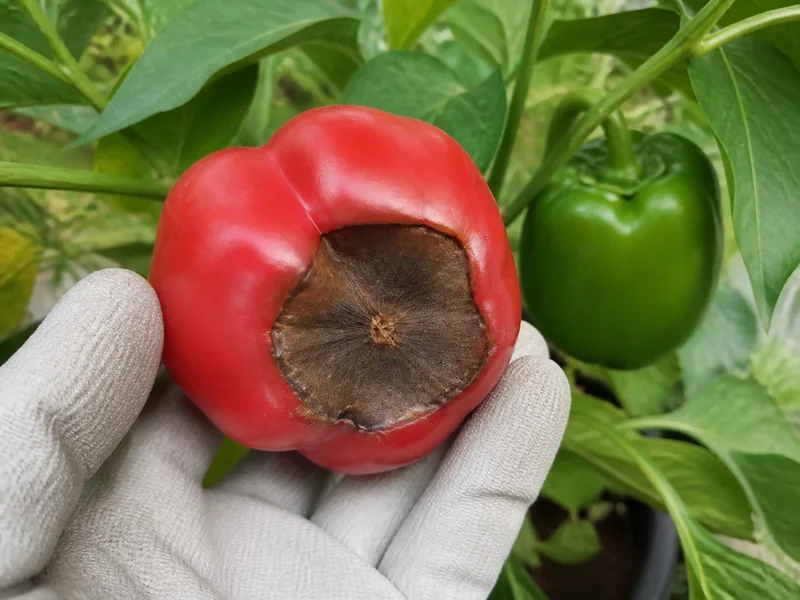
That patch darkens over time, turning brown or black as dead tissue accumulates.
Key symptoms to watch for:
- Blossom end rot: Pale green or yellow sunken patch on the fruit bottom, darkening over time
- Leaf distortion: Young leaves curl or develop irregular margins on new growth
- Fruit cracking: Splitting, especially in varieties with thin walls
- Stunted shoots: New growth fails to expand properly
- Soft rot: Blackened blossom ends attract bacteria and fungus
Early-season fruit is most vulnerable because the ratio of leaf surface to fruit surface is at its highest. There is more foliage competing for the same calcium supply, so the first peppers to set often show symptoms even when later fruit develops normally.
Blossom end rot is not the only condition that causes sunken spots on pepper fruit. Fruit anthracnose and sunscald produce similar-looking damage, but they appear on the side walls of the fruit rather than blossom-end-rot.
If the blemish is on the stem side or the lower sidewall of immature fruit, it is not calcium deficiency.
What Causes Calcium Deficiency in Peppers?
Most gardening articles skip the main point. Low soil calcium is only one of several possible causes, and it is not the most common one.
| Cause | Mechanism | How to Fix |
|---|---|---|
| Nitrogen competition | Excess nitrogen makes leaves grow fast and outcompete fruit for calcium | Reduce nitrogen once flowering begins |
| Inconsistent watering | Calcium moves via water transport. Dry-wet cycling disrupts delivery | pepper watering and consistently |
| Root damage | Transplant shock, cultivation damage, or pathogens limit uptake | Handle roots carefully, avoid cultivation near stem |
| Soil compaction | Restricted roots can't access water and dissolved nutrients | Use loose, well-draining soil |
| pH imbalance | Below 6.0 or above 7.0, calcium becomes unavailable | Test soil and amend to 6.0-6.8 range |
Nitrogen competition is the leading trigger in home gardens. When a pepper plant receives too much nitrogen, its leaves grow rapidly and outcompete the developing fruit for calcium ions.
The leaves win because they have a stronger vascular pull. The fruit starves.
Inconsistent watering is the second major cause. Calcium moves through the plant via the same water transport system that carries moisture from roots to leaves and fruit.
If the soil dries out and then gets watered heavily, the surge and drop in water flow disrupts calcium delivery to the fruit. This is why blossom end rot often appears after a dry spell followed by heavy rain.
Why Adding Calcium Can Make Things Worse
Calcium does not travel alone. Potassium and magnesium compete with it for the same uptake pathway, so a plant sitting in calcium-rich soil can still run short if the balance is wrong.
That is the trap behind a high-potassium bloom feed. It is doing exactly what the label promises and starving the fruit at the same time.
The reverse also happens: piling on calcium can block magnesium uptake and hand you a second deficiency to diagnose.
This is why a soil test comes before an amendment, rather than after it stops working.
If symptoms appeared right after a fertilizer change, look at the ratio before you look at the calcium.
How Superhots and Bell Peppers Respond Differently
Not all peppers react to calcium stress the same way. Capsicum annuum varieties tend to show blossom end rot earlier in the season, partly because they set fruit quickly and have thinner walls relative to their size.
That covers the bell pepper and the jalapeño, the two most growers start with.
Capsicum chinense varieties, including the habanero, the ghost pepper and the Carolina Reaper, have a longer fruit development cycle. They can absorb more calcium before the waxy coating on the fruit surface thickens and slows water movement into the pod.
Once that coating forms, calcium delivery to the fruit depends almost entirely on the plant's existing root-to-fruit vascular pathway.
Superhot growers often notice calcium issues later in the season, not because the plants are less susceptible, but because the symptoms take longer to appear. By the time a ghost pepper shows blossom end rot, the underlying imbalance may have been building for weeks.
How Do You Fix Blossom End Rot on Peppers?
If you see blossom end rot on your plants today, use this correction sequence.
Step-by-step fix:
- Correct the watering. Water deeply and consistently. Aim for soil that stays evenly moist, not soggy. The soil ball test works well. Grab a handful of soil from near the roots. If it forms a ball without breaking apart, moisture is adequate. If it crumbles, the plant needs more water.
- Apply calcium nitrate. Use 2 to 4 tablespoons per gallon of water, applied directly to the soil around the base of the plant. Calcium nitrate is water-soluble, which means the roots can access it immediately. Apply it through pepper deep-watering if you have it, or water it in by hand.
- Reduce nitrogen temporarily. Stop any high-nitrogen fertilizer for two weeks. If you have been using a balanced fertilizer like 10-10-10, switch to a lower-nitrogen option like 5-10-10 until the plant recovers.
- Mulch. Add a 2- to 3-inch layer of organic mulch around the base of each plant. Mulch stabilizes soil moisture, keeps root-zone temperature in the ideal range for calcium absorption, and reduces the wet-dry cycling that triggers blossom end rot.
New fruit should develop without symptoms within 7 to 14 days if the underlying cause was watering inconsistency. Fruit that already shows damage will not recover.
Remove affected peppers so the plant redirects energy to healthy pods.
How to Prevent Calcium Deficiency Next Season
Prevention is cheaper and easier than treatment. These steps address the root causes rather than the symptoms.
| Prevention Step | When | Why It Works |
|---|---|---|
| Test soil pH and calcium | Before planting | Identifies deficiency or pH lockout before symptoms appear |
| Amend with gypsum or bone meal | Before planting | Adds calcium without excess nitrogen |
| Switch to pepper fertilizing at flowering | When first flowers appear | Reduces leaf competition for calcium |
| Install drip irrigation | At planting | Delivers consistent moisture, eliminates dry-wet cycling |
| Mulch beds | After transplanting | Stabilizes soil moisture and temperature |
Soil test: a basic soil test from your local cooperative extension or a home kit will tell you whether your soil is calcium-deficient, pH-imbalanced, or both. Check calcium levels and pH together, because high pH can make abundant calcium unavailable.
Gypsum or bone meal: both supply calcium without adding excess nitrogen. Gypsum (calcium sulfate) works quickly and does not alter soil pH.
Bone meal releases calcium slowly and adds phosphorus, which supports root development. Apply 1 to 2 pounds of gypsum per 100 square feet before planting, worked into the top 6 inches of soil.
Nitrogen management: use a balanced fertilizer during vegetative growth, then shift to a lower-nitrogen, higher-phosphorus formula once flowering begins.
The goal is to slow leaf growth so the fruit can compete for calcium more effectively.
Consistent watering: install drip irrigation or soaker hoses if possible. Watering deeply 2 to 3 times per week in most climates keeps soil moisture stable.
Avoid light daily sprinkles that wet the surface but do not reach the root zone.
Avoiding compaction: do not walk or kneel in raised beds. Use wide paths between rows.
In containers, choose a well-draining potting mix and make sure drainage holes are not blocked.
- A basic soil test kit: $10 to $20, covering pH, nitrogen, phosphorus and potassium.
- An extension service test: adds calcium, magnesium and micronutrients, which is what you want when the balance is the suspect.
- Gypsum: roughly 1 to 2 pounds per 100 square feet for a mild deficiency, and it adds calcium and sulfur without raising pH the way lime does.
Foliar Sprays and Other Myths
Foliar calcium sprays get recommended frequently in gardening forums, but they do not fix calcium deficiency. Calcium is immobile in the plant's phloem, which means it cannot move from the leaves where you spray it to the fruit where it is needed.
There is no internal pathway for that transport. Save your money.
Crushed eggshells are another popular suggestion. They do contain calcium, but they decompose so slowly that they will not help a plant in distress.
Eggshells can contribute to long-term soil calcium levels if you add them to your compost pile 6 to 12 months before you need the calcium, but they are not a treatment for an active deficiency.
The most persistent myth is that blossom end rot always means low soil calcium. As covered above, it usually means the plant cannot transport the calcium it already has, because of watering problems, nitrogen excess, or root damage.
Adding calcium to soil that already has enough will not fix a transport problem.
Calcium Deficiency in Pepper Plants: Signs, Causes, and Fixes FAQ
- NC State Extension: Blossom-End Rot of Tomato, Pepper, and Watermelon
- NC State Extension: Vegetable Gardening FAQ on Blossom-End Rot
- UF/IFAS Extension: Plant Tissue Analysis and Interpretation for Vegetable Crops
- UNH Extension: Managing Blossom-End Rot
- South Dakota State University Extension: Blossom End Rot on Tomatoes and Other Vegetables