
Paprika Pepper vs Smoked Paprika (Pimentón): Compared
Paprika pepper and smoked paprika (pimentón) are deeply related — one is the fresh or dried source material, the other a smoke-transformed spice with a character all its own. Both register 0 SHU, making heat a non-issue, but their flavor profiles and kitchen applications are strikingly different. Understanding when to reach for each one changes how a dish tastes at a fundamental level.

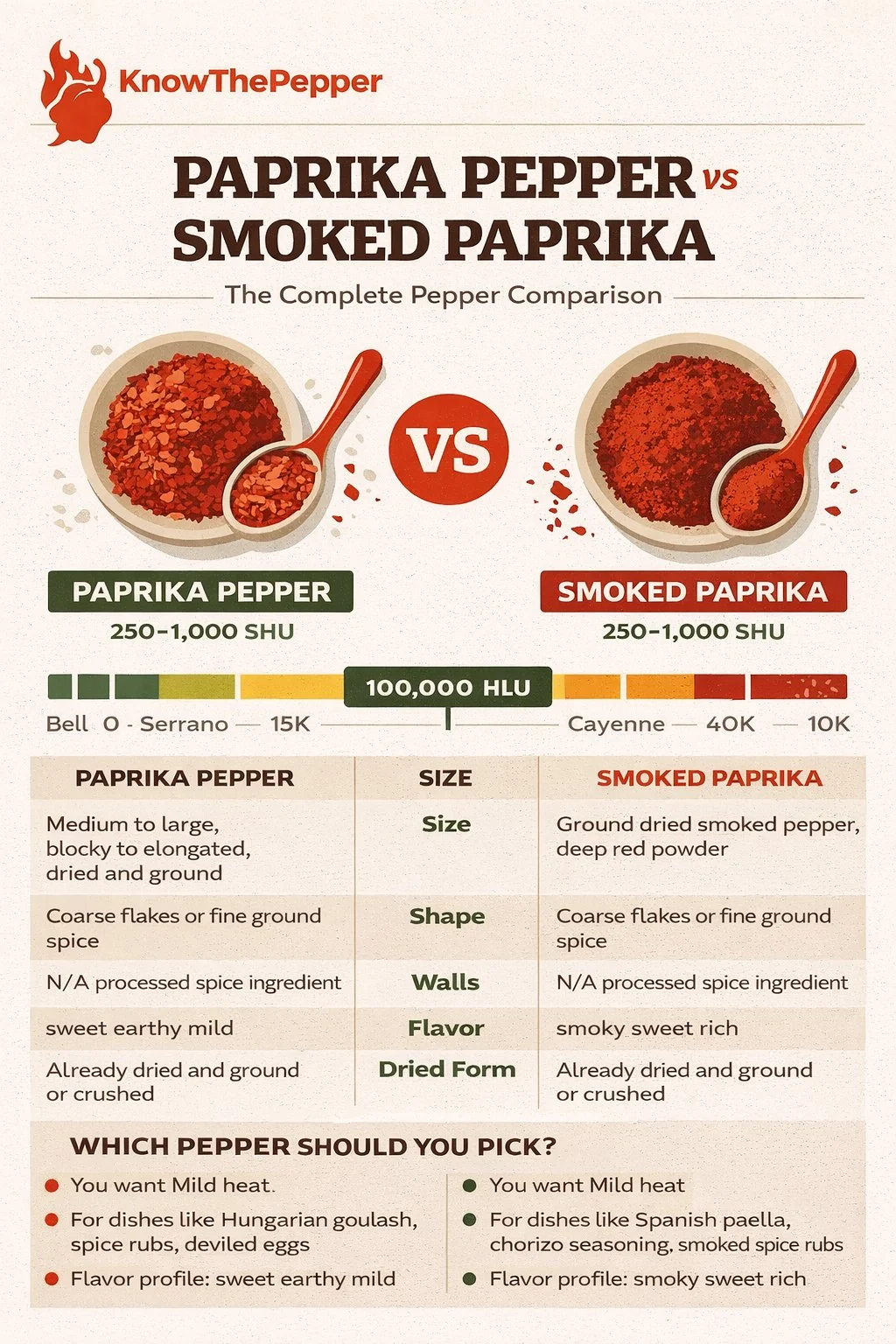
Paprika Pepper measures 0–1K SHU while Smoked Paprika (Pimentón) registers 250–1K SHU — roughly equal in heat. Paprika Pepper is known for its sweet and mild flavor (C. annuum), while Smoked Paprika (Pimentón) offers smoky and sweet notes (C. annuum).
- Species: Both are C. annuum
- Best for: Paprika Pepper excels in everyday cooking and salsas, Smoked Paprika (Pimentón) in fresh salsas and mild recipes
Paprika Pepper
MediumSmoked Paprika (Pimentón)
MediumPaprika Pepper vs Smoked Paprika (Pimentón) Comparison
Paprika Pepper vs Smoked Paprika (Pimentón) Heat Levels
Both paprika pepper and smoked paprika (pimentón) sit at 0 SHU on the Scoville scale's zero-heat rating position. There is no capsaicin to measure, no burn to compare, and no jalapeño or Fresno multiplier that applies — these are purely culinary spices valued entirely for color and flavor rather than heat.
This zero-heat status places them in the sweet and mild intensity range alongside bell peppers and other ornamental varieties bred specifically to eliminate pungency. That breeding decision — selecting for sweetness over heat — is what made paprika peppers so central to Hungarian and Spanish cooking traditions, where the spice is used in large quantities without overwhelming a dish.
Pimentón, the smoked Spanish variant, shares this same zero-heat baseline but comes in three labeled grades: dulce (sweet), agridulce (bittersweet), and picante (hot). Even the picante grade is mild by any real pepper standard — the 'heat' is more aromatic complexity than capsaicin burn. The smoke process doesn't add heat; it adds a layered, low-burning warmth that reads as intensity without any TRPV1 receptor involvement.
For cooks accustomed to building heat into dishes, this comparison is a reminder that flavor depth and heat are separate dimensions. Smoked paprika delivers what feels like boldness without any measurable SHU behind it.
Flavor Profile Comparison
Paprika peppers sit at the mildest end of the pepper spectrum, delivering sweetness with almost no perceptible heat - a stark contrast to even the gentlest Fresno, which runs roughly 2,500 to 10,000 SHU by comparison.
Before you even taste smoked paprika, the aroma announces itself — that low, woody smoke layered over something almost caramel-sweet.
Raw paprika pepper — the fresh fruit before drying — tastes sweet, slightly grassy, and mildly fruity. Dried and ground into standard paprika powder, it develops a gentle earthiness and a clean, sweet pepper flavor with subtle bitterness at the finish. Hungarian-style paprika tends toward brighter red color and a more pronounced sweetness; Spanish-style often skews slightly more complex even before smoking.
Smoked paprika (pimentón de la Vera) is a transformation, not just a variation. The peppers — typically Capsicum annuum varieties grown in Spain's Extremadura region — are slowly dried over oak fires for up to two weeks. That process infuses the flesh with phenolic smoke compounds that fundamentally change the aroma: campfire, cured meat, dark wood, and a faint sweetness underneath.
The difference in a dish is immediate and unmistakable. Standard paprika adds color and a soft pepper note that blends into the background. Smoked paprika announces itself — it's the reason a simple roasted potato or deviled egg tastes like it came off a grill.
Aroma matters here as much as taste. Smoked paprika has a volatile aromatic profile that releases on contact with warm fat, blooming in a hot pan in a way that plain paprika never quite matches. For dishes like the sweet-versus-pungent matchup in bell pepper vs. paprika comparisons, that aromatic dimension is exactly what separates a flat result from a complex one.
For color, both are vivid red, but smoked paprika often runs slightly darker and more brick-toned due to the drying process.
Culinary Uses for Paprika Pepper and Smoked Paprika (Pimentón)
Chicken paprikash is the clearest test case for standard paprika: the spice is used in quantities measured in tablespoons, not pinches, and it provides the dish's entire color and a significant share of its flavor. Sweet paprika works here because it can be used generously without bitterness taking over. Smoked paprika in the same dish would overwhelm — the smokiness competes with the sour cream base in ways that feel off-balance.
Smoked paprika, on the other hand, belongs in dishes where that campfire note is the point. Patatas bravas, Spanish chorizo, paella, romesco sauce, and dry rubs for grilled meats all depend on pimentón's smoke character. A pinch in hummus or a dusting over deviled eggs adds a dimension that plain paprika simply cannot replicate.
Substitution works in one direction more cleanly than the other. Replacing smoked paprika with regular paprika loses the smoke but preserves color and mild pepper flavor — add a drop of liquid smoke if the recipe depends on that character. Going the other direction (using smoked paprika where plain paprika is called for) risks dominating the dish; use roughly half the quantity and taste as you go.
For spice blends, standard paprika is the workhorse — it appears in the milder, sweeter profile that distinguishes Kashmiri chili from paprika and in countless seasoning mixes where neutral color is the goal. Smoked paprika is more of a featured ingredient than a background note.
Storage matters for both: keep them in airtight containers away from heat and light. Smoked paprika's volatile aromatics fade faster than plain paprika — if it no longer smells smoky when you open the jar, it is past its prime. Neither variety benefits from being stored near the stove, despite how convenient that is.
Which Should You Choose?
Reach for standard paprika when you need volume — dishes built on the spice as a primary ingredient, spice blends, or anywhere a clean red color and gentle sweetness are the goal. It is the more versatile of the two precisely because it stays in the background.
Smoked paprika (pimentón) earns its place when smoke is a genuine flavor objective, not just an afterthought. It is a finishing spice as much as a cooking spice — a half-teaspoon over roasted vegetables or stirred into mayo changes the character of the dish entirely.
For cooks comparing the two against other red spices, the heat and sweetness contrast between Espelette pepper and paprika is worth understanding — Espelette adds mild heat that neither paprika variant provides.
If a recipe calls for one and you only have the other, the swap works — but know what you are trading. Smoke is not something paprika can fake, and paprika's neutrality is not something smoked paprika can dial back.
Can You Substitute One for the Other?
Yes — direct substitution works. Paprika Pepper and Smoked Paprika (Pimentón) are close enough in heat to swap at roughly 1:1. The main difference will be flavor. For more swap options, explore ranked alternatives with conversion ratios.
Growing Paprika Pepper vs Smoked Paprika (Pimentón)
If you’re deciding which pepper to grow at home, consider your climate and patience level. Paprika Pepper and Smoked Paprika (Pimentón) have different maturation times and temperature preferences. Hotter varieties generally need a longer, warmer growing season to develop their full capsaicin content. Our zone-based planting date tool can pinpoint the best sowing window for your area.
Paprika peppers are among the more rewarding varieties to grow - productive, relatively disease-resistant, and visually striking when the plants load up with red fruit in late summer.
Start seeds indoors 8-10 weeks before your last frost date. Germination is reliable at 75-85°F soil temperature; a heat mat helps considerably.
Plants reach 24-36 inches tall and benefit from caging or staking once fruit sets - the heavy load of thick-walled peppers can tip unsupported plants. Space them 18-24 inches apart for good airflow, which reduces fungal pressure.
The peppers behind pimentón are standard C. annuum varieties — round, thick-walled, and suited to warm, dry climates.
These plants prefer full sun and consistent moisture during fruit development. Inconsistent watering is one of the main reasons home growers lose blossoms — for practical guidance on why peppers drop flowers before fruiting, the cause is usually heat stress or moisture swings.
Days to maturity typically run 70–90 days from transplant to red-ripe fruit. For a full timeline breakdown, the guide on how long it takes peppers to reach harvest covers the stages in detail.
History & Origin of Paprika Pepper and Smoked Paprika (Pimentón)
Both peppers carry centuries of culinary heritage. Paprika Pepper traces its roots to Hungary, while Smoked Paprika (Pimentón) originates from Spain. Understanding their backstory helps explain why each pepper developed its distinctive traits.
Buying & Storage
Whether you’re shopping for Paprika Pepper or Smoked Paprika (Pimentón), the same quality indicators apply. Fresh peppers should feel firm and heavy for their size, with taut, glossy skin and no soft or wet spots. Minor stem cracks known as “corking” are perfectly normal and often indicate a mature, flavorful pod.
- Firm pods with taut skin and consistent color
- Should feel heavy relative to size
- Minor stem cracks (“corking”) are normal
- Avoid anything soft, shriveled, or with dark wet spots
- Fresh: Paper bag, crisper drawer — 1–2 weeks
- Frozen: Wash, dry, freeze on sheet pan — 6+ months
- Dried: Airtight, away from light — up to 1 year
The Verdict: Paprika Pepper vs Smoked Paprika (Pimentón)
Paprika Pepper and Smoked Paprika (Pimentón) sit in the same heat tier but serve different roles. Paprika Pepper delivers its distinctive sweet and mild character. Smoked Paprika (Pimentón), with its smoky and sweet profile, excels in everyday cooking.
Frequently Asked Questions
Related Comparisons
Sources pending verification.
