Dragon's Breath vs Pepper X Showdown: Heat, Flavor & Uses
Dragon's Breath and Pepper X sit at opposite ends of the data spectrum — one pepper with no verified SHU record, the other a certified record-holder at up to 3,180,000 SHU. This comparison digs into what that gap means practically, where flavor enters the picture, and whether Dragon's Breath deserves its fearsome name when stacked against Pepper X's documented firepower.

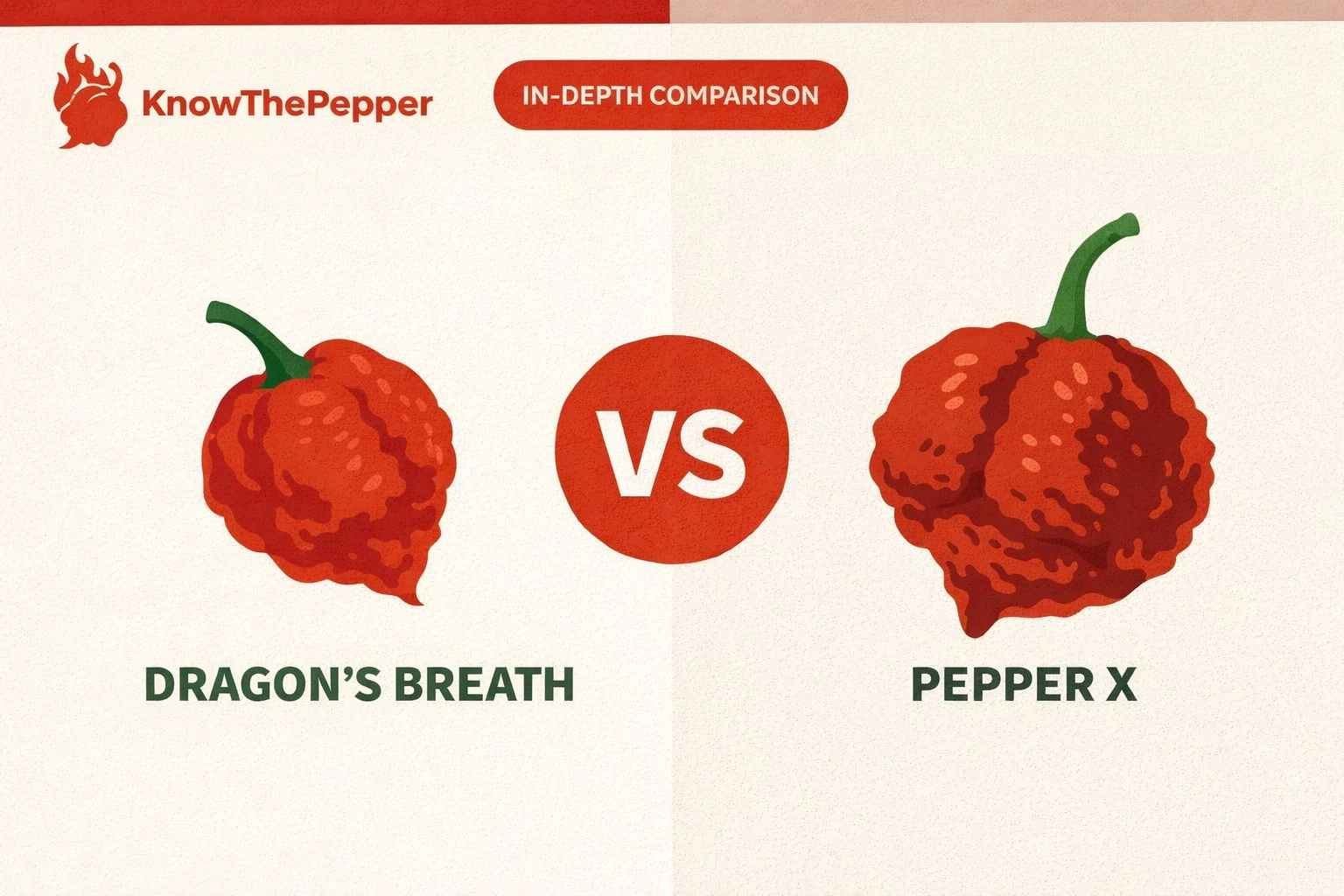
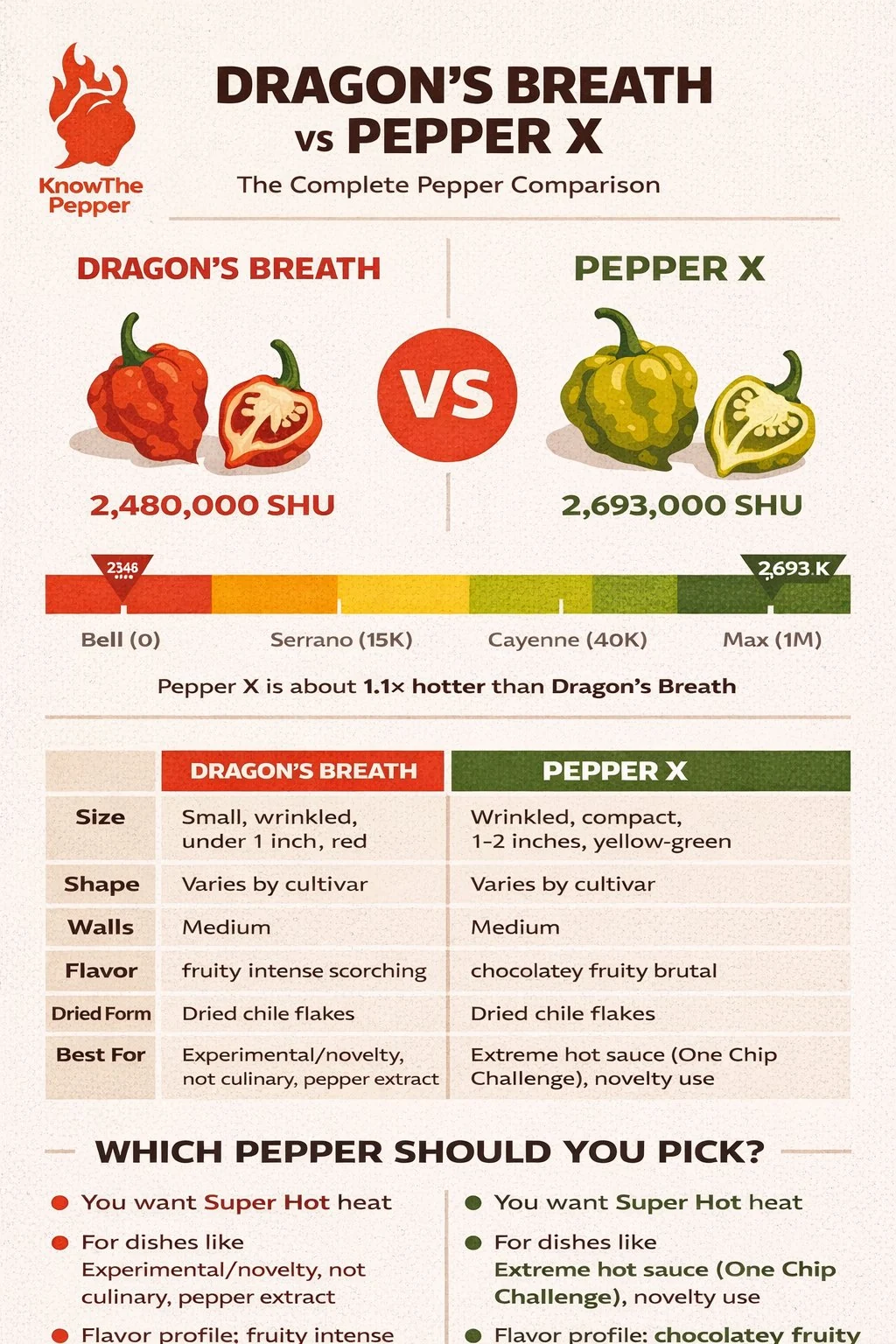
Dragon's Breath measures 2.5M–2.5M SHU while Pepper X registers 2.7M–3.2M SHU — roughly equal in heat. Dragon's Breath is known for its extremely intense flavor (C. chinense), while Pepper X offers fruity and earthy notes (C. chinense).
- Species: Both are C. chinense
- Best for: Dragon's Breath excels in hot sauces and extreme dishes, Pepper X in hot sauces and spicy dishes
Dragon's Breath
Super-HotPepper X
Super-HotDragon's Breath vs Pepper X Comparison
Dragon's Breath vs Pepper X Heat Levels
The numbers here tell a lopsided story. Pepper X clocks in at 2,693,000 to 3,180,000 SHU, certified by Guinness World Records in 2023 as the hottest pepper on the planet. That upper range is roughly 1,200 times hotter than a standard jalapeño (sitting around 2,500-8,000 SHU). It belongs firmly in the super-hot classification tier alongside the Carolina Reaper and other extreme-heat varieties bred by Ed Curlin at PuckerButt Pepper Company.
Dragon's Breath is a different case entirely. The pepper generated significant press around 2017 when its creator, Mike Smith, claimed a peak reading near 2.48 million SHU — which would have challenged the Reaper's record at the time. The problem: no independent lab verification ever confirmed that figure to the standard required for official recognition. As of now, Dragon's Breath carries no verified SHU range in peer-reviewed or officially certified testing.
That ambiguity matters. Without confirmed data, any heat comparison between these two peppers relies on unverified claims for one side of the equation. What the Scoville heat ranking index makes clear is that Pepper X's certification is rigorous — HPLC testing, independent verification, multiple sample batches. Dragon's Breath, whatever its actual capsaicin content, has not gone through that process publicly.
If the 2.48 million SHU claim were accurate, Dragon's Breath would still fall short of Pepper X's lower bound by over 200,000 SHU. The heat character of Pepper X is also notable for its slow build — capsaicin compounds absorb deep into tissue, producing a prolonged burn rather than an immediate spike.
Flavor Profile Comparison
Dragon's Breath emerged from an unlikely collaboration between a Welsh farmer, Mike Smith, and Nottingham Trent University researchers.
At 3,180,000 SHU at its peak, Pepper X doesn't just push the boundary of what a pepper can be - it redefines it.
Pepper X has a documented flavor profile that most people never experience directly — because eating it raw is genuinely dangerous for most individuals. Those who have tasted it (in controlled, small-quantity settings) describe an initial fruity and earthy quality before the heat overwhelms everything else. The fruity note is characteristic of C. chinense botanical lineage, the same species that gives habaneros and Scotch Bonnets their tropical edge. The earthiness adds depth that separates Pepper X from one-dimensional heat bombs.
Dragon's Breath flavor data is sparse. Without a well-documented tasting record or established culinary use, describing its flavor profile requires relying on anecdotal grower reports rather than consistent sourcing. The pepper appears visually similar to other chinense-type pods — small, wrinkled, with a pointed tip — but flavor characteristics have not been systematically documented the way Pepper X's have been through PuckerButt's development process.
For practical kitchen purposes, Pepper X's fruity-earthy flavor makes it a candidate for hot sauces where complexity matters alongside heat. The fruit notes can complement mango or pineapple bases, while the earthiness grounds the sauce rather than letting sweetness dominate. Dragon's Breath, lacking a confirmed flavor identity, is harder to position in a recipe context — it functions more as a curiosity or heat-delivery vehicle than a flavor ingredient with known characteristics.
Both peppers share the visual drama of super-hot varieties: vivid coloring, irregular pod shapes, and an appearance that signals danger before you even get close. But Pepper X has the documented identity to back up its reputation in ways Dragon's Breath currently does not.
Culinary Uses for Dragon's Breath and Pepper X
Working with Pepper X in the kitchen requires the same precautions as any certified super-hot: nitrile gloves, eye protection, and serious restraint with quantities. A single pod can produce a large batch of hot sauce — most recipes call for 1-3 pods per quart of sauce, balanced against acidic components like vinegar or citrus to carry the heat and highlight the fruity notes.
Pepper X's fruity and earthy character makes it particularly well-suited to: - Hot sauces with tropical fruit bases (mango, papaya, pineapple) - Fermented chili pastes where earthiness can develop over time - Dry rubs and spice blends where a small amount of powder delivers significant heat - Infused oils (with proper safety protocols — botulism risk in improperly processed oil infusions is real)
For those wanting the head-to-head heat gap between Carolina Reaper and Pepper X context, Pepper X actually edges out the Reaper at peak measurements, though both sit in a range where the difference is academic for most cooking applications.
Dragon's Breath lacks established culinary use cases. Without confirmed flavor data or a reliable commercial supply chain, substituting it into recipes is guesswork. If you have access to Dragon's Breath pods and want to use them, treating them with the same precautions as any extreme-heat pepper is the safe approach — start with a fraction of a pod in a large batch.
For Pepper X substitutes, the Carolina Reaper or [7 Pot Primo](https://knowthepepper.com) come closest in heat range and chinense-type flavor. The swap options for Pepper X lean toward other super-hots rather than mid-range peppers, since the heat gap to anything below 1 million SHU is too large to bridge with simple quantity adjustments.
Both peppers are grown primarily by enthusiasts and specialty growers connected to American pepper cultivation traditions. Neither is a supermarket item — sourcing requires specialty seed suppliers or direct purchase from hot sauce producers.
Which Should You Choose?
Pepper X is the clear choice when you need verified, extreme heat with a documented flavor profile. Its 2,693,000-3,180,000 SHU certification makes it the world's hottest confirmed pepper, and the fruity-earthy flavor gives it legitimate culinary identity beyond raw heat delivery. For hot sauce makers, spice enthusiasts, and growers chasing the frontier of capsaicin intensity, Pepper X is a known quantity in every sense.
Dragon's Breath occupies a different category — more legend than laboratory result. The unverified SHU claims made it a media sensation, but without certified testing, it cannot be positioned against Pepper X with any precision. That does not make it uninteresting; it makes it a project pepper for growers willing to document their own results.
If your goal is cooking with known heat levels, Pepper X wins by default — not because Dragon's Breath is necessarily milder, but because you cannot build a recipe around a number that has not been confirmed. If your goal is growing something with an unresolved story and potential for surprise, Dragon's Breath has that going for it.
For most practical purposes, Pepper X is the answer. Dragon's Breath is the question.
Can You Substitute One for the Other?
Proceed with caution. Pepper X is 1× hotter than Dragon's Breath.
Need a different option altogether? Search for peppers that match your target heat and flavor with precise swap ratios.
Growing Dragon's Breath vs Pepper X
If you’re deciding which pepper to grow at home, consider your climate and patience level. Dragon's Breath and Pepper X have different maturation times and temperature preferences. Hotter varieties generally need a longer, warmer growing season to develop their full capsaicin content. Our zone-based planting date tool can pinpoint the best sowing window for your area.
The hardest part of growing Dragon's Breath isn't germination — it's maintaining consistent heat through a long season. These plants need 90–100+ days of warm weather after transplant, which makes them a challenge outside of USDA zones 9–11 unless you're running a greenhouse or a very long indoor start.
Germination itself requires soil temps of 80–85°F and typically takes 2–4 weeks. Start seeds indoors 10–12 weeks before last frost.
Soil drainage matters more than fertility for this variety. Like most *C.
Pepper X seeds are still limited in commercial availability - source from Puckerbutt Pepper Company directly or from reputable specialty vendors who can verify authenticity. Counterfeit seeds labeled as Pepper X are common.
Start seeds indoors 10-12 weeks before last frost. Germination requires 85-90°F soil temperature - a heat mat is non-negotiable.
Transplant into containers or raised beds with **well-draining, slightly acidic soil (pH 6.0-6.
History & Origin of Dragon's Breath and Pepper X
Both peppers carry centuries of culinary heritage. Dragon's Breath traces its roots to United Kingdom, while Pepper X originates from USA. Understanding their backstory helps explain why each pepper developed its distinctive traits.
Buying & Storage
Whether you’re shopping for Dragon's Breath or Pepper X, the same quality indicators apply. Fresh peppers should feel firm and heavy for their size, with taut, glossy skin and no soft or wet spots. Minor stem cracks known as “corking” are perfectly normal and often indicate a mature, flavorful pod.
- Firm pods with taut skin and consistent color
- Should feel heavy relative to size
- Minor stem cracks (“corking”) are normal
- Avoid anything soft, shriveled, or with dark wet spots
- Fresh: Paper bag, crisper drawer — 1–2 weeks
- Frozen: Wash, dry, freeze on sheet pan — 6+ months
- Dried: Airtight, away from light — up to 1 year
The Verdict: Dragon's Breath vs Pepper X
Dragon's Breath and Pepper X sit in the same heat tier but serve different roles. Pepper X delivers its distinctive fruity and earthy character. Dragon's Breath, with its extremely intense profile, excels in everyday cooking.
Frequently Asked Questions
Related Comparisons
Sources pending verification.