Ghost Pepper Oil for Dosing by the Drop, Made From Dried Pepper Flakes
Ghost pepper oil is a superhot finishing oil, not a pour-all cooking oil. Use fully dried ghost pepper, warm the oil gently, steep off heat, strain for control, label the jar clearly, and serve it by drops or measured teaspoons.
Ghost pepper oil is a dosing oil, not a bottle you leave open on the table. Dried ghost pepper gives enough capsaicin to season a whole dish with a few drops.
The method is simple: use dry pepper, warm oil gently, steep off heat, then decide whether to strain. The hard part is control, because one casual pour can overheat dinner.
Dry Pod Rule
Use dried ghost pepper pieces or flakes. Fresh pods bring water into oil, and water causes splatter, shorter storage, and a riskier jar.
The Ghost Pepper explains why this pod needs respect: the heat is far above habanero and jalapeno territory. Treat one dried pod as a batch-level ingredient, not a garnish.
Check the dried pieces before they hit the pan. They should smell fruity and sharp, not dusty, moldy, or smoky in a burnt way.
If your only ghost pepper is fresh, dry it fully first or choose another recipe. This oil should stay dry from start to finish.
Heat Trial
Test the oil on a spoonful of plain rice or broth, not on your fingertip. Fat carries capsaicin, and a fingertip test makes the heat hard to judge.
Wait at least thirty seconds before adding more. Ghost pepper heat builds slower than jalapeno heat, and the second wave is where many batches feel too strong.
Write down the steep time if the batch works. A note such as 20-minute steep, strained, one dried pod makes the next jar repeatable.
Tiny Dose
Start with less pepper than you think you need. Two tablespoons of crushed dried ghost pepper in one cup of oil already makes a serious bottle.
Heat spreads through fat, so the burn coats food evenly. That makes the oil feel stronger than a single chopped piece of pepper on a plate.
For a milder oil, cut the dried pepper in half and steep for less time. For more heat, make a second batch stronger instead of dumping extra flakes into a finished jar.
Oil Choice
Neutral oil keeps the ghost pepper front and center. Grapeseed, canola, or another neutral cooking oil makes the cleanest heat carrier.
Olive oil works when the food can handle bitterness and grassiness. Use it for beans, bread, and roasted vegetables, not delicate noodles.
Sesame oil should stay a finishing accent, not the full cup. It can dominate the pepper before the heat even lands.
Low Heat
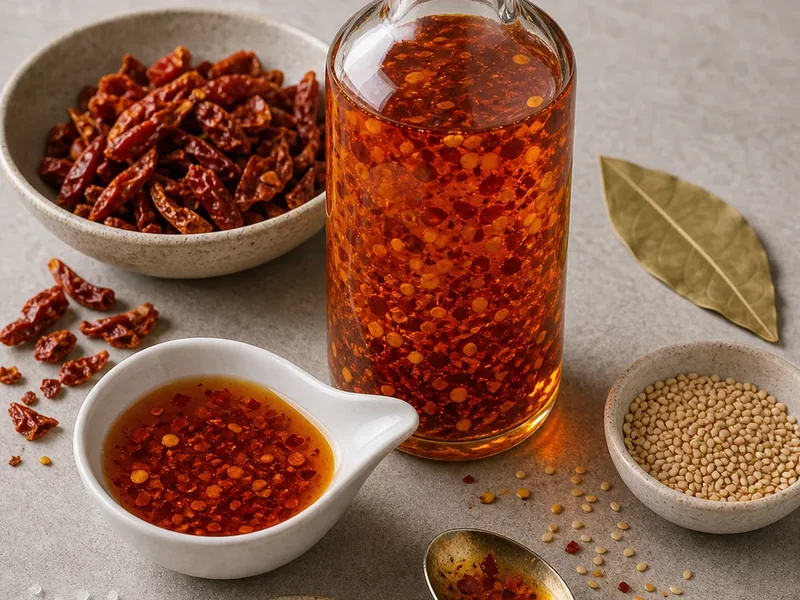
Warm the oil to about 225 F, then keep it calm. The pepper should darken slightly and release aroma, not fry hard or turn black.
Neutral oil gives the cleanest ghost pepper heat. Olive oil makes a heavier finishing oil, closer to chipotle olive oil in feel but much hotter.
If the pan smells harsh or bitter, turn off the heat. Burnt superhot flakes make the whole jar taste acrid.
Strain Choice
Strained oil is easier to dose. It stops the pepper pieces from giving more heat every day and keeps gritty powder out of eggs, noodles, or vegetables.
Leaving flakes in the jar makes sense only when the oil will be used quickly and by people who know it is superhot. Label it clearly.
A coffee filter gives the clearest oil but moves slowly. A fine mesh strainer is enough when a little red sediment does not bother you.
Serving Drops
Portion the oil before the food reaches the table. A full bottle invites big pours, and ghost pepper does not forgive big pours.
- Use 2 to 3 drops for a bowl of ramen or soup.
- Use 1/4 teaspoon for a full skillet of fried rice.
- Use 1/2 teaspoon for a large pot of chili if the group likes superhot food.
For a textured chile condiment with garlic, sesame, and crunch, make chili oil instead. Ghost pepper oil stays simpler so the dose stays readable.
What Not to Add
Skip fresh garlic, fresh herbs, and wet citrus peel. They bring moisture into oil and make the jar harder to store safely.
If you want garlic flavor, use the oil on garlic-heavy food instead of putting garlic in the bottle. The result is cleaner and safer.
Dry spices are safer, but they should still support the pepper. Bay leaf and sesame can work.
A crowded spice blend makes dose control harder.
Superhot Handling
Ghost pepper belongs near the super-hot pepper tier, so gloves are not optional when crushing pods. Pepper dust can move into your nose and eyes before you notice it.
Work with a dry board, keep your face away from the jar, and wash tools with hot soapy water. Capsaicin sticks to oil, so a quick rinse will not remove it.
If skin starts burning, stop and clean up before touching anything else. The capsaicin explains why oil carries the heat so well, and pepper burn cleanup covers the first-aid side.
Label the Jar
Write the pepper name and date on the jar before it goes in the fridge. Ghost pepper oil can look like any other chile oil after a week.
A clear label protects guests and your own future cooking. Nobody should discover superhot oil by mistake on breakfast eggs.
Use a small spoon for serving, not a pour spout. A pour spout makes the dose harder to control and can drip onto the outside of the bottle.
Storage Checks
Cool the oil fully, pour it into a clean jar, and refrigerate it. A small jar is better than a big one because it gets used faster and opened less.
Discard the oil if you see moisture, bubbles, off smells, or fuzzy growth. This is not a canning recipe and it is not shelf-stable.
If you need a fresh pepper oil for quick use, jalapeno-infused olive oil uses a shorter, milder plan. It is still refrigerated, but the heat level is more forgiving.
Food Pairing
Use ghost pepper oil on food that can take a small, even burn. Beans, chili, noodle soup, pizza, fried rice, and roasted potatoes are better choices than delicate salads.
Acidic food can make the oil feel sharper. If a tomato soup tastes too fierce, stir in a little dairy or starch instead of adding more oil.
Do not cook with this oil over high heat. Add it after cooking so the pepper aroma stays clean and the kitchen does not fill with superhot vapor.
Cleanup
Wash the pan, strainer, and spoon with hot soapy water right away. Oil left on tools can carry ghost pepper heat into the next meal.
Use paper towels for the first wipe, then discard them. A cloth towel can hold capsaicin and surprise the next person who uses it.
Keep the jar outside the reach of children and guests. The oil looks ordinary, but it does not behave like ordinary chile oil.
Next Batch
Most corrections happen in the next batch. Once capsaicin dissolves into oil, you cannot pull it back out cleanly.
If the oil was too hot, use half the dried pepper or strain earlier next time. If it was too weak, extend the off-heat steep by ten minutes before adding more pepper.
If you cannot find dried ghost pepper, choose a swap by heat class and dried form. A ghost pepper substitute should still warn the cook before it touches oil.
Chef's Tip
Strain the first batch. A clear ghost pepper oil is easier to dose, and you can always make the next jar stronger by steeping longer.
Ingredients
-
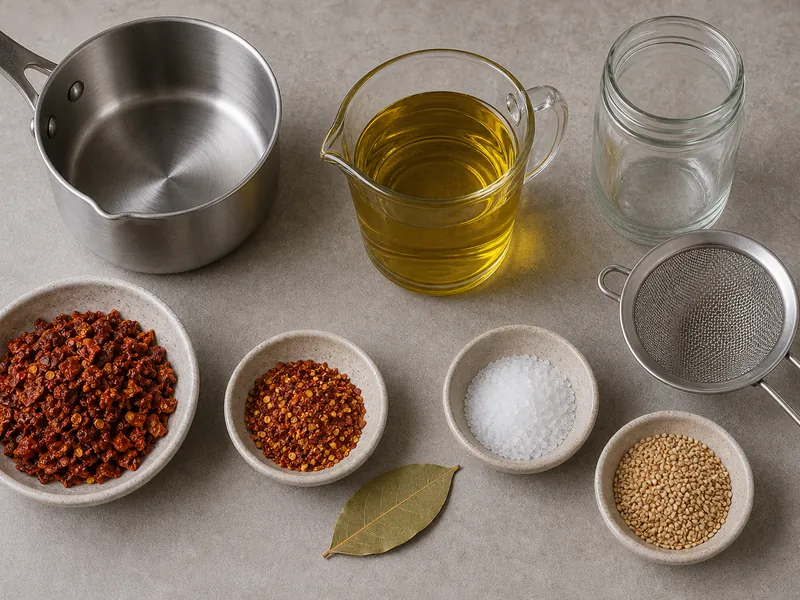
2 tablespoons dried ghost peppercrushed
-
1 cup neutral oil or olive oil
-
1 small dried bay leafoptional
-
1/2 teaspoon kosher salt
-
1 teaspoon toasted sesame seedsoptional
Full Recipe Instructions
Check that the…
Check that the ghost pepper pieces are fully dry and free of mold before they touch the oil.
Warm the oil…
Warm the oil over low heat to about 225 F, then add the dried pepper, bay leaf if using, and salt.
Hold gentle heat…
Hold gentle heat for 8 to 10 minutes without letting the pepper fry hard or turn black.
Turn off the…
Turn off the heat and steep for 20 minutes, tasting a tiny drop on food before extending the steep.
Strain for clearer,…
Strain for clearer, easier dosing, or leave flakes in only if the jar will be used quickly and labeled clearly.
Ghost Pepper Oil for Dosing by the Drop, Made From Dried Pepper Flakes FAQ
- USDA FoodData Central
- New Mexico State University Chile Pepper Institute
- Pickling - National Center for Home Food Preservation