How Do You Make Sweet Thai Chili Sauce That Clings?
Equal parts rice vinegar, water, and sugar create the base, while a small slurry makes the cooled sauce cling. Judge the final balance and thickness only after a spoonful cools.
Sweet Thai chili sauce should taste bright before it tastes sugary, then cool into a glossy dip that clings without setting like jelly. This recipe uses equal parts rice vinegar, water, and sugar, plus fresh Thai chiles, garlic, fish sauce or soy sauce, and a small cornstarch slurry.
The finished sauce is different from sriracha and savory Thai chile paste. It keeps visible chile pieces in a clear, sweet-tart base, and the starch supplies the spoon-coating texture rather than a long reduction.
Start with the ratio that keeps the vinegar visible
For about 1 1/2 cups, combine 1/2 cup rice vinegar, 1/2 cup water, and 1/2 cup sugar. Two garlic cloves and 1 tablespoon of fish sauce or soy sauce give the syrup enough savory depth to taste like a condiment rather than sweetened vinegar.
Rice vinegar is the mild acidic base in this recipe, but the final sauce should still smell bright when it reaches the table. If sweetness covers the vinegar after cooling, stir 1 teaspoon of rice vinegar into the finished batch and taste again before adding more.
A small saucepan keeps the liquid deep enough to simmer without evaporating too quickly. A wide skillet exposes more surface area, so the syrup can become too concentrated before the garlic softens.
- 1/2 cup rice vinegar supplies the tart backbone.
- 1/2 cup water controls concentration while the aromatics cook.
- 1/2 cup sugar creates gloss and balances the vinegar.
- 1 tablespoon slurry thickens the cooked base without requiring a candy-like reduction.
Choose the chile dose by how the sauce will be served
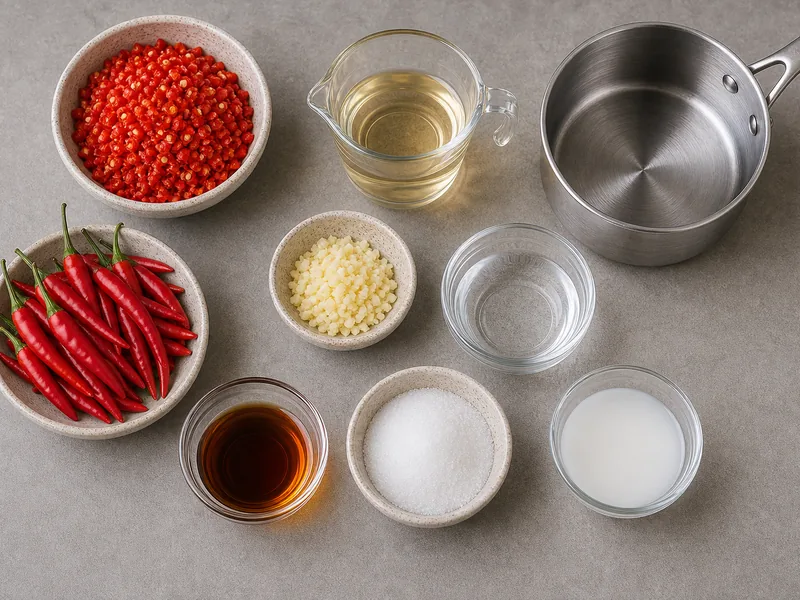
Use three minced Thai chiles for a warmer family-style dip or five for a clearly hot sauce. The New Mexico State University Chile Pepper Institute explains that capsaicinoids concentrate in the placental tissue inside a chile, so removing some pale inner tissue changes the heat more effectively than picking out loose seeds alone.
A fine knife mince distributes small sparks of heat through every spoonful. A coarser mince creates hotter bites and a more rustic dip, while a puree clouds the syrup and removes the distinct chile-piece texture.
Fresh Thai chiles keep the flavor sharp and grassy. Dried flakes can replace them in a pantry batch, but 1 to 2 teaspoons will produce a darker, rounder chile flavor and need a slightly longer simmer to soften.
Wear gloves when cutting a large batch, and avoid touching your eyes until the knife, board, and hands are clean.
Capsaicin is oil-soluble, so plain water does not remove it from skin or tools as effectively as detergent.
Simmer the aromatics before the starch enters the pan
Combine the vinegar, water, sugar, garlic, minced chiles, and fish sauce or soy sauce, then bring the mixture to a gentle simmer. Stir until the sugar dissolves and cook for 7 minutes, which gives the garlic time to lose its raw edge while the liquid stays loose.
Look for a clear red-orange base with softened garlic and suspended chile pieces. A hard boil is unnecessary because the cornstarch will provide the final body, and aggressive reduction can make the sauce sweeter and thicker than intended.
Taste a cooled drop rather than judging only from steam rising off the pan. Heat makes vinegar smell sharper and makes the liquid feel thinner, so the hot saucepan gives a poor forecast of the final balance.
Whisk the slurry in slowly and stop while it still looks loose
Mix 1 tablespoon cornstarch with 2 tablespoons cold water, then stir it again immediately before use. Starch settles quickly, and pouring the watery top first leaves a dense layer at the bottom of the cup.
Keep the sauce at a gentle simmer and whisk the slurry in a thin stream. Cook for 60 to 90 seconds until the sauce turns glossy and lightly coats the back of a spoon.
Stop while the trail made by a finger closes slowly on the spoon.
The sauce thickens further as it cools, so a pot that already looks like bottled glaze will usually become too firm in the refrigerator.
Do not pour dry cornstarch into the sauce.
The outside of each clump gelatinizes before water reaches the center, leaving pale beads that continued boiling will not smooth out.
Judge the final texture only after the sauce cools
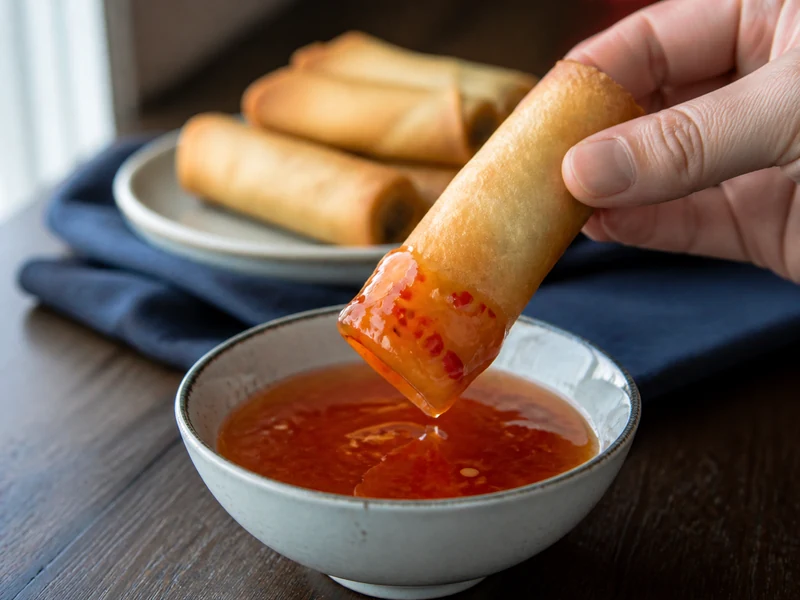
Rest a spoonful on a cool plate for 2 minutes before taking the pan off the heat. The cooled sample should spread slowly, hold visible chile pieces, and leave a thin coating on food rather than a rubbery cap.
Wait 20 to 30 minutes before making the last adjustment to the batch. Cooling changes both cling and sweetness, which is why adding more starch while the sauce is hot often causes an overcorrection.
| What you see | Likely cause | Useful correction |
|---|---|---|
| Thin after cooling | Short starch cook or weak slurry | Return to a simmer and add 1 teaspoon fresh slurry at a time |
| Rubbery or spoon-standing | Too much starch or too long a cook | Warm gently and whisk in hot water 1 tablespoon at a time |
| Cloudy with pale beads | Slurry was lumpy or added too fast | Strain the batch, then use a smooth cold-water slurry if more thickening is needed |
| Too sweet when cool | Acid is hidden by sugar | Add rice vinegar 1 teaspoon at a time |
| Too sharp when cool | Acid remains dominant | Add dissolved sugar 1 teaspoon at a time |
| Too salty | Fish sauce or soy sauce is dominant | Dilute with a small batch of unsalted vinegar-water-sugar base |
Make small corrections and cool another sample before repeating them.
Large additions can shift sweetness, acidity, and thickness at the same time, which makes the next problem harder to diagnose.
Keep a dip thicker than a glaze or drizzle
For spring rolls, egg rolls, fried shrimp, or crisp chicken, serve the sauce cool and on the side. The thicker cooled texture stays on each bite without soaking the crust before it reaches the table.
For grilled chicken, tofu, shrimp, or vegetables, loosen the sauce with 1 teaspoon water and brush it on during the final minutes of cooking. Sugar browns quickly, so an early coating can scorch before the food is done.
For a rice-bowl drizzle, add a little lime juice after the sauce cools. The extra acid makes the sauce flow more easily and keeps a full spoonful from tasting heavy over rice.
The correct texture depends on the job, not on matching a commercial bottle. A dip should cling to a spring roll, a glaze should spread under a brush, and a drizzle should fall in a narrow ribbon from a spoon.
Know when this sauce is the wrong Thai condiment
Choose sriracha when you want a smooth, chile-forward squeeze sauce with no suspended pieces. Choose savory Thai chile sauce or chile paste when concentrated aromatics and salt should lead the flavor.
This sweet Thai chili sauce fits food that benefits from contrast between crisp or grilled surfaces and a glossy sweet-tart coating. Increasing the chile dose can make it hotter, but it will not turn the recipe into fermented sriracha or an oil-rich paste.
If five Thai chiles are still too gentle, use an extra-spicy sweet chili formula that preserves the vinegar-sugar balance while deliberately raising the chile load. Adding random spoonfuls of dried powder to this finished jar makes heat harder to distribute and can muddy the sauce.
Refrigerate the jar and do not infer canning safety
Cool the sauce for 10 minutes, transfer it to a clean jar, and refrigerate when the jar is no longer hot. Use it within about 2 weeks, and discard it if you see mold, smell fermentation, or find pressure building in the container.
Stir the cold sauce before thinning it because cornstarch can form a firmer layer at the bottom. If stirring is not enough, warm only the amount you need and add hot water 1 teaspoon at a time.
The National Center for Home Food Preservation says home canners should use research-tested recipes for mixtures of acid and low-acid ingredients. This refrigerator recipe contains vinegar, but that fact alone does not establish a safe heat process or shelf-stable acidity for pantry storage.
Freezing is also a poor fit for a starch-thickened sauce because thawing can separate water from the gel.
If a batch is frozen, reheat it gently and whisk it before deciding whether the texture can be recovered.
Ingredients
-
3 to 5 Thai chilesminced
-
1/2 cup rice vinegar
-
1/2 cup water
-
1/2 cup sugar
-
2 garlic clovesminced
-
1 tablespoon fish sauce or soy sauce
-
1 tablespoon cornstarch mixed with 2 tablespoons cold water
Full Recipe Instructions
Combine rice vinegar,…
Combine rice vinegar, water, sugar, garlic, minced Thai chiles, and fish sauce in a small saucepan.
Bring to a…
Bring to a gentle simmer and cook for 7 minutes, stirring until the sugar dissolves and the garlic softens.
Stir the cornstarch…
Stir the cornstarch slurry again, then whisk it into the simmering sauce in a thin stream.
Cook for 60…
Cook for 60 to 90 seconds, until the sauce turns glossy and lightly coats a spoon.
Cool for 10…
Cool for 10 minutes, adjust vinegar or water if needed, then refrigerate in a clean jar.