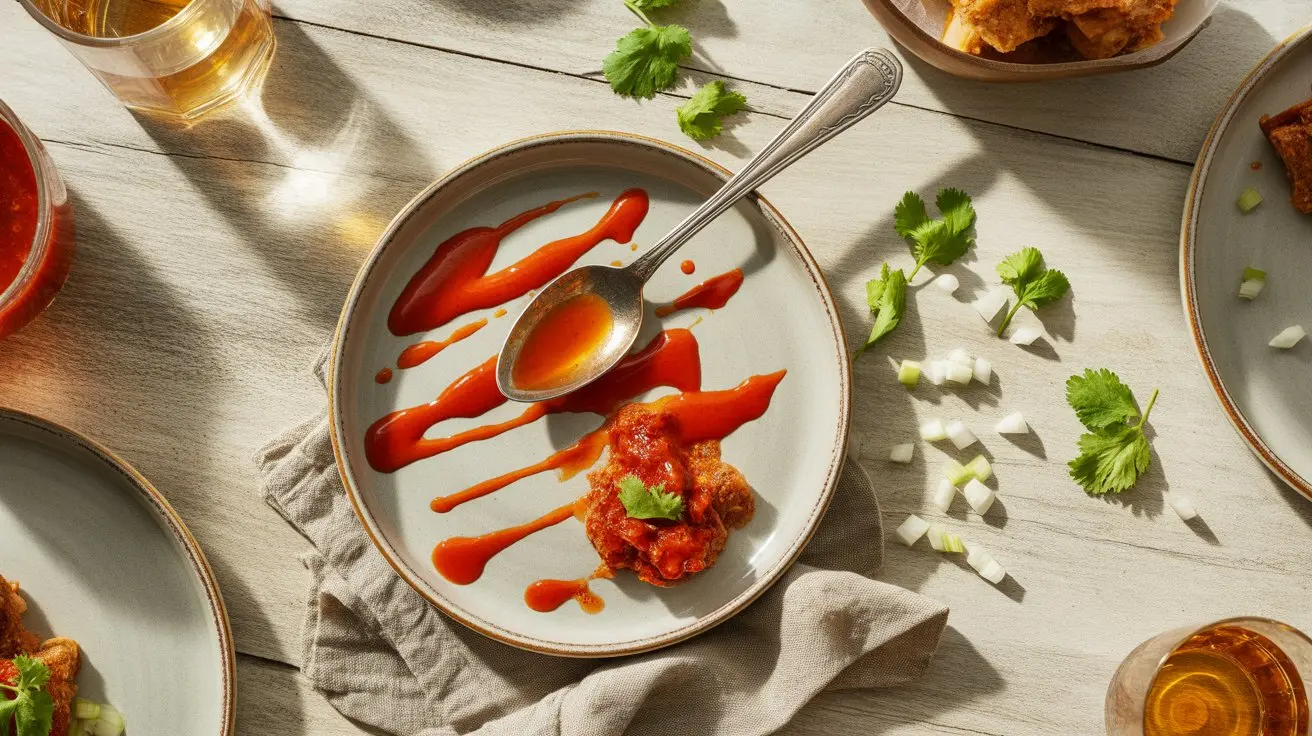
Ghost Pepper Hot Sauce
Make ghost pepper hot sauce at home. Small batch balances extreme heat with mango or garlic. Safety tips for superhots. Find your perfect heat level.

Why Ghost Pepper Hot Sauce Deserves More Than Fear
The first time a friend handed me a bottle of homemade ghost pepper sauce, I put exactly one drop on a cracker and spent the next twenty minutes regretting my confidence. The second time, I made my own batch - and that changed everything. Controlling the ratio of pepper to acid to sweetener means you can dial this sauce from "aggressively hot" down to "seriously complex with serious heat."
The ghost pepper's Northeast Indian heritage gives it something most superhots lack: genuine fruity depth beneath the fire. That flavor is worth preserving, not drowning.
Understanding the Heat You're Working With
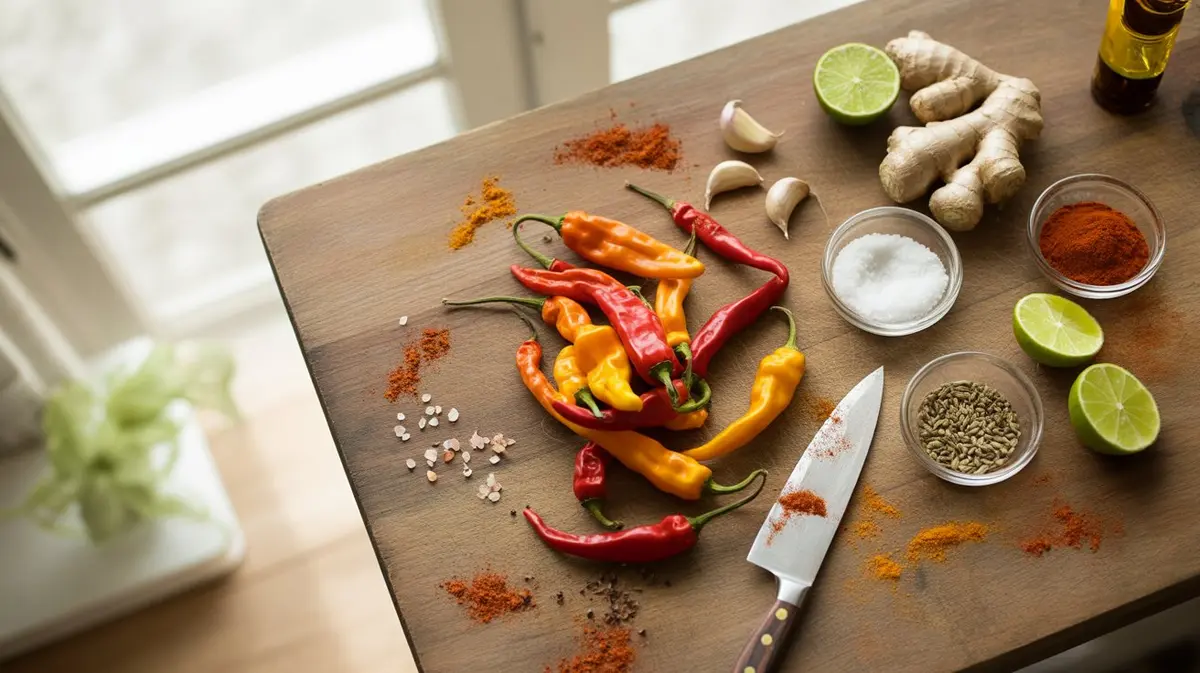
Ghost peppers (Bhut jolokia) clock in at 855,000 to 1,041,427 Scoville Heat Units. For context, a guajillo sits around 2,500 to 5,000 SHU - meaning ghost pepper can run 200 times hotter than that dried Mexican staple.
On the SHU unit definition scale, ghost pepper occupies the lower end of the superhot category - brutal enough to demand respect, but manageable enough to build a balanced sauce around. Check the superhot category range to see exactly where it lands relative to scorpion peppers and reapers.
Understanding why peppers trigger that burning sensation helps you work with the heat rather than against it. Fat and acid both slow capsaicin's binding to receptors - which is exactly why this recipe uses both vinegar and optional oil.
Safety First: Handling Superhots
This is not optional reading. Ghost peppers cause real skin and eye irritation that lasts hours.
- Wear nitrile gloves - latex tears too easily
- Work in a ventilated space or outdoors; blending creates capsaicin aerosol
- Keep a dedicated cutting board for superhots - capsaicin transfers to other foods
- Never touch your face, eyes, or contact lenses during prep
- Have whole milk or yogurt nearby, not water - fat neutralizes capsaicin, water spreads it
- When blending, hold the lid down with a folded towel and start on low speed
Technique Tips
Seed management: Ghost pepper seeds carry significant heat. Removing them before cooking drops the overall SHU noticeably without losing much flavor. For a slightly more approachable sauce, remove seeds from half the peppers.
Charring vs. roasting: Dry-skillet charring gives faster, more intense smokiness than oven roasting. Either works - oven roasting at 425°F for 20 minutes produces a slightly sweeter result.
Vinegar selection matters: White wine vinegar keeps the mango's color bright and the flavor clean. Apple cider vinegar adds complexity but slightly muddies the color. Distilled white vinegar is sharp and clean but lacks nuance.
pH and safety: For long-term shelf stability, the sauce needs a pH of 4.0 or below. The vinegar ratio in this recipe achieves that, but if you reduce vinegar significantly, test with pH strips before storing at room temperature.
The balance between fruit sweetness and acid is what separates a sauce you reach for daily from one that sits in the back of the fridge. Ghost pepper has enough fruit character of its own - the mango amplifies it rather than masking the pepper.
Variations
- Garlic-forward version: Replace mango with 8 cloves of roasted garlic and add 1 tbsp brown sugar. Darker, more savory, pairs exceptionally well with grilled meats.
- Caribbean-style: Swap mango for 1/2 cup pineapple chunks and add 1/4 tsp allspice. This bridges the flavor profile toward Caribbean pepper traditions without abandoning the ghost pepper's Indian roots.
- Fermented base: Instead of cooking, blend raw peppers with 2% brine by weight (20g salt per 1kg of peppers and vegetables). Ferment in a jar with an airlock at room temperature for 5-7 days, then blend with vinegar. The lactic acid adds complexity that cooking cannot replicate.
- Milder version: Replace two ghost peppers with red habaneros - still serious heat but more manageable. See where extra-hot peppers fall on the spectrum if you want to calibrate further.
- Smoked version: Cold-smoke the peppers for 30 minutes before charring. Adds a layer of complexity that works particularly well in the garlic variation.
What to Use It On
A sauce this concentrated works best as a condiment rather than a cooking sauce - a few drops rather than a pour. Eggs, tacos, grilled chicken, and rice dishes all benefit from a measured addition.
Mixing a small amount into mayonnaise or sour cream creates a heat-forward dipping sauce that's more approachable for guests who aren't committed superhot eaters. The fat in the dairy carries the flavor compounds and stretches the sauce's intensity into something more broadly usable.
If you want to explore the step-by-step process of growing your own ghost peppers to use in future batches, the long season (around 100-120 days to maturity) means starting seeds indoors in late winter. Fresh-picked ghost peppers have a noticeably brighter flavor than store-bought dried ones.
For a different direction with your harvest, a from-scratch ghost pepper salsa uses similar ingredients but keeps more texture and works better as a dip than this sauce.
Comparing Ghost Pepper to Other Superhots
Ghost pepper sits below scorpion peppers and Carolina Reapers in raw heat, but its flavor is arguably more complex than either. The ghost pepper versus habanero matchup shows how dramatically the heat gap widens even between peppers that both get called "very hot" in casual conversation.
If ghost pepper proves too intense for your target audience, what to use instead of ghost pepper covers ratio guides for stepping down to habanero or red savina without rebuilding the recipe from scratch.
Ghost pepper belongs to Capsicum chinense, the same species as habaneros and scotch bonnets - see the full Capsicum chinense species profile for how that family connection shapes the shared fruity heat character across those peppers.
Storage Notes
Refrigerated: Keeps for 3-4 months in a sealed glass jar. The flavor actually improves after 2-3 days as the vinegar and pepper flavors meld.
Room temperature (shelf-stable): Only safe if pH is confirmed at 4.0 or below. Process in a water bath canner for 10 minutes if you want extended shelf life without refrigeration.
Freezing: Works fine in ice cube trays, then transferred to a freezer bag. Texture thins slightly after thawing but flavor holds well for up to 12 months.
Signs of spoilage: Mold growth, off smell, or unusual bubbling (unless intentionally fermented) means discard. Don't taste-test questionable hot sauce - capsaicin masks off-flavors.
Chef's Tip: The Resting Period
Patience is an ingredient. After mixing, let the dish rest for 10–15 minutes before serving. This allows the flavours to meld and the seasoning to fully penetrate. If making ahead, refrigerate and bring to room temperature before serving.
Shopping List
-
6 fresh ghost peppersstems removed (about 60-70g)
-
1 medium mangopeeled and roughly chopped (about 1 cup)
-
4 cloves garlicpeeled
-
1 medium white onionquartered
-
1 cup white wine vinegar
-
1/4 cup water
-
2 tbsp lime juicefreshly squeezed
-
1 tbsp honey
-
1 tsp kosher salt
-
1/2 tsp ground cumin (optional)
-
1 tbsp neutral oil (optional)
Full Recipe Instructions
Put on nitrile…
Put on nitrile gloves before handling peppers. Set up workspace near an open window or with exhaust fan running.
Preheat a dry…
Preheat a dry skillet over medium-high heat. Add ghost peppers, quartered onion, and garlic. Char for 4-5 minutes per side until dark spots appear.
Transfer charred vegetables…
Transfer charred vegetables to a medium saucepan. Add vinegar, water, lime juice, honey, salt, and cumin. Bring to a gentle simmer over medium heat.
Simmer uncovered for…
Simmer uncovered for 12-15 minutes until peppers are fully softened and liquid has reduced by one-quarter.
Add chopped mango…
Add chopped mango during the last 3 minutes of simmering. Cook until just softened.
Remove from heat.…
Remove from heat. Cool for 10-15 minutes before blending.
Transfer to a…
Transfer to a high-powered blender. Add oil if using. Hold lid with a folded towel, start on lowest speed, and gradually increase to high. Blend 60-90 seconds until smooth.
Taste carefully using…
Taste carefully using a small piece of bread. Adjust salt, vinegar, or honey as needed.
Strain through a…
Strain through a fine-mesh sieve for a smoother sauce, or leave unstrained for more texture.
Funnel into sterilized…
Funnel into sterilized glass bottles or jars while warm. Seal immediately. Refrigerate for up to 3-4 months.
Frequently Asked Questions
-
Start with 3 peppers instead of 6 and remove all seeds before cooking. You can also replace half the ghost peppers with red habaneros, which sit significantly lower on the heat scale while keeping a similar fruity character.
-
Yes - nitrile gloves are essential, not optional. Ghost pepper oils cause intense skin irritation that lasts several hours, and the capsaicin transfers easily to eyes and mucous membranes if you touch your face during prep.
-
Dried ghost peppers work but produce a different flavor profile - earthier and less fruity than fresh. Rehydrate them in hot water for 20 minutes first, and use about
More Recipes
View allFresh Salsa Recipe
Restaurant-quality fresh salsa in 10 minutes. Proper tomato prep, right jalapeño amount, and the secret to balanced flavor. Find your perfect heat level.
Jalapeno Poppers Recipe
Classic cream cheese stuffed jalapeño poppers that are crispy outside, creamy inside. Find your perfect heat level.
Pickled Jalapenos Recipe
Two methods: 10-minute quick pickle and proper fermented. Both stay crispy. Find your perfect heat level.
Stuffed Peppers Recipe
Classic stuffed peppers with rice and meat, plus vegetarian and Mexican variations. Covers bell peppers, poblanos, and which peppers stuff best.