Chipotle Hot Sauce From Dried Morita or Meco Chiles
This chipotle hot sauce starts with six dried morita or meco pods and finishes as a smooth, pourable sauce in about 40 minutes, with morita giving a fruitier result and meco bringing heavier smoke. Toast only until the aroma opens, soak until the thickest part of each pod folds, then blend and simmer until a spoonful falls in a ribbon.
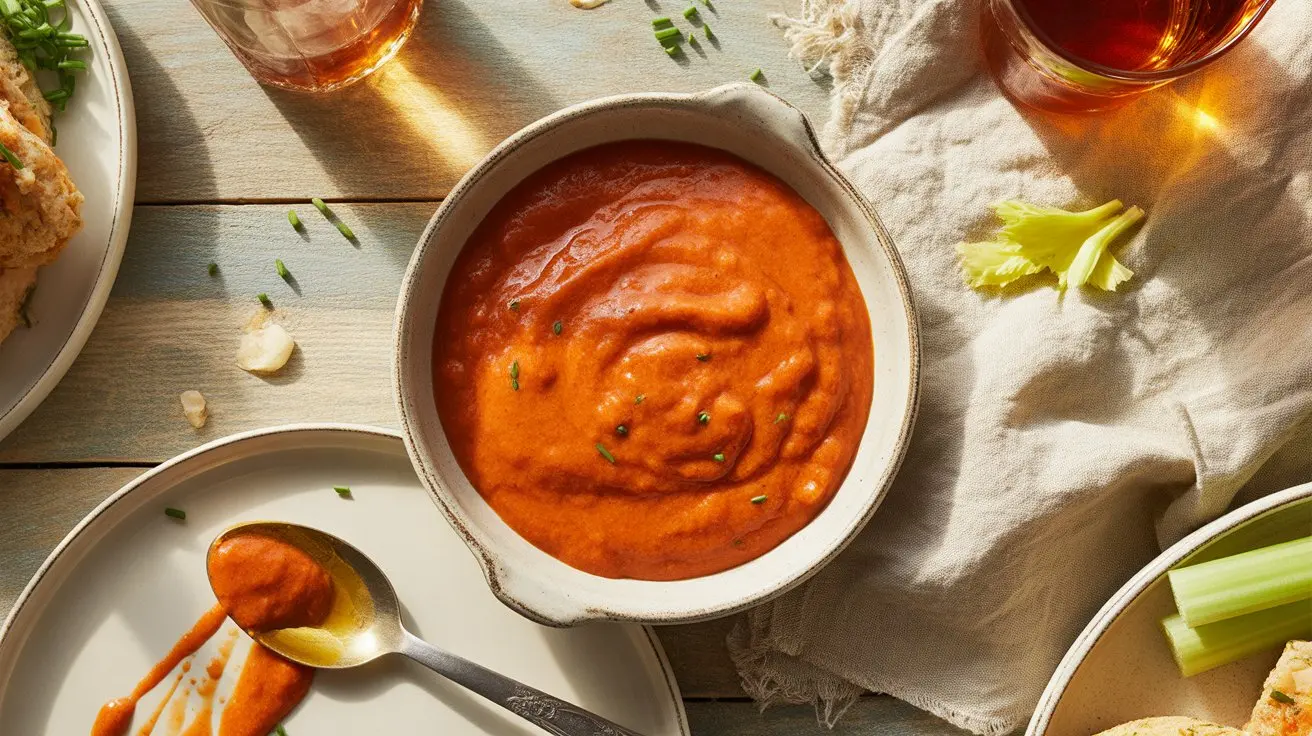
This chipotle hot sauce turns six dried smoked jalapenos into about 1 3/4 cups of pourable, brick-red sauce in 40 minutes. It has enough cider vinegar to taste bright, a small amount of piloncillo or brown sugar to round the smoke, and a lime finish that stays distinct because it goes in after cooking.
The method uses physical cues as well as a clock, so stop toasting when the pods smell smoky, stop soaking when the thickest shoulder folds without cracking, and stop reducing when sauce from a spoon leaves a line that closes slowly on the surface.
The Chile Pepper Institute at New Mexico State University identifies chipotle as a smoked, dried ripe jalapeno, which is why this recipe builds flavor from smoke and mature red-pepper character instead of imitating either one with liquid smoke or fresh green chiles.
Choose the chipotle that matches the sauce
Use morita for a fruitier everyday bottle and meco for a darker, more assertive smoke. Both are chipotles, but the finished sauces do not land in the same place.
- Morita pods are usually smaller, dark red, and pliable. Their fruitier flavor fits eggs, tacos, beans, and dressings where the sauce needs to share the plate.
- Meco pods are tan to gray-brown and carry a longer-smoked character. Choose them for grilled beef, braises, or barbecue applications where smoke is the main reason for using the sauce.
- Canned chipotles in adobo are already softened in a tomato-vinegar sauce. They make a useful shortcut, but the tomato and seasoning create a rounder adobo-style result rather than the clean dried-pod sauce made here.
Inspect dried pods before measuring and discard any pod with a musty odor, damp patch, or fuzzy growth instead of trying to hide the defect in a blended sauce.
If canned adobo is the only option, replace the six dried pods with four canned chipotles plus 2 tablespoons of their sauce. Skip the soaking liquid, begin with 1/2 cup water, and add more only if the blender stalls.
Build the batch before the skillet heats
The measured formula uses six dried chipotle pods, 1 cup reserved soaking liquid, 1/2 cup cider vinegar labeled 5% acidity, 3 garlic cloves, 1 tablespoon piloncillo or brown sugar, 1 teaspoon kosher salt, and 1 teaspoon fresh lime juice. The recipe card keeps those amounts and the five execution steps together.
That formula needs a dry skillet, heatproof bowl, blender, small nonreactive saucepan, and spoon, with a fine-mesh sieve reserved for a narrow bottle or a polished texture.
Stem the pods before toasting, then shake out loose seeds without scraping away every inner rib. Removing loose seeds reduces grit, while leaving some rib tissue preserves the chipotle heat that the sauce is meant to carry.
Keep an extra half cup of hot water beside the blender, but add it only when visible blender resistance or excessive thickness shows that the pods absorbed more than the measured cup.
Toast for aroma, not color
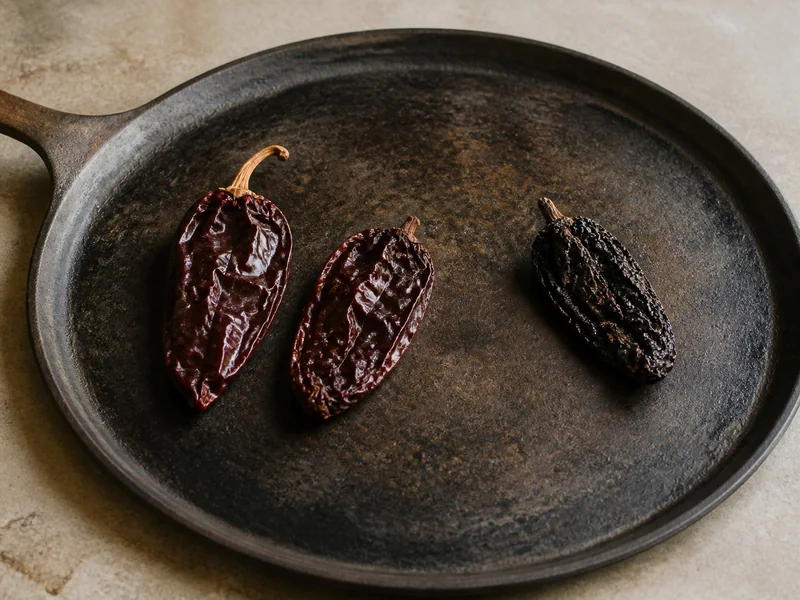
A dry-pan toast wakes the volatile aromas on the pod surface, but the useful window is short. Heat the skillet over medium, press each pod against it for roughly 15 to 30 seconds per side, and remove the pod as soon as the smoke aroma becomes fuller.
Since morita and meco begin dark, use an acrid smell, a black blister, or visible smoke from the pod as the stop signal that the surface has scorched.
Discard a scorched pod and replace it before soaking. That small reset protects the whole batch more reliably than adding sweetness later, because sugar can soften a bitter edge but cannot remove charred compounds from the puree.
Toast in a single layer and work in two rounds if needed because crowding can burn one pod while another stays cold and contributes little aroma.
Soak until the pods fold
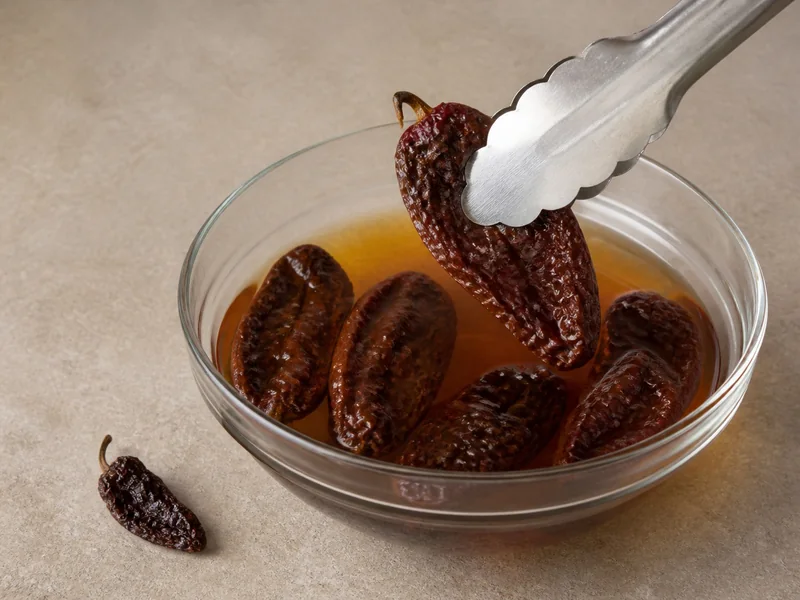
Move the toasted pods into a heatproof bowl and cover them with water that has just come off the boil. Weight floating pods with a small plate so the thick shoulders stay submerged rather than softening only along one side.
Twenty minutes is the starting time, while a clean fold is the finish cue. Pinch the thickest shoulder with tongs and bend it gently, then continue soaking in five-minute increments if it cracks or springs back stiffly.
Taste a cooled drop of the smoky, mildly sweet soaking liquid before reserving it because a harsh or strongly bitter sample will carry the same defect into every spoonful of sauce.
Use clean hot water when the soaking liquid tastes unpleasant because vinegar, garlic, and hydrated pods make a better base than preserving a small amount of bitter dissolved chile flavor.
Blend and simmer to a slow-closing ribbon
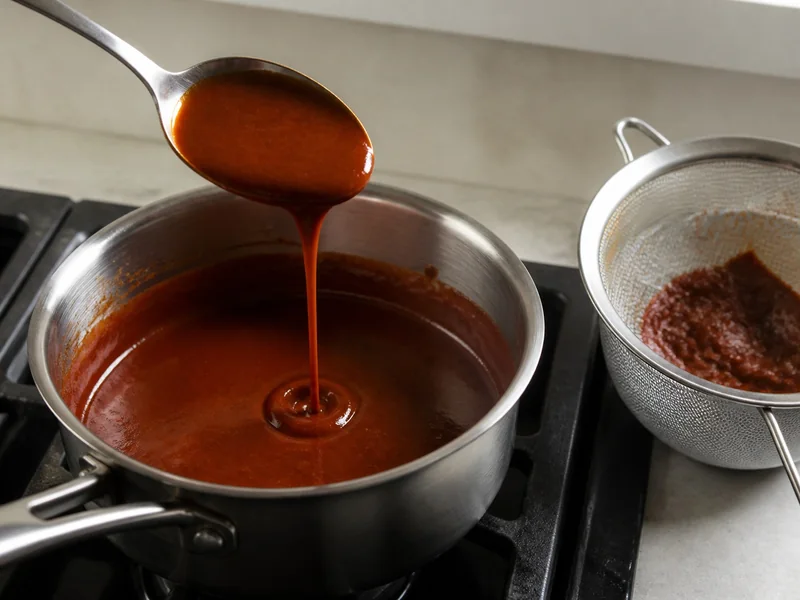
Put the softened pods, 1 cup of acceptable soaking liquid, cider vinegar, garlic, piloncillo, and salt in the blender. Start low to pull the heavy pieces into the blades, then run on high until no large pieces of skin circle the jar.
Vent the lid according to the blender manufacturer's directions and use a folded towel to control splatter without sealing expanding steam inside the warm jar.
Transfer the puree to a small nonreactive saucepan and simmer gently for 10 minutes. Stir across the bottom often enough to prevent a dense ring from catching near the edge of the burner.
The sauce is ready when a spoonful falls back in a continuous ribbon and the line remains visible for a moment before closing. If it drops in clumps, add hot water one tablespoon at a time, while a watery stream needs two more minutes of uncovered simmering before another check.
Press the sauce through a fine-mesh sieve for a silkier bottle and the cleanest pour. Leave it unstrained when a slightly rustic texture suits beans, marinades, or a spooned table sauce, since the retained pulp also preserves more yield.
Take the pan off the heat before stirring in lime juice to keep its fresh aroma above the cooked vinegar and smoke.
Balance one axis at a time
Taste a cooled teaspoon, change only one variable, and stir thoroughly before another taste because heat from the pan exaggerates aroma and makes the sauce seem thinner.
| What the sauce needs | Small first adjustment | What that change costs |
|---|---|---|
| Brighter finish | Add 1/2 teaspoon lime juice | Too much can hide the smoke |
| Less bitter edge | Add 1/2 teaspoon piloncillo | Repeated additions move the sauce toward sweet barbecue sauce |
| Clearer chile flavor | Add a pinch of kosher salt | Salt cannot repair a scorched pod |
| More heat | Blend in part of one toasted, soaked chile de arbol | The burn becomes sharper and less rounded |
| Thinner pour | Add 1 tablespoon hot water | Every addition dilutes acid, salt, and smoke |
| Thicker cling | Simmer uncovered for 2 minutes | Long reduction softens the fresh lime note |
Brown sugar works when piloncillo is unavailable, but it supplies sweetness without the same molasses-like depth. Honey changes both aroma and viscosity, so it is a variation rather than a neutral one-for-one replacement.
For a milder batch, make the full recipe with four pods rather than diluting a finished six-pod sauce with cups of water. Keeping the vinegar, garlic, salt, and lime proportions intact protects the balance while reducing the amount of chile material.
Read the symptom before fixing the batch
Troubleshooting works when the correction answers a visible or sensory symptom, since a generic splash of vinegar may brighten a dull sauce while making a thin or sharp one worse.
- Bitter or ashy usually points to a scorched pod or bitter soaking liquid. If the defect is strong, begin again because sweetness only covers part of it.
- Gritty means the blender left skin or seed fragments. Blend longer, then strain rather than thinning the sauce to make the particles less obvious.
- Watery means the puree contains more liquid than the pod solids can hold. Simmer uncovered in two-minute rounds and retest the spoon ribbon.
- Paste-thick means the pods absorbed more water or the simmer reduced too far. Blend in hot water one tablespoon at a time so the texture changes without a sudden flavor collapse.
- Flat can come from too little salt or acid. Add a pinch of salt first, then use lime in half-teaspoon steps if the chile still lacks definition.
- Smoke-heavy needs another flavor axis rather than more water. A small lime or piloncillo adjustment gives the palate contrast while keeping the sauce recognizably chipotle.
Match the pour to the food
The unstrained sauce has enough body to sit on fried eggs, black beans, roasted sweet potatoes, or a breakfast taco without running off the plate. Its fruit and smoke remain visible beside simple foods because the recipe contains no tomato to turn it into salsa.
Strain the batch for a shaker bottle or a thin line over tacos. The smoother texture also mixes more evenly into mayonnaise, crema, or yogurt, though those dairy-based mixtures need their own refrigerated storage and should not be poured back into the sauce bottle.
For grilled chicken or pork, whisk 1 tablespoon sauce with 2 tablespoons neutral oil and 1 tablespoon lime juice. Apply that mixture as a finishing brush near the end of cooking because the piloncillo can darken quickly over direct heat.
A dressing needs a looser ratio. Start with one part sauce, one part lime juice, and three parts oil, then adjust salt after the mixture is emulsified because the sauce already contributes salt and acid.
When doubling pushes past blender capacity, toast in single-layer rounds and blend in batches, then combine the puree before simmering so every bottle has the same concentration.
Refrigerate this batch or freeze portions
This formula is a refrigerator sauce, not a pantry one. Cold storage or the freezer is the safe route for a batch mixed to your own proportions.
Cool the sauce promptly, transfer it to a clean covered container, and refrigerate at 40 F or below. Penn State Extension uses that temperature as the upper limit for refrigerated foods, while Oregon State University Extension advises refrigerating or freezing original sauce recipes that have not been validated for canning.
Oregon State University Extension describes refrigerated salsa-type sauces as keeping for several weeks and frozen sauces for months. Use a smaller working jar and freeze the rest in labeled portions when the batch will not be used regularly, since repeated opening introduces utensils and air to the whole supply.
Leave headspace in freezer containers and thaw a portion in the refrigerator. Stir after thawing because natural separation can occur in a sauce with no commercial stabilizer.
Discard the sauce if mold, unexpected bubbling, slime, or an odor outside its normal smoky-vinegar profile appears. A measured pH below 4.6 is relevant to acidified-food controls, but the National Center for Home Food Preservation still requires a tested recipe and process for home canning rather than treating one home pH reading as permission to improvise.
Chef's Tip
Use aroma as the toast signal. A pod that smells acrid or develops a black blister should be replaced before it can make the full batch bitter.
Ingredients
-
6 dried chipotle podsmorita or meco, stemmed
-
2 cups hot water for soakingplus more only as needed
-
1/2 cup apple cider vinegar labeled 5% acidity
-
3 garlic clovespeeled
-
1 tablespoon grated piloncillo or packed brown sugar
-
1 teaspoon kosher salt
-
1 teaspoon fresh lime juice
Full Recipe Instructions
Toast the stemmed…
Toast the stemmed chipotle pods in a dry skillet over medium heat for 15 to 30 seconds per side, removing each pod when its smoky aroma becomes fuller.
Cover the pods…
Cover the pods with hot off-boil water, weight them below the surface, and soak for about 20 minutes until the thickest shoulder folds without cracking.
Taste a cooled…
Taste a cooled drop of soaking liquid. Blend the softened pods with 1 cup acceptable soaking liquid or clean hot water, vinegar, garlic, piloncillo, and salt until no large skin pieces remain.
Simmer the puree…
Simmer the puree gently for 10 minutes, stirring across the bottom, until sauce falling from a spoon leaves a line that closes slowly on the surface.
Strain for a…
Strain for a silkier narrow-bottle pour if desired, remove from the heat, stir in the lime juice, then cool promptly and refrigerate.