Thai Chili

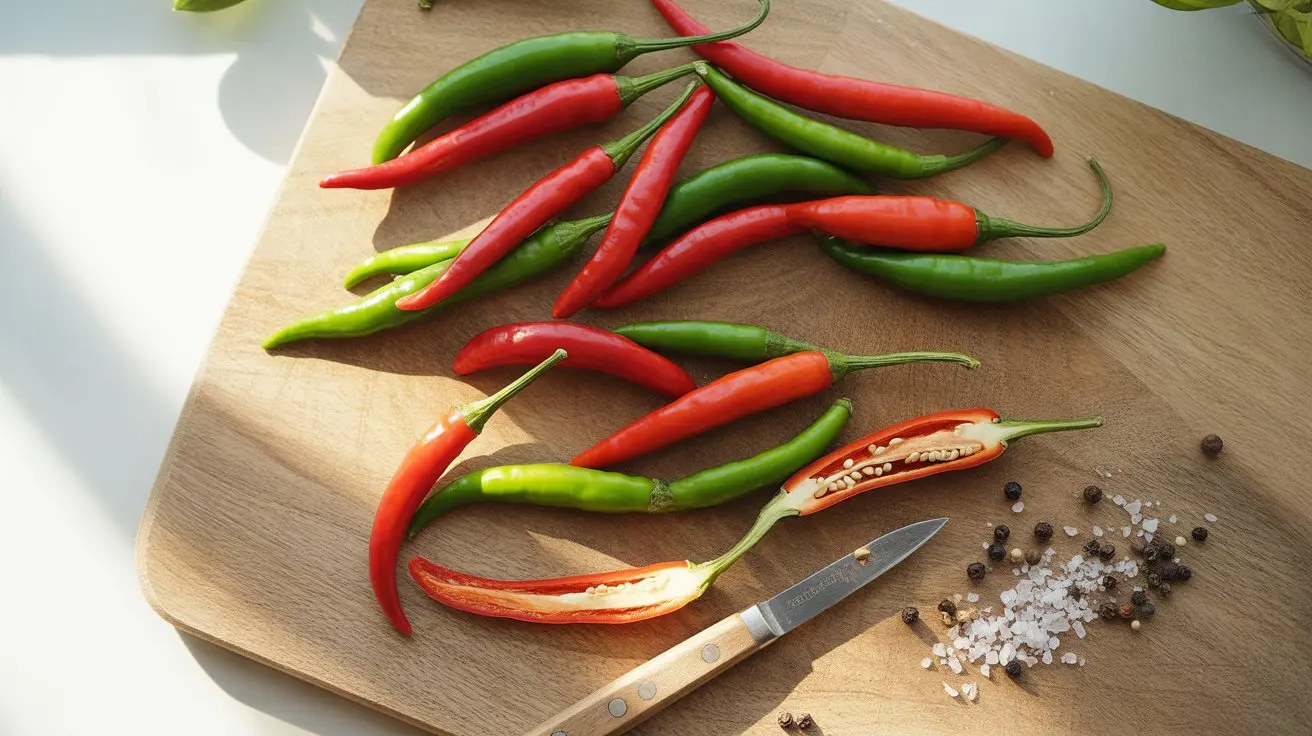
The Thai chili is a small but ferocious pepper registering 50,000–100,000 SHU — roughly on par with a scotch bonnet in raw heat. Native to Thailand and central to Southeast Asian cooking, these finger-length pods deliver a bright, peppery burn that hits fast and lingers. Fresh, dried, or ground, they are the backbone of countless regional dishes across the continent.
- Species: C. annuum
- Heat tier: Extra-Hot (100K–1M SHU)
- Comparison: 20x hotter than a jalapeño
What is Thai Chili?
Small enough to overlook, fierce enough to remember — the Thai chili punches well above its size. Measuring just 1–3 inches long, these slender pods belong to C. annuum's broad botanical family, the same species that includes bell peppers and cayenne. Yet in character, they are nothing like their mild relatives.
At 50,000–100,000 SHU, the heat lands somewhere near a scotch bonnet — fast, sharp, and persistent. The flavor underneath that heat is genuinely bright and peppery, not fruity or smoky, which makes Thai chilies especially useful in dishes where you want clean fire rather than layered complexity.
They ripen from green to red, with both stages used in cooking. Green pods are grassier and slightly less hot; red ones carry more heat and a touch more sweetness. The tiny, pointed pod shape you see in markets is characteristic of the broader bird's eye chili group, and the two names are often used interchangeably — though Thai chilies are specifically cultivated varieties from Thailand.
For context: these are significantly hotter than serrano-level heat, and that gap is noticeable the moment you bite in. The burn builds quickly and spreads across the palate, staying for several minutes. Anyone new to this heat tier should start with half a pod.
History & Origin of Thai Chili
Chili peppers arrived in Southeast Asia via Portuguese trade routes in the late 15th and early 16th centuries, originating from the Americas. Thailand adopted them rapidly, and within a few generations, chilies had displaced black pepper as the primary source of heat in Thai cooking.
The varieties that took root in Thai soil — what we now call Thai chilies — were shaped by centuries of local selection. Farmers cultivated plants for prolific yields, manageable size, and that characteristic bright heat that integrates cleanly into curries, soups, and stir-fries. By the time Thai cuisine gained international recognition in the 20th century, these small red pods were already inseparable from its identity.
Today, Thailand is both a major producer and consumer of these chilies, and the pepper has traveled with Thai diaspora communities worldwide. The regional pepper tradition they represent stretches across borders into Laos, Vietnam, and Cambodia.
How Hot is Thai Chili? Heat Level & Flavor
The Thai Chili delivers 50K–100K Scoville Heat Units, placing it in the Extra-Hot tier (100K–1M SHU). That makes it roughly 20x hotter than a jalapeño.
Flavor notes: bright and peppery.
Thai Chili Nutrition Facts & Health Benefits
Thai chilies are nutritionally dense for their size. A 10-gram serving (about 3–4 fresh pods) provides meaningful amounts of vitamin C — sometimes exceeding 100% of the daily recommended value when consumed regularly as part of Southeast Asian diets. They also contain vitamin A, potassium, and dietary fiber.
Capsaicin, the compound responsible for heat, has been studied for its anti-inflammatory properties and potential metabolic effects. The receptor chemistry behind how capsaicin creates that burning sensation involves TRPV1 ion channels in nerve endings — the same pathway that makes the heat feel like temperature rather than taste.
Calories are negligible. The nutritional contribution is real, even in small quantities.
Best Ways to Cook with Thai Chili Peppers
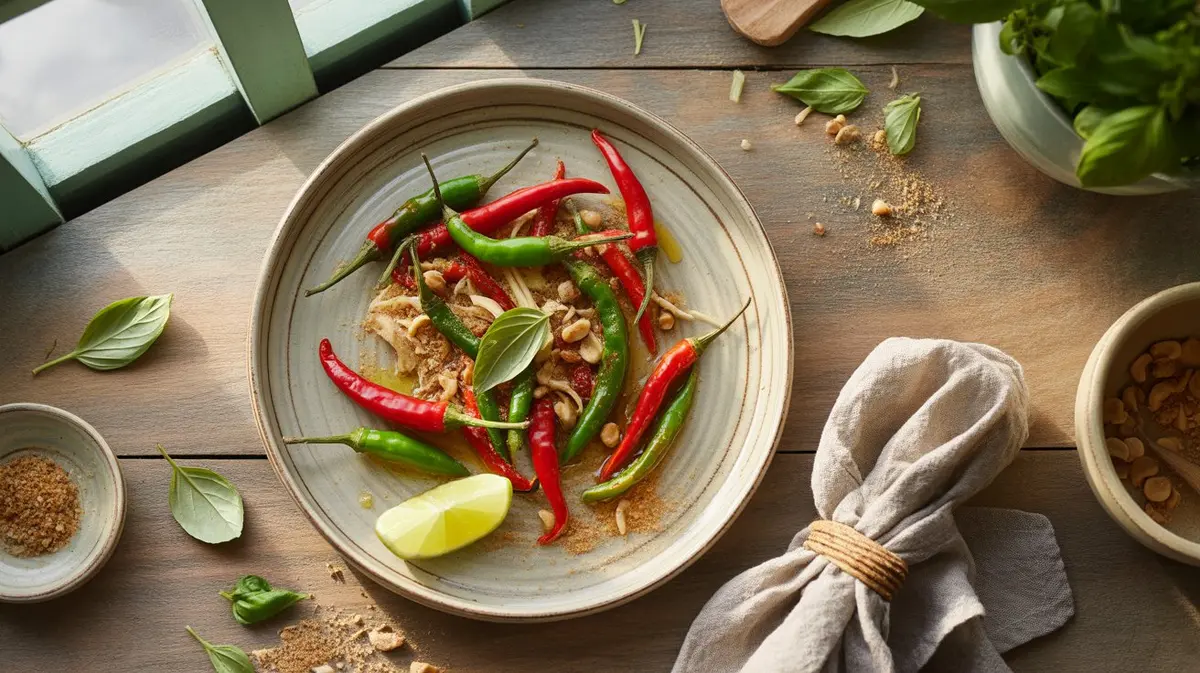
Thai chilies are one of the most flexible hot peppers in Asian cooking, used at nearly every stage of meal preparation. Fresh pods go into nam prik (chile dipping sauces), green curries, and larb. Dried whole chilies get toasted in oil to infuse heat into stir-fries. Ground into flakes or powder, they finish soups and noodle dishes.
The heat-to-flavor ratio is what makes them indispensable. Unlike some superhot peppers where capsaicin overwhelms everything else, Thai chilies deliver enough brightness and pepper character to actually contribute flavor — not just pain. That said, at 50,000–100,000 SHU, they sit firmly in the extra-hot intensity bracket, so portion control matters.
For substitutions, the sharp fruity heat of a peach-toned sweet-hot hybrid works in some applications, though the flavor profiles differ. More reliable swaps include the intense peppery punch of malagueta chilies — a Brazilian variety with a similar cultural weight in its own cuisine.
Dried Thai chilies keep their heat well and rehydrate nicely in broth or oil. When fresh pods are unavailable, dried flakes are a reasonable stand-in at about 1/4 teaspoon per fresh chili. Always remove seeds if you want to dial back intensity without sacrificing flavor.
Where to Buy Thai Chili & How to Store
Fresh Thai chilies are available in most Asian grocery stores year-round, typically sold loose or in small bags. Look for firm, glossy pods without soft spots or wrinkling. Both green and red stages are useful — green for sharper grassiness, red for fuller heat.
Refrigerate fresh pods in a paper bag inside a plastic bag; they keep for 1–2 weeks this way. For longer storage, freeze them whole — no blanching required — or dry them using a dehydrator or low oven at 135°F until brittle.
Dried Thai chilies and flakes are pantry staples that keep for 12–18 months in an airtight container away from light. Check the Scoville rating system for comparing dried versus fresh heat intensity if you are adjusting recipes between forms.
Best Thai Chili Substitutes & Alternatives
Whether you ran out of thai chili or just want to try something different, these peppers make solid stand-ins. We picked them based on heat range, flavor overlap, and how well they actually work in the same dishes.
Our top pick: Apollo Pepper (50K–100K SHU). Same species (C. annuum) and nearly the same heat, so it swaps in at a 1:1 ratio without changing the character of the dish. The flavor leans bright and crisp, which is close enough that most people won’t notice the difference in a cooked recipe.
How to Grow Thai Chili Peppers
The hardest part of growing Thai chilies is not germination — it is managing heat stress during fruiting. These plants originate from a tropical climate and expect warmth, but sustained temperatures above 95°F (35°C) cause flower drop before pods can set. In hot inland regions, afternoon shade during peak summer becomes essential.
Germination itself is straightforward at 80–85°F soil temperature, typically within 10–14 days. Start seeds indoors 8–10 weeks before last frost. Once established, Thai chili plants are remarkably productive — a single mature plant can yield hundreds of pods over a season.
They prefer well-draining soil with consistent moisture but will tolerate brief dry spells better than waterlogging. Feed with a low-nitrogen fertilizer once flowering begins; too much nitrogen pushes leaf growth at the expense of pods.
For growers interested in year-round production, overwintering pepper plants is worth considering — Thai chilies respond well to being cut back and brought indoors, often producing again in their second year with less startup time. Compare their cultivation demands to the thick-walled rocoto's cold-climate tolerance if you are working with a short growing season. Once harvested, learning to properly dry hot peppers extends your supply significantly through the winter months.
Frequently Asked Questions
-
Thai chilies register 50,000–100,000 SHU, which puts them in the same heat range as a scotch bonnet. The difference is in character — Thai chilies are brighter and more peppery, while scotch bonnets carry a distinctly fruity, floral quality alongside their heat.
-
Yes, with some adjustment — use about 1/4 teaspoon of flakes per fresh chili called for in a recipe. Dried flakes integrate more evenly into sauces and oils but lose some of the fresh brightness that makes raw Thai chilies distinct.
-
They are closely related and often used interchangeably, but Thai chilies are specifically cultivated varieties developed in Thailand. The broader bird's eye category includes similar small, pointed chilies grown across Southeast Asia and Africa.
-
Removing the seeds and inner membrane cuts heat noticeably, since most capsaicin concentrates there. Using fewer pods and adding a fat — coconut milk, peanut butter, or oil — also helps, as capsaicin binds to fat rather than water.
-
From transplant to first ripe pods typically runs 70–90 days, depending on growing conditions and whether you are harvesting green or waiting for full red ripeness. Plants grown in consistently warm conditions tend to fruit faster and more prolifically.
- Chile Pepper Institute - New Mexico State University
- USDA FoodData Central - Hot Peppers
- University of California Cooperative Extension - Growing Peppers
- Bosland & Votava, Peppers: Vegetable and Spice Capsicums (2nd ed.)
Species classification: C. annuum — based on published botanical taxonomy.