Infinity Chili

The Infinity Chili briefly held the world record for hottest pepper in 2011, clocking in at 1,067,000-1,250,000 SHU. Bred in England by Nick Woods, this C. chinense species delivers fruity, intense heat that builds slowly before hitting like a wall. Roughly 250 times hotter than a jalapeño, it belongs to a small club of peppers that can genuinely be called dangerous.
- Species: C. chinense
- Heat tier: Super-Hot (1M+ SHU)
- Comparison: 250x hotter than a jalapeño
What is Infinity Chili?
The first time I tasted an Infinity Chili, I made the rookie mistake of treating it like a habanero - small bite, chew, evaluate. The fruity sweetness hit first, almost tropical, and for about four seconds I thought the heat hype was overblown. Then it arrived.
At 1,067,000-1,250,000 SHU, the Infinity sits firmly in the super-hot pepper category alongside legends like the record-shattering Carolina Reaper and the Trinidad Moruga Scorpion's volcanic intensity. What separates it from many in that range is the flavor that precedes the fire - genuinely fruity and complex before the capsaicin takes over.
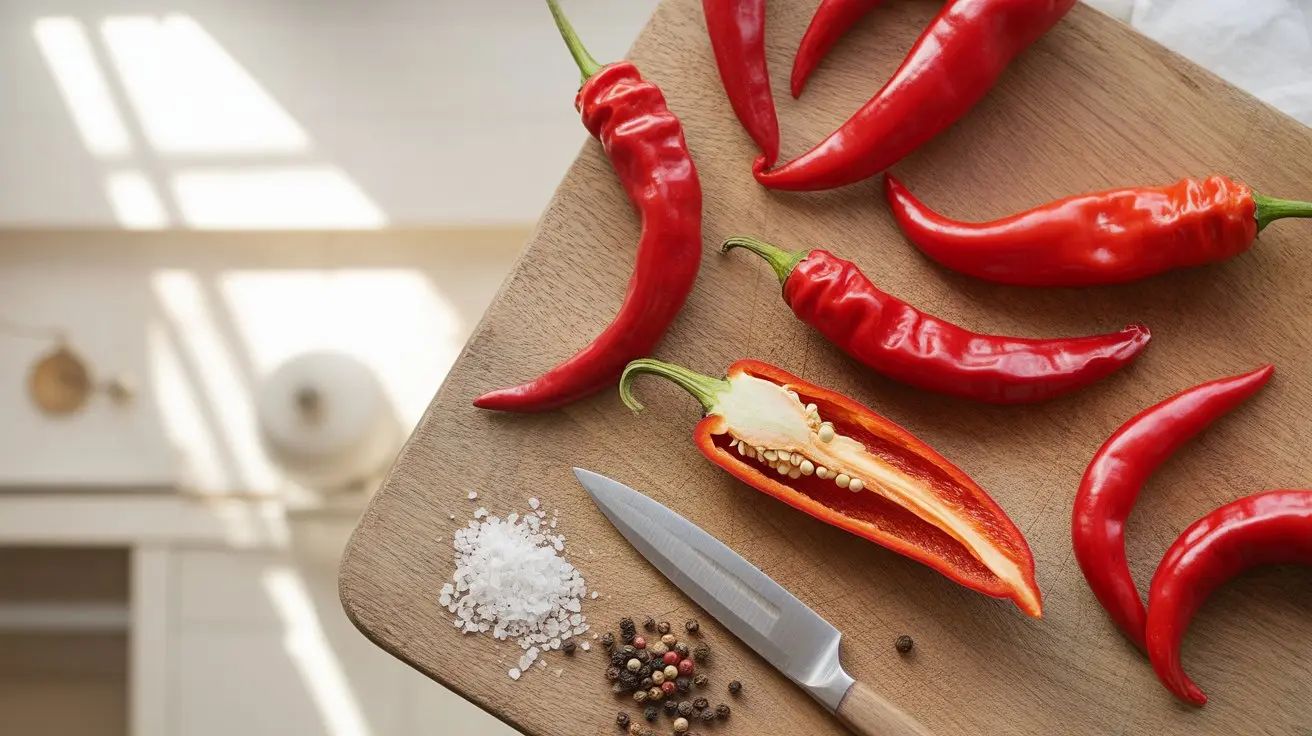
The pepper itself is visually distinctive: small, deeply wrinkled, and red at full maturity. That bumpy, gnarly exterior is a hallmark of high-capsaicin C. chinense varieties. The pods are relatively compact, but size is irrelevant at this heat level.
Nick Woods of Fire Foods in Lincolnshire, England, developed the Infinity and had it verified by Warwick HRI (Horticulture Research International) in 2011. It held the Guinness World Record for just two weeks before being displaced - a testament to how rapidly the super-hot breeding world was moving at the time. That brief record tenure doesn't diminish what it is: one of the most intensely hot peppers ever produced on British soil.
History & Origin of Infinity Chili
The Infinity Chili emerged from the competitive super-hot breeding scene that exploded in the late 2000s. Nick Woods, a chili enthusiast and vendor based in Lincolnshire, spent years selecting for maximum heat and submitted his creation for official testing through Warwick HRI in early 2011.
On February 18, 2011, the Guinness World Records officially recognized the Infinity as the world's hottest pepper at 1,067,000 SHU. The record lasted exactly two weeks before the Naga Viper claimed the title.
England's role in the super-hot world is often underestimated - the British chili pepper tradition has produced multiple record-contenders, driven by a passionate community of growers who import C. chinense genetics and push them through selective breeding. The Infinity remains a milestone in that story, even if its record reign was brief.
How Hot is Infinity Chili? Heat Level & Flavor
The Infinity Chili delivers 1.1M–1.3M Scoville Heat Units, placing it in the Super-Hot tier (1M+ SHU). That makes it roughly 250x hotter than a jalapeño.
Flavor notes: fruity and intense.
Infinity Chili Nutrition Facts & Health Benefits
Like all super-hot C. chinense peppers, the Infinity Chili is nutritionally dense relative to its size. A single pod provides meaningful amounts of vitamin C - often exceeding 100% of the daily recommended intake - along with vitamin A and B6.
The capsaicin content, responsible for the extreme heat, has documented metabolic effects. Research published in the British Journal of Nutrition links capsaicin to thermogenesis and appetite suppression. The health implications of high-capsaicin peppers extend to cardiovascular and anti-inflammatory markers as well.
Given that realistic serving sizes are tiny (fractions of a pod), the practical nutritional contribution per meal is modest - but the capsaicin itself is bioactive at even small doses.
Best Ways to Cook with Infinity Chili Peppers
Using the Infinity in a kitchen context requires treating it less like an ingredient and more like a seasoning agent measured in milligrams. A single pod can carry enough heat to transform a large batch of hot sauce into something most people can't finish.
The fruity character does come through in extracts and fermented sauces when the heat is distributed across a large volume. For hot sauce production, pairing it with mango, pineapple, or passion fruit amplifies the tropical notes already present in the pepper. A ratio of one pod per quart of sauce base is a reasonable starting point for a very hot but still edible product.
For cooking, the Infinity works best in oil infusions where the capsaicin and flavor compounds transfer into the fat. A single split pod simmered in olive oil for 20 minutes, then removed, produces a finishing oil that carries the fruity character without the incapacitating heat of eating the pepper directly.
Compared to something like the peach-toned ghost scorpion's layered burn profile, the Infinity's heat is more linear and sustained. It doesn't have as many flavor dimensions, but what it delivers - fruit followed by prolonged, intense burn - it delivers consistently. Wear gloves. Don't touch your face. That's not a suggestion.
Where to Buy Infinity Chili & How to Store
Fresh Infinity Chilis are rarely found in mainstream markets. Specialty chili vendors, UK-based fire food retailers, and farmers markets with dedicated hot pepper growers are the most reliable sources. Online dried pods and powder are more accessible than fresh.
For storage, fresh pods last 1-2 weeks refrigerated in a paper bag. Freezing whole pods extends shelf life to 12 months with minimal flavor loss - freeze them unwashed and use directly from frozen. Dried pods store well in an airtight container away from light for up to 2 years.
For long-term use, follow proper pepper preservation methods to maintain potency. Powder degrades faster than whole dried pods - buy whole and grind as needed.
Best Infinity Chili Substitutes & Alternatives
Whether you ran out of infinity chili or just want to try something different, these peppers make solid stand-ins. We picked them based on heat range, flavor overlap, and how well they actually work in the same dishes.
Our top pick: 7 Pot Barrackpore (800K–1.3M SHU). Same species (C. chinense) and nearly the same heat, so it swaps in at a 1:1 ratio without changing the character of the dish. The flavor leans fruity and floral, which is close enough that most people won’t notice the difference in a cooked recipe.
How to Grow Infinity Chili Peppers
Growing the Infinity follows the same demanding protocol as most C. chinense super-hots. The species evolved in humid tropical climates, so replicating warmth and consistent moisture is the core challenge in cooler regions like its home country of England.
Start seeds indoors 10-12 weeks before last frost. Germination requires soil temperatures of 80-85°F (27-29°C) - a heat mat is non-negotiable, not optional. Expect germination in 10-21 days; slower is normal for super-hots.
Transplant into containers or raised beds once nighttime temps stay above 55°F (13°C). The Infinity needs a long season - 90-120 days from transplant to ripe pods - which is why UK growers typically use polytunnels or greenhouses. In USDA zones 9-11, outdoor growing is straightforward; anywhere cooler, protected growing is almost essential.
Feed with a low-nitrogen fertilizer once flowering begins. High nitrogen promotes foliage at the expense of pod production. Consistent watering matters more than volume - irregular moisture causes blossom drop and affects pod development. For a detailed step-by-step growing walkthrough, the process applies well to this variety.
For comparison on how growing environment affects pod characteristics, look at the cultivation traits of the Trinidad-origin Barrackpore - similar requirements, equally demanding.
Frequently Asked Questions
-
The Infinity held the Guinness World Record for the world's hottest pepper for approximately two weeks in February 2011 before the Naga Viper took the title. Despite the brief tenure, it remains one of the most significant peppers in British chili breeding history.
-
The Infinity Chili (1,067,000-1,250,000 SHU) and the Trinidad Moruga Scorpion's extreme upper range overlap significantly, with the Moruga capable of exceeding 2 million SHU at its peak. In typical specimens, they are comparable - both are well beyond what most people can consume directly.
-
Technically yes, but it's not advisable without significant heat tolerance built up over time. The sustained burn at 1M+ SHU can cause physical distress including intense sweating, hiccuping, and nausea in unprepared individuals.
-
The initial flavor is genuinely fruity - tropical and slightly sweet, characteristic of C. chinense varieties. That pleasant window lasts only a few seconds before the capsaicin load takes over completely.
-
The Infinity sits in the same general heat range as peppers like the fiercely hot Jonah variety and the distinctively shaped Katie pepper, all clustering between 800,000 and 1,300,000 SHU. The Infinity tends to have a smoother, more linear heat curve compared to the more erratic intensity spikes common in 7 Pot varieties.
- Guinness World Records - Hottest Chili
- Warwick HRI Chili Testing
- British Journal of Nutrition - Capsaicin and Thermogenesis
- Chile Pepper Institute - C. chinense Species
- Fire Foods - Infinity Chili Origin
Species classification: C. chinense — based on published botanical taxonomy.