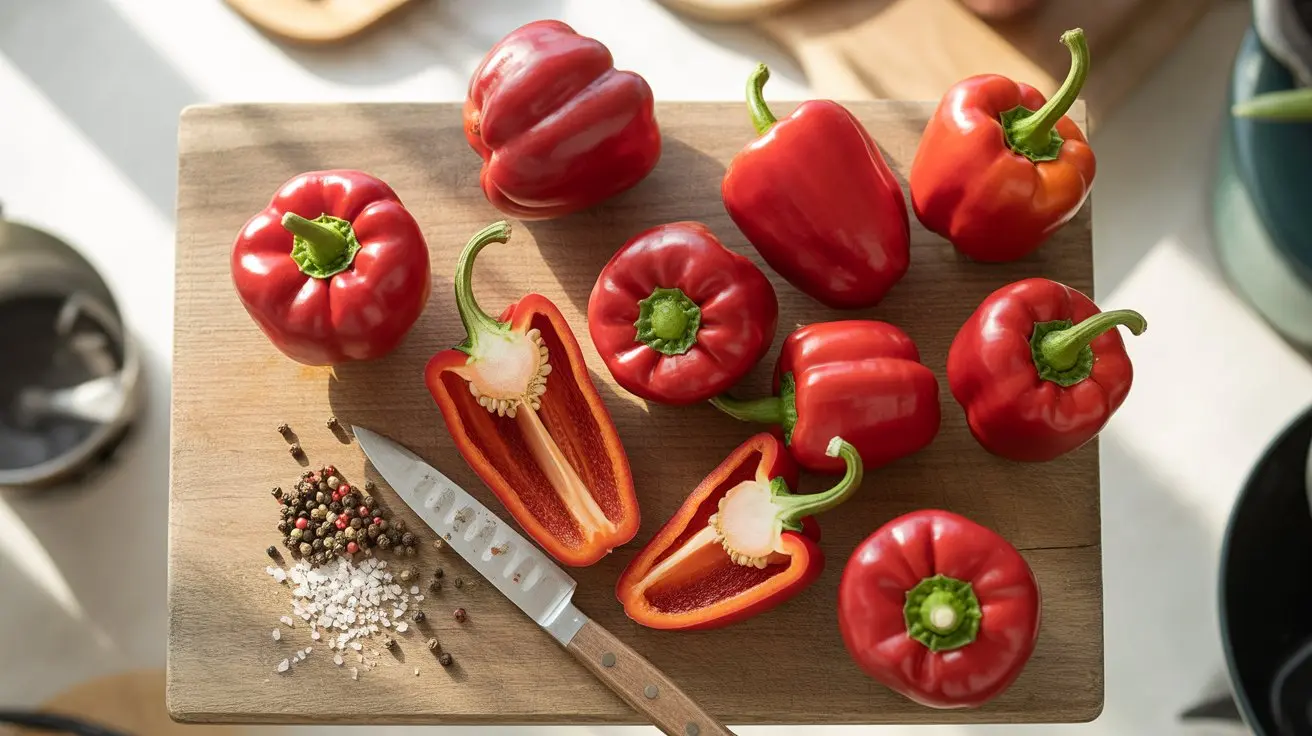
7 Pot Red Giant

The 7 Pot Red Giant tops out at 1,200,000 SHU — putting it squarely in the super-hot category alongside Trinidad's most feared peppers. Despite the name, it doesn't just burn: the fruity, smoky flavor hits before the heat does. Grown from C. chinense stock, this wrinkled red pod is bigger than most 7 Pot variants and carries serious culinary potential for those who can handle it.
- Species: C. chinense
- Heat tier: Super-Hot (1M+ SHU)
- Comparison: 240x hotter than a jalapeño
What is 7 Pot Red Giant?
Most people assume the 7 Pot Red Giant is just a larger, angrier version of a standard super-hot — a novelty for heat chasers. That's only half right.
The name '7 Pot' refers to a Trinidadian claim that one pepper could spice seven pots of stew. The Red Giant variant takes that reputation seriously, producing pods that are noticeably larger than relatives like the wrinkled, elongated 7 Pot Jonah while delivering the same 850,000–1,200,000 SHU heat range.
What surprises most first-timers is the flavor sequence. Fruity top notes — think tropical fruit with a faint smokiness — arrive before the capsaicin fully activates. That window is brief, but it's real. The TRPV1 receptor response kicks in hard after that, and the heat lingers.
Compared to the 7 Pot Douglah (which regularly tests above 1.8M SHU), the Red Giant is measurably milder — though 'mild' is relative when you're still at twelve times the heat of a habanero. The pods are distinctively wrinkled with a bumpy, irregular surface and mature to a deep crimson red.
This is a C. chinense through and through: slow to mature, heat-loving, and prone to cross-pollination if you're not careful with isolation. The Trinidad pepper tradition that produced it has a long history of pushing capsaicin to its limits.
History & Origin of 7 Pot Red Giant
Trinidad's pepper culture runs deep. The island has produced some of the most heat-extreme C. chinense varieties ever documented, and the 7 Pot Red Giant sits within that lineage.
The broader 7 Pot family emerged from Trinidadian home gardens and small farms, where peppers were selected generation after generation for heat, yield, and culinary utility. The Red Giant is believed to be a stabilized selection from that pool — chosen partly for pod size and partly for its distinctive fruity-smoky flavor profile.
Unlike the peach-toned Trinidad-origin variety with ghost pepper lineage, the Red Giant stayed closer to traditional Trinidadian 7 Pot stock. It gained wider attention in the early 2010s as the super-hot pepper market expanded beyond the Reaper and Scorpion, giving collectors a large-fruited alternative with serious heat credentials.
How Hot is 7 Pot Red Giant? Heat Level & Flavor
The 7 Pot Red Giant delivers 850K–1.2M Scoville Heat Units, placing it in the Super-Hot tier (1M+ SHU). That makes it roughly 240x hotter than a jalapeño.
Flavor notes: fruity and smoky.
7 Pot Red Giant Nutrition Facts & Health Benefits
Like other C. chinense super-hots, the 7 Pot Red Giant is nutritionally dense in small packages. Fresh pods contain meaningful amounts of vitamin C — often exceeding bell peppers by weight — along with vitamin A, vitamin B6, and potassium.
The high capsaicin concentration (the compound responsible for heat) has been studied for anti-inflammatory and metabolic effects, though the quantities used in research are typically standardized extracts, not whole peppers. A single pod delivers roughly 5–10 calories.
For context on how capsaicin behaves in the body, the TRPV1 receptor activation mechanism explains why the burn feels different from other types of heat.
Best Ways to Cook with 7 Pot Red Giant Peppers
Cooking with the 7 Pot Red Giant requires a plan — this isn't a pepper you improvise with.
The fruity-smoky character makes it genuinely useful in small quantities. Hot sauces are the most practical application: a single pod blended into a larger batch delivers noticeable heat without turning the sauce into a punishment. The smokiness pairs well with roasted tomatoes, garlic, and vinegar-forward bases.
Drying and grinding works exceptionally well here. The fruity notes concentrate during dehydration, and the resulting powder carries both heat and flavor — unlike some super-hots that lose nuance when dried. A pinch of 7 Pot Red Giant powder in a mole or barbecue rub adds depth that pure heat can't replicate.
For those interested in similar cooking applications, the Trinidad-origin pepper known for its culinary versatility at 1M+ SHU offers a useful comparison point.
Gloves are non-negotiable. The capsaicin oil transfers easily and persists on skin for hours. If you're fermenting, the pods hold up well in brine — fermented Red Giant mash is a common base for artisan hot sauce makers. Start with 1/4 to 1/2 pod per serving in any fresh application until you know your tolerance.
Where to Buy 7 Pot Red Giant & How to Store
Fresh 7 Pot Red Giants rarely appear in grocery stores — specialty pepper vendors and farmers markets with heat-focused growers are your best sources. Online retailers like [Pepper Joe's](https://www.pepperjoes.com) and specialty seed companies stock both fresh pods (seasonally) and dried product year-round.
Store fresh pods in the refrigerator crisper drawer for up to 2 weeks. For longer storage, freeze whole pods without blanching — they retain heat and most flavor compounds well. Dried pods keep for 12 months in an airtight container away from light. Powder degrades faster; use within 6 months for best potency.
Always check that pods are firm and fully red before buying — soft spots indicate breakdown.
Best 7 Pot Red Giant Substitutes & Alternatives
Whether you ran out of 7 pot red giant or just want to try something different, these peppers make solid stand-ins. We picked them based on heat range, flavor overlap, and how well they actually work in the same dishes.
Our top pick: Jay's Peach Ghost Scorpion (850K–1.2M SHU). Same species (C. chinense) and nearly the same heat, so it swaps in at a 1:1 ratio without changing the character of the dish. The flavor leans fruity and sweet, which is close enough that most people won’t notice the difference in a cooked recipe.
How to Grow 7 Pot Red Giant Peppers
Starting seeds indoors 10–12 weeks before last frost is the standard approach for growing super-hots from seed. The 7 Pot Red Giant needs that head start — it's a long-season plant that won't hit full production if direct-sown in most climates.
Soil temperature for germination should be 80–85°F. A heat mat under seed trays makes a real difference; without one, germination can stretch to 3–4 weeks. Once seedlings are established, they want consistent warmth above 65°F at night and full sun during the day.
The plants grow large — expect 3–4 feet in height with adequate spacing. Give each plant at least 18 inches of room. Containers work, but go big: a 5-gallon minimum, though 7–10 gallon pots produce noticeably better yields.
Isolation matters if you're saving seed. The Red Giant crosses readily with other C. chinense varieties in the same garden. A 10-foot buffer or physical bagging of flowers is the only reliable protection.
Days to maturity run 90–120 days from transplant. If you want to ripen green pods faster late in the season, pulling the plant and hanging it upside down indoors can accelerate color change. Pods are ready at full red — don't harvest early expecting the fruity notes to develop.
Frequently Asked Questions
-
The 7 Pot Red Giant measures 850,000–1,200,000 SHU, placing it in the same range as the Trinidad Moruga Scorpion's lower measurements but well below the chocolate-brown Douglah's extreme 1.8M+ SHU output. It's significantly hotter than a habanero (roughly 12x) but more approachable than the current record holders.
-
Yes — the fruity and smoky flavor profile is genuine, not marketing language. There's a brief window after the first bite where tropical fruit notes register before capsaicin fully activates the TRPV1 receptors, which is why it works well in hot sauces where flavor complexity matters.
-
Pod size is the most obvious difference — the Red Giant produces larger, heavier pods than variants like the intensely hot yellow-fruited 7 Pot or the creamy-white heat of the pale 7 Pot strain. The flavor profile also skews smokier than most other 7 Pot selections.
-
It's not beginner-friendly, but it's manageable with the right setup. The main challenges are the long growing season (90–120 days from transplant), the need for consistently warm temperatures, and the tendency to cross-pollinate with nearby C. chinense plants if you're saving seed.
-
Seeds are available through specialty vendors like Pepper Joe's, Baker Creek Heirloom Seeds, and various online hot pepper retailers. Fresh pods are seasonal and typically only available through specialty growers at farmers markets or direct-to-consumer pepper farms.
- Chile Pepper Institute - NMSU Variety Information
- Bosland, P.W. - Capsicum: The Genus Capsicum (Research Overview)
- USDA GRIN - Capsicum chinense Accession Data
- Cichewicz, R.H. & Thorpe, P.A. - The Antimicrobial Properties of Chile Peppers
Species classification: C. chinense — based on published botanical taxonomy.