
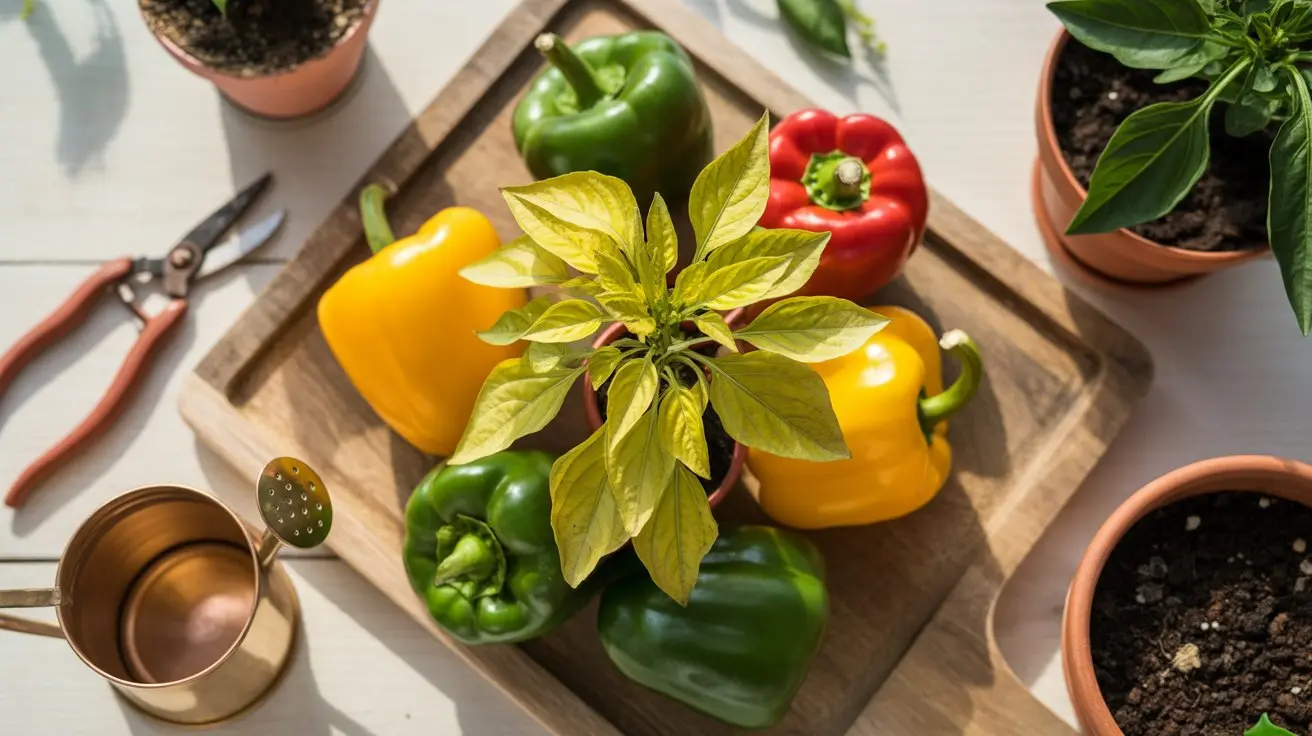
Pepper Leaves Turning Yellow
Yellow pepper leaves? Diagnose the cause—overwatering, nutrient deficiency, or disease—and fix it before you lose the plant. Find your perfect heat level.

Why Your Pepper Leaves Are Turning Yellow
A few seasons back, a tray of seedlings started fading from deep green to a sickly pale yellow almost overnight. The plants looked fine the day before — same light, same water schedule. Turned out the issue was nitrogen lockout caused by a pH swing in the potting mix, something that never showed up until the leaves announced it.
Yellow leaves on pepper plants are almost always a symptom, not the disease itself. Identifying the root cause early is the difference between a minor correction and losing the plant entirely.
Overwatering: The Most Common Culprit
Overwatering causes more yellow pepper leaves than any other single factor. Waterlogged soil starves roots of oxygen, triggering a stress response that shows up first in the foliage.
The tell is in the texture. Overwatered leaves turn yellow and feel soft or slightly mushy, sometimes dropping before they fully yellow. Underwatered leaves yellow too, but they curl, crisp at the edges, and the soil pulls away from the pot walls.
Check the soil 2 inches down before watering. If it is still moist, wait. Peppers prefer consistent moisture, not constant moisture. Containers need drainage holes — no exceptions.
If you are growing peppers in pots and want a full walkthrough of soil mix, container selection, and watering rhythm, the step-by-step pepper growing guide covers all of it in sequence.
Nitrogen Deficiency
Nitrogen deficiency produces a specific yellowing pattern: it starts at the oldest, lowest leaves and moves upward. The leaves turn uniformly pale yellow — not spotted, not blotchy.
This happens because nitrogen is mobile in plants. When there is not enough, the plant scavenges it from older tissue to feed new growth at the top. The bottom leaves are sacrificed first.
Fix it with a balanced fertilizer or a nitrogen-heavy formula like fish emulsion or blood meal. Apply at half-strength first to avoid fertilizer burn. If you are growing in containers, nutrients deplete faster than in-ground beds — plan on feeding every 2-3 weeks during the growing season.
Worth noting: fertilizing too aggressively causes its own problems. Excess nitrogen pushes leafy growth at the expense of fruit set and can cause tip burn on its own.
Iron and Magnesium Deficiency
The tricky part: iron chlorosis is often not about a lack of iron in the soil. It is about pH. When soil pH rises above 7.0, iron becomes chemically unavailable even if it is physically present. Test your soil pH before adding iron supplements.
Magnesium deficiency also causes interveinal yellowing but starts on older leaves, similar to nitrogen. Magnesium is the central atom in chlorophyll molecules, so a shortage hits photosynthesis directly. A foliar spray of Epsom salt (magnesium sulfate) at 1 tablespoon per gallon of water is a fast-acting fix.
pH Problems and Nutrient Lockout
Soil pH controls whether roots can absorb nutrients at all. Peppers grow best in soil with a pH between 6.0 and 6.8. Outside that range, nutrients become chemically bound and unavailable, regardless of how much fertilizer you apply.
Nutrient lockout is especially common in containers where pH can drift over time as water minerals accumulate. A cheap digital pH meter or test strips from a garden center will tell you immediately whether this is the issue.
To lower pH (too alkaline): add sulfur or acidic fertilizers. To raise pH (too acidic): use agricultural lime. Adjust gradually — a 0.5 unit shift per week is safer than a large correction all at once.
Root Rot and Fungal Disease
Root rot, usually caused by Phytophthora or Pythium species, produces yellowing that starts at the bottom of the plant and works upward fast. Stems may show brown discoloration at the soil line. Pull the plant from the pot and the roots will look brown, mushy, and may smell foul.
There is no reliable cure once root rot is advanced. Prevention is the only real strategy: good drainage, correct watering frequency, and avoiding cold, wet conditions in early spring.
Fungal leaf diseases like Cercospora and Phytophthora blight create yellow halos around brown or black lesions. These spread through splash and contact. Remove affected leaves immediately, avoid overhead watering, and improve air circulation between plants.
Pepper varieties differ significantly in disease tolerance. The ornamental variety with deep purple-black foliage is notably more cold-tolerant than many standard varieties, which affects how vulnerable it is to the damp conditions that encourage fungal problems.
Pests That Cause Yellowing
Spider mites, aphids, and whiteflies all cause yellowing by piercing leaf tissue and feeding on plant sap. The damage pattern is usually stippled or mottled rather than uniform — tiny pale dots across the leaf surface.
Spider mites thrive in hot, dry conditions. Check the undersides of leaves for fine webbing and tiny moving dots. A hard spray of water knocks populations down fast. Neem oil or insecticidal soap handles heavier infestations.
Aphids cluster on new growth and the undersides of leaves. They excrete honeydew, which leads to sooty mold — a black coating that blocks light and makes yellowing worse. Ladybugs are effective biological control. Neem oil works well as a spray.
Thrips cause silvery streaking that can look like yellowing from a distance. Look closely at the leaf surface — actual thrip damage has a papery, scratched appearance rather than true chlorosis.
Temperature Stress and Light Problems
Peppers are warm-season crops. Temperatures below 55°F (13°C) cause chilling injury, which shows up as yellowing, purpling, or leaf drop. This is especially common when seedlings are transplanted too early or when nights turn unexpectedly cold in early summer.
Cold stress yellowing tends to affect the whole plant rather than following a bottom-up or vein-specific pattern. Once temperatures warm, recovery usually happens without intervention — but fruit set will be delayed.
Low light causes a general fading and etiolation (stretching toward light) rather than dramatic yellowing. If plants are indoors or in a shaded spot, they need at least 6-8 hours of direct sun or supplemental grow lighting.
Even heat-loving varieties like the thick-walled Andean species that thrives in cool mountain climates have temperature limits below which they struggle — and the rocoto is actually more cold-tolerant than most peppers, which makes it an exception rather than the rule.
Viral Infections
Pepper mosaic virus and cucumber mosaic virus both cause irregular yellowing — mottled, streaked, or mosaic-patterned leaves rather than uniform color loss. Infected plants often show distorted leaf shape alongside the color changes.
Viruses spread through aphid feeding and infected tools. There is no cure. Remove infected plants immediately and do not compost them. Sanitize pruning tools with a 10% bleach solution between plants.
Controlling aphid populations is the most effective prevention. Reflective mulch disrupts aphid flight patterns and reduces virus transmission rates in research trials.
Normal Leaf Drop vs. Problem Yellowing
Not all yellow leaves signal a problem. Peppers naturally drop their lowest, oldest leaves as the season progresses — especially once fruit sets and the plant redirects energy upward. A few yellowing leaves at the very base of a healthy, productive plant is normal.
The warning signs that distinguish a real problem: yellowing that spreads rapidly, affects multiple plant levels at once, is accompanied by spots or lesions, or causes significant leaf drop before the plant has fruited.
Mild varieties like the sweet, low-heat Easter pepper and the Hungarian-origin stuffing pepper with mild flesh both show stress through leaf yellowing earlier than hotter varieties — something to watch for if you are growing multiple types together.
Diagnosing Your Plant: A Step-by-Step Approach
- Check the soil moisture 2 inches deep. Wet and compacted points to overwatering. Bone dry with curling leaves points to underwatering.
- Look at which leaves are affected first. Bottom leaves yellowing = likely nitrogen. New top leaves yellowing with green veins = likely iron or pH issue.
- Examine leaf undersides with a magnifying glass for pests, webbing, or sticky residue.
- Check the stem at soil level for brown discoloration or mushy texture (root rot).
- Look for mosaic patterns, streaking, or leaf distortion that suggests viral infection.
- Test soil pH. If it is outside 6.0-6.8, address that before adding any nutrients.
- Check nighttime temperatures. If they have been below 55°F recently, cold stress is likely.
Fixes by Cause
Once you have identified the cause, the correction is usually straightforward. The table below summarizes the most common causes and their remedies.
- Overwatering: Let soil dry out, improve drainage, reduce watering frequency
- Nitrogen deficiency: Apply balanced fertilizer or fish emulsion every 2-3 weeks
- Iron chlorosis: Test and correct pH first, then apply chelated iron if needed
- Magnesium deficiency: Foliar spray with Epsom salt at 1 tbsp per gallon
- Root rot: Remove affected plants, improve drainage, treat remaining roots with hydrogen peroxide drench
- Spider mites/aphids: Neem oil or insecticidal soap, repeat every 5-7 days
- Cold stress: Cover plants or bring indoors when temps drop below 55°F
- Viral infection: Remove and destroy affected plants, control aphid vectors
Preventing Yellow Leaves Going Forward
Prevention comes down to consistent conditions. Peppers are not demanding plants, but they do not tolerate neglect followed by overcorrection. Watering on a schedule rather than reacting to visual cues reduces both overwatering and underwatering stress.
Starting with quality potting mix or amended garden soil at the right pH saves a lot of trouble downstream. Adding slow-release fertilizer at planting gives seedlings a foundation that reduces the early-season deficiency window.
Varieties with strong disease resistance are worth seeking out if you have had repeated problems. African heat varieties like the fiery African bird pepper used in peri-peri sauces and Caribbean types like the Panamanian hot pepper related to the habanero family tend to be vigorous growers with decent tolerance to variable conditions — though no pepper is immune to waterlogged roots or severe nutrient lockout.
Rotating planting locations year to year reduces pathogen buildup in soil. If you grew peppers in a spot last year and had disease problems, plant something from a different family there this season and move your peppers to a fresh location.
For broader context on how heat level and plant vigor relate across pepper varieties, the hot pepper category covers varieties that tend to be among the most vigorous growers — worth referencing when choosing plants if disease resistance matters to you.
Frequently Asked Questions
-
Bottom-up yellowing is the classic pattern for nitrogen deficiency. The plant pulls nitrogen from older lower leaves to feed new growth at the top. Apply a balanced fertilizer and the progression usually stops within a week.
-
Yes, if caught early. Let the soil dry out completely, then water less frequently going forward. If roots have started to rot, recovery is harder — remove mushy roots, treat with a diluted hydrogen peroxide drench, and replant in fresh dry mix.
-
Transplant shock causes temporary yellowing as roots adjust to new soil. It usually resolves within 7-10 days if watering is moderate and temperatures stay above 60 degrees F. Avoid fertilizing immediately after transplanting, which adds stress.
-
Soil pH controls whether roots can actually absorb nutrients. Even if iron, magnesium, or nitrogen are present in the soil, a pH above 7.0 or below 5.5 locks them out chemically. Test pH first before adding any supplements.
-
Yes. Once fruit has set and the plant is directing energy toward ripening, it naturally sheds older lower leaves. A few yellowing leaves at the base of an otherwise healthy, fruiting plant is not a problem worth treating.
