What to Do With Habanero Peppers Before They Spoil
Use one or two firm habaneros fresh in salsa, marinades, beans, or stews. Turn a larger batch into refrigerator hot sauce, freezer portions, dried flakes, or pickles, and discard pods with mold, wet decay, or a sour odor.
A few habaneros can season fresh salsa, beans, marinades, or a pot of stew. A large harvest is easier to manage when you divide it by condition and intended use, then send firm pods to the freezer, dehydrator, pickle jar, or a refrigerator hot sauce before they soften.
Sort the peppers before choosing a use
Preserve only sound pods. Penn State's pepper-preservation guidance starts with firm fruit free of disease and insect damage, so inspect every habanero before a soft or moldy one enters a larger batch.
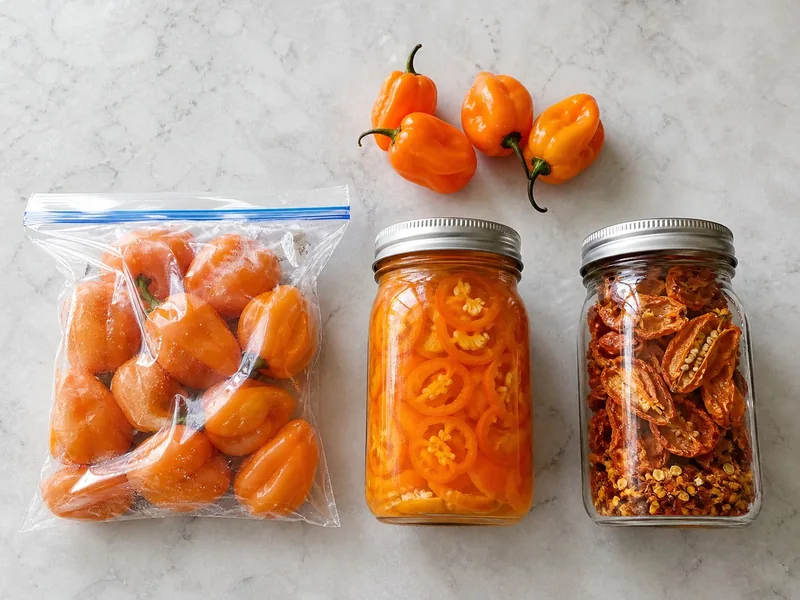
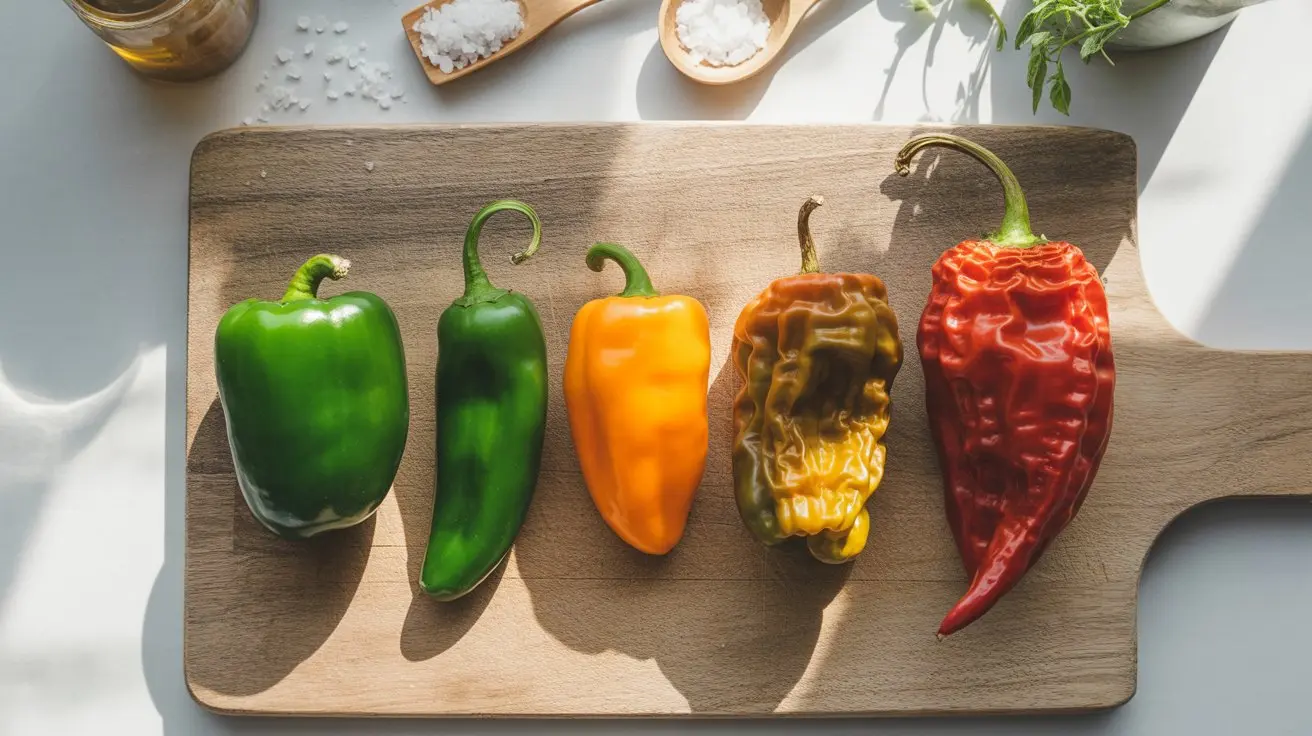
Fully colored orange, red, chocolate, or other ripe fruit gives you the best starting point for fresh preparations. Firm green habaneros are also usable, but their less-developed ripe aroma fits cooked sauces, beans, and stews better than a fruit-forward raw salsa.
| What you have | Best next move | Reason |
|---|---|---|
| One or two firm ripe pods | Use fresh in measured portions | You can keep their aroma visible without creating a large leftover batch |
| Several firm ripe pods | Make refrigerator sauce or pickles | A prepared condiment turns many hot pods into small repeatable servings |
| A large firm harvest | Freeze some and dry some | The two formats preserve different cooking options |
| Firm green pods | Cook now or freeze | Longer cooking makes their greener character less prominent |
| Dry surface wrinkles, clean interior | Cook the same day | They have lost storage margin even when no decay is visible |
| Mold, slime, wet collapse, or sour odor | Discard | Cooking and preservation do not repair decay |
Do not mix questionable fruit into sauce, brine, or a freezer bag to avoid waste. One bad pod can make the condition of the full batch harder to judge later.
How much habanero should go into a dish?
Start with less than you think you need.
NIST notes that variety, soil, temperature, and growing location can change pepper heat.
Penn State supplies the published heat range. The three portion entries are our editorial starting points, so mix the pepper completely, wait for the flavor to spread, and add more only after tasting the finished portion.
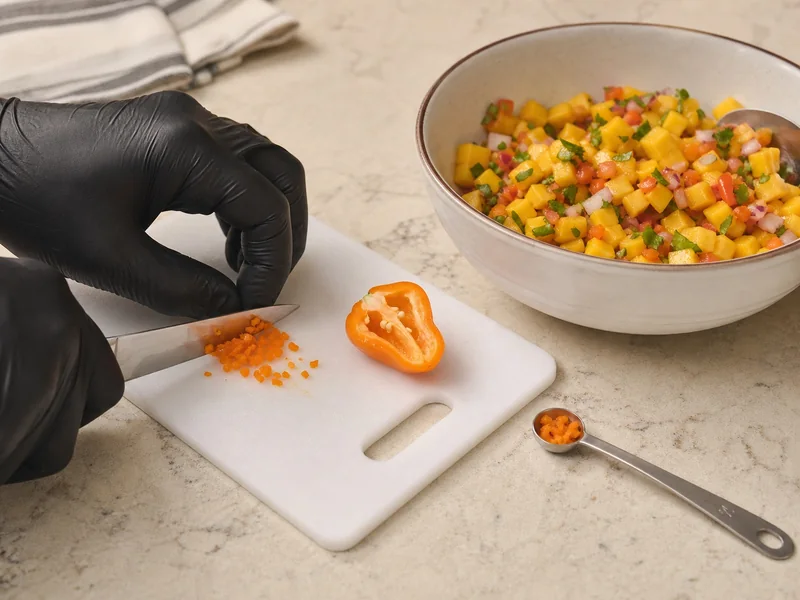
NIST identifies the white inner lining as the main concentration area for capsaicinoids. Removing that tissue reduces the hottest material, but it does not turn a habanero into a mild pepper because residue remains on the flesh, knife, and board.
- Wear disposable gloves while cutting and cleaning the work area.
- Use a dedicated board or wash the board, knife, faucet handle, and blender controls with dish soap immediately.
- Keep your hands away from your eyes and face until the gloves are off and the work area is clean.
- Run the range hood or open a window when frying, roasting, or blending hot habaneros.
Cut size also changes control. A visible ring is easier to remove from one serving, while a fine mince or puree spreads capsaicin through every bite.
What goes well with fresh habanero?
Fresh habanero works best when its citrus-fruit character has a clear role alongside acid, sweetness, or rich food. In our editorial synthesis, lime, orange, mango, pineapple, tomato, onion, pork, chicken, black beans, and coconut milk provide more useful partners than adding the pepper to a dish only for heat.
For raw salsa or relish, mince a measured piece and disperse it through the full bowl. A few large slices create unpredictable bites, while a fine, even cut lets every spoonful carry a similar amount.
Add habanero late to a cooked salsa, glaze, or pan sauce when you want more of its fresh aroma. A long simmer spreads the heat through the dish and softens the brighter fruit note, which suits beans, chili, soup, and braised meat.
A marinade needs restraint because the liquid coats the whole ingredient. Mix the habanero into the completed marinade, reserve none of the raw mixture for serving, and cook food that contacted the raw marinade to the temperature required for that food.
Keep an unheated portion free of habanero when people at the table have different tolerances. A separate minced garnish or sauce gives each person control without forcing the entire dish toward the strongest palate.
When does hot sauce make sense?
Hot sauce makes sense when several sound pods need to become consistent, small servings.
The important choice is the storage method, because a quick refrigerator sauce, a fermented sauce, and a shelf-stable canned sauce follow different safety controls.
A cooked refrigerator sauce is the shortest path from fresh peppers to a usable bottle. The basic habanero hot sauce on KnowThePepper uses measured peppers and 5% vinegar, then stays refrigerated because it is not presented as a tested pantry-canning formula.
Choose fermentation when you want a tangier result and are prepared to control salt, submersion, time, and refrigeration. The broader hot sauce method compares fermented, vinegar-based, and fresh blended styles so you can choose a process before buying jars or scaling the batch.
Pantry-storage rule: For room-temperature storage, follow a current tested recipe exactly. The National Center for Home Food Preservation publishes an Easy Hot Sauce with fixed ingredients, jar size, headspace, and elevation-adjusted processing times.
Do not turn a refrigerator recipe into a pantry product by guessing at extra vinegar or boiling time.
Can you freeze habanero peppers?
Freezing is the best low-work choice when you want the peppers available for cooked dishes rather than a finished condiment.
Penn State directs cooks to wash and stem hot peppers, pack them with no headspace, seal the package, and freeze it.
Dry the surface before packing so loose ice does not glue the harvest into one solid block. Freeze pods in the portions you normally use, or separate them on a tray before moving them into a labeled freezer bag.
Plan to chop frozen or thawed habaneros into sauce, beans, curry, soup, or stew. Their softened texture will not replace the crisp bite of a fresh ring, but the format gives you the freedom to take out only what a cooked dish needs.
Label the package with the pepper and date. That small step prevents a smooth orange pod from being mistaken for a mild pepper months later.
How do you dry habanero peppers?
Drying fits firm pods that you want to dose as flakes or powder.
It demands more handling and ventilation than freezing, but the final seasoning takes little storage space and enters food without adding liquid.
Halve the pods so you can inspect the interior and shorten the moisture path. Dry them until the thickest pieces snap cleanly, then cool them completely before crushing or sealing them in an airtight container.
Choose habanero flakes when visible pieces and slower heat release help you control a serving. Powder disperses more evenly and becomes difficult to remove, so grind only the amount you expect to use and keep the grinder closed until airborne dust settles.
The full instructions for habanero flakes cover cutting shapes, dehydrator conditions, the brittle endpoint, grinding, and storage. Follow the appliance guidance instead of improvising a drying temperature.
Can you pickle habanero peppers?
Pickling turns habanero rings into an acidic garnish that can be portioned one piece or one teaspoon of brine at a time. It is a good choice for tacos, eggs, beans, fried fish, sandwiches, and rich meat because the jar supplies both pepper and acid.
A refrigerator pickle and a canned pantry pickle are not interchangeable.
The refrigerator recipe for pickled habaneros keeps its habanero-specific quick pickle cold and gives the reader a measured serving path instead of claiming shelf stability.
The National Center for Home Food Preservation publishes a tested Pickled Hot Peppers formula using named pepper types, 5% vinegar, fixed water and salt quantities, approved jar sizes, and elevation-adjusted processing. Use a current tested formula that explicitly permits your chosen peppers when pantry storage is the goal, and do not can a refrigerator brine.
Keep the pepper pieces and brine together as one measured recipe. Pouring water into a finished jar to soften the heat changes the acid balance, so reduce heat in the served portion with mayonnaise, yogurt, beans, or another suitable food instead.
How do you fix food that is too hot?
Once habanero is dispersed through a dish, no kitchen ingredient removes the capsaicinoids. The reliable correction is to reduce their concentration by adding more of the dish's unseasoned base or by mixing a small amount of the hot batch into a second mild batch.
- Split soup, beans, chili, or curry into two pots and extend both with unsalted base ingredients.
- Blend an over-hot salsa with more tomato, tomatillo, mango, or another ingredient already in the recipe.
- Serve dairy, avocado, rice, bread, or tortillas alongside the food to give each diner a milder bite.
- Reserve the over-hot sauce as a concentrate and add it by the teaspoon to later meals.
Sugar and acid can rebalance flavor, but they do not remove capsaicin.
Adjust salt, sweetness, and acidity only after dilution, or the dish may become both too hot and too sweet or sour.
If capsaicin reaches your skin or eyes, stop cooking and address the exposure rather than trying to finish the batch. The separate pepper-burn instructions cover skin, mouth, and eye contact at the depth that first aid requires.