
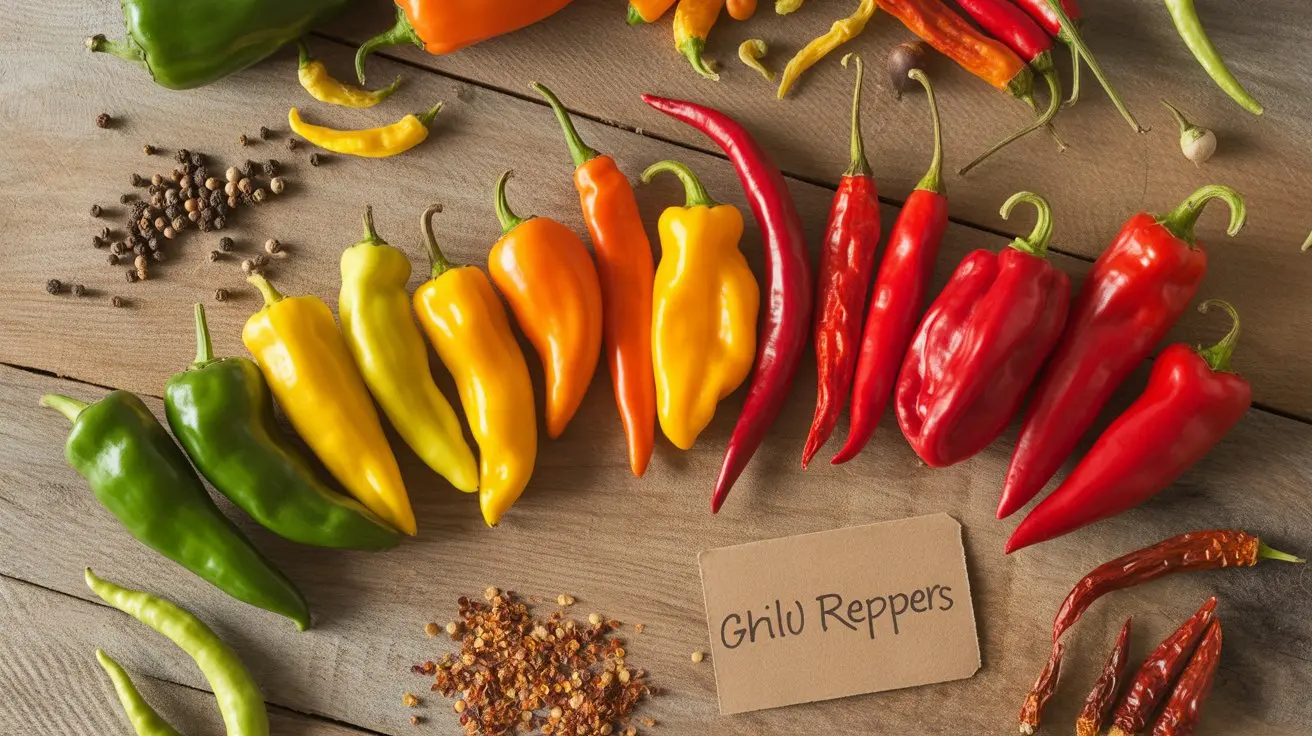
Scoville Scale Explained
How pepper heat is measured, SHU ratings, and what the numbers mean in practice. Find your perfect heat level.

What the Scoville Scale Actually Measures
Before getting into numbers, consider the difference between a bell pepper and a habanero — not in heat, but in what you taste first. The bell pepper offers sweetness, earthiness, and a crisp vegetal note. The habanero hits with fruity brightness, then comes the fire. That fire is capsaicin, and the Scoville scale exists specifically to quantify it.
The scale measures capsaicin concentration — the alkaloid compound responsible for the burning sensation when you eat hot peppers. Higher capsaicin content means a higher Scoville Heat Unit (SHU) rating, and a more intense burn.
Who Invented It and How It Worked Originally
American pharmacist Wilbur Scoville developed the original measurement method in 1912 while working for Parke-Davis pharmaceutical company. His goal was practical: he needed a standardized way to assess the heat of capsaicin-based muscle rub ingredients.
His method, called the Scoville Organoleptic Test, involved dissolving a dried pepper sample in alcohol, then diluting that solution with sugar water until a panel of five trained tasters could no longer detect heat. The dilution factor became the SHU rating — so a pepper rated 5,000 SHU required 5,000 parts sugar water to neutralize one part pepper extract.
The obvious problem: human tasters get fatigued, and palates vary. Results could swing significantly between panels. The method was subjective by design, which is why modern labs have largely moved on.
How Peppers Are Measured Today
Modern labs use High-Performance Liquid Chromatography (HPLC), a technique that separates and quantifies capsaicinoids with precision. The results get converted into SHU using a standard conversion factor — roughly 15 million SHU per gram of pure capsaicin.
HPLC removes the human subjectivity problem entirely. It also measures the full capsaicinoid profile, not just capsaicin itself. Dihydrocapsaicin, for instance, makes up roughly 22% of most pepper heat and burns differently — slower to arrive, longer to fade — compared to capsaicin's sharp, immediate punch. If you want to understand why two peppers at the same SHU can feel completely different on your palate, that chemistry is the answer. The capsaicin chemistry and burn mechanism goes deeper on this topic.
You can also explore an interactive SHU measurement lookup tool to compare specific peppers side by side.
Reading the Numbers: What SHU Ranges Mean in Practice
Numbers without context are just numbers. Here is how the SHU spectrum maps to real-world eating experience.
0 SHU — Bell peppers and sweet varieties. Zero capsaicin, zero heat. The baseline.
2,500-30,000 SHU — Medium heat territory. Jalapeños (2,500-8,000 SHU) live here, as does cayenne powder in its milder forms. This is the range where most people start to sweat slightly, where dairy becomes your friend, and where heat starts influencing flavor perception.
30,000-100,000 SHU — Hot tier. Cayenne pepper (30,000-50,000 SHU) anchors the lower end. The Lemon Drop pepper, with its citrusy bite and sharp heat, reaches 15,000-30,000 SHU on the upper end of medium into hot. At this level, heat becomes the dominant experience and requires intentional use in cooking.
100,000-350,000 SHU — Extra hot. Habaneros and Scotch Bonnets occupy this range. Heat is intense and sustained. Even a small amount transforms a dish.
350,000+ SHU — Super-hot peppers. This is where the Carolina Reaper, Ghost Pepper, and their relatives live. At these concentrations, capsaicin stops feeling like a flavor component and starts feeling like a physiological event.
Why Two Peppers at the Same SHU Can Feel Different
SHU measures total capsaicinoid concentration, but it does not tell you everything about how heat behaves on your palate. Several factors alter the experience significantly.
Capsaicinoid profile matters enormously. Capsaicin binds to TRPV1 receptors in your mouth fast and sharp. Dihydrocapsaicin activates the same receptors more slowly and lingers longer. A pepper high in dihydrocapsaicin at 50,000 SHU may feel more intense over time than a capsaicin-dominant pepper at the same rating.
Sugar and acid content in the pepper itself modifies perception. The Bishop's Crown pepper, with its unusual shape and mild fruity heat, sits around 5,000-15,000 SHU but its high sugar content softens the heat experience considerably compared to a drier pepper at the same rating.
Fat and water content in your food changes delivery speed. Capsaicin is fat-soluble, so oily preparations carry it differently than water-based ones. This is why a hot sauce with high oil content hits differently than a vinegar-based one at the same SHU.
Cayenne as Your Measuring Stick
Jalapeños get used as the default reference point, but cayenne pepper (30,000-50,000 SHU) is arguably more useful for understanding the scale because it sits in the middle of the practical range and most people have experienced it in powder form.
A jalapeño at 5,000 SHU is about 6-10 times milder than a typical cayenne, the backbone of hot sauce and spice blends worldwide. A habanero at 200,000 SHU is roughly 4-6 times hotter than cayenne. Using cayenne as your midpoint gives you a cleaner sense of how the scale stretches in both directions.
The Urfa Biber, a smoky Turkish chili with raisin-like depth, lands around 30,000-50,000 SHU — roughly cayenne-equivalent in heat, but dramatically different in flavor character. That comparison illustrates how SHU tells you heat intensity but says nothing about flavor.
The Practical Heat Tiers for Cooks
If you cook with peppers regularly, memorizing exact SHU numbers matters less than internalizing the tiers. Here is a working framework:
- 0-1,000 SHU: Flavor-forward, no real heat. Use freely for color, sweetness, and body.
- 1,000-10,000 SHU: Background warmth. Most people can eat these without discomfort. Kashmiri chili and Espelette live here.
- 10,000-50,000 SHU: Noticeable heat that shapes the dish. Cayenne, serrano, and Lemon Drop peppers. Requires some restraint in quantity.
- 50,000-200,000 SHU: Heat-forward. Even small amounts dominate. Habaneros, Thai bird chilies, African bird's eye.
- 200,000+ SHU: Heat as the point. Use with extreme precision. Super-hots, extracts, and concentrated hot sauces.
This tier structure maps directly to how experienced cooks think about substitution. Swapping a cayenne for a habanero is not a 1:1 exchange — it is a 4-6x heat multiplication that will change the dish fundamentally.
How Growing Conditions Affect SHU
The same pepper variety can produce dramatically different SHU readings depending on how it was grown. This surprises people who expect a specific number from a specific variety.
Water stress during the growing period is the biggest variable. Peppers produce more capsaicin under drought stress — it is a defense mechanism. Irrigation-heavy commercial growing tends to produce milder peppers than the same variety grown in dry conditions.
Temperature also plays a role. Peppers grown in consistently hot conditions with warm nights tend to accumulate more capsaicin than those grown in cooler climates. This is why the same Espelette pepper variety grown outside the Basque region often tests differently than the PDO-certified version.
If you want to grow your own and understand how to push or moderate heat levels, the full seed-starting and growing guide covers these variables in detail, including soil, watering schedules, and maturity timing.
Fruit maturity matters too. Most peppers accumulate capsaicin as they ripen, so a red jalapeño tests hotter than a green one from the same plant. The difference can be significant — sometimes 2-3x higher SHU at full red ripeness.
Where the Scale Breaks Down
The Scoville scale has real limitations worth understanding. It measures capsaicinoids only — it says nothing about piperine (the heat compound in black pepper), zingerone (ginger heat), or allyl isothiocyanate (horseradish and wasabi heat). These compounds activate different receptors and produce distinctly different burn sensations, none of which the Scoville scale captures.
Even within capsaicin-based heat, individual sensitivity varies enormously. Regular capsaicin exposure desensitizes TRPV1 receptors over time, which is why experienced hot sauce eaters can tolerate peppers that would floor someone with no tolerance. The same 50,000 SHU pepper is a completely different experience for those two people.
There is also the question of what happens at extreme ends. Above roughly 2 million SHU, the scale becomes somewhat theoretical from a culinary standpoint — no one is cooking with pure capsaicin extract. The competition for world's hottest pepper records produces numbers that matter more for headlines than for kitchen practice.
Practical Takeaways for Buying and Cooking
When a hot sauce label lists SHU, use it as a directional indicator rather than a precise specification. Batch variation, ingredient combinations, and dilution all shift the effective heat of the final product.
For fresh peppers, remember that the placenta and seeds carry the highest capsaicin concentration. Removing them reduces heat significantly without changing the pepper's flavor profile. This is the most reliable way to dial down a pepper that is testing hotter than expected.
When comparing peppers for substitution, stay within one tier when possible. Crossing two tiers — say, from medium to extra-hot — requires significant quantity adjustment and often changes the flavor balance of the dish as much as the heat. The Indian pepper tradition handles this intuitively, using Kashmiri chili for color and mild heat while layering in hotter varieties for intensity, rather than relying on a single high-SHU pepper for everything.
If you are heat-sensitive and want to build tolerance gradually, starting in the mild heat range and moving up incrementally is far more effective than occasional exposure to extreme heat. Consistent low-level exposure desensitizes receptors gradually.
Frequently Asked Questions
-
SHU stands for Scoville Heat Units, the standard measure of capsaicin concentration in peppers. Higher SHU means more capsaicin, which binds to TRPV1 pain receptors in your mouth and produces the burning sensation associated with hot peppers.
-
Capsaicin production responds to growing conditions - water stress, heat, and soil all affect final SHU. A jalapeño grown in dry, hot conditions can test 3-4x hotter than one grown with consistent irrigation, even from the same seed stock.
-
Yes, significantly. High-Performance Liquid Chromatography measures capsaicinoid concentrations directly and converts them to SHU mathematically, eliminating the panel fatigue and palate variation that made Wilbur Scoville's original 1912 organoleptic method unreliable.
-
Regular capsaicin exposure desensitizes TRPV1 receptors, which is why experienced heat-eaters tolerate peppers that overwhelm newcomers. Consistent moderate exposure is more effective for building tolerance than occasional extreme heat.
-
Removing seeds helps somewhat, but the real heat is in the white placental tissue they attach to - that tissue carries the highest capsaicin concentration. Scraping out both the seeds and placenta produces the most significant heat reduction.
