
How to Rehydrate Dried Peppers
Soaking and toasting dried peppers for sauces and cooking. Times and blending techniques. Find your perfect heat level.

Why Rehydrating Dried Peppers Matters
Dried peppers are not just dehydrated fresh peppers — they are a distinct ingredient with concentrated flavor, deeper color, and a different chemical profile than their fresh counterparts.
Rehydrating them properly unlocks that complexity. Rush it or skip steps, and you get bitter, grainy results. Do it right, and the soaking liquid alone becomes a cooking ingredient worth saving.
The three main methods — hot water soak, cold water soak, and dry-toast-then-soak — each produce different results depending on the pepper and the dish.
Start With Toasting (Most Peppers Benefit From It)
Before any water touches a dried pepper, consider toasting it first. A dry skillet over medium heat, 30 seconds per side, wakes up the volatile aromatic compounds that have been dormant since drying.
Press the pepper flat against the pan with a spatula. You want it to blister slightly and release a nutty, smoky fragrance — not burn. Burning turns the skin bitter, and that bitterness carries straight into your sauce.
Toasting is especially valuable for thicker-walled varieties like dried anchos or mulatos. Thinner, more brittle peppers — think the mild, tangy dried guindilla from northern Spain — can skip this step entirely since they rehydrate quickly and their delicate flavor is easily lost to heat.
After toasting, remove the stem and shake out the seeds if you want less heat. The seeds do not add flavor — that is a myth. They just add texture and, depending on the variety, some additional capsaicin chemistry from the placental tissue clinging to them.
Method 1: Hot Water Soak
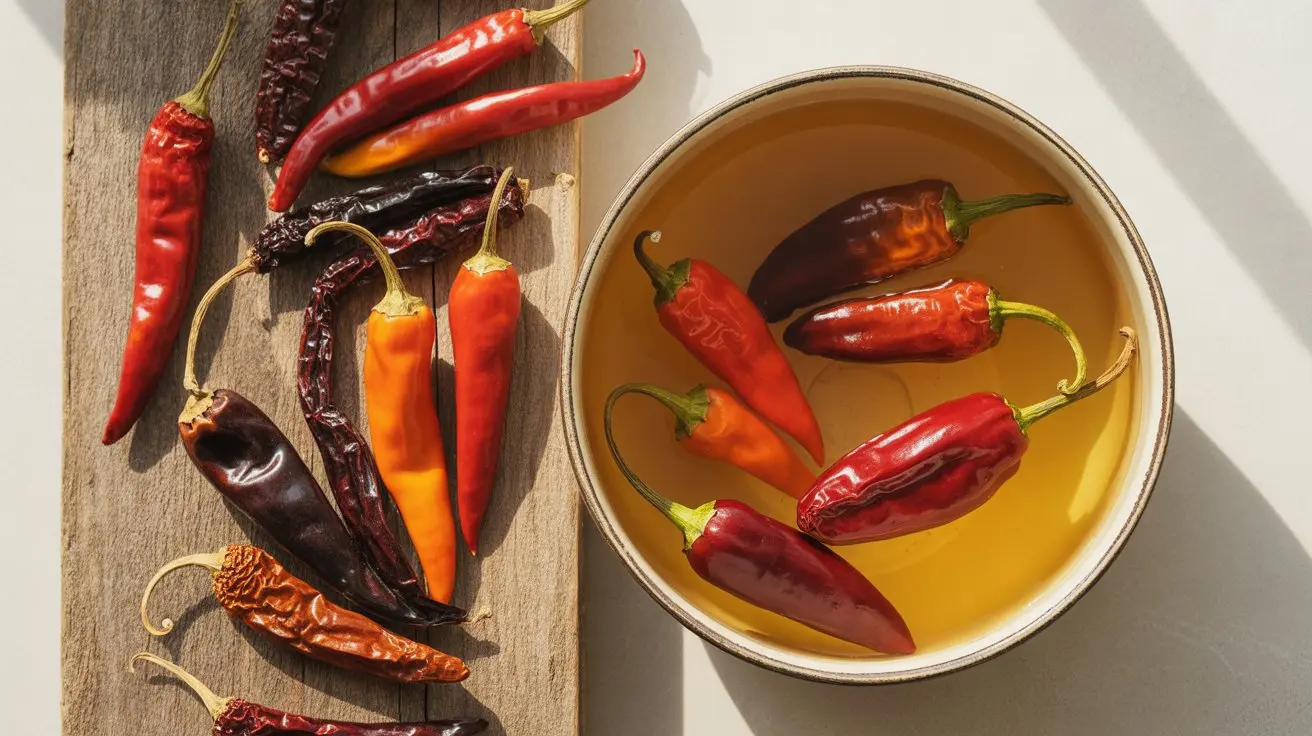
This is the fastest and most common approach. Bring water to a near-boil (around 190°F / 88°C), pour it over the toasted, stemmed peppers in a heatproof bowl, and weigh them down with a plate or small lid to keep them submerged.
Soak time depends on the pepper's wall thickness:
- Thin-skinned peppers (chiles de árbol, dried Thai varieties): 15-20 minutes
- Medium-walled peppers (guajillo, New Mexico): 20-30 minutes
- Thick-walled peppers (ancho, mulato, pasilla): 30-45 minutes
The water turns dark and complex — that is your soaking liquid. Strain it and use it in your sauce base, braise liquid, or soup. Discard only if it tastes extremely bitter, which usually signals over-toasting.
One thing to watch: do not use boiling water. The violent heat can make the skins tough and slightly rubbery rather than soft and pliable.
Method 2: Cold Water Soak
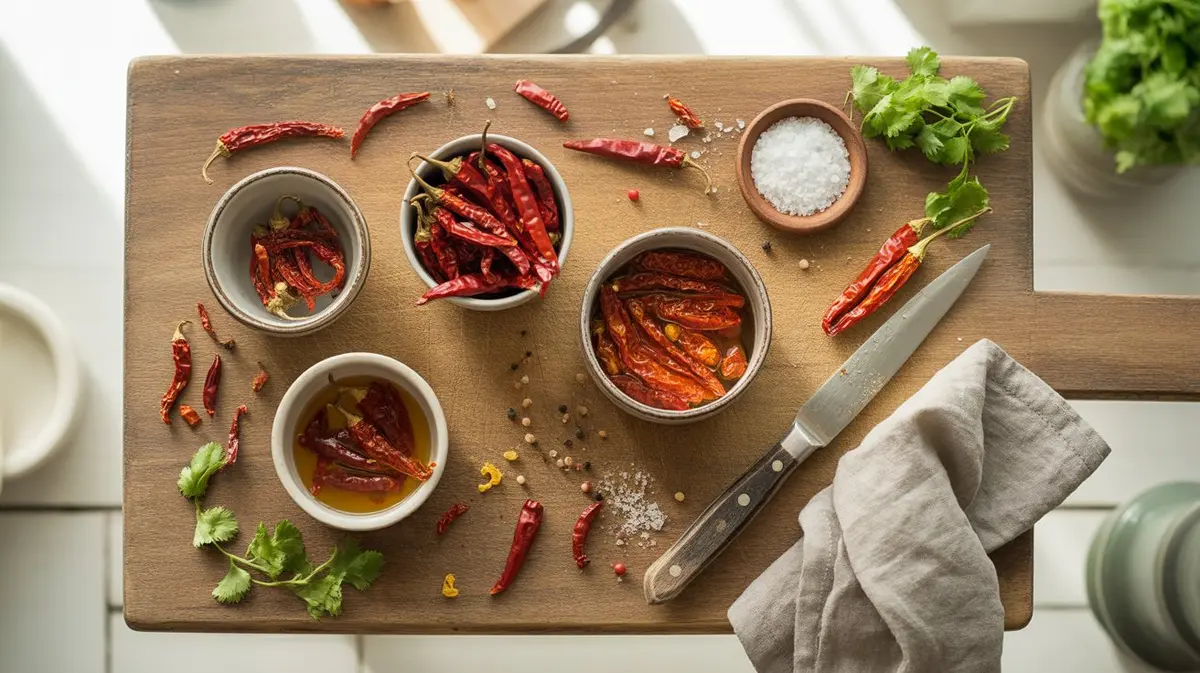
Slower, but the results are often cleaner in flavor. Submerge the peppers in room-temperature water and let them sit for 8-12 hours — overnight works perfectly.
Cold soaking is the better choice when you want to preserve delicate floral or fruity notes that hot water can drive off. If you are working with something like the moderately hot, fruity Indonesian lombok in a dried form, cold soaking keeps more of that fruit character intact.
The tradeoff is time. Cold-soaked peppers also tend to absorb less water overall, so they stay slightly firmer — which can actually be an advantage if you are slicing them into a dish rather than blending them into a sauce.
Refrigerate the bowl during a long cold soak to prevent any fermentation, especially in warm kitchens.
Method 3: Toast, Soak, Then Blend Hot
For sauces and mole-style preparations, the full sequence produces the deepest results: toast, soak in hot water, then blend the softened peppers with some of their soaking liquid while everything is still warm.
Warm blending matters. The heat keeps fats from congealing and helps emulsify the sauce into a smoother consistency. A high-powered blender handles this better than a food processor — the latter tends to leave small skin fragments that make the sauce feel gritty.
Blend for at least 90 seconds at high speed, then pass the sauce through a fine-mesh strainer if you want a completely smooth result. This step is non-negotiable for restaurant-quality texture.
For peppers on the hotter end of the hot tier — dried cayennes, or the fiery Indonesian cabe rawit with its sharp, intense bite — blend in a ventilated space. The aerosolized capsaicin can irritate eyes and airways.
Handling Super-Hot Dried Peppers
Rehydrating peppers above 500,000 SHU requires different precautions than working with everyday dried chiles. Gloves are mandatory — not optional.
Dried superhots like the Naga Morich, a blistering variety from the Bangladesh-India border, concentrate capsaicin as they dry. The soaking liquid from these peppers is potent enough to cause skin irritation on contact.
Work in a ventilated kitchen. Keep the blender lid sealed with a towel held firmly over it for the first few seconds of blending — the pressure from hot liquid can pop the lid. Never lean over the blender when you remove the lid after blending superhots.
For peppers in the super-hot bracket — including varieties like the 7 Pot Jonah, known for its extreme fruity heat and the 7 Pot Katie with its comparable scorching intensity — use far less pepper than you think you need. A single dried pod rehydrated into a quart of sauce can be enough to make it genuinely difficult to eat.
The burn mechanism of capsaicin does not diminish with rehydration — the capsaicinoids remain fully active. Drying concentrates them; water just redistributes them through the flesh.
Reading the Pepper Before You Start
Good dried peppers should be pliable, not completely brittle. Bend one — it should flex slightly before snapping. If it crumbles into dust when you handle it, it was dried too aggressively or stored too long and the flavor compounds have degraded.
Color is another indicator. Vibrant deep reds, dark browns, and rich burgundies signal well-preserved peppers. Faded, dusty-looking skins usually mean the pepper has been sitting in poor storage conditions — heat, light, and humidity are the enemies of dried peppers.
Smell them before you commit. A good dried pepper smells earthy, slightly sweet, and complex. Musty or hay-like odors mean moisture got in at some point, which can also mean mold on the inside even if the exterior looks fine.
Matching Rehydration Method to the Dish
The method should follow the recipe's needs, not the other way around.
- Sauces and moles: Toast then hot soak, blend warm with soaking liquid
- Stews and braises: Hot soak, rough chop or leave whole, add directly to pot
- Marinades: Cold soak, then blend smooth — cleaner flavor without the intensity of hot soaking
- Stuffed preparations: Hot soak until fully pliable, handle carefully to keep the pepper intact
- Pastes and rubs: Hot soak, drain well, blend with minimal liquid for a concentrated paste
The soaking liquid's role changes too. For stews, add it freely — the bitterness mellows in a long braise. For delicate sauces, taste it first. A quick-toasted pepper's soaking liquid will be cleaner than one that was charred.
Blending Techniques for Smooth Results
After soaking, the peppers are soft enough to blend — but technique determines whether the result is silky or chunky.
Add soaking liquid gradually. Start with just enough to get the blender moving, then add more as needed. Too much liquid early on and the sauce will be thin; you will spend time reducing it on the stove to recover the flavor concentration you started with.
For the smoothest result, blend in stages: rough blend first for 30 seconds, scrape down the sides, then run at full speed for 60-90 seconds. Straining through a fine-mesh sieve after blending removes any remaining skin fragments and seeds that made it through.
If you are making a sauce that will be cooked further — like a red enchilada sauce or a Mexican-style chile base — strain it before cooking, not after. Cooking an unstrained sauce concentrates everything, including any remaining bitterness from skin fragments.
Storage After Rehydrating
Rehydrated peppers do not keep well at room temperature. Once they have absorbed water, they are perishable again.
Whole rehydrated peppers keep refrigerated for up to 5 days in an airtight container, covered with a little of their soaking liquid to prevent drying out. Blended sauces made from rehydrated peppers keep for about a week refrigerated, or up to 3 months frozen in portioned containers.
The soaking liquid itself can be frozen in ice cube trays and added to soups, stews, or braises over the following months. Each cube is essentially a concentrated flavor bomb — particularly useful when you have soaked a large batch of dried peppers at once.
Dried peppers are widely available year-round at Latin grocery stores, specialty spice shops, and online. Seasonal availability peaks in late fall after the summer harvest, when newly dried crop arrives fresh — this is the best time to buy in bulk and stock your pantry.
Heat Level Awareness by Pepper Type
Not all dried peppers behave the same way in terms of heat delivery. Drying concentrates capsaicin, so a pepper that seems manageable fresh can surprise you in dried form.
Mild dried peppers — anchos, pasillas, New Mexico reds — fall in the mild heat range and are forgiving to work with. The rehydrated flesh is rich and complex without requiring special handling.
Mid-range dried peppers like guajillos and chiles de árbol sit in the medium heat zone and add noticeable warmth without overwhelming a dish. The dried guindilla's gentle, tangy heat from the Basque region is another example in this range — excellent for braises and vinaigrettes.
Once you move into the extra-hot range, rehydration requires more deliberate handling. The capsaicin is dense enough in the soaking liquid to cause irritation, and portion control becomes critical for palatability.
For reference on where any specific dried pepper falls, the Scoville heat index tool provides measurement context across thousands of varieties.
Frequently Asked Questions
-
Thin-skinned dried peppers need 15-20 minutes in hot water, while thick-walled varieties like anchos need 30-45 minutes. Cold water soaking takes 8-12 hours but preserves more delicate flavor compounds.
-
Yes — the soaking liquid is concentrated with flavor and should be saved for sauces, soups, or braises. Taste it first; if it is very bitter, the pepper was over-toasted and the liquid may not be worth using.
-
Toasting is optional but recommended for most varieties. It takes 30 seconds per side in a dry skillet and activates aromatic compounds that significantly deepen the flavor of the finished sauce or dish.
-
Tough texture usually means the water was too hot (boiling rather than near-boiling), the soak time was too short, or the peppers were too old and dried out. Try extending the soak and using water around 190°F instead of boiling.
-
The total capsaicin content does not change, but concentration can feel more intense than the fresh pepper because drying removes water weight. Rehydration redistributes the capsaicinoids through the flesh without reducing them.
