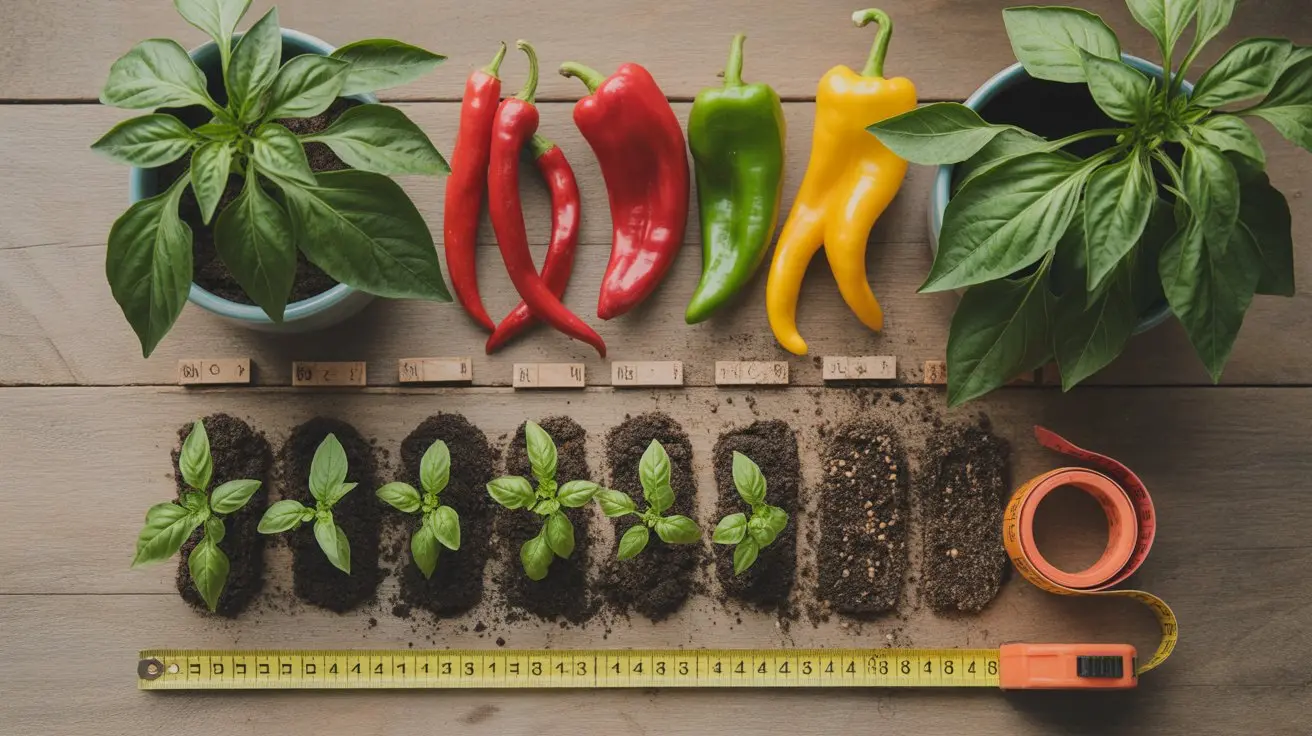
Pepper Plant Spacing Guide
Proper pepper plant spacing for containers, raised beds, and in-ground gardens. Find your perfect heat level.

Why Spacing Matters More Than Most Growers Realize
Pepper plants compete for the same finite resources — light, water, soil nutrients, and airflow. Crowd them and you get leggy stems, reduced fruit set, and fungal problems that spread plant to plant.
Give them too much room and you waste garden space, lose yield per square foot, and sometimes stress the plant with excessive soil temperature fluctuation around the roots. Getting spacing right is one of those decisions you make once per season but live with for months.
The Basic Framework: Spacing by Plant Size
Pepper spacing recommendations generally fall into three tiers based on mature plant size: compact varieties at 12-14 inches apart, mid-size plants at 18 inches, and large or sprawling types at 24-36 inches.
Row spacing follows the same logic — allow enough space between rows to walk comfortably and let light penetrate the canopy. A standard recommendation is rows set 24-36 inches apart for most garden configurations.
These numbers are starting points, not gospel. Soil fertility, climate, and whether you're staking or caging your plants all shift the math slightly.
Compact and Ornamental Varieties: 12-14 Inches
Small-fruited peppers and ornamentals often stay under 18 inches tall at maturity, making them well-suited to tighter spacing and container planting.
The sweet, thick-walled Alma Paprika is a good example — it matures into a compact, bushy plant that fits comfortably in a 3-gallon container or at 12-inch spacing in a raised bed. Similarly, the Trinidad Perfume's aromatic, mild fruit comes from a relatively compact plant that won't crowd neighbors at 14-inch spacing.
For truly ornamental varieties grown primarily for color and form, you can sometimes push to 10-inch spacing if your soil is fertile and drainage is excellent.
Mid-Size Peppers: The 18-Inch Standard
Most of the peppers home gardeners grow fall into this category — plants that reach 24-36 inches tall with moderate branching. Bell peppers, most Anaheims, poblanos, and a wide range of sweet Italian types all fit here.
Jimmy Nardello's long, thin-walled sweet fruit comes from a plant that typically hits 24-30 inches, making 18-inch spacing the comfortable standard. At that distance, mature plants will just barely touch, which actually helps with moisture retention and slight shading at the soil level.
If you're growing in a raised bed with rich amended soil, 18 inches works well in a grid pattern rather than rows — you can fit more plants in the same footprint without significant crowding.
Hot and Extra-Hot Varieties: 18-24 Inches
Hotter peppers — particularly those in the hot tier's 100,000-350,000 SHU intensity range — often produce larger, more vigorous plants than their milder counterparts. This isn't universal, but it's a pattern worth planning for.
Standard habanero plants regularly reach 36-48 inches under good conditions. The Caribbean Red Habanero's intensely fruity, searing heat comes from a plant that can get surprisingly large — 24-inch spacing is the minimum, and 30 inches gives it room to branch freely without competing with neighbors.
Airflow becomes especially important with large-canopy hot peppers. Dense planting in humid climates creates the exact conditions that favor bacterial leaf spot and phytophthora root rot.
Super-Hot Varieties: Give Them 24-36 Inches
Plants producing peppers in the super-hot category above 1,000,000 SHU tend to be the most vigorous growers in any pepper garden. They often need a full season — sometimes 150+ days — to produce ripe fruit, and they put a lot of energy into vegetative growth during that time.
The Chocolate Habanero's deep, smoky super-hot character comes from a plant that commonly reaches 4 feet tall with significant lateral spread. Thirty-six inches between plants isn't excessive — it's practical. Crowding these varieties means fighting for airflow all season.
The Fatalii's citrus-forward scorching heat is another variety that surprises growers with its plant size. African-origin super-hots often produce tall, open-branching plants that need staking even at proper spacing — account for that when planning your bed layout.
For super-hots, also consider staking infrastructure. A 36-inch spacing allows you to run a stake or cage for each plant without the hardware interfering with neighboring plants.
Container and Raised Bed Spacing
Container growing changes the calculus significantly. Root volume is limited by pot size, which naturally limits plant size regardless of variety.
A general rule: one plant per 3-5 gallon container for compact varieties, 5-10 gallons for mid-size types, and at least 10-15 gallons for hot and super-hot varieties if you want anything close to full production. Undersized containers produce undersized plants and reduced yields.
Raised beds with good drainage and rich soil can support slightly tighter spacing than in-ground gardens because you control the soil quality precisely. A raised bed filled with compost-heavy mix and consistent drip irrigation can support 16-inch spacing for varieties that would normally want 18 inches at ground level.
Square-foot gardening methods typically allocate one pepper plant per square foot for compact varieties and one plant per 2-4 square feet for larger types. These are workable minimums, not ideals — more space almost always means more fruit per plant.
Spacing Adjustments for Climate and Season Length
In short-season climates — anywhere with fewer than 150 frost-free days — tighter spacing can actually help. Plants shade each other slightly, reducing soil temperature swings and conserving moisture during dry spells. A 15-inch spacing instead of 18 inches may produce comparable yields when the season is compressed.
In long-season climates (the American Southwest, Gulf Coast, Florida), peppers have time to reach full vegetative size. Plants that stay compact in Pennsylvania can become sprawling 4-foot shrubs in Texas. Use the wider end of spacing recommendations if you're in a warm zone with a growing season exceeding 200 days.
Humidity is another variable. High-humidity regions benefit from extra airflow — space plants at the wider end of the range and consider pruning lower leaves to improve circulation. This single adjustment dramatically reduces fungal disease pressure over a full season.
Transplant Timing and Spacing Setup
Spacing decisions should be made before transplanting, not after. Moving established pepper plants is stressful and damages roots — plan your bed layout on paper first.
Transplant seedlings outdoors after the last frost date when soil temperature has reached at least 60°F, ideally 65°F at a 4-inch depth. Cold soil slows root establishment even when air temperatures are fine. Use a soil thermometer, not just a calendar date.
- Mark your spacing with stakes or a measuring tape before digging any holes.
- Dig holes slightly larger than the root ball — about 1.5x the pot diameter.
- Set transplants at the same depth they grew in the container, or slightly deeper if stems are leggy.
- Water in immediately after planting to collapse air pockets around the roots.
- Apply 2-3 inches of mulch around each plant, keeping it a few inches back from the stem.
If you're starting from seed indoors, the full germination-to-transplant walkthrough covers timing and hardening-off steps that affect how well plants establish after you've set them at their final spacing.
Soil Preparation and Fertility
Proper spacing assumes your soil can support the plants you're putting in it. Dense planting in poor soil produces worse results than the same density in well-amended ground.
Peppers prefer a pH of 6.0-6.8. Outside that range, nutrient uptake suffers regardless of how much fertilizer you apply. Test your soil before the season starts — a basic test costs under $20 and tells you exactly what amendments are needed.
Work in 2-4 inches of compost before planting. For heavy clay soils, add perlite or coarse sand to improve drainage — waterlogged roots are one of the fastest ways to lose a pepper plant regardless of how well-spaced it is.
A balanced starter fertilizer with moderate phosphorus supports root establishment during the first few weeks. Once plants are actively growing, switch to a lower-nitrogen formula to encourage fruiting over excessive leaf growth.
Watering Strategies at Different Spacings
Closer spacing means more root competition for soil moisture — which means more frequent watering. Wider spacing allows deeper root development and slightly better drought tolerance per plant.
Drip irrigation is the most efficient approach for in-ground and raised bed peppers at any spacing. It delivers water directly to the root zone, keeps foliage dry (reducing disease risk), and allows precise control over frequency and volume.
A general starting point: peppers need about 1-2 inches of water per week during active growth and fruiting. Adjust based on temperature, soil type, and plant size. Sandy soils drain faster and need more frequent watering; clay-heavy soils hold moisture longer but can become waterlogged.
Mulching between plants at any spacing reduces evaporation significantly — a 3-inch layer of straw or wood chips can cut watering frequency by 30-40% during hot weather while also suppressing weeds that compete for nutrients.
When to Harvest and How Spacing Affects Yield
Properly spaced plants produce more fruit per plant than crowded ones, even if crowded plantings produce more fruit per square foot in the short term. Over a full season, well-spaced plants maintain better health and continue producing longer.
Most peppers can be harvested at any color stage — green, orange, red, brown, or chocolate depending on variety. Fully ripe fruit has higher sugar content and, in hot varieties, sometimes more developed heat. Peppers in the extra-hot intensity range above 350,000 SHU often show the most complex flavor when allowed to fully ripen on the plant.
Harvest regularly. Leaving ripe fruit on the plant signals it to slow down new flower production. Consistent picking — every 3-5 days during peak season — keeps plants producing aggressively through the end of the season.
For Caribbean-origin varieties like habaneros and their relatives, the window between color change and overripe fruit is shorter than with Annuum types. Check these plants more frequently once fruit begins to color up.
Quick Reference: Spacing by Category
- Compact/ornamental (under 18" tall): 12-14 inches between plants, 24 inches between rows
- Mid-size sweet and mild (18-30" tall): 18 inches between plants, 24-30 inches between rows
- Hot varieties (30-48" tall): 18-24 inches between plants, 30-36 inches between rows
- Super-hot varieties (36"+ tall): 24-36 inches between plants, 36 inches between rows
- Containers (compact): One plant per 3-5 gallon pot
- Containers (large varieties): One plant per 10-15 gallon pot
Mild varieties like those in the mild pepper category — sweet bells, pimentos, banana peppers — almost always fall in the 18-inch range and are the most forgiving of minor spacing errors. Hot and super-hot types punish crowding more severely because of their longer seasons and larger mature size.
Frequently Asked Questions
-
Plant jalapeños 18 inches apart in rows spaced 24-30 inches apart. They reach 24-30 inches tall at maturity, and this spacing gives each plant enough airflow and root space to produce consistently through the season.
-
Only if the container is at least 10 gallons and the varieties are compact types that stay under 18 inches tall. Two full-size pepper plants in a standard 5-gallon pot will compete for resources and underperform compared to one plant given adequate space.
-
Sometimes in the short term, but not usually over a full season. Crowded plants produce more fruit per square foot early on, but they decline faster due to disease pressure and root competition. Properly spaced plants maintain production longer and often win on total seasonal yield.
-
Reduced airflow leads to fungal disease, plants compete for soil nutrients and water, and fruit set drops as the season progresses. Leggy growth and powdery mildew are the most common visible symptoms of overcrowded pepper plantings.
-
Yes. Super-hot varieties like Chocolate Habaneros and Fataliis commonly reach 4 feet tall with significant lateral branching after a 150+ day growing season. Giving them 30-36 inches of spacing isn't excessive — it prevents the canopy crowding that invites disease and reduces airflow.