Pepper Blossom End Rot
Blossom end rot causes dark, sunken spots on pepper bottoms. A calcium delivery issue, not a disease. Find your perfect heat level.

What Blossom End Rot Actually Is
Blossom end rot is not a disease, a fungus, or a pest problem — and that distinction matters enormously for how you fix it.
It is a physiological disorder caused by calcium deficiency in the developing fruit tissue, specifically at the blossom end (the bottom tip of the pepper, opposite the stem).
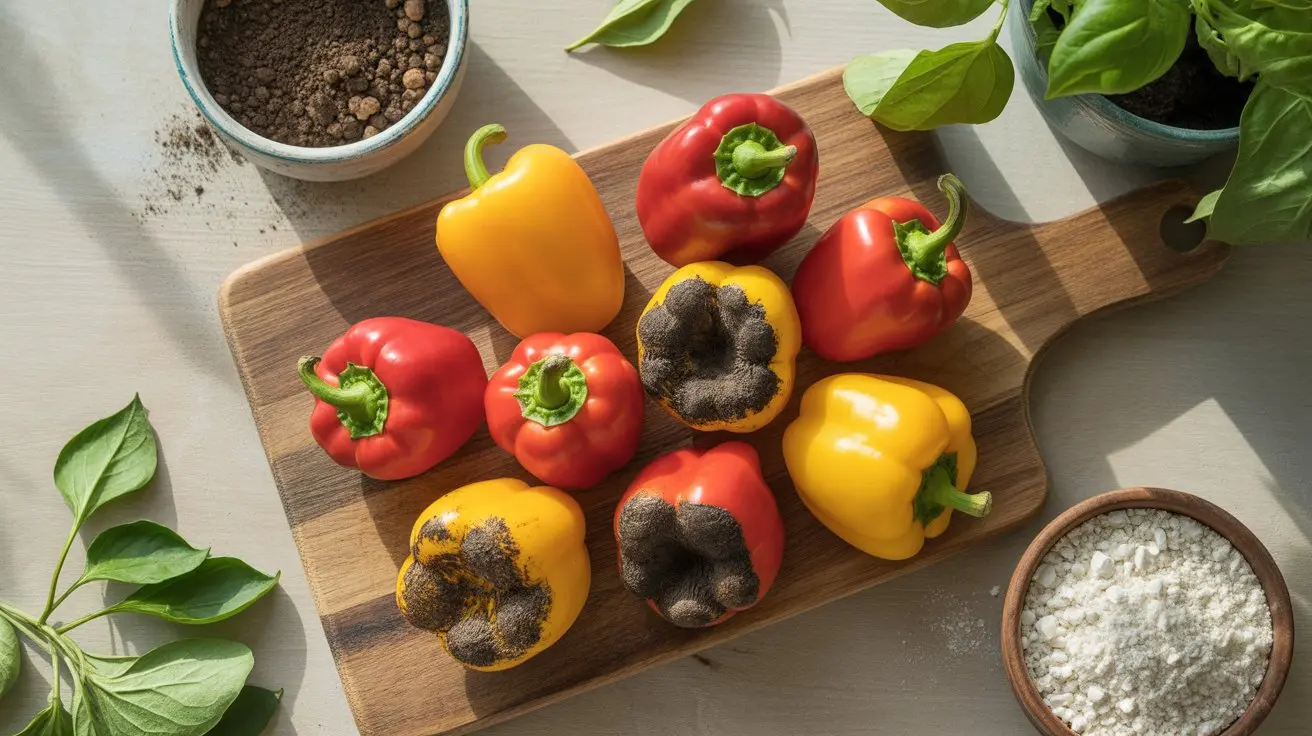
The dark, sunken, leathery patch that forms there is dead tissue — cells that collapsed because they didn't receive enough calcium during rapid fruit development.
Spraying fungicide won't help. Pesticides won't help. The fix lives in your soil, your watering routine, and sometimes your fertilizer program.
Recognizing the Symptoms Early
The first sign is usually a pale, water-soaked spot at the very bottom of a young pepper, often appearing when the fruit is still small — sometimes less than an inch long.
Within days, that spot darkens to brown or black, shrinks inward, and develops a dry, leathery texture. It can cover anywhere from a small dimple to half the fruit.
Secondary molds sometimes colonize the damaged tissue, which can mislead gardeners into thinking a fungal disease caused the problem in the first place.
Blossom end rot typically hits the first flush of fruits hardest. Later fruits on the same plant often escape it entirely, especially once soil moisture stabilizes.
If you grow a range of varieties — from the mild mildly fruity rocotillo to thick-walled bells — you'll notice thinner-walled peppers often show symptoms more dramatically because their tissue is more sensitive to calcium stress.
The Real Cause: Calcium Delivery, Not Calcium Absence
Here's the part that trips up most gardeners: your soil probably has plenty of calcium. The problem is delivery failure.
Calcium moves through plants in the xylem — the water-conducting tissue. It travels with the flow of water from roots to leaves and fruit. When that flow is interrupted or inconsistent, calcium doesn't reach fast-growing fruit tissue in time.
Several things disrupt that flow:
- Inconsistent watering — the single most common trigger. Dry spells followed by heavy watering cause the plant to prioritize rapid uptake, and calcium simply can't keep pace with sudden growth surges.
- Root damage — cultivation too close to the plant, transplant shock, or nematode pressure all reduce the root system's capacity to absorb water and minerals.
- Excess nitrogen — high-nitrogen fertilizers push aggressive vegetative growth that outpaces calcium supply to fruit.
- Excess competing cations — high levels of potassium, magnesium, or ammonium in the soil can block calcium uptake at the root level.
- Soil pH imbalance — calcium availability drops sharply below pH 6.0 and above 7.5, even when calcium is physically present in the soil.
Hot, dry weather compounds everything. During a heat wave, plants transpire heavily through their leaves — and leaves are calcium's preferred destination when supply is tight, leaving fruit to go without.
Step-by-Step Fixes That Actually Work
These four approaches address the root causes rather than just the symptoms. Apply them in order of urgency.
- Stabilize your watering immediately. This is the highest-leverage fix. Peppers need consistent moisture — not wet, not dry, consistently moist. Aim for 1 to 2 inches of water per week, delivered evenly. Drip irrigation or soaker hoses are far superior to overhead watering for this reason. Mulch heavily — 2 to 3 inches of straw, wood chips, or shredded leaves around the base of each plant dramatically reduces soil moisture swings. If you're container growing, small pots dry out faster than you think; check daily during summer heat.
- Test and adjust soil pH. Get a soil test before adding anything. Most university extension offices process them for a modest fee, and the data is worth it. For peppers, target pH 6.2 to 6.8. If you're below 6.0, work agricultural lime into the soil — dolomitic lime adds both calcium and magnesium. If pH is already in range but calcium is genuinely low (the soil test will tell you), gypsum (calcium sulfate) adds calcium without shifting pH.
- Apply a foliar calcium spray as a short-term intervention. Foliar application bypasses the root uptake problem entirely and delivers calcium directly to developing fruit tissue. Mix calcium chloride or calcium nitrate at roughly 0.5% concentration (about 1 tablespoon per gallon of water) and spray early morning, targeting the undersides of leaves and young fruit. This won't reverse damage already done, but it can prevent new fruits from developing the disorder. Repeat every 5 to 7 days during active fruiting. Note: this is a bridge fix, not a permanent solution.
- Reassess your fertilizer program. If you've been feeding heavily with high-nitrogen fertilizers — anything with a first number above 10 — back off. Switch to a balanced or low-nitrogen fertilizer during fruiting, or use one specifically formulated for fruiting vegetables. Avoid heavy ammonium-based fertilizers, which compete with calcium at the root surface. Calcium nitrate is a useful dual-purpose option: it supplies nitrogen in a form that doesn't antagonize calcium uptake, while simultaneously adding calcium to the soil.
What Doesn't Work (and Why People Try It)
Epsom salt is probably the most common misapplied remedy in pepper growing. Epsom salt is magnesium sulfate. Adding magnesium when calcium is already struggling to compete is counterproductive — magnesium and calcium compete for the same uptake sites on roots.
Eggshells are another popular suggestion. They do contain calcium carbonate, but they decompose so slowly in garden soil that they provide essentially zero benefit to a plant mid-season. They're fine as a long-term soil amendment added in fall, not as a fix for plants fruiting right now.
Cutting off affected fruits helps aesthetically and reduces the plant's stress load, but it won't prevent new fruits from developing rot if the underlying cause hasn't been addressed.
Pepper Varieties and Their Vulnerability
Not all peppers are equally susceptible. Thin-walled varieties with fast-developing fruit tend to show blossom end rot more frequently because their cells divide rapidly during a short window, creating high calcium demand in a compressed timeframe.
Thick-walled, large-fruited varieties also struggle — particularly when grown in containers or under inconsistent irrigation. The NuMex Heritage Big Jim's large, meaty pods are classic candidates for blossom end rot when water stress hits mid-season, simply because there's so much fruit tissue demanding calcium at once.
Super-hot varieties with dense, dense flesh can be similarly affected. Growers working with something like the Jay's Peach Ghost Scorpion's thick, wrinkled pods often report blossom end rot during heat waves, when transpiration spikes and calcium simply can't keep up with demand.
Even the yellow ghost pepper's intensely hot, corrugated fruit can show symptoms in poorly irrigated beds — the irregular surface texture doesn't help calcium distribution through the fruit wall.
The Red Savina habanero's compact, lantern-shaped pods are somewhat less prone than elongated varieties, but container-grown plants are still at risk if watering is erratic.
Meanwhile, small-fruited varieties like the malagueta's slender, thin-walled fruits tend to show lower rates simply because each individual fruit demands less total calcium and develops quickly.
Container Growing and Blossom End Rot
Container gardeners deal with blossom end rot at a higher rate than in-ground growers, and the reason is straightforward: pots dry out fast, and fast-drying soil means erratic calcium delivery.
A few container-specific adjustments make a significant difference:
- Use containers at least 5 gallons in size — larger volume means slower moisture fluctuation.
- Add water-retaining amendments like coir or perlite to your potting mix to buffer dry spells.
- Water deeply and consistently, not just until you see runoff. The entire root zone needs to stay evenly moist.
- Consider self-watering containers with reservoirs for varieties you know are high-demand fruiting types.
- Use a potting mix with added calcium, or amend with a small amount of gypite (fine-ground gypsum) before planting.
Container growers should also be cautious about fertilizer salts building up over time — flush containers with plain water every few weeks to prevent salt accumulation that can interfere with calcium uptake.
Preventing Blossom End Rot Before It Starts
Prevention is substantially easier than correction mid-season. Most of the work happens before transplanting.
Start with a soil test. This is non-negotiable for serious pepper growers. Knowing your baseline calcium, pH, and competing mineral levels lets you amend precisely rather than guessing.
Work lime or gypsum into the bed at least two weeks before planting — ideally the fall before. Calcium moves slowly through soil and needs time to distribute evenly through the root zone.
Install drip irrigation or soaker hoses before the season starts. The cost and effort pay back immediately in reduced blossom end rot rates and better overall yields. For a full walkthrough on setting up your pepper beds for success, the complete germination and growing guide covers soil prep in detail.
Avoid deep cultivation around established plants. Pepper roots are shallow and spread wide — a hoe going more than an inch deep near the drip line can sever feeder roots and trigger exactly the kind of uptake disruption that leads to blossom end rot.
When selecting transplants, choose stocky, well-rooted plants over tall, leggy ones. A healthy root system is your best long-term insurance against calcium delivery problems.
When to Give Up on Affected Fruits
Fruits that already show blossom end rot will not recover. The dead tissue doesn't regenerate, and affected fruits are best removed promptly.
Removing them serves two purposes: it reduces the plant's overall stress load, freeing energy for healthy fruit development, and it prevents secondary mold from spreading to adjacent fruits.
Don't compost heavily affected fruits if secondary mold has set in — dispose of them in the trash or bury them away from your garden beds.
The good news: once you've stabilized watering and addressed calcium delivery, later-season fruits on the same plant typically develop without any sign of the problem. Blossom end rot is frustrating, but it's rarely a season-ending issue if caught early.
Soil Testing Resources and Next Steps
The most reliable path forward is accurate soil data. University extension programs in most U.S. states offer soil testing for $15 to $30, with results that include specific amendment recommendations for your target crops.
The University of Massachusetts Extension and Penn State Extension both offer mail-in testing with detailed reports. Many land-grant universities have similar programs — a quick search for your state's extension office will turn up options.
Home test kits are a reasonable option for pH checks, but they're less reliable for calcium and competing mineral levels. For diagnosing a persistent blossom end rot problem, professional lab testing is worth the investment.
If you're growing a range of heat levels — from mild-end varieties suited for fresh eating to extra-hot varieties demanding more intensive care — understanding your soil baseline helps you manage the whole garden more effectively, not just the blossom end rot problem.
Growers who push into the super-hot intensity range often find that these varieties are more sensitive to environmental stress across the board — blossom end rot included. Dialing in consistent irrigation and soil chemistry pays dividends with every variety you grow.
Frequently Asked Questions
-
Yes, the unaffected portion of the fruit is safe to eat. Cut away the dark, leathery tissue at the bottom and use the rest normally. If secondary mold has spread beyond the original spot, discard the fruit entirely.
-
No. Because it is a physiological disorder rather than a pathogen, it cannot spread between plants. Multiple plants showing symptoms simultaneously points to a shared environmental cause, such as inconsistent irrigation or a soil-wide calcium issue.
-
Foliar calcium sprays cannot reverse existing damage. Dead tissue stays dead. Sprays help protect new fruits that are still developing, acting as a short-term bridge while you address the underlying watering or soil issue.
-
Yes. High temperatures increase plant transpiration, pulling calcium toward leaves rather than fruit. Heat waves combined with inconsistent watering create ideal conditions for blossom end rot to appear on multiple fruits simultaneously.
-
Fruits already affected will not recover, but new fruits developing after you stabilize irrigation typically show no symptoms within one to two weeks. The plant itself recovers quickly once moisture stress is resolved.