How to Bonsai a Pepper Plant: Cut the Top, Then Reduce Roots in Stages
A pepper bonsai, or bonchi, is a mature pepper kept compact through canopy pruning, staged root reduction, strong light, and a restricted pot. Put recovery before wiring or a shallow display pot.
A pepper bonsai is not a special dwarf pepper. It is a living pepper plant kept small through canopy pruning, staged root reduction, and a restricted pot.
The common hobby name is bonchi, and the practical goal is a healthy miniature pepper rather than a tree-species bonsai.
The safest path is to start with a healthy pepper after harvest, cut the top before the roots, move into a fast-draining training pot, and spend the first year helping the plant recover. Styling comes after survival.
When is a pepper plant ready to become a bonsai?
Use a plant that already grew well for you. A weak, pesty, or water-stressed pepper is a bad candidate because bonchi work removes leaves, stems, and roots all at once.
The best timing is after the main outdoor harvest and before frost. University of Maryland Extension classifies pepper as a tender warm-season perennial whose top growth is injured by frost.
If the plant is still actively loaded with pods, harvest first. A pepper trying to ripen fruit is spending energy you need for root and leaf recovery.
Do not start with a plant you just bought and have never grown. University of Minnesota Extension recommends examining every plant and container for insects, webbing, holes, and eggs before bringing it indoors.
A pepper that completed a healthy summer in your care gives you better evidence about its roots, pests, and response before hard pruning.
Look at the lower stem before you decide. University of Maryland Extension notes that mature pepper stems become semi-woody, which gives an older healthy plant a better starting trunk than a soft transplant.
Low side branches create styling options, while a tall bare stem can survive but offers fewer choices after the first cut.
Which pepper varieties work best as bonsai?
Small-fruited peppers usually make better bonchi than bell types. They carry fruit without hiding the trunk, and their smaller leaves fit the scale of a shallow pot more naturally.
A compact ornamental such as Bolivian Rainbow shows why small pods and visible branching fit a miniature composition.
Ornamental and compact peppers work especially well. A colorful Bolivian Rainbow is a good reference point for why fruit size matters more than heat level.
| Plant type | Bonchi fit | Reason |
|---|---|---|
| Small ornamentals | Best first choice | Small pods, visible trunk, and strong visual payoff. |
| Small hot peppers | Good with light pruning | Fruit stays proportional and branches can still look tree-like. |
| Large bells | Hard mode | Large leaves and heavy fruit fight the miniature shape. |
| Very tall vigorous plants | Possible, but slower | They need more reduction and more recovery time. |
Heat level is a poor selection rule. A very hot pepper can make a good bonchi if the plant is compact and branchy, while a mild plant can be awkward if the fruit are huge and the internodes are long.
Small leaves are helpful but secondary to plant health and usable branch placement. Strong light and repeated shoot pruning can reduce the visual scale over time.
Choose the candidate for its compact growth, lower branches, and fruit proportion before judging individual leaf size.
Most garden peppers are Capsicum annuum types, but some hot peppers are Capsicum chinense types. The species label matters less than the plant in front of you: healthy roots, woody lower stem, and branch placement you can use.
Cut the top before disturbing the roots
Top pruning before root work lowers water demand. That order matters because a reduced root ball cannot support a full summer canopy under indoor light.
- Remove fruit and dead leaves.
- Choose the trunk line and two to five useful branches.
- Cut tall soft growth back to a simple frame.
- Leave some leaves or buds so the plant can restart.
- Wait a short recovery window if the plant wilts hard after top pruning.
Use clean pruners and make fewer cuts than you want to make. You can refine later, but you cannot put back a branch that would have been useful in spring.
Leave insurance growth by keeping several live buds or small leaves on the frame unless that individual pepper has already regrown reliably from bare wood.
A completely leafless stem can recover, but it removes visible evidence about which branches remain active.
For normal plant pruning, the pepper pruning covers production plants. Bonchi pruning is stricter because the goal is structure, not maximum yield.
After the first cut, keep the plant in shade or soft light for a short recovery window. Hard sun or a strong grow light right after pruning can dry the remaining leaves before roots catch up.
Do not wire the same day you make heavy cuts. Let the plant show which buds are still alive first, then shape the branches that actually respond.
Reduce roots in stages, then use a fast mix
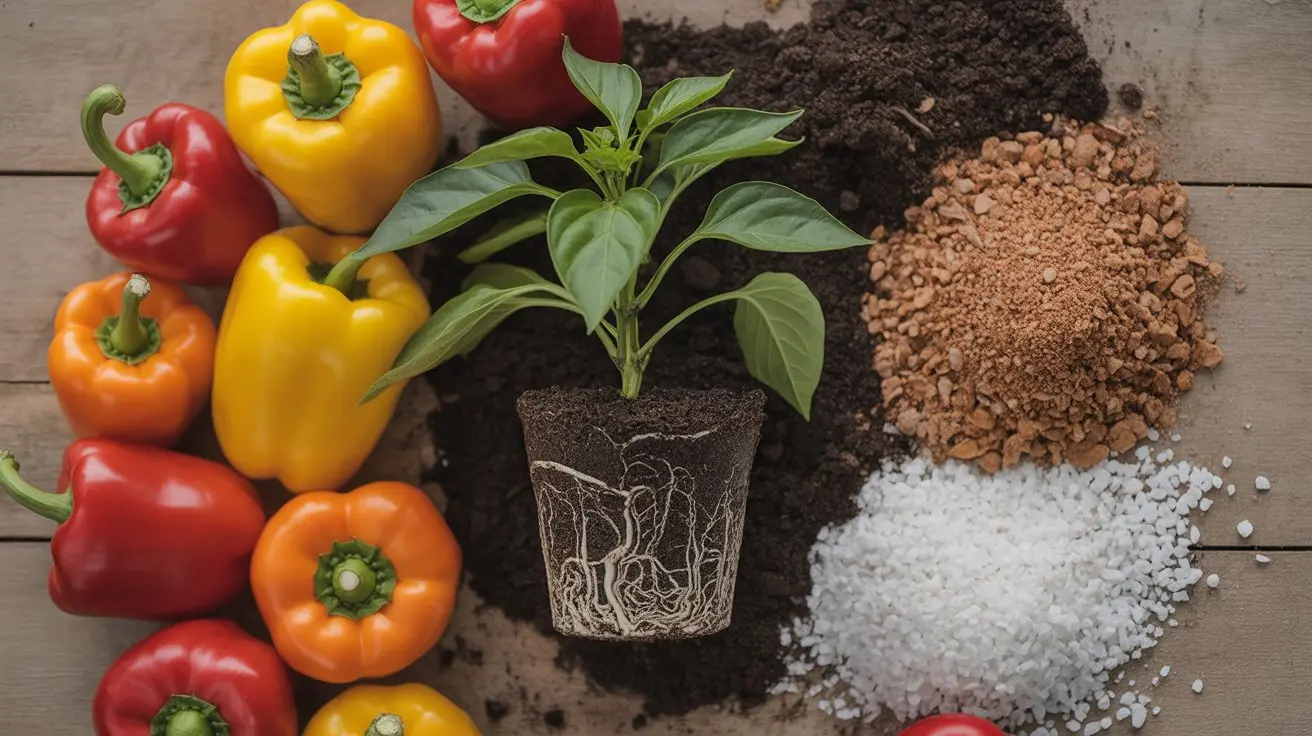
Root work is the step that kills the most pepper bonsai attempts. Peppers can regrow fine roots, but they do not like losing too much root volume and then sitting wet in a shallow pot.
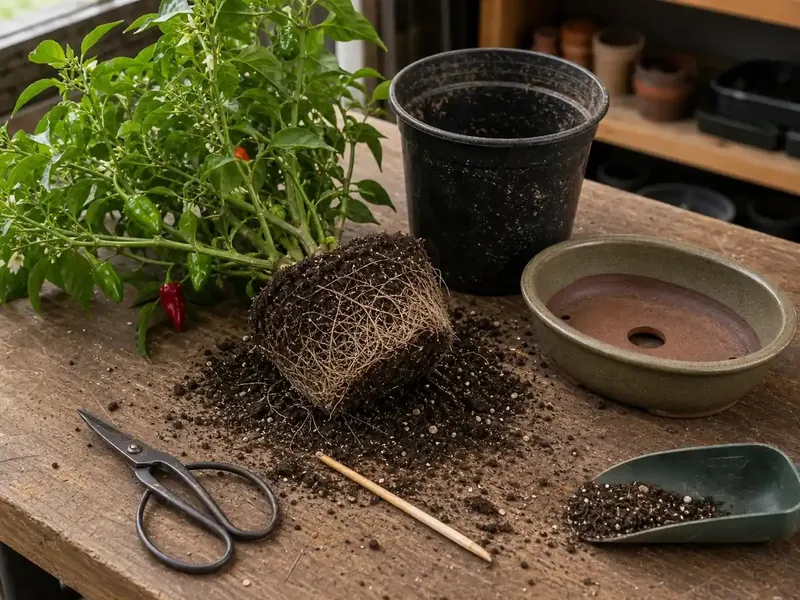
Knock away loose soil, shorten long circling roots, and keep a compact root pad with fine roots attached. If the plant is valuable, reduce in two stages: first into a training pot, then into a smaller display pot after recovery.
| Choice | Use it when | Risk |
|---|---|---|
| Training pot | First-year recovery | Less pretty, much safer. |
| Shallow bonsai pot | Plant has recovered and pushes steady leaves | Dries fast and leaves little error room. |
| Deep nursery pot | Plant is weak after cutting | Shape develops slower, but survival odds improve. |
RHS bonsai guidance treats root pruning and repotting as a timing-sensitive job because the small container limits water and nutrients. With peppers, be even more conservative after a heavy top chop because the plant is herbaceous-woody rather than a classic tree species.
Use a fast-draining mix because a shallow pot leaves little buffer between adequate moisture and waterlogged cut roots. The same drainage principle applies to peppers in containers, but a bonchi has even less root volume.
RHS guidance says to work fresh medium around the trimmed root ball, water it thoroughly, and keep the plant shaded and sheltered until it re-establishes.
Do not bare-root a stressed plant just to make the roots look tidy. Leave some familiar soil around the fine roots if the plant is already wilted, then clean and reduce more aggressively during a later repot after new growth returns.
How do you care for a pepper bonsai in winter?
Indoors, light is the limiting factor. A bright window may keep a pepper alive, but a strong grow light gives a recovering bonchi a better chance to push tight new growth.
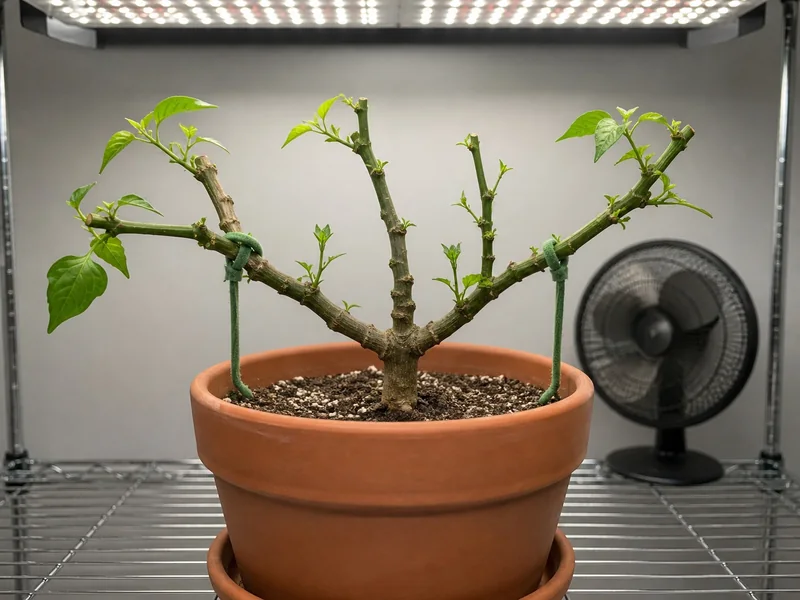
Water less than you did outdoors. Small pots dry fast at the edge but can stay damp near the root pad, so check the mix before watering instead of following a calendar.
Low winter light changes the whole water budget because a slowly growing plant absorbs water slowly. RHS describes indoor bonsai as high-light plants that need stable temperature and humidity.
Check the mix instead of following the outdoor watering calendar, especially near the compact center of the root pad.
Humidity helps only if air still moves. A sealed clear bin can keep leaves from drying for a short recovery period, but stagnant wet air also encourages mold on cut stems and soil.
- Keep the plant away from cold glass and heater blasts.
- Watch for aphids and mites before they spread to houseplants.
- Skip heavy feeding until new leaves are steady.
- Turn the pot weekly so one side does not stretch toward the light.
University of Minnesota Extension advises inspecting tops, undersides, pot rims, and saucers before an outdoor plant joins indoor plants, then isolating a newcomer for one to two weeks.
If leaves wilt after potting, compare moisture and root stress with pepper plant wilting. If sticky insects appear indoors, check aphids on pepper plants before they cover tender regrowth.
When can you wire a pepper bonsai?
Do not wire a freshly shocked pepper hard. Pepper stems scar easily, and tender branches can snap when forced into shape too soon.
Use soft ties first and lower a branch in small adjustments after growth resumes. Waiting for each new position to harden reduces the chance of snapping tender pepper wood.
Wire only branches that have proved alive, then check contact points often because expanding shoots can mark quickly.
Spring is the first real styling window. Increase light, resume light feeding, and wait until the plant pushes several healthy shoots before making another hard cut.
| Season | Main job | What to delay |
|---|---|---|
| Late fall | Harvest, top prune, and move into recovery. | Fine branch styling. |
| Winter | Keep alive under bright light with careful water. | Heavy feeding and repeated repotting. |
| Spring | Build new shoots and choose the next branch line. | Display-pot move until growth is steady. |
| Summer | Refine shape outdoors or under strong light. | Letting too much fruit drain the plant. |
The broader transplanting pepper seedlings is a useful reminder: roots need time to reconnect before the top can perform. A bonchi is more extreme, but the same recovery logic holds.
When new shoots appear, choose slowly. Keep extra shoots for a few weeks as backups, then remove the ones that point inward, cross the trunk line, or crowd the lowest branch you want to feature.
Why is your pepper bonsai wilting or stretching?
A struggling pepper bonsai usually tells you where the problem is. React to the symptom instead of doing every fix at once.
| Symptom | Likely cause | Best next move |
|---|---|---|
| Leaves wilt while soil is wet | Root loss plus low oxygen | Stop watering, improve air flow, and avoid more pruning. |
| Long pale shoots | Not enough light | Move closer to a grow light and delay styling cuts. |
| Sticky tips or curled new growth | Aphids or mites | Inspect undersides and isolate the plant. |
| No growth after heavy cutting | Too much stress at once | Keep warm, bright, and lightly moist. Wait before repotting again. |
Spider mites deserve a separate check indoors because dry air and grow lights suit them. If leaves look speckled instead of simply wilted, inspect with a hand lens and compare with spider mite.
Adding a second major correction too soon compounds root, canopy, and moisture stress. If the stem remains green and the root zone does not smell or look rotten, waiting is often safer than another cut or repot.
Use the scratch test sparingly. One small scrape that reveals green tissue is enough evidence to stop testing and let the plant rest.
Repeated scraping creates new wounds on a plant already operating with reduced roots and leaves.
When should a pepper bonsai move to a display pot?
The first year should be a recovery year. A pepper that has just lost canopy and roots needs time to rebuild fine roots, push new leaves, and prove which branches are alive.
Move into a smaller display pot only after steady new growth returns. That may be spring for a strong plant or the second season for a plant that barely survived winter.
Keep the first styling goal modest: a visible trunk, healthy new leaves, and one believable branch direction. Fine ramification can wait until the plant has a stronger root pad.
If a branch is useful but too long, shorten it in stages. Leaving one live node buys you another chance if the first bud fails.
Take a photo before each major cut. Pepper branches leaf out fast in spring, and photos help you see whether the trunk line is improving or whether you are just chasing new growth.
A display pot is the reward, not the starting line. Move too soon and you trade recovery room for looks before the plant has earned that constraint.
If maximum fruit production is the goal, bonchi is the wrong container strategy. A normal pot with more root volume supports the conditions described in many peppers per plant.
A bonchi can flower and fruit after recovery, but its restricted roots and structural pruning prioritize form and continuity over yield.
The payoff is continuity because one favorite plant can retain a trunk and history in a smaller footprint instead of restarting from seed each spring.
That tradeoff is worthwhile only when the shaping and recovery work matter as much as the harvest.
If the plant survives the first winter, the second year is where it starts to look intentional. The trunk thickens, branch choices become clearer, and the small pot finally makes visual sense.
That long timeline is the point. A bonchi rewards steady small choices: one cleaner cut, one better tie, one safer repot, and one season of patient growth at a time, without forcing a finished tree look too early.
How to Bonsai a Pepper Plant: Cut the Top, Then Reduce Roots in Stages FAQ
- Royal Horticultural Society, Bonsai: Growing Miniature Trees
- University of Maryland Extension, Growing Peppers in a Home Garden
- University of Minnesota Extension, Managing Insects on Indoor Plants
- University of Minnesota Extension, Bringing Houseplants Back Inside
- Utah State University Extension, Container Garden Drainage