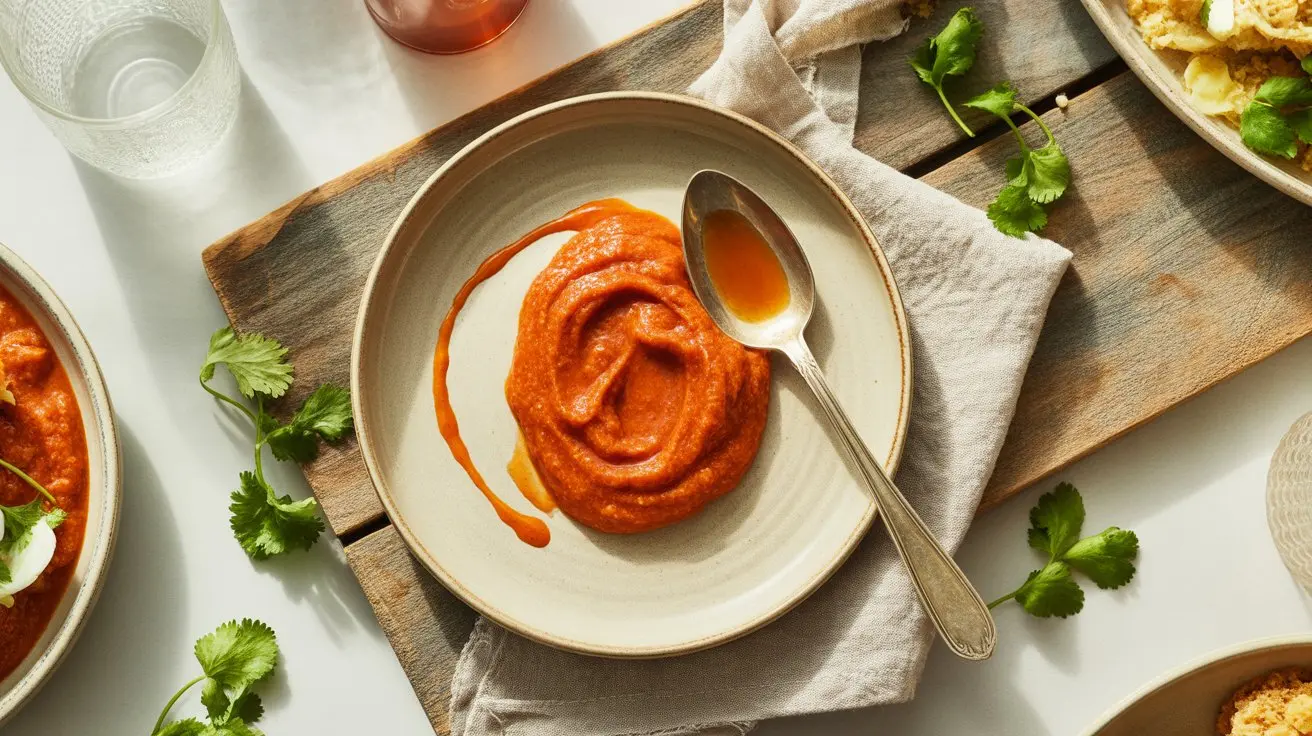
Habanero Hot Sauce
Make habanero hot sauce at home with 6 ingredients. Fruity, fiery, ready in 15 minutes. Fermented and quick-cook methods. Find your perfect heat level.

Why Habanero Hot Sauce Hits Different
Most hot sauces burn and disappear. Habanero hot sauce burns and stays - then leaves behind a wave of tropical fruit flavor that no other pepper delivers at this heat level. That combination is the whole reason to make it yourself.
Habaneros clock in at 100,000-350,000 Scoville Heat Units, which puts them firmly in the extra-hot classification tier - roughly 12 to 100 times hotter than a typical jalapeño depending on which end of the range you're measuring. The heat comes from capsaicin binding to TRPV1 receptors; if you want to understand the molecular burn pathway and how it triggers pain signals, that chemistry is genuinely fascinating.
This guide covers two methods: a 15-minute quick-cook sauce for immediate use and a 5-day lacto-fermented version that develops deeper, more complex acidity. Both use six core ingredients.
Quick-Cook Instructions
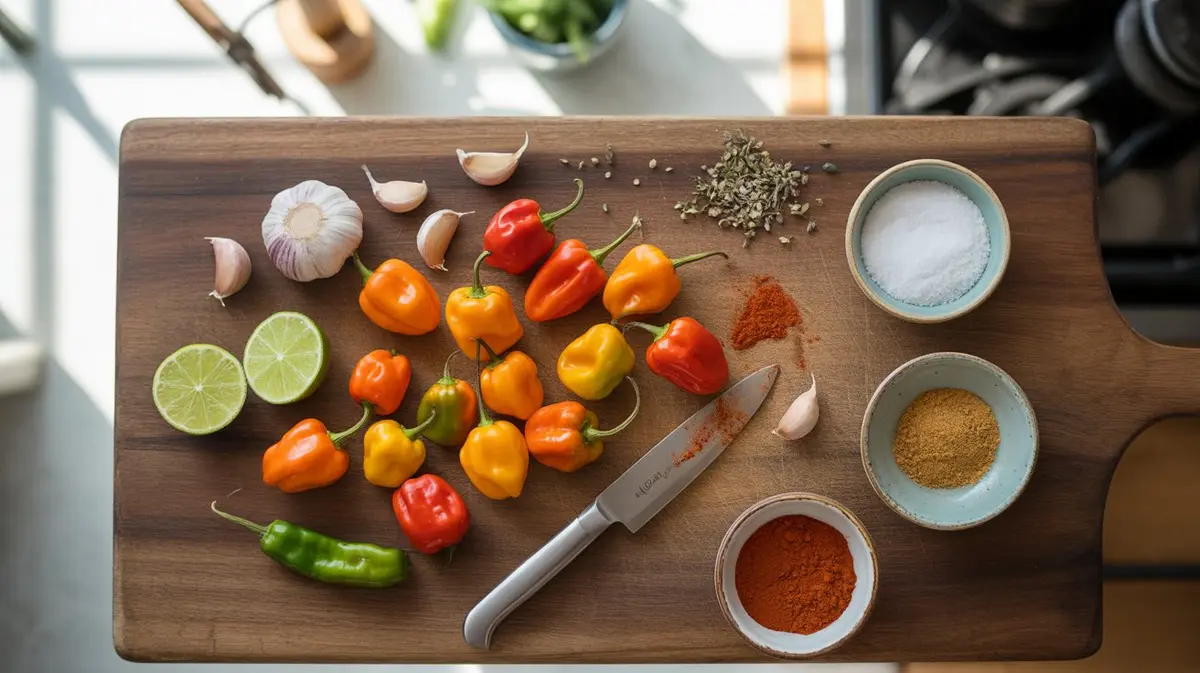
- Wear gloves. Habanero oils transfer to skin easily and persist for hours. Remove stems from peppers; seeds stay in for full heat, or scrape half out for a milder result.
- Combine peppers, garlic, carrot, water, and salt in a small saucepan over medium heat.
- Bring to a simmer, cover, and cook for 10-12 minutes until carrots are soft and peppers have lost their raw brightness.
- Let the mixture cool for 5 minutes, then transfer everything - including all liquid - to a blender.
- Add vinegar and lime juice. Blend on high for 60-90 seconds until completely smooth.
- Taste. Add honey if the acidity is too sharp. Adjust salt.
- Strain through a fine-mesh sieve for a pourable sauce, or leave unstrained for a thicker, chunkier texture.
- Bottle in sterilized glass. Refrigerate immediately.
The sauce thickens slightly as it cools. If it seems too thick after refrigerating overnight, whisk in a tablespoon of water or vinegar.
Fermented Method Instructions
Fermentation produces lactic acid naturally, creating a tangier, more layered flavor than vinegar alone can achieve. The process takes 4-7 days at room temperature.
- Dissolve 20g kosher salt in 1 liter of filtered (not tap) water. Chlorine in tap water can inhibit fermentation.
- Pack peppers, garlic, and carrot into a clean wide-mouth jar. Leave 2 inches of headspace.
- Pour brine over the vegetables until fully submerged. Use a small zip-lock bag filled with brine as a weight to keep everything below the surface.
- Cover loosely with a cloth or fermentation lid. Do not seal airtight - CO2 needs to escape.
- Leave at room temperature (65-75°F / 18-24°C) for 4-7 days. Taste starting on day 4. The brine will turn cloudy and slightly tangy - that is what you want.
- When the flavor reaches your preferred acidity, drain the brine (save a few tablespoons).
- Transfer fermented vegetables to a blender. Add apple cider vinegar, lime juice, and 2-3 tablespoons of reserved brine.
- Blend on high for 90 seconds. Strain or leave textured. Bottle and refrigerate.
Fermented sauce keeps longer - up to 6 months refrigerated - because the lactic acid acts as a natural preservative in addition to the vinegar.
Technique Tips
Blending safety: Hot liquids expand in a blender. Fill no more than halfway, hold the lid down with a folded towel, and start on low speed before ramping up.
Roasting the peppers and garlic before cooking adds a smoky depth that works especially well if you plan to use the sauce on grilled meats. Place them under a broiler for 4-5 minutes until lightly charred, then proceed with the recipe as written.
The seed-to-flesh ratio is your primary heat control lever. Habanero seeds and pith contain the highest concentration of capsaicin. Removing seeds from half the peppers reduces heat by roughly 30-40% without sacrificing the fruity flavor the flesh provides.
Acidity matters beyond flavor - it also affects shelf life. A finished sauce with a pH below 4.0 is shelf-stable when properly bottled. If you plan to store at room temperature (not refrigerated), use a pH strip to verify before bottling.
Variations
- Mango habanero: Add 1/2 cup fresh mango chunks to the blender. Reduces heat perception while amplifying the tropical notes already present in the pepper.
- Roasted garlic version: Use a full head of roasted garlic instead of raw cloves. The sweetness balances the acid and rounds out sharp edges.
- Scotch bonnet blend: Replace half the habaneros with Scotch bonnet's distinctly sweet Caribbean heat for a more floral, complex profile common in Jamaican-style sauces.
- Ghost pepper escalation: Swap 2-3 habaneros for ghost peppers if you want to push toward the super-hot tier. Ghost pepper's delayed onset changes the eating experience significantly - the heat arrives later and lasts longer.
- Lower heat version: Blend habaneros with Fresno's moderate, approachable heat at a 1:3 ratio (one habanero to three Fresnos). Same color, fraction of the intensity.
- Smoked habanero: Cold-smoke the peppers for 45 minutes before cooking. Pairs particularly well with the fermented method.
What to Do With It
Habanero sauce is not a condiment to drizzle carelessly. A few drops go further than most people expect the first time.
It works best as a finishing sauce rather than a cooking sauce - the volatile aromatic compounds that make habanero taste like habanero dissipate under sustained high heat. Add it after cooking, not during.
Classic pairings: grilled fish tacos, jerk chicken, eggs, black bean dishes, and fresh fruit (mango, pineapple, papaya all work). The fruit-acid-heat combination is the foundation of most Caribbean pepper-based condiments.
For a quick wing sauce, whisk 3 tablespoons of habanero sauce with 2 tablespoons of melted butter and a teaspoon of honey. Toss immediately after frying.
Growing Your Own Habaneros
Fresh habaneros from a garden taste noticeably different from grocery store peppers - more aromatic, more complex. The difference comes down to ripeness at harvest; commercial peppers are often picked early for shipping durability.
Habaneros need a long growing season - 90-100 days from transplant to harvest. If you are interested in the transplanting and cultivation process for hot peppers, starting seeds indoors 10-12 weeks before last frost gives them enough runway. They are heat-loving plants that stall below 60°F soil temperature.
The plant belongs to Capsicum chinense, the same species as Scotch bonnets and most superhot varieties. Chinense peppers tend to be slower to mature than Capsicum annuum types like jalapeños, but the flavor complexity makes the wait worthwhile.
For a full breakdown of where habaneros sit relative to other varieties, the Scoville heat index ranking tool puts their range in context across hundreds of pepper types.
Storage Notes
Quick-cook sauce: Refrigerate in a sealed glass bottle for up to 3-4 weeks. The flavor actually improves after 48 hours as the ingredients meld.
Fermented sauce: Refrigerate for up to 6 months. A small amount of continued fermentation may occur - burp the lid occasionally in the first few weeks.
Freezing: Both versions freeze well. Pour into ice cube trays, freeze solid, then transfer to a zip-lock bag. Each cube is roughly one tablespoon - a convenient portion for adding to soups or marinades.
Avoid storing in reactive metals (aluminum, uncoated cast iron). The acidity corrodes the surface and picks up metallic flavors. Glass or stainless steel only.
Comparing Methods: Which One to Make
The quick-cook version is sharper, brighter, and ready in 20 minutes. It tastes like habanero vinegar sauce - which is exactly what it is, and that directness is a feature.
The fermented version has more depth, a softer acidity, and a funkiness that builds complexity. It takes longer but requires almost no active work - mostly waiting.
If this is your first batch, start with quick-cook. It is more predictable and the variables are easier to control. Once you understand how the base recipe behaves, the fermented version makes more sense to attempt.
Both methods scale easily. Double the batch and the only adjustment is a slightly longer simmer time (add 3-4 minutes) for the quick-cook version.
Chef's Tip: The Resting Period
Patience is an ingredient. After mixing, let the dish rest for 10–15 minutes before serving. This allows the flavours to meld and the seasoning to fully penetrate. If making ahead, refrigerate and bring to room temperature before serving.
Shopping List
-
8-10 fresh habanero peppers (about 100g)stems removed
-
4 cloves garlicpeeled
-
1 medium carrotroughly chopped (about 80g)
-
1/2 cup white wine vinegar or apple cider vinegar
-
1/4 cup water
-
1 tsp kosher salt
-
1 tbsp fresh lime juice
-
1 tsp honey (optional)
Full Recipe Instructions
Wear gloves. Remove…
Wear gloves. Remove stems from habanero peppers. Leave seeds in for full heat or scrape half out for a milder result.
Combine peppers, garlic,…
Combine peppers, garlic, carrot, water, and salt in a small saucepan over medium heat.
Bring to a…
Bring to a simmer, cover, and cook for 10-12 minutes until carrots are soft.
Let mixture cool…
Let mixture cool for 5 minutes, then transfer everything including liquid to a blender.
Add vinegar and…
Add vinegar and lime juice. Blend on high for 60-90 seconds until completely smooth.
Taste and adjust.…
Taste and adjust. Add honey if acidity is too sharp. Adjust salt as needed.
Strain through a…
Strain through a fine-mesh sieve for a pourable sauce or leave unstrained for thicker texture.
Bottle in sterilized…
Bottle in sterilized glass and refrigerate immediately. Sauce thickens slightly as it cools.
Frequently Asked Questions
-
Habaneros range from 100,000 to 350,000 SHU while jalapeños top out around 8,000 SHU, making habanero sauce roughly 12 to 100 times hotter depending on the peppers used. A few drops of habanero sauce delivers the same heat as a much larger quantity of jalapeño-based sauce.
-
Yes - orange and red habaneros are the same variety at different ripeness stages, with red being slightly hotter and more complex in flavor. Either works in this recipe without any changes to quantities or technique.
-
Bitterness usually comes from over-blending the seeds, which releases harsh compounds, or from using underripe peppers that have not developed their full sugar content. Removing some seeds before blending and ensuring peppers are fully ripe orange or red reduces bitterness significantly.
-
Quick-cook sauce keeps for 3-4 weeks refrigerated in a sealed glass bottle, while the fermented version lasts up to 6 months. Both can be frozen
More Recipes
View allFresh Salsa Recipe
Restaurant-quality fresh salsa in 10 minutes. Proper tomato prep, right jalapeño amount, and the secret to balanced flavor. Find your perfect heat level.
Jalapeno Poppers Recipe
Classic cream cheese stuffed jalapeño poppers that are crispy outside, creamy inside. Find your perfect heat level.
Pickled Jalapenos Recipe
Two methods: 10-minute quick pickle and proper fermented. Both stay crispy. Find your perfect heat level.
Stuffed Peppers Recipe
Classic stuffed peppers with rice and meat, plus vegetarian and Mexican variations. Covers bell peppers, poblanos, and which peppers stuff best.