Growing Poblano Peppers to Harvest Green or Ripen Red for Ancho
Start poblano seed about eight weeks before transplanting, then wait for 65 F soil and nights above 50 F. Give each plant sun, steady root-zone moisture, early support, and enough time to choose between full-size green fruit and red peppers for ancho.
Set the Crop Up for Broad, Heavy Pods
Growing poblano peppers well means giving a long-season plant enough warmth, root room, steady moisture, and branch support to finish broad fruit. Oregon State University Extension describes a typical poblano as 3 to 4 inches wide and 4 to 7 inches long, so each pod asks more of a stem than a narrow chile does.
The first usable harvest is usually green. Fruit left to mature becomes red, and Oregon State identifies that dried red form as an ancho chile.
| Crop decision | Condition to protect | What it changes |
|---|---|---|
| Green poblano harvest | Firm, full-size fruit | Provides pods for roasting and stuffing |
| Red fruit for ancho | More frost-free ripening time | Develops mature color before drying |
| Broad, sound pods | Even water and supported branches | Reduces stress while fruit fills |
This guide follows the plant from seed to that harvest decision. The useful measure is not a fixed pod count, but whether the plant can mature sound fruit for the way you plan to use it.
When Should You Start and Transplant Poblano Peppers?
Start poblano seed indoors about eight weeks before transplanting. That timing comes from University of Minnesota Extension and gives the seedlings a head start without holding them indoors until they become root-bound.
Warm air alone is not a transplant signal. University of Maryland Extension advises waiting until the soil reaches 65 F, while Minnesota says nighttime lows should remain above 50 F.
Harden seedlings for one to two weeks before planting, as Minnesota recommends. Set them outdoors for progressively longer periods, but bring them back under cover when temperatures fall below 55 F.
- About eight weeks before transplant: sow seed indoors.
- One to two weeks before planting: begin hardening.
- At transplant: require 65 F soil and nights above 50 F.
Water the seedlings before they leave their cells and keep the root ball intact. Minnesota advises planting at the same soil line because peppers do not benefit from deeply buried stems the way tomatoes can.
How Much Sun and Space Do Poblano Plants Need?
Choose a site with at least six hours of direct sun. University of Maryland Extension says peppers prefer eight to ten hours, which gives a poblano canopy more energy to fill large fruit.
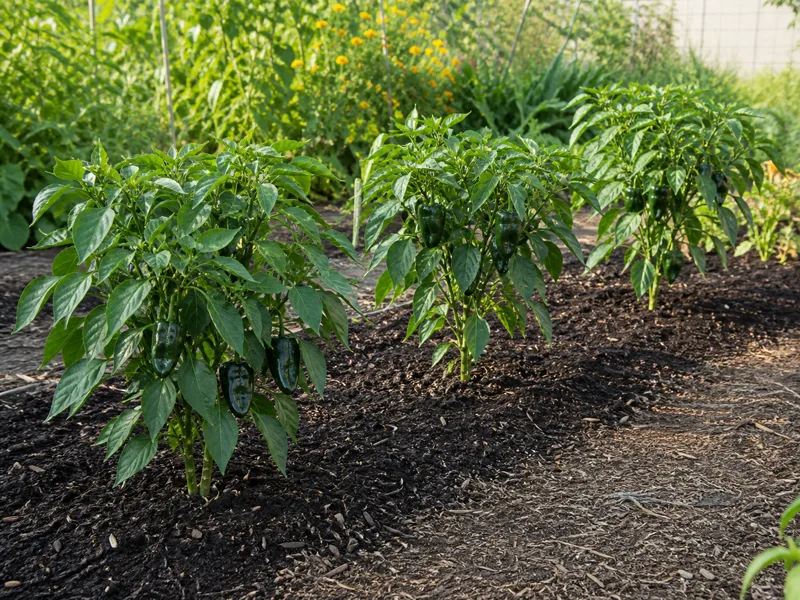
For an in-ground row, Minnesota uses roughly 18 inches between plants and 30 to 36 inches between rows. Maryland gives a wider in-row range of 12 to 24 inches, so 18 inches is a practical center point when a cultivar label does not specify otherwise.
Spacing also needs to leave a hand path for tying branches and cutting fruit. A plant crowded against a wall or another dense crop may be difficult to inspect even when its nominal spacing is adequate.
Do not remove healthy leaves merely to expose the pods. Maryland Extension identifies sunscald as damage to fruit exposed to strong sun, so preserving a working canopy is part of protecting broad poblano shoulders.
What Soil and Fertilizer Do Poblano Peppers Need?
Use loose, well-drained soil with organic matter mixed through the planting area. Both Minnesota and Maryland Extension recommend soil testing before fertilizer decisions because the existing nutrient level should determine what the bed receives.
A starter fertilizer at transplant can support establishment, according to Minnesota.
Later feeding should respond to the soil test and plant condition rather than a calendar alone.
More nitrogen does not guarantee more peppers. Minnesota warns that excessive nitrogen produces bushy, leafy plants that are slow to set fruit, which is a poor trade when the goal is a crop of broad pods.
When a dark green plant keeps making shoots but carries few flowers, check the fertilizer record before adding another dose. Temperature can also stop fruit set, so diagnose both inputs before changing either one.
Do Poblano Pepper Plants Need Support?
Install a stake or open cage before the first heavy fruit load. University of Maryland Extension describes pepper stems as brittle and recommends support to prevent breakage.
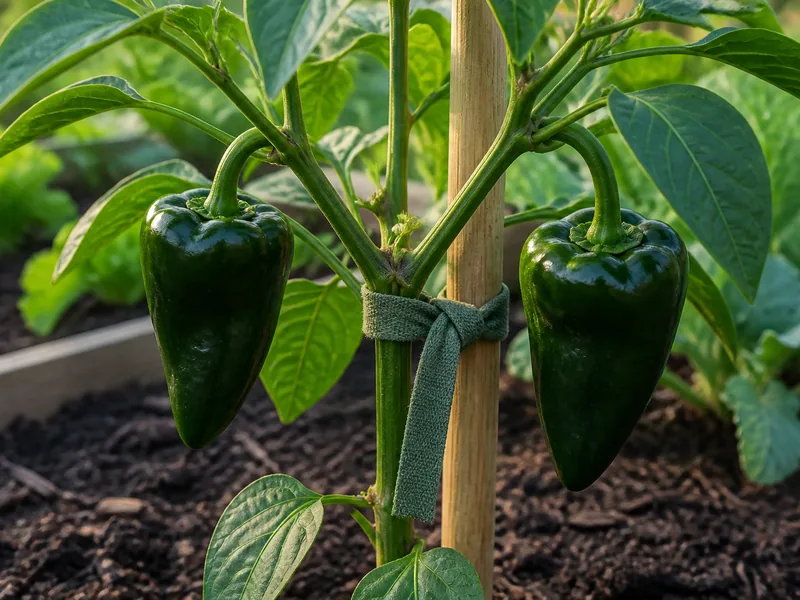
A poblano can reach 4 to 7 inches long according to Oregon State, and several fruit may pull on the same fork. Tie the main stems loosely with soft material, leaving room for them to thicken instead of cinching them to the support.
Place ties below a loaded fork so the support carries the branch rather than pressing against a pod.
Check contact points as fruit expands because a cage wire that starts clear can later rub a broad shoulder.
- Stake early: place the support without disturbing a mature root system.
- Tie below the load: keep the fruit cluster from levering the fork downward.
- Leave clearance: prevent pods from resting against wire or rough stems.
If one branch becomes overloaded, harvest its full-size green fruit before less-developed pods elsewhere. Cutting weight from the strained branch protects fruit already close to the intended green stage.
How Should You Water Poblano Peppers?
Uniform moisture matters most while flowers set and pods expand. Clemson Cooperative Extension identifies fruit set and fruit development as critical watering periods, while Maryland links dry soil with blossom drop and small fruit.
Water deeply enough to wet the active root zone, then allow the surface to begin drying before the next irrigation. Minnesota specifically warns that frequent shallow sprinkling encourages shallow roots and leaves plants more vulnerable during hot weather.
A drip line or soaker hose can deliver water without repeatedly wetting foliage. Maryland recommends both methods, and a layer of mulch helps slow evaporation after the soil has warmed.
| What you observe | Likely water pattern | First correction |
|---|---|---|
| Wilt before each irrigation | Root zone dries too far | Check sooner and water deeply |
| Small fruit plus blossom drop | Moisture is not uniform | Stabilize the interval with drip and mulch |
| Constantly wet surface | Water is too frequent or drainage is weak | Check below the surface before watering again |
Do not answer every midday wilt with immediate watering.
Check moisture below the surface first because leaves can droop temporarily in heat even when the root zone still holds water.
Why Are Poblano Flowers Dropping?
Flower drop during a hot spell is often a temperature response. Minnesota reports weak pepper growth when days exceed 90 F, nights fall below 60 F, or nights rise above 70 F.
University of Maryland Extension gives another useful marker. Evening temperatures above 75 F can slow or stop pod production even when the plant continues growing leaves.
Keep the soil evenly moist during these periods, but do not force the plant with extra nitrogen.
Flowers can resume setting when temperatures moderate, while excessive fertilizer may leave the plant with still more canopy and no additional fruit.
Cold conditions cause a different pause. Clemson places the best daytime range for peppers at 70 to 85 F and the best nighttime range at 60 to 70 F, so a newly transplanted poblano may simply need warmer weather rather than another input.
Why Are Your Poblano Peppers Small or Damaged?
Start with the symptom instead of treating every flawed pod as a feeding problem. Water stress, exposed fruit, and calcium transport problems leave different patterns and need different responses.
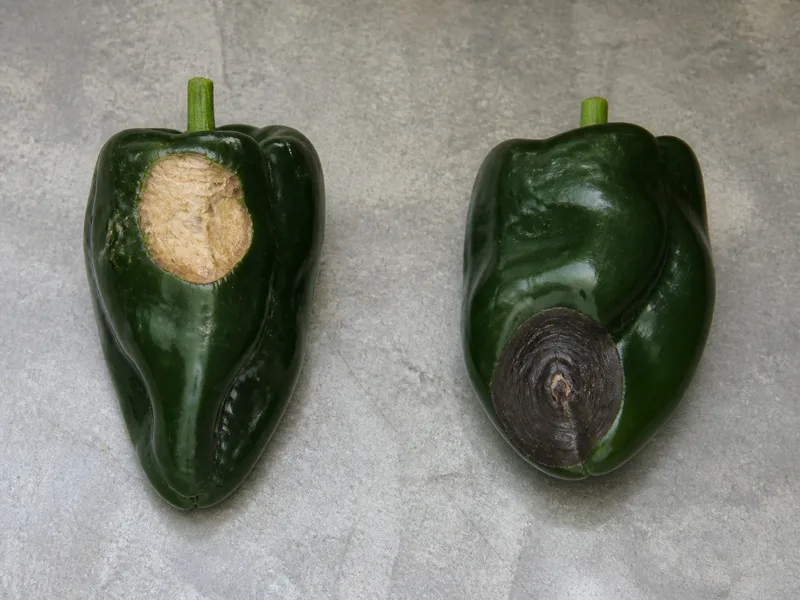
| Symptom | Most useful clue | Action |
|---|---|---|
| Pods remain narrow or small | Soil repeatedly dries and flowers also drop | Stabilize root-zone moisture before feeding |
| Tan or papery patch on the exposed side | Fruit lost leaf shade | Preserve healthy foliage and support the branch under cover |
| Dark, sunken area at the blossom end | Moisture swings disrupt calcium movement | Water uniformly and avoid root damage |
| Scars where fruit touches a cage | The mark follows a contact point | Move the tie or support before the pod expands further |
Maryland Extension identifies the exposed patch as sunscald and describes blossom-end rot as a calcium-related disorder commonly associated with uneven moisture. Adding calcium without a soil test can miss the actual cause when roots could not take it up consistently.
Leaf loss changes the diagnosis because it removes fruit shade. Inspect for chewing damage and disease before pruning more foliage, then preserve enough healthy canopy to protect the developing pods.
Damaged fruit does not always need to stay on the plant. Cut a firm, usable pod for immediate cooking when a scar is only superficial, but discard fruit with spreading soft rot.
Can You Grow Poblano Peppers in a Pot?
A poblano can grow in a pot, but University of Maryland Extension sets five gallons as the minimum container volume for peppers. A broader, heavier pot is more stable than a narrow vessel once the canopy and fruit begin pulling on a cage.
Use fresh, well-drained potting mix rather than garden soil compacted into a container.
Confirm that excess water can leave through open drainage holes, then place the support while the plant is still small.
Containers need more frequent moisture checks than an in-ground bed because the root volume is limited. Water until the mix is evenly moist, and check below the surface before repeating rather than following a fixed daily dose.
One plant per five-gallon container gives the roots and support structure the full volume. If a cultivar tag calls for more space or the site is exceptionally hot and windy, a larger pot provides a slower drying buffer.
When Should You Pick Poblano Peppers?
Pick a green poblano when it has reached its cultivar's expected size, feels firm, and has full shoulders. Oregon State places typical fruit at 3 to 4 inches wide and 4 to 7 inches long, but the seed packet remains the better size reference for a named cultivar such as Baron or Tiburon.
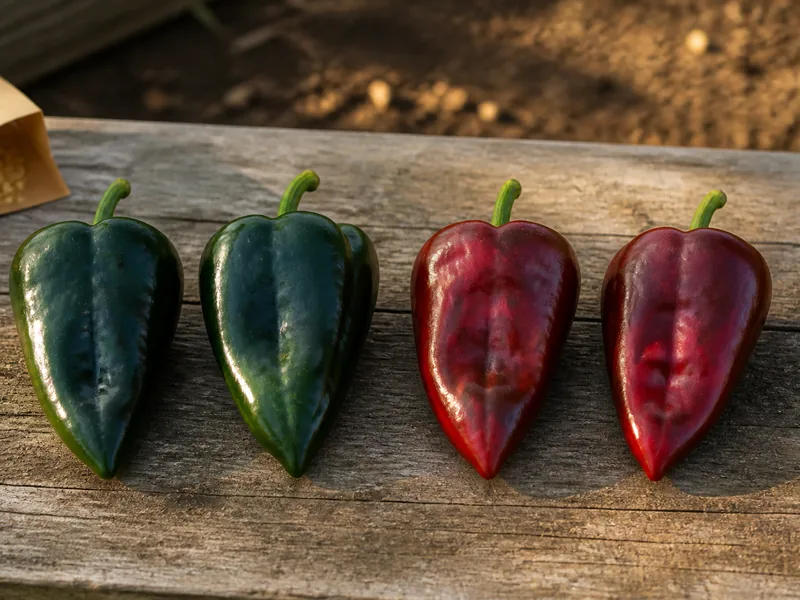
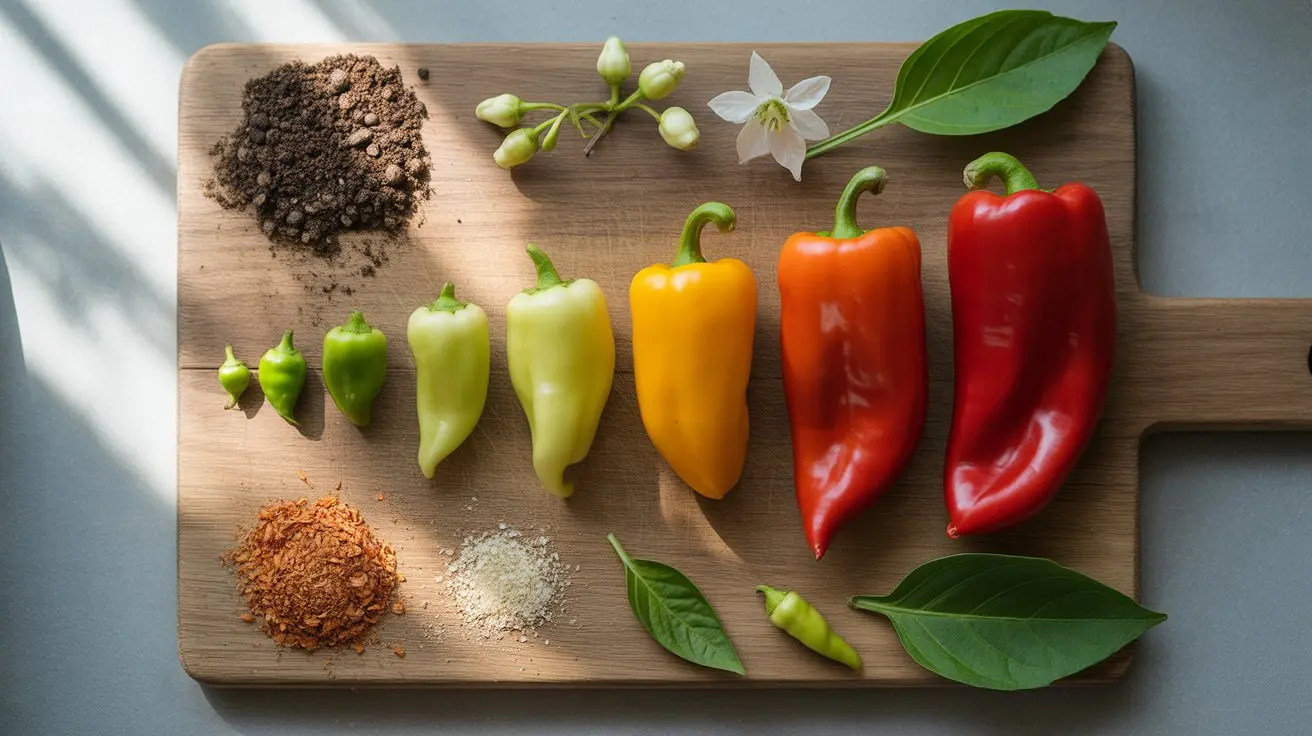
Color tells you a separate part of the maturity story. Oregon State describes green poblano fruit as immature and red fruit as mature, with the dried red pepper known as ancho.
Peppers need at least 45 to 55 days from pollination to reach a harvestable stage under good conditions, according to Oregon State. That interval explains why a late flower is unlikely to become a fully red pod before an early frost.
| Harvest stage | Choose it when | Plant tradeoff |
|---|---|---|
| Full-size green | You want firm fruit for roasting or stuffing | Removes weight and allows later fruit to develop |
| Color break | You can finish ripening a sound pod off the plant | Frees a branch before full red maturity |
| Fully red | You intend to use or dry a mature pepper as ancho | Occupies the branch for a longer period |
Cut the stem with clean pruners instead of pulling the fruit. Maryland recommends cutting peppers because a tug can tear the brittle branch that is still carrying the rest of the crop.
Which Poblanos Should You Harvest Before Frost?
As frost approaches, protect the fruit that has a realistic path to harvest. Use Oregon State's 45-to-55-day post-pollination interval to distinguish recently set fruit from pods already close to full size.
Harvest firm green poblanos before a damaging cold event rather than risking the whole crop.
Reserve the remaining warm days for a small number of sound, well-developed pods when red maturity matters for ancho use.
Remove split, soft, or actively rotting fruit because it will not improve with more time. Keep healthy leaves and branch supports in place while the final selected pods finish.
Sort the cut fruit immediately by condition and intended use. Broad, unbroken pods suit stuffing, sound fruit with superficial marks can be roasted promptly, and fully red fruit can move to the separate drying process.