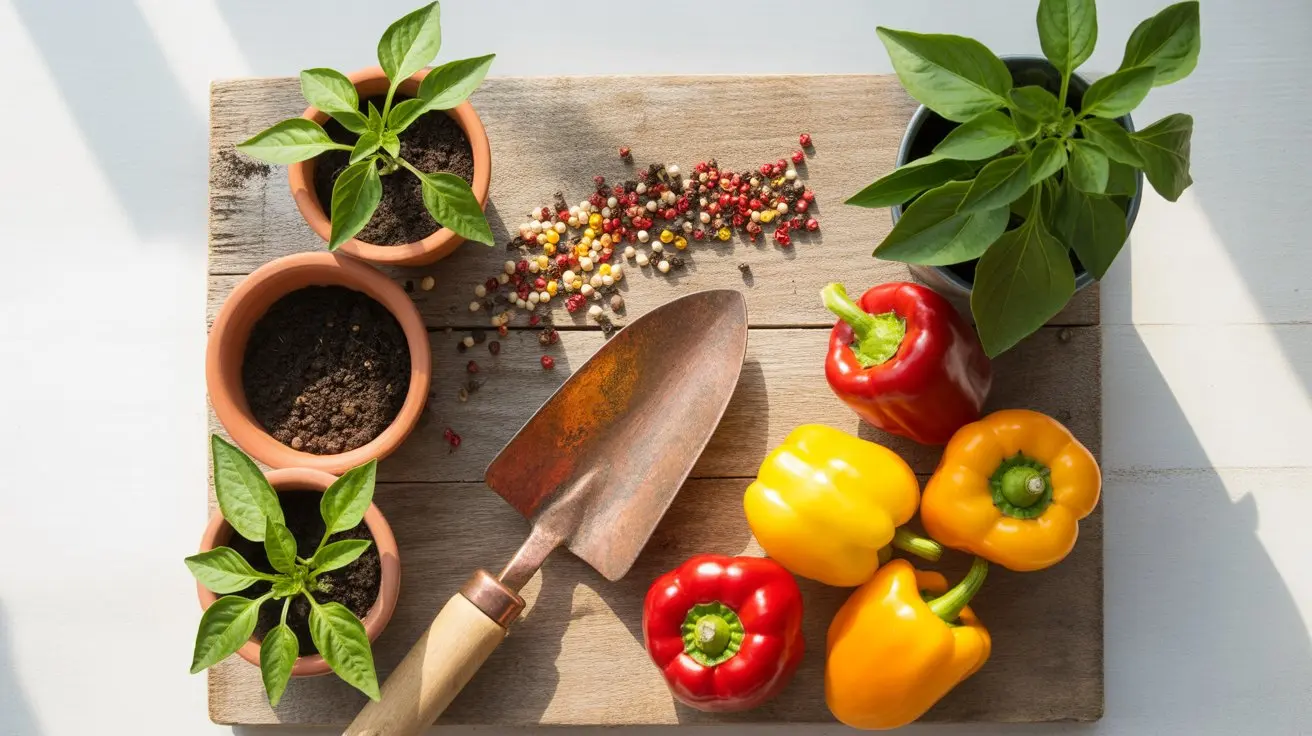
How to Grow Peppers from Seed
Growing peppers from seed indoors and outdoors. Germination, transplanting, and harvest. Detailed guide with expert tips and practical advice.
Starting Seeds Indoors: Timing Is Everything
Peppers are slow starters. Unlike tomatoes, which can go from seed to transplant-ready in five or six weeks, most pepper varieties need 8-12 weeks of indoor growing before they're ready to face the outside world.
Count backward from your last frost date. If that date falls in mid-May, you're starting seeds in late February or early March. Get that wrong and you're either scrambling to catch up or babysitting leggy seedlings for months.
Hot varieties like the thin-walled, intensely flavored Jwala finger chili from India often need even more lead time than milder types — plan for the longer end of that range when you're growing anything with serious heat.
What You Need Before You Plant
The equipment list is shorter than most guides make it sound. A heat mat, seed trays or small containers, a quality seed-starting mix, and a light source are the core four.
Standard potting soil is too dense for germination. Seed-starting mix drains faster and stays loose enough for tiny roots to push through without resistance. Fill cells to about 1/4 inch from the top.
Lights matter more than most beginners expect. A sunny south-facing window can work, but a grow light positioned 2-4 inches above seedlings gives you much more consistent results, especially in northern climates where winter sun is weak and fleeting.
Germination: Heat Is the Key Variable
Pepper seeds don't germinate well in cold soil. The sweet spot is 80-90°F soil temperature. Below 70°F, germination slows dramatically. Below 60°F, seeds may sit dormant for weeks and then rot.
A seedling heat mat placed under your trays solves this cleanly. Most cost under $30 and can dramatically improve germination rates across every variety you're growing — from mild guajillo peppers with their dried-fruit depth all the way up to scorching Indian varieties.
Plant seeds 1/4 inch deep, two per cell. If both germinate, snip one at the soil line — don't pull, which disturbs roots. Cover trays with a humidity dome or plastic wrap to retain moisture until sprouts appear.
Germination time ranges widely. Common annuum varieties often sprout in 7-14 days. Chinense species, which include habaneros and most super-hots, routinely take 21-30 days even under ideal conditions. Don't give up on slow cells too early.
Caring for Seedlings After Germination
Once you see sprouts, pull the humidity dome and drop the temperature slightly — 70-75°F air temperature keeps growth steady without encouraging leggy stretching.
Lighting becomes critical now. Seedlings need 14-16 hours of light per day. Too little and they stretch toward the source, producing weak, thin stems that struggle later. A timer on your grow light removes the guesswork entirely.
Water when the top of the soil feels dry, not on a schedule. Overwatering kills more pepper seedlings than underwatering does. Let the mix dry slightly between waterings, and always water from below when possible — bottom watering encourages roots to grow downward.
Start a diluted liquid fertilizer at half strength once seedlings develop their first true leaves (the second set, not the initial seed leaves). A balanced formula works fine at this stage.
Transplanting Up: When and How to Pot On
When roots start showing through drainage holes, it's time to move up. Going from a small seed cell to a 4-inch pot is the standard first transplant. Don't jump straight to a large container — peppers in oversized pots often stall while roots catch up to the soil volume.
Handle seedlings by their leaves, not their stems. A leaf can be replaced; a snapped stem usually ends the plant's story. Settle the root ball into pre-moistened potting mix and water in gently.
Indian varieties grown for their color and mild heat — like the deep-red Byadgi chili prized in Karnataka cooking — develop extensive root systems and benefit from a second transplant into 6-8 inch containers before going outdoors.
Hardening Off: Don't Skip This Step
Moving seedlings directly from your climate-controlled house to the garden is a fast way to stress or kill them. Hardening off is the gradual acclimatization process that prevents transplant shock.
Start by placing plants outdoors in a sheltered, partly shaded spot for 1-2 hours on the first day. Increase outdoor time by an hour or two each day over 10-14 days, gradually introducing more direct sun and wind.
Watch for wilting, leaf curl, or bleached patches — signs the transition is moving too fast. Pull plants back inside if temperatures drop below 55°F at night. Peppers are tropical plants and cold snaps set them back significantly.
Choosing Varieties Based on Your Goals
The variety you start with shapes everything — germination time, days to maturity, plant size, and ultimately what ends up on your plate or in your pantry.
If you're growing for dried chiles and complex sauces, look at the Mexican pepper traditions. The dark, earthy pasilla and mulato with its chocolate-raisin notes are both Capsicum annuum varieties that dry beautifully and anchor mole-style cooking. Both are manageable heat levels for most palates.
For Indian-style cooking, the fiery Guntur chili from Andhra Pradesh is a benchmark variety worth growing if you want to understand India's pepper-growing traditions firsthand. It's productive and performs well in containers.
Heat tier matters for planning too. Mild-tier varieties like pasilla and Byadgi finish faster and are more forgiving of suboptimal conditions. Hot-tier peppers including guajillo and Guntur need a full season and consistent warmth to reach their potential.
Direct Sowing vs. Indoor Starting
In most of North America, direct sowing pepper seeds outdoors doesn't work. The growing season simply isn't long enough — peppers need 100-150 days from transplant to harvest depending on variety, and that clock doesn't start until soil temperatures consistently hit 65°F or above.
Growers in USDA zones 9-11 have more flexibility. If you're in southern California, Florida, or the Gulf Coast, direct sowing in late winter or early spring is viable. Everywhere else, indoor starting is non-negotiable for a productive harvest.
The one exception: fast-maturing medium-heat varieties in zones 7-8 can sometimes be direct-sown under row cover if you get seeds in the ground early enough and the season runs long.
Planting Out: Spacing, Soil, and Sun
Peppers want full sun — six hours minimum, eight or more is better. In hot climates, afternoon shade can prevent blossom drop, but don't sacrifice morning sun to get it.
Space plants 18-24 inches apart in rows or raised beds. Crowding restricts airflow and invites fungal issues. Compact varieties like many Indian finger chiles can go a bit closer; large annuum types need the full spacing.
Soil prep matters. Work in compost before planting and aim for a slightly acidic pH of 6.0-6.8. Avoid high-nitrogen fertilizers at this stage — they push leaf growth at the expense of fruit. Switch to a phosphorus-forward formula once plants are established and starting to flower.
Peppers from Mexico's pepper-growing regions evolved in well-drained volcanic soils. Replicating that drainage in heavy clay soils means either raising your beds or amending heavily with perlite or coarse sand.
Watering and Feeding Through the Season
Consistent moisture is the goal — not wet, not dry. Inconsistent watering causes blossom end rot and blossom drop, two of the most common reasons for disappointing yields.
Drip irrigation or soaker hoses eliminate the variability of hand watering. Mulching around plants keeps soil moisture stable and suppresses weeds that compete for nutrients.
Feed every two weeks with a balanced fertilizer once plants are established. When flowers appear, back off nitrogen and increase potassium to support fruit development. Overfeeding nitrogen at this stage produces beautiful plants with very few peppers.
From Flower to Harvest
Most pepper plants drop their first flush of flowers. This is normal — the plant is establishing root structure and isn't ready to support fruit yet. Don't panic. The second and third flushes typically set fruit successfully.
Peppers are edible at any stage. Green peppers are just unripe versions of whatever color they'll eventually turn — red, yellow, orange, brown, or purple depending on variety. Letting them fully ripen on the plant intensifies sugar content and, in hot varieties, can increase capsaicin concentration.
The thin-walled dried varieties like guajillo are almost always harvested red and then dried. Thick-walled fresh types are usually picked green or at whatever color suits the recipe. Knowing your variety's intended use shapes when you harvest.
Days to maturity listed on seed packets count from transplant date, not from germination. A variety listed at 80 days means 80 days after you put it in the ground outside, assuming conditions are right.
Common Problems and How to Handle Them
Aphids cluster on new growth and can be knocked off with a strong water spray or treated with insecticidal soap. Check the undersides of leaves regularly.
Damping off kills seedlings at the soil line and is caused by fungal pathogens thriving in wet, poorly ventilated conditions. Prevention is the only real cure: use sterile seed-starting mix, avoid overwatering, and run a small fan near seedlings to improve airflow.
Bacterial leaf spot shows as water-soaked lesions that turn brown. Remove affected leaves, improve airflow, and avoid overhead watering. Copper-based sprays can slow the spread but won't eliminate an established infection.
Saving Seed for Next Season
Peppers are largely self-pollinating, which makes seed saving straightforward — but not foolproof. Different varieties grown close together can cross-pollinate through insect activity, producing seeds that won't grow true to type.
To save reliable seed, let a few fruits fully ripen on the plant past the eating stage — they should be slightly shriveled and very soft. Scrape seeds onto a paper towel, rinse off any flesh, and dry at room temperature for 1-2 weeks before storing.
Store dried seeds in a cool, dark place in paper envelopes or glass jars with a silica gel packet. Properly stored pepper seeds remain viable for 2-4 years. Germination rates drop after that, so test a small batch before committing to a full tray.
Saving seed from open-pollinated and heirloom varieties like the mulato or pasilla is particularly rewarding — these are the same genetics that Mexican growers have selected for generations, and maintaining them matters for biodiversity.
Frequently Asked Questions
-
From seed to first harvest typically takes 120-180 days depending on variety. That includes 8-12 weeks of indoor growing, a hardening-off period, and 80-150 days to maturity after transplanting outdoors.
-
Soil temperature is usually the culprit. Pepper seeds need 80-90°F to germinate reliably. A seedling heat mat fixes this quickly. Chinense varieties also naturally take 21-30 days even under ideal conditions, so patience matters.
-
Sometimes, but results are inconsistent. Many commercial peppers are harvested before fully ripe, meaning seeds may not be mature enough to germinate well. Seeds from a fully ripe, locally grown pepper have much better odds.
-
Peppers need at least six hours of direct sun daily, and eight or more is better for productive fruiting. In climates where summer temperatures regularly exceed 90°F, some afternoon shade can actually prevent blossom drop.
-
Count back 8-12 weeks from your last frost date. For most of the northern US, that means starting seeds in late February or early March. Hot varieties and slow-germinating chinense types should start at the longer end of that range.