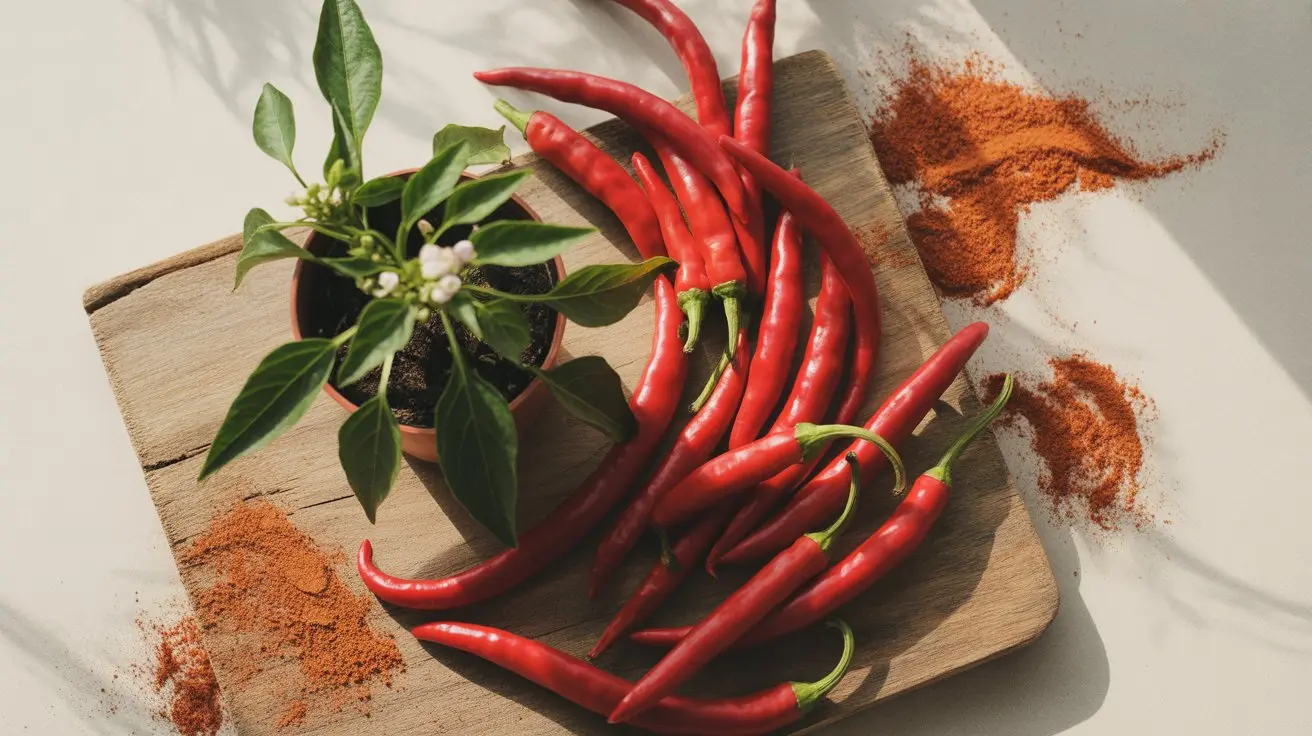
How to Grow Cayenne Peppers
Cayenne peppers are easy to grow and perfect for drying into powder. Planting, care, harvest, and drying/grinding methods. Find your perfect heat level.

What Makes Cayenne a Great First Grow
Cayenne peppers hit between 30,000 and 50,000 SHU — firmly in the hot pepper tier — but they're surprisingly forgiving in the garden. The plants are vigorous, productive, and adaptable to containers or raised beds.
Unlike some finicky superhots, cayenne rewards beginners with fast germination, steady growth, and a harvest that's genuinely useful in the kitchen. The real payoff comes at the end of the season when you dry and grind your own powder.
Choosing Your Cayenne Variety
The word "cayenne" covers a wider range than most people realize. Standard Long Red Cayenne is the classic — thin-walled, 4-6 inches long, ripening to bright red. It dries exceptionally well and grinds into the familiar fine powder.
If you want something with more bite, Carolina Cayenne pushes closer to 100,000 SHU. For comparison, the fiery, thin-fruited Prik Jinda from Thailand occupies similar culinary territory — both are used fresh or dried for intense heat in sauces and stir-fries.
Gardeners who want a hotter cayenne alternative might also look at the Teja chili's sharp, pungent heat, a South Indian variety that grows similarly and dries just as well. For container growers, compact cayenne varieties like Cayennetta stay under 18 inches and produce heavily.
Starting Seeds Indoors: Timing and Setup
Cayenne seeds need 8-10 weeks of indoor time before transplanting. Count backward from your last frost date — in most of the US, that means starting seeds in late February or early March.
Fill seed trays with a sterile seed-starting mix (not potting soil — it's too dense for germination). Plant seeds about 1/4 inch deep, two per cell.
Heat is the critical variable here. Cayenne germinates best at 80-85°F soil temperature. A seedling heat mat makes a real difference — without one, germination can take 3 weeks or longer. With one, expect sprouts in 7-14 days.
Once seedlings emerge, drop the temperature slightly to 70-75°F and move them under grow lights. Keep lights 2-3 inches above the tops to prevent leggy stretching. Twelve to sixteen hours of light daily is the target.
For a broader look at seed-starting technique that applies across pepper species, the complete pepper cultivation guide covers soil prep, lighting schedules, and common early mistakes worth avoiding.
Transplanting and Outdoor Setup
Harden off seedlings for 7-10 days before transplanting. Start with an hour of outdoor shade, then gradually increase sun exposure and time outside each day. Skipping this step causes transplant shock that can set plants back by weeks.
Transplant only after nighttime temperatures stay consistently above 55°F. Cayenne is cold-sensitive — a single night below 50°F stunts growth noticeably.
Space plants 18-24 inches apart in rows 24-30 inches apart. They'll reach 2-3 feet tall at maturity and benefit from airflow between plants to reduce fungal pressure.
Cayenne thrives in full sun — at least 6 hours daily, 8+ preferred. Choose the sunniest spot in your garden. Sandy loam or well-draining raised bed mix works best. Heavy clay soils hold too much moisture and invite root rot.
Soil, Fertilizing, and Watering
Target a soil pH between 6.0 and 6.8. Before planting, work in 2-3 inches of compost to improve drainage and add organic matter. A balanced starter fertilizer (like 10-10-10) at planting gives seedlings a strong foundation.
Once plants start setting flowers, shift to a lower-nitrogen fertilizer. Too much nitrogen at this stage pushes leafy growth at the expense of fruit. A tomato fertilizer or one with a 5-10-10 ratio keeps the plant focused on production.
Cayenne needs consistent moisture but hates wet feet. Water deeply once or twice a week rather than shallow daily watering. The goal is soil that stays evenly moist 2-3 inches down. Mulching around the base with straw or wood chips conserves moisture and keeps soil temperatures stable.
Drip irrigation is worth the setup time for cayenne. It keeps water off the foliage, reducing the risk of bacterial leaf spot — a common problem in humid summers.
Common Problems and How to Handle Them
Aphids cluster on new growth and the undersides of leaves. A strong spray of water knocks most off. Neem oil works for persistent infestations, applied in the evening to avoid leaf burn.
Bacterial leaf spot shows as dark, water-soaked lesions on leaves. It spreads in wet conditions and can't be cured once established — remove affected leaves immediately and avoid overhead watering going forward.
If you're growing multiple hot varieties nearby, note that cayenne can cross-pollinate with other Capsicum annuum types. This won't affect this season's fruit, but saved seeds may produce unpredictable plants next year. For context on how heat genetics work across varieties, the chemistry behind capsaicin's burn explains why heat levels vary so dramatically even within the same species.
When and How to Harvest
Cayenne peppers are ready to harvest when they turn fully red — typically 70-80 days after transplanting. You can pick them green for a grassier, slightly less hot flavor, but the heat and sweetness both peak at full red ripeness.
Use scissors or pruning shears rather than pulling by hand. Yanking pods can snap branches or uproot shallow-rooted plants. Cut with a short stem attached to extend shelf life.
Harvest frequently once the season starts. Leaving ripe pods on the plant signals it to slow production. Regular picking keeps the plant producing through frost.
A healthy cayenne plant in good conditions will yield 30-50 pods per season, sometimes more. The thin walls and low moisture content make them ideal for drying — unlike thicker-walled peppers that can take weeks to dehydrate.
Drying and Grinding Your Harvest
Cayenne's thin flesh is its biggest advantage at harvest time. It dries faster and more completely than most peppers, with minimal risk of mold.
Air drying is the simplest method. Thread a needle through the stems and hang strings of peppers in a warm, dry spot with good airflow. They'll be fully dry in 2-4 weeks, depending on humidity. This only works reliably in dry climates — in humid regions, a dehydrator is the better call.
A food dehydrator set to 125-135°F produces consistent results in 8-12 hours. Slice larger pods in half to speed the process. Peppers are ready when they snap rather than bend.
Oven drying works but requires attention. Set the oven to its lowest temperature — ideally 170°F or below — and prop the door open slightly for airflow. Check every hour. This method takes 4-8 hours.
Once completely dry, grind in a dedicated spice grinder or high-powered blender. Wear a mask — airborne cayenne powder is intensely irritating. Sift through a fine-mesh strainer for a smooth powder, or leave it coarser for more texture. Store in an airtight jar away from light and heat. Homemade cayenne powder stays potent for 12-18 months.
Cayenne Heat in Context
At 30,000-50,000 SHU, cayenne sits well above serrano peppers (10,000-23,000 SHU) — roughly two to three times hotter by Scoville measurement. The pepper heat index tool puts this in perspective against the full range from mild bells to superhots.
For growers curious about what lives above cayenne on that scale, the Kanthari chili's intense, sharp heat from Kerala represents a significant jump — small pods that punch well above their weight. Further up still, the 7 Pot Jonah's extreme capsaicin output reaches over a million SHU, a completely different category of pepper growing.
Those looking at the upper extremes of the super-hot pepper bracket will find that cultivation demands shift significantly — longer germination times, more heat-mat dependency, and much more patience. Cayenne is a good stepping stone before tackling those varieties.
Growing Cayenne in Containers
Cayenne adapts well to container growing, which is useful for gardeners with limited space or those in colder climates who want to bring plants indoors before frost.
Use a container at least 5 gallons in volume — 7-10 gallons is better for full-size varieties. Containers dry out faster than in-ground beds, so check moisture daily during hot weather. A self-watering pot significantly reduces maintenance.
Container-grown cayenne benefits from more frequent fertilizing since nutrients leach out with regular watering. A half-strength liquid fertilizer every 10-14 days during the growing season keeps plants productive.
One real advantage of container growing: you can extend the season by moving plants indoors before the first frost. Cayenne is a short-lived perennial in frost-free climates — overwintered plants often produce earlier and more heavily in their second year.
Overwintering Cayenne Plants
In USDA zones 9-11, cayenne can stay in the ground year-round. Everywhere else, overwintering indoors is the practical option for growers who want to skip the seed-starting process next year.
Before the first frost, cut plants back by about half their height and bring them inside. A sunny south-facing window works, though a grow light keeps plants healthier through the short days of winter.
Water sparingly during dormancy — once every 1-2 weeks is usually enough. Don't fertilize until spring growth resumes. Overwintered plants break dormancy faster and often fruit 4-6 weeks earlier than seedlings started from scratch.
Growers interested in the broader world of South and Southeast Asian thin-fruited hot peppers — varieties that share cayenne's drying potential — might explore the Indian pepper growing traditions or the Thai pepper cultivation heritage, where thin-walled varieties have been dried and powdered for centuries.
Comparing Cayenne to Similar Hot Varieties
Cayenne occupies a specific niche: high heat, easy drying, versatile powder. It's hotter than most garden-variety hot peppers but approachable compared to the extra-hot SHU bracket starting around 100,000 SHU.
Growers who want more complexity with comparable heat might look at the 7 Pot Yellow's fruity, extreme heat or the 7 Pot White's rare, blistering intensity — though both require significantly more growing expertise and time to mature.
For a straightforward comparison of how cayenne stacks up against common garden varieties in flavor and application, the pepper profiles linked above give a clear side-by-side picture of where each fits.
Frequently Asked Questions
-
Cayenne peppers take about 8-10 weeks indoors before transplanting, then another 70-80 days to reach full red ripeness outdoors. Total time from seed to harvest is roughly 5-6 months depending on your climate and growing conditions.
-
Yes, cayenne grows well in containers of at least 5 gallons. Larger containers (7-10 gallons) produce more fruit and require less frequent watering. Container plants dry out faster than in-ground beds, so daily moisture checks during hot weather are important.
-
Blossom drop is almost always caused by temperature stress — either daytime highs above 90°F or nighttime lows below 60°F. Inconsistent watering and low humidity can also trigger it. Plants typically recover and set fruit once temperatures stabilize.
-
A food dehydrator set to 125-135°F is the most reliable method, finishing peppers in 8-12 hours. Air drying on strings works well in dry climates but takes 2-4 weeks. Oven drying at the lowest possible temperature (170°F or below) is a good middle option.
-
Cayenne peppers range from 30,000 to 50,000 SHU, which is roughly two to three times hotter than serrano peppers (10,000-23,000 SHU). The heat in cayenne is sharp and quick-hitting rather than slow-building, making it noticeable immediately in food.