How to Use Ghost Pepper Powder Without Losing Control
Ghost pepper powder is dried, finely ground Bhut Jolokia with enough heat to overwhelm a dish in a fraction of a teaspoon. Start with a deliberately tiny dose, disperse it through the whole batch, and treat airborne powder as an eye and airway irritant.
What is ghost pepper powder?
Pure ghost pepper powder contains dried and ground Bhut Jolokia, not the cumin, garlic, oregano, salt, and milder chiles often sold together as chili powder.
Read the ingredient list before using it because a single-pepper powder and a seasoning blend call for completely different amounts.
In replicated New Mexico trials, Paul Bosland and Jit Baral measured Bhut Jolokia at 1,001,304 Scoville heat units.
That value describes the tested pepper material, not a guarantee for every jar, but it establishes why an ordinary teaspoon is the wrong starting measure.
Drying removes water, but it does not create new capsaicin.
Powder feels especially forceful because a spoon holds concentrated pepper solids and the fine particles spread quickly across the mouth and through a dish.
The aroma can include fruit, earth, and a faint smoke note, depending on the pods and drying method.
Heat dominates at a careless dose, so using less powder is also how you preserve the pepper character that made you choose ghost pepper in the first place.
How much ghost pepper powder should you use?
For four cups of wet food, our conservative editorial starting point is 1/64 teaspoon of pure powder.
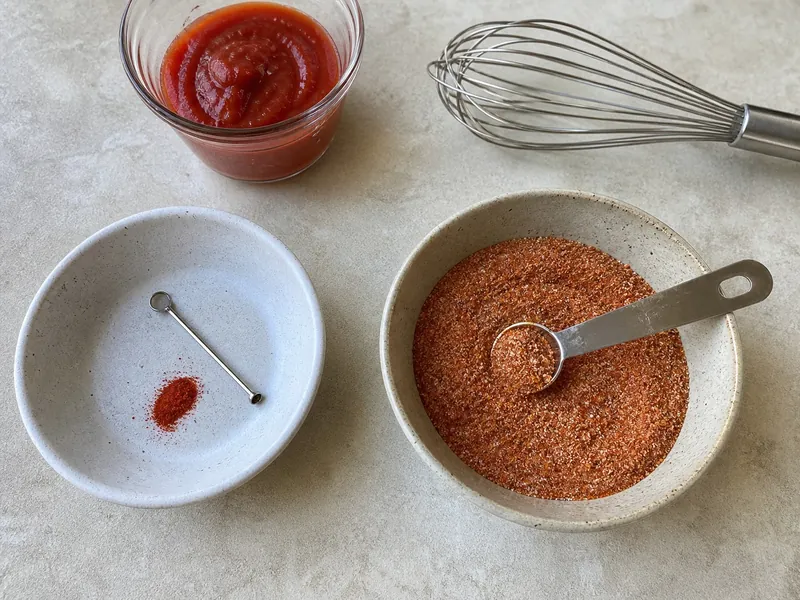
This is a calibration amount, not a medical safety threshold, and people who are sensitive to capsaicin should begin lower or use a diluted blend.
A standard measuring-spoon set usually stops at 1/4 or 1/8 teaspoon.
Do not estimate one sixty-fourth by partly filling a large spoon because a small mound, a level spoon, and powder clinging to the metal can differ by several times the intended dose.
The easiest repeatable method is a 1-to-15 dilution by volume. Mix one level part ghost pepper powder with fifteen level parts paprika, mild chile powder, or fine salt, then label the jar with both ingredients and the ratio.
| Method | Starting point for 4 cups | Best use | Main control |
|---|---|---|---|
| Pure powder | 1/64 teaspoon | Large sauces, stews, or marinades | Use a micro-spoon and mix through the full batch |
| 1-to-15 diluted blend | 1/4 teaspoon of blend | Rubs, snacks, eggs, and smaller batches | The carrier spreads the same tiny pure-powder amount more evenly |
| Removable dried piece | One small piece, removed early | Broth, beans, or a long-simmered pot | Taste during cooking and lift the pepper out |
Stir powder into a small cup of the sauce or cooking liquid first, then return that mixture to the pot.
This prevents a dry clump from landing in one serving and makes the first taste more representative of the batch.
Wait before adding more. Mix thoroughly, let the food cook or rest for several minutes, then taste a small amount. Fat, starch, temperature, and serving size can delay how the burn presents.
Scale from the amount already used rather than starting another guess. If 1/64 teaspoon is too quiet for four cups, the next controlled step is 1/32 teaspoon, while jumping to 1/8 teaspoon multiplies the first dose eightfold.
How do you cook with ghost pepper powder?
Ghost pepper powder works best when the food can distribute a very small dose evenly. A wet mixture, a measured dry blend, or a batch of oil-coated food gives the powder somewhere to disperse before anyone takes a bite.
Whisk a tiny dose into chili, curry, barbecue sauce, a marinade, or a hot sauce base. Mix it into a small portion first, then combine that portion with the rest.
Dilute the powder through salt, paprika, garlic, or another measured carrier before it reaches meat, nuts, fries, popcorn, or roasted vegetables.
Use a piece of dried pod instead of powder when you want to taste a broth, bean pot, or stew and stop the extraction by taking the pepper out.
Fine powder is a poor finishing shaker for a shared table.
A light tap can release an uneven cloud, the next person cannot see the dose, and the dust can reach eyes or noses before it reaches the plate.
For a rub, combine every dry ingredient before applying it to food.
Sprinkling pure ghost powder onto one side of a steak or one corner of a tray creates hot spots that browning will not correct.
In a sauce, add the powder early enough to disperse but keep your face away from steam.
A hard boil or a hot dry pan can carry irritating particles and vapors into the room, so gentle mixing is a better choice than blooming this powder by itself.
Whole ghost pepper, flakes, and powder are not interchangeable by spoon. Choose flakes when visible pieces and slower distribution suit the dish, powder when even dispersion matters, and a whole dried piece when removal is the valuable control.
How do you make ghost pepper powder at home?
Make ghost pepper powder only from sound pods with no mold, wet decay, insect damage, or fermented odor.
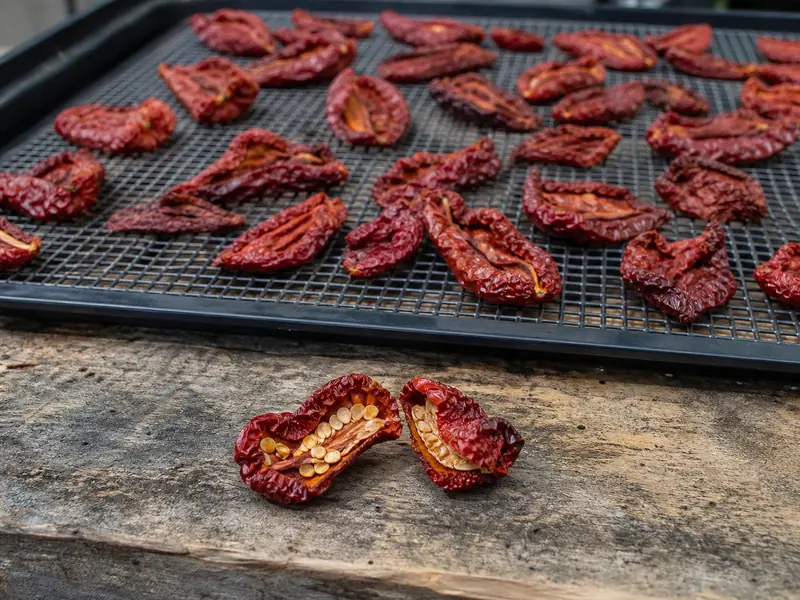
Drying concentrates existing defects as well as flavor, and grinding hides the evidence you could have rejected while the pod was intact.
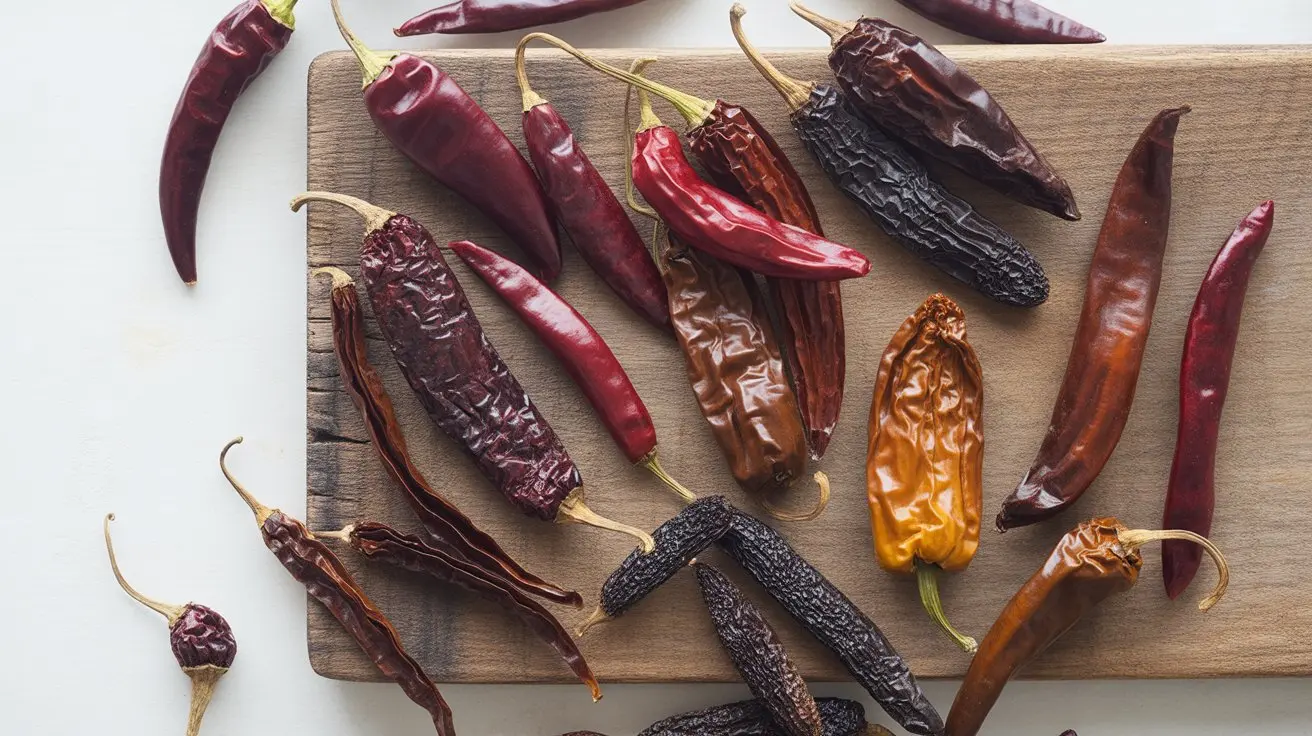
Penn State Extension advises starting a dryer at 140 F for two hours, then reducing it to 130 F until the peppers are tough to brittle. Diced peppers dry faster than whole pods and tend to keep better color and aroma.
- Put on nitrile gloves before washing, stemming, or cutting the peppers.
- Wash sound pods under running water and dry their surfaces completely.
- Remove stems, then halve or dice the pods so moisture can escape at a similar rate.
- Spread pieces in one layer without overlap on dehydrator trays.
- Run the dryer at 140 F for two hours, then lower it to 130 F.
- Continue until the thickest pieces are brittle and snap rather than bend.
- Cool the pieces completely in a protected dry place before testing or grinding them.
Time is only a planning clue because pod thickness, piece size, tray load, airflow, and humidity change the finish.
Test the thickest piece from more than one tray instead of trusting the first thin edge that cracks.
If a cooled piece bends, feels leathery at the fold, or leaves a damp interior when snapped, return the batch to the dryer.
Residual moisture can produce clumps and spoilage after the powder is sealed.
An oven is harder to ventilate and may move pepper vapors through the home. A dehydrator in a separate, protected, well-ventilated area gives you more control, especially when children, pets, or anyone with asthma shares the space.
Control the dust before it controls the room
Grinding is the highest-exposure step because it turns brittle pepper into suspended particles. A study of workers who ground chiles documented sneezing, watering of the nose, cough, and skin burning when the air held chili powder or volatilized capsaicin.
Move the task outdoors or into a separate ventilated work area where dust cannot drift toward people, pets, food, dishes, or an air-return vent.
Wind should carry particles away from you, not blow them back across the bench.
- Wear nitrile gloves, sealed eye protection, long sleeves, and a well-fitting particulate respirator.
- Use a small grinder with a locking lid rather than an open blender or mortar.
- Dedicate the grinder, sieve, spoon, funnel, and storage jar to hot peppers.
- Pulse briefly and keep the lid closed until no dust is visible and suspended powder has settled.
- Open the grinder at arm's length with your face turned away.
- Wipe the work surface with damp disposable towels instead of brushing or blowing powder into the air.
- Wash tools separately with hot detergent solution and wash gloved hands before removing the gloves.
Do not smell the open grinder to judge freshness. Wafting is also a bad test here because the ingredient is designed to stimulate capsaicin-sensitive nerves at a very low concentration.
Transfer only the powder you expect to use, then stop. Repeated milling, sifting, and pouring create more chances for a fine cloud while adding little value for ordinary sauces or rubs.
How should you store ghost pepper powder?
Seal ghost pepper powder in a small airtight jar and keep it in a cool, dark, dry cabinet away from the stove and sink. Penn State notes that light fades dried peppers quickly, while opening a large container repeatedly brings in humid kitchen air.
Label the lid and the side with GHOST PEPPER POWDER, the date, and any dilution ratio. Do not reuse a salt, paprika, or seasoning shaker that another person could pick up without reading the label.
The powder is dry and free-flowing, the jar is clean, and the aroma remains clear even if the red color has softened slightly.
Aroma and color have faded, but the powder remains dry with no musty odor, insects, wet clumps, or visible growth. The heat may still be strong.
Moist clumps, mold, insects, condensation, a musty smell, or a damaged seal mean the jar is no longer a quality-only question.
A best-by date estimates quality under the packer's conditions. It cannot tell you how much moisture entered after opening, so inspect the jar rather than assuming old powder has become harmless.
Make or buy a small quantity because aroma declines faster than most households use a superhot powder. Keeping dried pods whole and grinding a little at a time can protect quality, but each grinding session repeats the dust-control work.
What to do when a dish is too hot or powder gets on skin or eyes
An over-seasoned pot and capsaicin on the body need different responses.
Food is corrected by dilution and portion control, while eye, skin, or airway exposure calls for immediate decontamination and fresh air.
If the food is too hot
Stop adding seasonings and split the batch before trying to mask the burn. Add an equal amount of the same unseasoned base to cut the powder concentration roughly in half, then repeat only if the food is still beyond the intended heat.
Use more beans, tomatoes, stock, vegetables, meat, or starch when those ingredients belong in the dish. Sugar can change the balance and dairy can soften the sensation at the table, but neither removes capsaicin from the pot.
Mark and freeze a concentrated portion if doubling the whole recipe would make too much food. You can then blend small amounts into future unseasoned batches with a known ratio.
If powder reaches skin, eyes, or airways
Move away from the powder first. Get into fresh air, remove contaminated gloves or clothing without touching your face, and prevent another person from contacting the work area.
For skin, wash promptly with plenty of warm water and detergent, then avoid touching eyes or contact lenses. For eyes, Poison Control advises flushing with copious warm water for 15 minutes and removing contact lenses.
Do not put milk, oil, or antacid into an eye. If eye pain continues, vision changes, or powder was trapped under a contact lens, contact Poison Control or seek medical care after flushing.
Fresh air is the first response to coughing from airborne powder. Call emergency services for trouble breathing or chest discomfort, and get medical advice sooner when the exposed person has asthma or another respiratory condition.