Habanero vs Scotch Bonnet – Heat & Flavor Compared
Habanero and Scotch Bonnet share the same SHU range and the same species, yet they taste noticeably different in the kitchen. The habanero leans citrusy and sharp; the Scotch Bonnet goes sweeter and more tropical. Choosing between them often comes down to cuisine and personal preference rather than heat tolerance.

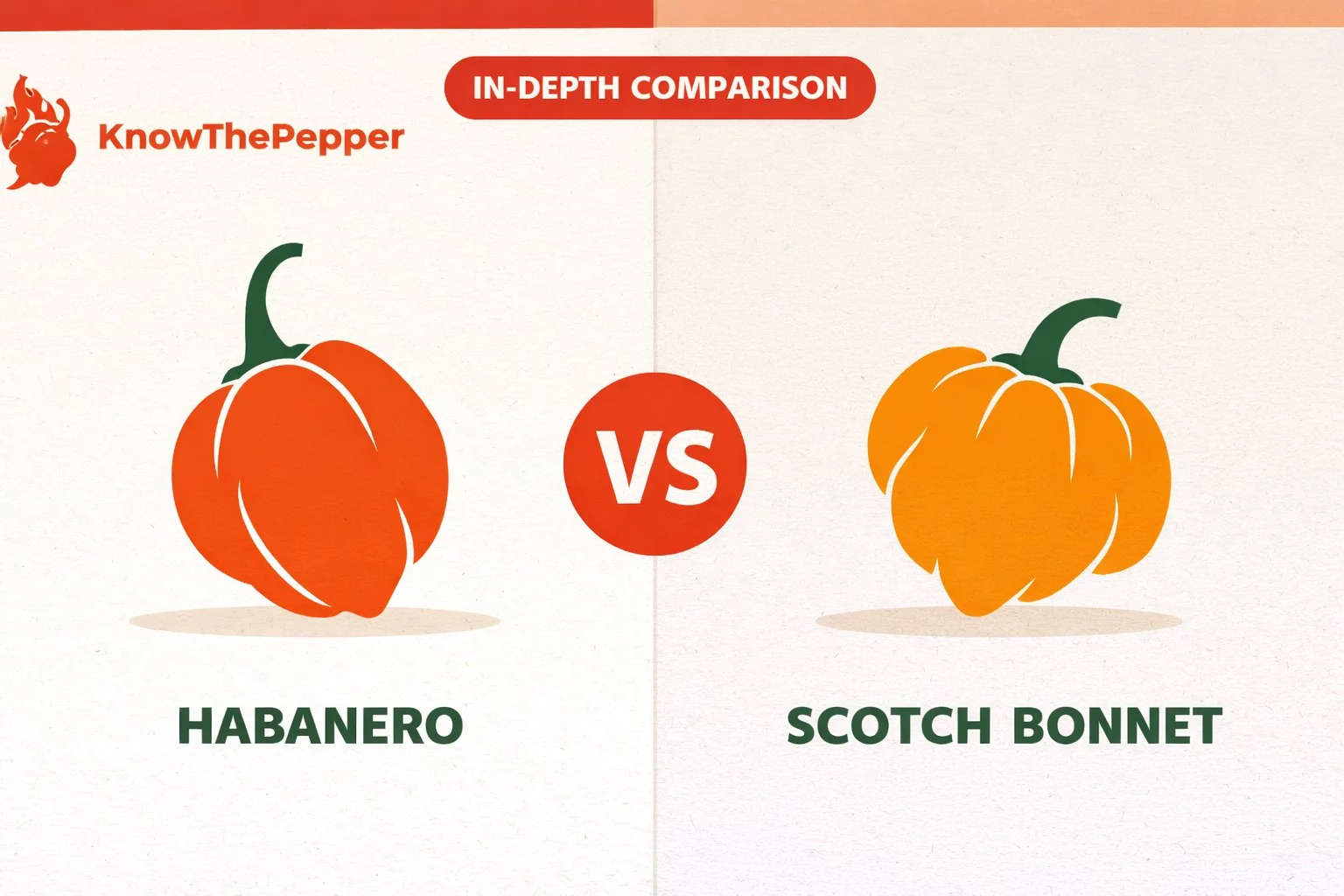
Habanero measures 100K–350K SHU while Scotch Bonnet registers 100K–350K SHU — roughly equal in heat. Habanero is known for its fruity and citrusy flavor (C. chinense), while Scotch Bonnet offers fruity and tropical notes (C. chinense).
- Species: Both are C. chinense
- Best for: Habanero excels in hot sauces and extreme dishes, Scotch Bonnet in hot sauces and spicy dishes
Habanero
Extra-HotScotch Bonnet
Extra-HotHabanero vs Scotch Bonnet Comparison
Habanero vs Scotch Bonnet Heat Levels
Before getting into numbers, notice this: the pepper that smells sweeter usually bites the same way. Both the habanero and Scotch Bonnet sit in the 100,000-350,000 SHU range, putting them firmly in the extra-hot tier alongside other C. chinense heavyweights.
To put that in perspective, a typical jalapeño clocks in around 2,500-8,000 SHU. That means both of these peppers can hit 40 to 140 times hotter than a jalapeño depending on where individual fruits land in their range. That is not a small gap.
The burn character differs despite identical SHU ceilings. Habanero heat tends to arrive fast - a sharp, almost aggressive wave that peaks quickly and then lingers in the back of the throat. Scotch Bonnet builds more gradually, spreading across the tongue before settling into a deep, sustained heat that feels slightly rounder. This difference comes from how capsaicinoids interact with TRPV1 receptors - the chemistry behind that burn is the same compound family, but fruit maturity and growing conditions shift the ratio of capsaicin to dihydrocapsaicin, affecting perceived sharpness.
Neither pepper is hotter than the other in any meaningful practical sense. A ripe habanero from a stressed plant can match or exceed a Scotch Bonnet from the same conditions. Grow them side by side in poor soil with limited water and both will push toward the upper end of their range.
Flavor Profile Comparison
Few peppers balance heat and flavor as well as the habanero.
The first time I tasted a Scotch Bonnet raw — sliced thin, no gloves, rookie mistake — the sweetness hit before anything else.
This is where the two peppers actually diverge. Habanero brings a citrus-forward fruitiness - think dried apricot with a squeeze of grapefruit peel. The aroma is bright and sharp, almost floral in fresh-cut form. That citrus note stays present even when cooked, which is why habanero works well in vinegar-based hot sauces where acidity is already part of the profile.
Scotch Bonnet flavor runs sweeter and deeper. The tropical note is real - ripe mango, papaya, and a faint cherry-like sweetness that makes it immediately recognizable to anyone familiar with Jamaican jerk seasoning. The aroma is more complex and arguably more aromatic raw, which is why Caribbean cooks often add a whole Scotch Bonnet to a pot and remove it before serving - just to perfume the dish without blowing out the heat.
Both peppers are Caribbean peppers in the broadest botanical sense, though the habanero is specifically associated with Mexican pepper traditions and the Yucatan peninsula in particular. That regional split shaped how each pepper developed culinarily.
Aroma matters here too. Scotch Bonnet has a distinctly funkier, more pungent raw smell that softens when cooked. Habanero smells cleaner and more immediately fruity. Neither is better - they are calibrated for different dishes. If you are comparing the fruity brightness of aji amarillo against habanero's citrus sharpness, you start to appreciate how much type of fruit flavor matters in pepper selection.
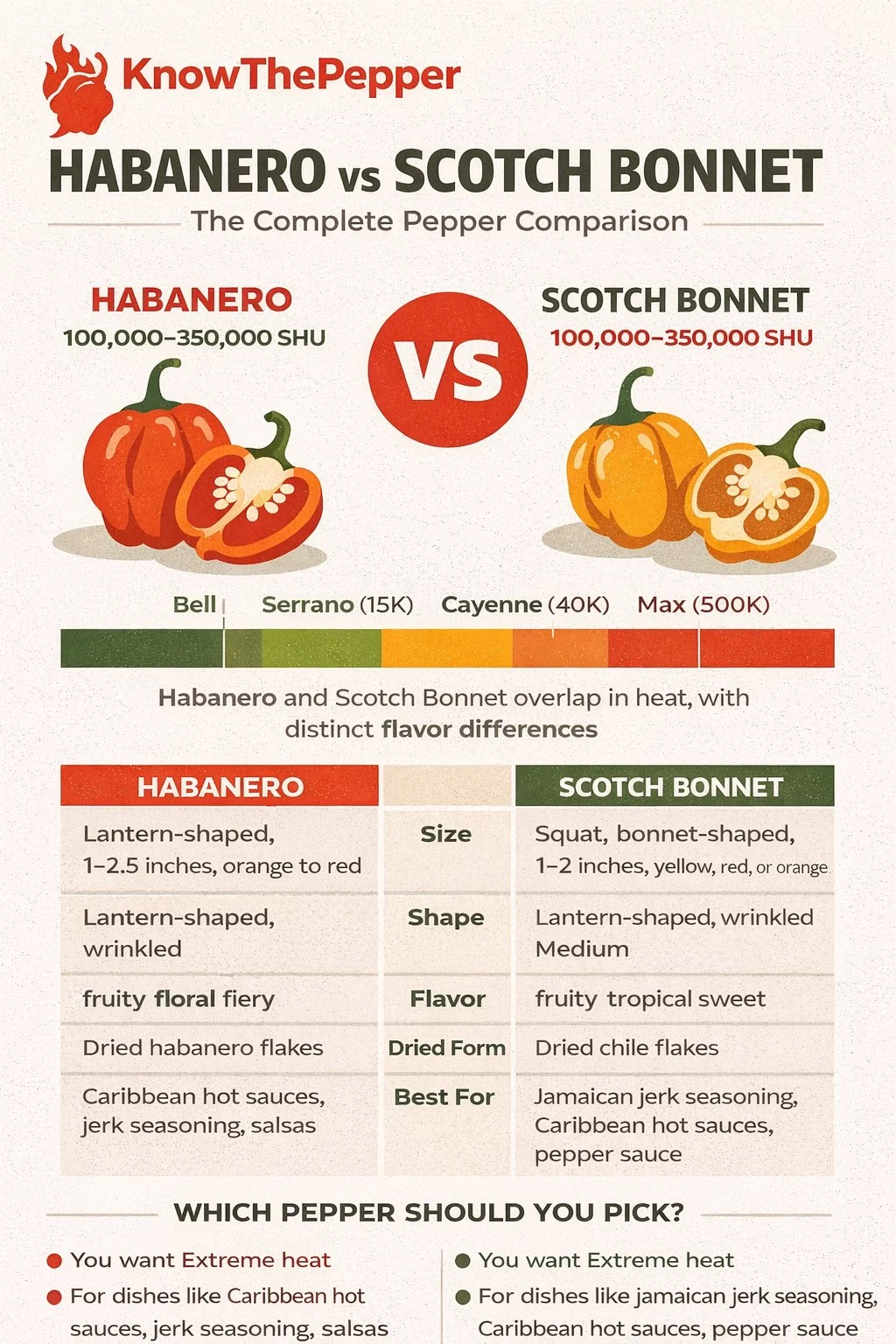
Culinary Uses for Habanero and Scotch Bonnet
Habanero is the workhorse of commercial hot sauce production in North America. Its clean citrus heat integrates well with vinegar, garlic, and tropical fruit purees. Use it in mango-habanero glazes for grilled chicken, blended into carrot-based hot sauces, or finely minced into salsas where you want heat without muddying the other flavors. A single medium habanero (roughly 5-8 grams without seeds) is enough to heat a salsa serving 6-8 people.
Scotch Bonnet belongs to Jamaican jerk, Trinidadian pepper sauce, and West African stews in a way that goes beyond substitution. The flavor is load-bearing in those dishes - replacing it with habanero produces something close but noticeably different. Caribbean cooks use Scotch Bonnet whole in rice and peas, piercing the skin slightly to release aroma without dumping all the heat into the dish. That technique only works because of the pepper's specific aromatic profile.
For substitution: habanero and Scotch Bonnet swap 1:1 by weight in most recipes. The heat will be comparable; the flavor will shift slightly. Going habanero in a jerk marinade? Add a small amount of allspice and a touch of brown sugar to compensate for the missing tropical sweetness. Going Scotch Bonnet in a Mexican-style salsa? Reduce any added citrus slightly since the Scotch Bonnet brings less of its own acid character.
Both peppers dehydrate and powder well. Habanero powder is common in spice blends; Scotch Bonnet powder is less widely available but worth making if you grow your own. The aji dulce vs Scotch Bonnet flavor gap is a useful reference point if you need a no-heat version of that Caribbean tropical profile for a dish where guests cannot handle the fire.
For anyone interested in growing either variety, both respond well to the same conditions - the seed-starting and full growing guide covers both species effectively since they share C. chinense requirements.
Which Should You Choose?
If your cooking leans toward Mexican, Tex-Mex, or American-style hot sauces, habanero is the practical choice. It is easier to source, its citrus heat integrates cleanly with acidic and savory profiles, and it performs consistently across a wide range of preparations. The habanero vs Bulgarian carrot pepper heat gap shows just how much the habanero punches above milder orange peppers it resembles visually.
If you are cooking Caribbean food - jerk, curries, pepper sauces, rice dishes - Scotch Bonnet is not interchangeable in the way that a recipe might suggest. The tropical sweetness is part of the dish architecture, not a background note.
For pure heat delivery with either pepper, they are identical enough that tolerance is the only variable. Both demand respect at the upper end of their range. Neither is a pepper you should taste raw without knowing what you are in for.
Can You Substitute One for the Other?
Yes — direct substitution works. Habanero and Scotch Bonnet are close enough in heat to swap at roughly 1:1. The main difference will be flavor. For more swap options, explore ranked alternatives with conversion ratios.
Growing Habanero vs Scotch Bonnet
If you’re deciding which pepper to grow at home, consider your climate and patience level. Habanero and Scotch Bonnet have different maturation times and temperature preferences. Hotter varieties generally need a longer, warmer growing season to develop their full capsaicin content. Our zone-based planting date tool can pinpoint the best sowing window for your area.
Starting habaneros from seed requires patience. Germination takes 10–21 days at soil temperatures of 80–85°F — a heat mat is not optional, it's essential.
Transplant seedlings outdoors only after nighttime temperatures stay consistently above 55°F. Habaneros are frost-intolerant and will stall in cold soil.
Full sun — at least 6–8 hours daily — is non-negotiable. In containers, use a 5-gallon minimum; habaneros develop substantial root systems.
Scotch Bonnets need warmth from the start. Germination requires 80–85°F soil temperature; anything cooler and seeds stall for weeks.
These plants run long — expect 90–120 days from transplant to ripe fruit. They're not beginner peppers in terms of patience, but they're forgiving once established.
Soil should drain well. *C.
History & Origin of Habanero and Scotch Bonnet
Both peppers carry centuries of culinary heritage. Habanero traces its roots to Mexico, while Scotch Bonnet originates from Caribbean. Understanding their backstory helps explain why each pepper developed its distinctive traits.
Buying & Storage
Whether you’re shopping for Habanero or Scotch Bonnet, the same quality indicators apply. Fresh peppers should feel firm and heavy for their size, with taut, glossy skin and no soft or wet spots. Minor stem cracks known as “corking” are perfectly normal and often indicate a mature, flavorful pod.
- Firm pods with taut skin and consistent color
- Should feel heavy relative to size
- Minor stem cracks (“corking”) are normal
- Avoid anything soft, shriveled, or with dark wet spots
- Fresh: Paper bag, crisper drawer — 1–2 weeks
- Frozen: Wash, dry, freeze on sheet pan — 6+ months
- Dried: Airtight, away from light — up to 1 year
The Verdict: Habanero vs Scotch Bonnet
Habanero and Scotch Bonnet sit in the same heat tier but serve different roles. Habanero delivers its distinctive fruity and citrusy character. Scotch Bonnet, with its fruity and tropical profile, excels in everyday cooking.
Frequently Asked Questions
Related Comparisons
Sources pending verification.