Friggitello vs Pepperoncini: What's the Difference?
Friggitellos and pepperoncini are both small, mild Italian peppers that look similar enough to cause real confusion at the grocery store. The key distinction comes down to heat — friggitellos register at 0 SHU while pepperoncini land between 100-500 SHU — and flavor character, with friggitellos tasting sweeter and pepperoncini carrying a signature tanginess. Understanding which is which changes how you cook with them.

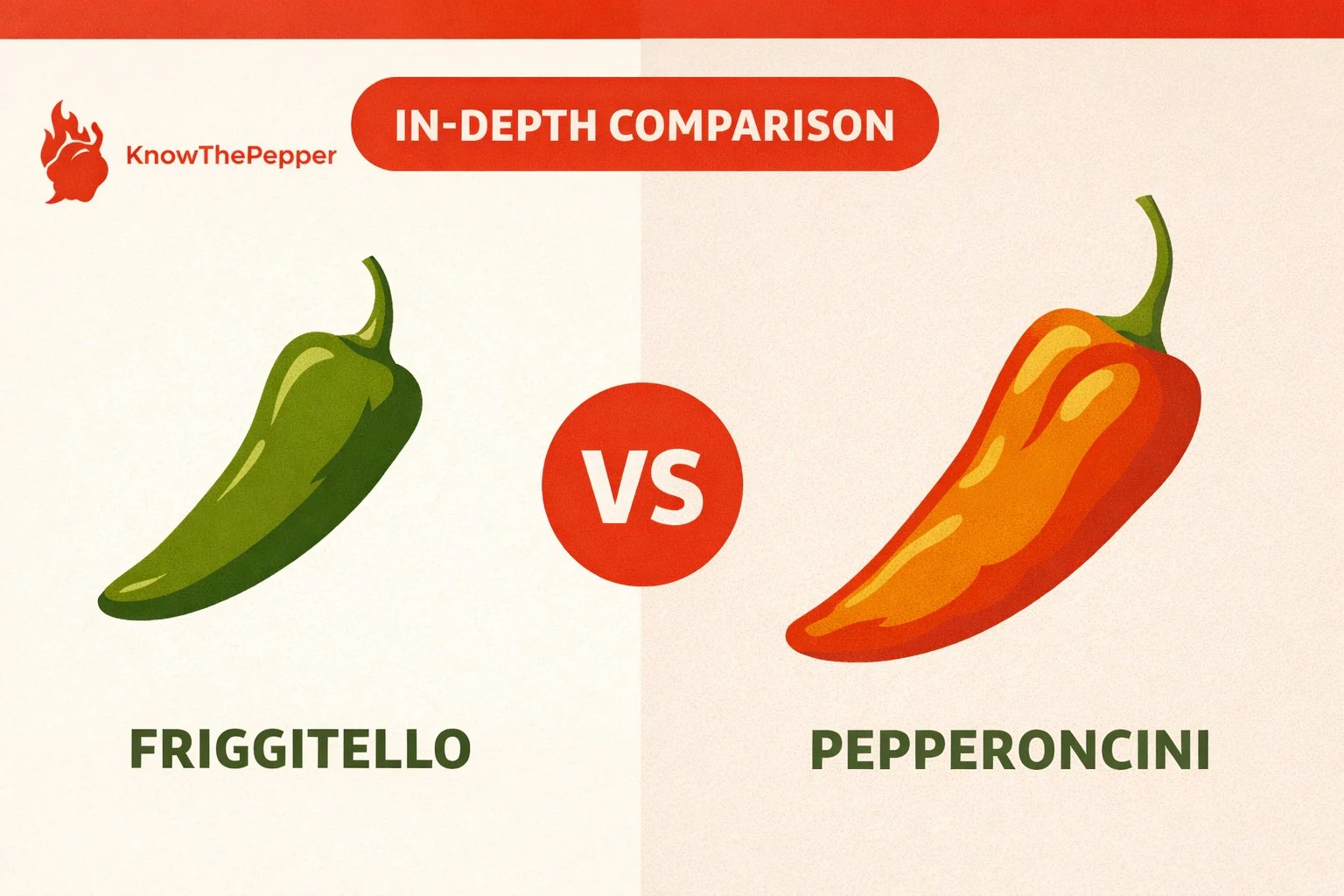
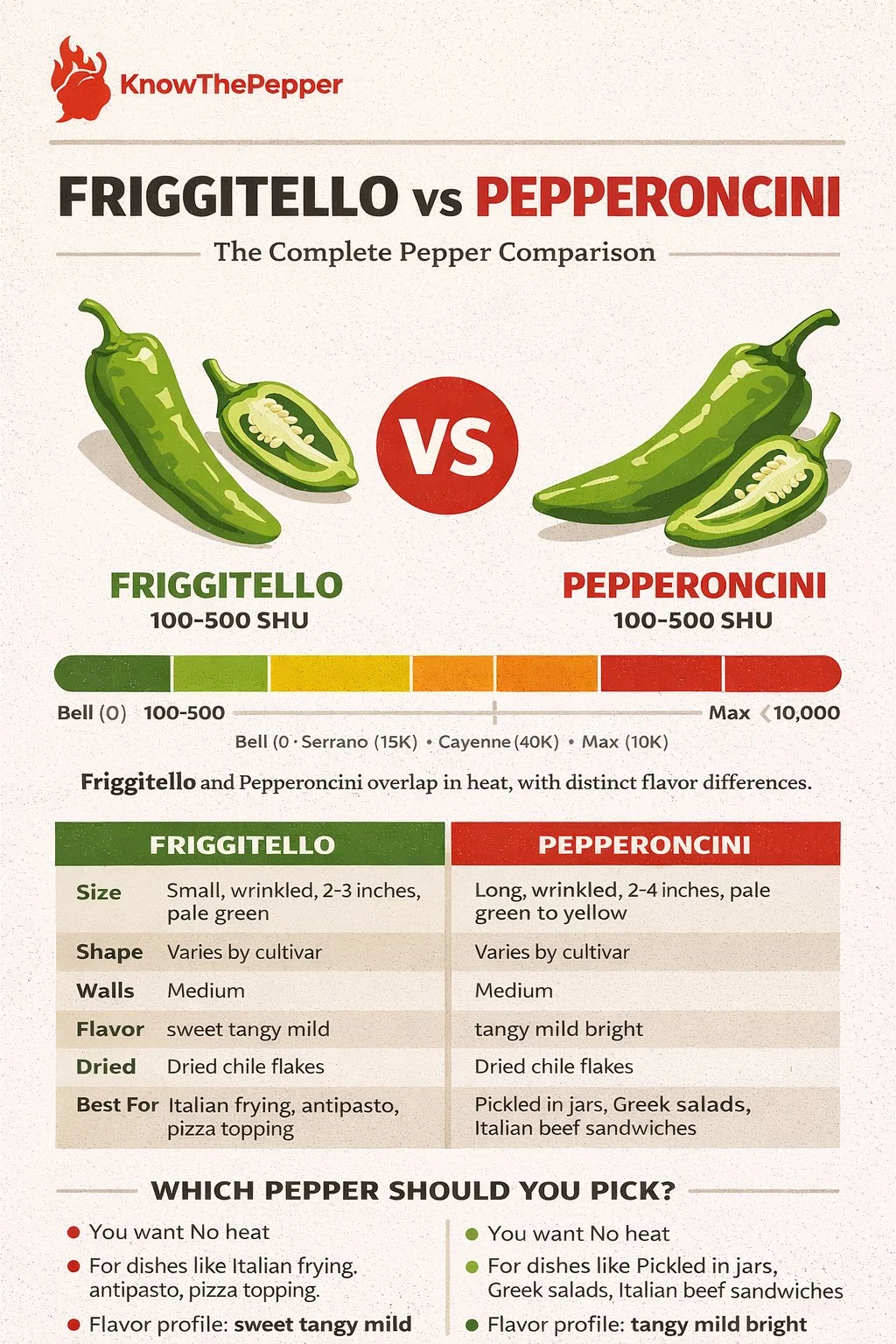
Friggitello measures 0–500 SHU while Pepperoncini registers 100–500 SHU — roughly equal in heat. Friggitello is known for its sweet and mild flavor (C. annuum), while Pepperoncini offers tangy and mild notes (C. annuum).
- Species: Both are C. annuum
- Best for: Friggitello excels in everyday cooking and salsas, Pepperoncini in fresh salsas and mild recipes
Friggitello vs Pepperoncini Comparison
Friggitello vs Pepperoncini Heat Levels
The heat gap between these two peppers is small in absolute terms but meaningful in practice. Friggitellos sit at a confirmed 0 SHU — no capsaicin, no burn, nothing. Pepperoncini range from 100 to 500 SHU, which puts them at the very bottom of the mild pepper intensity band, barely registering on the Scoville scale position for most tasters.
For context, a Fresno pepper typically measures around 2,500-10,000 SHU. That means even the hottest pepperoncini is roughly 5 to 100 times milder than a Fresno — which gives you a sense of just how gentle both of these peppers really are.
Friggitellos, being completely heatless, appeal to anyone who wants pepper flavor without any capsaicin involvement whatsoever. Pepperoncini bring just enough warmth to register on the palate — a faint tingle that lingers briefly without building. Neither pepper will challenge experienced heat-seekers, and both are genuinely accessible to people who typically avoid spicy food.
The difference matters most in raw applications. Bite into a raw friggitello and you get pure sweetness with no afterburn. A raw pepperoncini delivers that same mild bite but finishes with a subtle warmth and the vinegary tang the pepper is known for. Cooked, the distinction narrows considerably — both mellow into soft, sweet pepper flavor once heat is applied.
Flavor Profile Comparison
The friggitello belongs to the mild pepper intensity range and sits squarely within [C.
Here's the thing nobody tells you: pepperoncini and banana peppers are not the same pepper.
Flavor is where these two peppers diverge more sharply than heat numbers suggest. Friggitellos — sometimes called "sweet Italian frying peppers" — have a clean, grassy sweetness when raw that deepens into something almost buttery when sauteed in olive oil. The flesh is thin-walled and tender, which means it collapses quickly in a pan and absorbs surrounding flavors readily.
Pepperoncini carry a distinctive tanginess that sets them apart from most other mild peppers. That tang comes partly from the pepper itself and partly from the pickling brine they're almost always sold in. Fresh pepperoncini have a brighter, more acidic bite than friggitellos — closer to a mild sport pepper than a sweet frying pepper.
Aromatically, friggitellos smell grassy and fresh, similar to a mild bell pepper but with a slightly more complex vegetal note. Pepperoncini have a sharper, more vinegary aroma, especially from a jar. The tangy mild character of pepperoncini makes them natural partners for cured meats, brined olives, and other acidic ingredients.
Both belong to the broader Mediterranean pepper tradition, but they serve different flavor functions. Friggitellos add sweetness and body; pepperoncini add brightness and acid. In a composed dish, they're not always interchangeable — swapping one for the other changes the flavor balance noticeably, particularly in raw preparations like antipasto platters or sandwiches.
Culinary Uses for Friggitello and Pepperoncini
Spaghetti aglio e olio with friggitellos is one of those dishes that shows exactly what this pepper does best — the blistered, olive-oil-soaked flesh folds into pasta with almost no effort, adding sweetness and silky texture without distracting from the garlic. Friggitellos are purpose-built for high-heat frying and roasting. Toss them whole into a cast iron pan with olive oil and salt, and in about 8 minutes you have a side dish that needs nothing else.
Pepperoncini shine in entirely different contexts. Their natural home is on Italian-American antipasto spreads alongside olives, salami, and provolone — the acidity cuts through fat and resets the palate between bites. They're the default pepper in a Chicago-style Italian beef sandwich, tucked into submarine sandwiches, and scattered across Greek salads. The brine itself has culinary value; a splash in a pan sauce or salad dressing adds acid without overwhelming.
For substitution: if a recipe calls for friggitellos and you only have pepperoncini, drain and pat them dry first, then use a 1:1 ratio by volume — but expect more tang and slightly more heat. Going the other direction, friggitellos can replace pepperoncini in cooked applications at 1:1, though you'll want to add a small splash of white wine vinegar to compensate for the lost acidity.
Friggitellos also stuff well — their cavity is small but workable, and they hold up to a quick oven roast at 400°F without falling apart. Pepperoncini can be stuffed too, though their thinner flesh is less forgiving. Both peppers belong to C. annuum, the same botanical family as bell peppers and jalapeños, which means their cooking behavior is broadly predictable if you've worked with that species before.
For pickling at home, pepperoncini are the more traditional choice — their tang intensifies beautifully in brine. Friggitellos are better preserved in olive oil with garlic and herbs.
Which Should You Choose?
Choose friggitellos when you want pure, sweet pepper flavor with zero heat — frying, roasting, and pasta dishes are their natural territory. They're the better option for cooking audiences who are heat-averse, and their thin walls make them faster to cook than most frying peppers.
Reach for pepperoncini when acid and brightness are what the dish needs. Sandwiches, antipasto, grain bowls, and anywhere you'd otherwise use pickled vegetables — that's pepperoncini territory. The brine they come in is almost as useful as the pepper itself.
The sweet-versus-tangy distinction in banana pepper comparisons applies here too: it's less about heat tolerance and more about what flavor role the pepper is playing. Neither pepper dominates the other across all uses. They're complementary tools, not competitors — and a well-stocked kitchen has room for both.
Can You Substitute One for the Other?
Yes — direct substitution works. Friggitello and Pepperoncini are close enough in heat to swap at roughly 1:1. The main difference will be flavor. For more swap options, explore ranked alternatives with conversion ratios.
Growing Friggitello vs Pepperoncini
If you’re deciding which pepper to grow at home, consider your climate and patience level. Friggitello and Pepperoncini have different maturation times and temperature preferences. Hotter varieties generally need a longer, warmer growing season to develop their full capsaicin content. Our zone-based planting date tool can pinpoint the best sowing window for your area.
The hardest part of growing friggitellos is getting the fruit to size before the first fall frost. These plants need a long, warm season — start seeds indoors 10-12 weeks before last frost and do not rush transplanting.
Spacing matters more than most growers expect. Give plants 18-24 inches between them; crowded plants produce fewer peppers and are more vulnerable to fungal issues in humid climates.
Friggitellos are moderate feeders. A balanced fertilizer at transplant, then a switch to lower-nitrogen, higher-phosphorus feed once flowering begins, keeps plants productive without pushing excessive leaf growth at the expense of fruit.
Pepperoncini are straightforward to grow, especially if you have experience with other C. annuum varieties.
Transplant outdoors after nighttime temperatures stay consistently above 55°F. Plants reach 18–24 inches tall and prefer full sun with well-drained soil.
Fruits set at 60–75 days after transplant and are typically harvested yellow-green for the classic pickled product. Left on the plant, they turn red and become slightly sweeter.
History & Origin of Friggitello and Pepperoncini
Both peppers carry centuries of culinary heritage. Friggitello traces its roots to Italy, while Pepperoncini originates from Italy. Understanding their backstory helps explain why each pepper developed its distinctive traits.
Buying & Storage
Whether you’re shopping for Friggitello or Pepperoncini, the same quality indicators apply. Fresh peppers should feel firm and heavy for their size, with taut, glossy skin and no soft or wet spots. Minor stem cracks known as “corking” are perfectly normal and often indicate a mature, flavorful pod.
- Firm pods with taut skin and consistent color
- Should feel heavy relative to size
- Minor stem cracks (“corking”) are normal
- Avoid anything soft, shriveled, or with dark wet spots
- Fresh: Paper bag, crisper drawer — 1–2 weeks
- Frozen: Wash, dry, freeze on sheet pan — 6+ months
- Dried: Airtight, away from light — up to 1 year
The Verdict: Friggitello vs Pepperoncini
Friggitello and Pepperoncini sit in the same heat tier but serve different roles. Friggitello delivers its distinctive sweet and mild character. Pepperoncini, with its tangy and mild profile, excels in everyday cooking.
Frequently Asked Questions
Related Comparisons
Sources pending verification.