Choricero Pepper vs Ñora Pepper: Key Differences Explained
Both the choricero and the ñora are dried Spanish peppers with zero measurable heat, but they play distinctly different roles in the kitchen. The choricero brings a meaty, slightly tannic depth that anchors Basque sauces and chorizo, while the ñora offers a sweeter, more rounded fruitiness favored across Catalonia and Valencia. Understanding which to reach for — and when — can meaningfully change a dish.

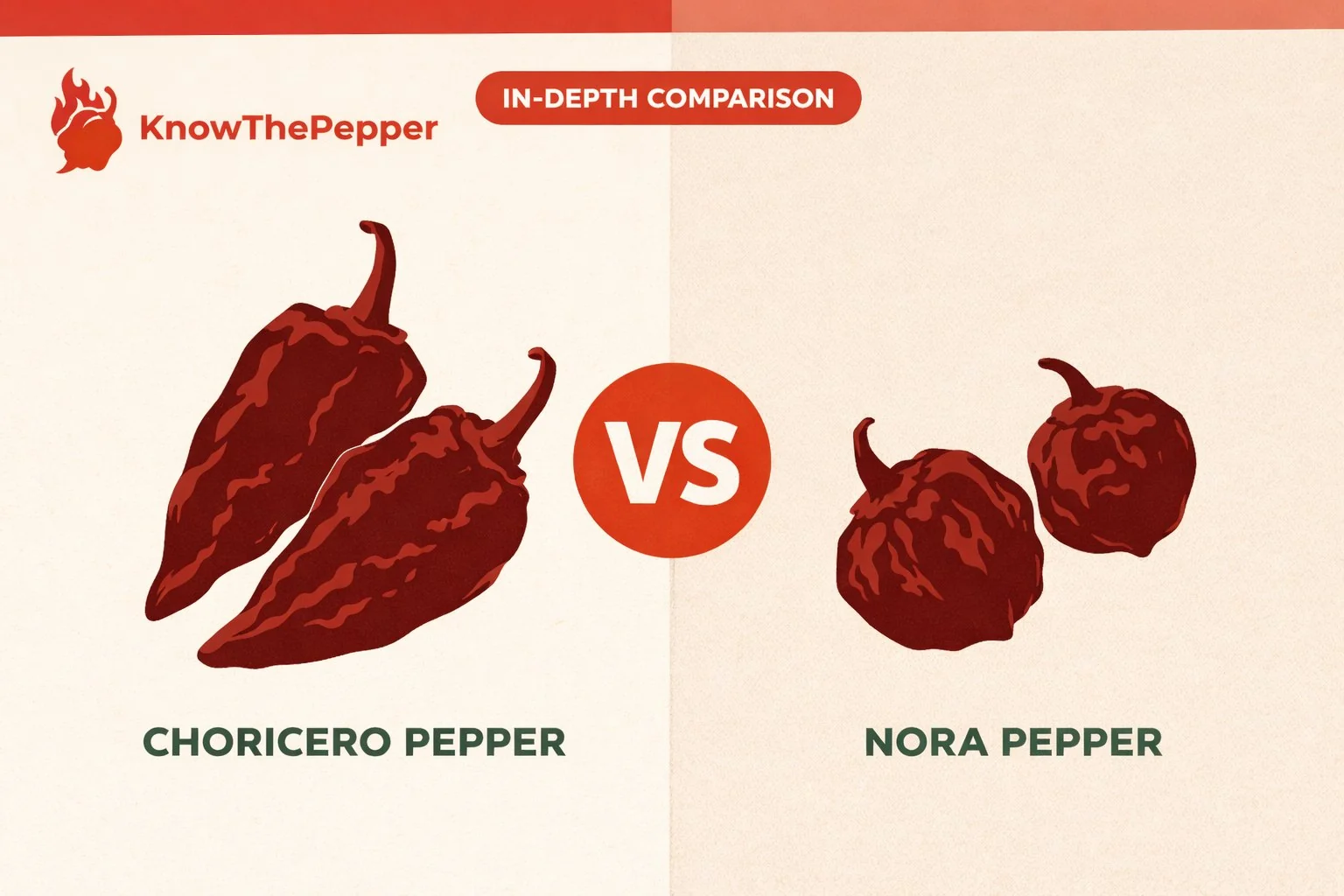
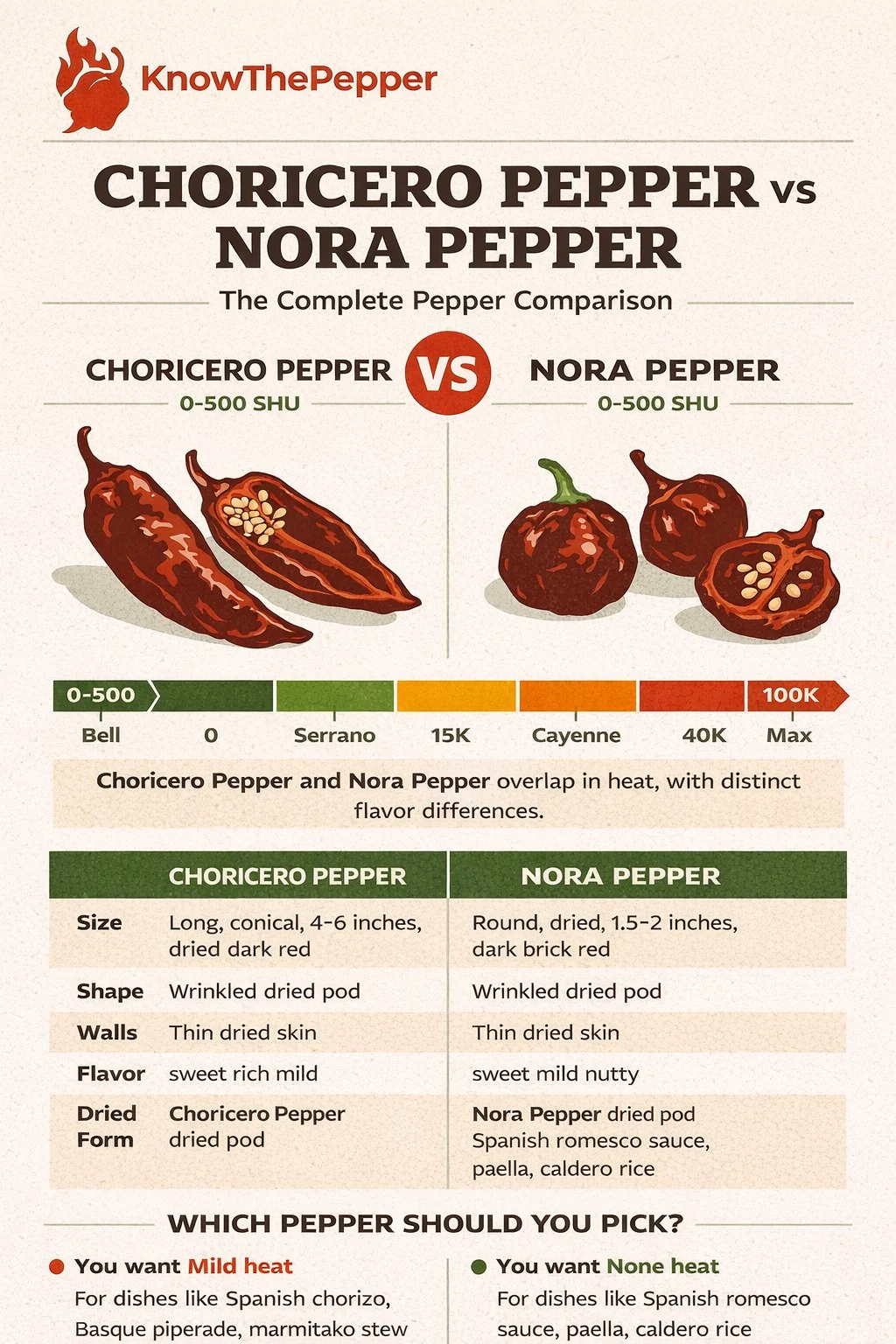
Choricero Pepper measures 500–1K SHU while Ñora Pepper registers 500–1K SHU — roughly equal in heat. Choricero Pepper is known for its sweet and mild flavor (C. annuum), while Ñora Pepper offers sweet and mild notes (C. annuum).
- Species: Both are C. annuum
- Best for: Choricero Pepper excels in everyday cooking and salsas, Ñora Pepper in fresh salsas and mild recipes
Choricero Pepper
MediumÑora Pepper
MediumChoricero Pepper vs Ñora Pepper Comparison
Choricero Pepper vs Ñora Pepper Heat Levels
At 0 SHU, both the choricero and the ñora sit firmly in the zero-heat mild tier of the Scoville scale, meaning neither registers any capsaicin-driven burn whatsoever. To put that in perspective, a serrano pepper typically lands between 10,000 and 23,000 SHU — so both of these Spanish dried peppers are not merely milder than a serrano, they are categorically heatless by comparison.
This absence of heat is not a limitation — it is the whole point. Both peppers were bred and selected over centuries specifically for their flavor contribution, not their fire. The Scoville heat index for these varieties essentially functions as confirmation that you are working with pure flavor vehicles, no thermal distraction involved.
Where they differ is not in heat degree but in how their zero-heat profiles express themselves on the palate. The choricero tends toward a deeper, more savory warmth — not spicy warmth, but the kind of richness that reads as substantial and almost meaty. The ñora runs sweeter and brighter, with a fruitiness that sits closer to the surface. Neither pepper will challenge heat-sensitive diners, making both excellent entry points for anyone exploring Spanish pepper traditions without wanting to manage burn.
Flavor Profile Comparison
The choricero sits at the foundation of Spanish gastronomy in a way few peppers can claim.
At 500–1,000 SHU, the ñora sits firmly in the mild heat category — you'll get almost no burn, just a rich, concentrated sweetness with earthy undertones.
The flavor gap between these two peppers is where the real story lives. Choricero peppers carry a pronounced savory depth — think sun-dried tomato meets smoked paprika, with a slight bitterness at the finish that adds structure rather than harshness. The flesh is thick and oily when rehydrated, releasing a concentrated, almost meaty paste that clings to sauces. There is a subtle earthiness running through it, which is part of why Basque cooks have relied on it for generations in dishes like marmitako and bacalao a la vizcaína.
Ñora peppers take a different direction entirely. Smaller and rounder in shape, they dry to a deep brick-red and rehydrate into something noticeably sweeter and more aromatic. The fruitiness is genuine — there is a dried cherry or raisin quality that sits alongside a mild, clean pepper flavor. Less bitter than the choricero, the ñora integrates smoothly into rice dishes and seafood preparations without dominating other ingredients.
Aromatically, the choricero has more presence when soaking — the liquid it releases is darker and more pungent. Ñora soaking water is lighter and faintly floral. Both repay patience: a good 20-30 minute soak in warm water before scraping the flesh unlocks far more complexity than a quick rinse. For dishes where you want the pepper to announce itself, choricero. For dishes where the pepper should support and sweeten without taking over, ñora is the better call.
Culinary Uses for Choricero Pepper and Ñora Pepper
Choricero peppers are most at home in the Basque Country, where they are a non-negotiable ingredient in bacalao a la vizcaína — the classic salt cod stew that has defined Basque cooking for centuries. The technique is consistent: soak dried choricero pods in warm water, then scrape the softened flesh from the skin with a spoon. That paste goes directly into sauces, braises, and — as the name suggests — into the spice blend for traditional Spanish chorizo sausage.
For a rough substitution ratio, one dried choricero pod yields approximately one tablespoon of scraped flesh. When the pepper itself is unavailable, commercial pimiento choricero paste sold in jars is a reasonable stand-in, though the paste lacks some of the textural depth of freshly scraped flesh.
Ñora peppers are the backbone of romesco sauce — the Catalan roasted pepper and nut sauce that accompanies everything from grilled spring onions to fish. They also appear in fideuà (the Valencian noodle dish), arròs negre, and countless rice preparations across eastern Spain. The ñora's sweetness plays particularly well with saffron, which is why it shows up so often alongside it.
A single ñora pod yields slightly less flesh than a choricero due to its smaller size — about two teaspoons of scraped paste. For romesco-style sauce recipes, the standard ratio is 2-3 ñora pods per cup of roasted tomatoes.
Both peppers can be used in the same dish — some cooks layer them for complexity — but they are not interchangeable. Swapping ñora for choricero in vizcaína sauce will produce something noticeably sweeter and less structured. Going the other direction in romesco yields a more bitter, heavier result. Respect what each pepper is designed to do.
Which Should You Choose?
If your cooking leans Basque — salt cod, bean stews, chorizo making — the choricero is the pepper you need. Its savory depth and slight bitterness are structural elements in those dishes, not decorative ones. No other pepper replicates what it does in vizcaína sauce.
If your focus is Catalan or Valencian cooking — romesco, rice dishes, seafood preparations — the ñora is the right tool. Its sweetness and fruity lift are what make those dishes work, and trying to substitute choricero will throw the balance off.
For a single pantry purchase, the ñora is arguably more versatile across a wider range of Spanish recipes, and its sweeter profile adapts more easily to non-Spanish applications like pepper-based dips or roasted vegetable sauces. The choricero is more specialized but irreplaceable within its domain.
Both are worth keeping on hand if Spanish cooking is a regular part of your repertoire. They are inexpensive, shelf-stable, and the flavor payoff from even a single pod is significant.
Can You Substitute One for the Other?
Yes — direct substitution works. Choricero Pepper and Ñora Pepper are close enough in heat to swap at roughly 1:1. The main difference will be flavor. For more swap options, explore ranked alternatives with conversion ratios.
Growing Choricero Pepper vs Ñora Pepper
If you’re deciding which pepper to grow at home, consider your climate and patience level. Choricero Pepper and Ñora Pepper have different maturation times and temperature preferences. Hotter varieties generally need a longer, warmer growing season to develop their full capsaicin content. Our zone-based planting date tool can pinpoint the best sowing window for your area.
The hardest part of growing choriceros isn't germination — it's the long growing season they need to develop full flavor. These peppers want 100–120 days from transplant to harvest, which means starting seeds indoors 10–12 weeks before your last frost date and not rushing them outside.
Choriceros thrive in full sun with consistent moisture. In their native Basque and Riojan climate, summers are warm but not extreme.
Space plants 18–24 inches apart. Overcrowding reduces airflow and invites fungal issues, which are the main disease threat for this variety.
Starting ñoras indoors 8–10 weeks before last frost gives them the head start they need — these peppers want a long season. Soil temperature should hit 70–80°F for reliable germination, which typically takes 10–14 days.
For anyone who wants a complete seed-starting and transplant germination walkthrough, the process mirrors most C. annuum varieties.
ñoras prefer full sun and well-drained soil with a slightly acidic pH around **6.0–6.
History & Origin of Choricero Pepper and Ñora Pepper
Both peppers carry centuries of culinary heritage. Choricero Pepper traces its roots to Spain, while Ñora Pepper originates from Spain. Understanding their backstory helps explain why each pepper developed its distinctive traits.
Buying & Storage
Whether you’re shopping for Choricero Pepper or Ñora Pepper, the same quality indicators apply. Fresh peppers should feel firm and heavy for their size, with taut, glossy skin and no soft or wet spots. Minor stem cracks known as “corking” are perfectly normal and often indicate a mature, flavorful pod.
- Firm pods with taut skin and consistent color
- Should feel heavy relative to size
- Minor stem cracks (“corking”) are normal
- Avoid anything soft, shriveled, or with dark wet spots
- Fresh: Paper bag, crisper drawer — 1–2 weeks
- Frozen: Wash, dry, freeze on sheet pan — 6+ months
- Dried: Airtight, away from light — up to 1 year
The Verdict: Choricero Pepper vs Ñora Pepper
Choricero Pepper and Ñora Pepper sit in the same heat tier but serve different roles. Choricero Pepper delivers its distinctive sweet and mild character. Ñora Pepper, with its sweet and mild profile, excels in everyday cooking.
Frequently Asked Questions
Sources pending verification.