Chiltepin vs Piquin Pepper: Which Pepper Should You Use?
Chiltepin and piquin are so closely related that botanists and cooks have argued for decades about whether they're even distinct peppers. Both are tiny, wild-type Capsicum annuum varieties with fierce, fleeting heat and a deep connection to Mexican and Southwestern foodways. The differences, where they exist, come down to shape, regional naming conventions, and subtle flavor nuance.

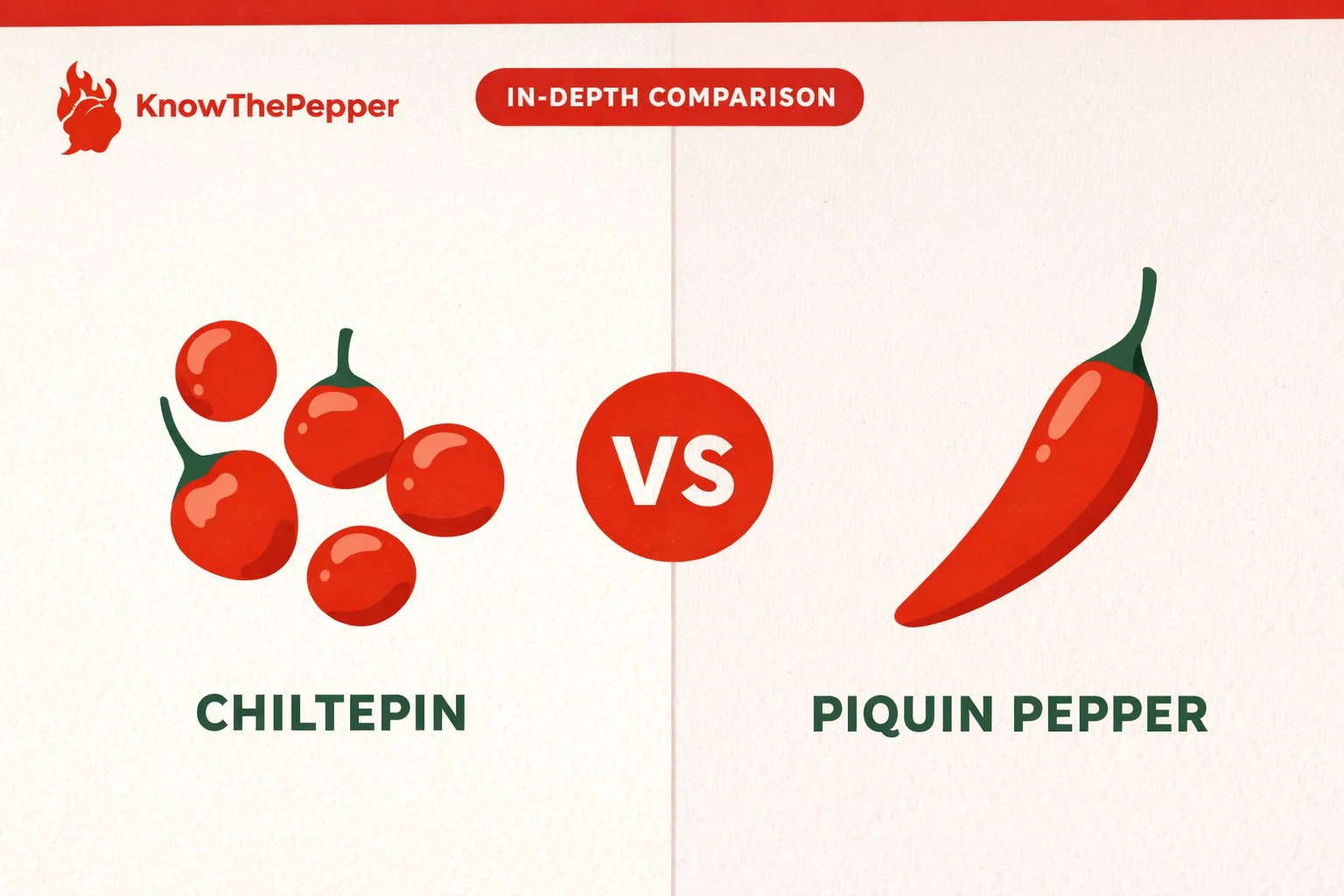
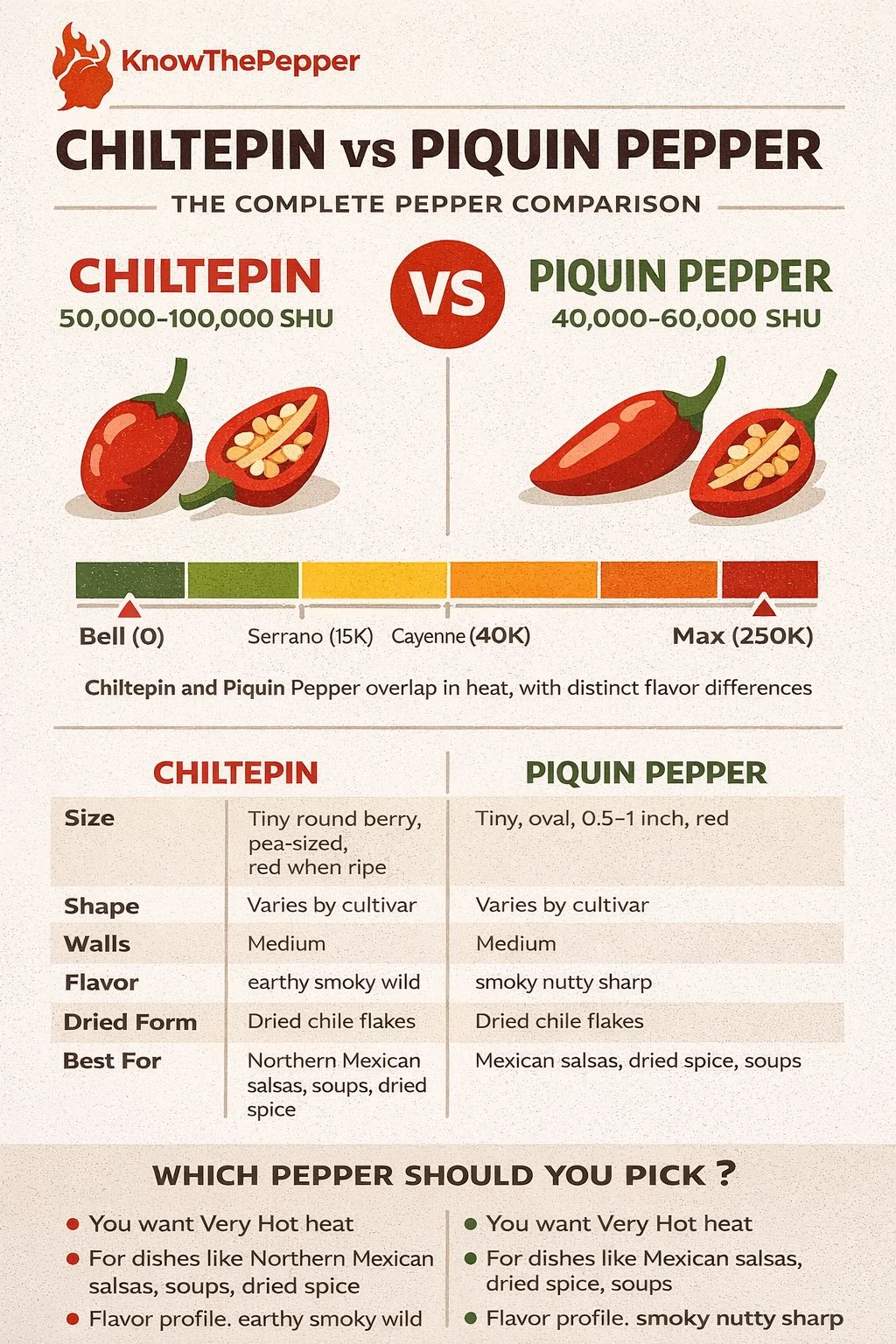
Chiltepin measures 50K–100K SHU while Piquin Pepper registers 30K–60K SHU — making Chiltepin 2× hotter. Chiltepin is known for its smoky and citrus flavor (C. annuum), while Piquin Pepper offers smoky and nutty notes (C. annuum).
- Heat difference: Chiltepin is 2× hotter
- Species: Both are C. annuum
- Best for: Chiltepin excels in hot sauces and extreme dishes, Piquin Pepper in hot sauces and spicy dishes
Chiltepin
Extra-HotPiquin Pepper
HotChiltepin vs Piquin Pepper Comparison
Chiltepin vs Piquin Pepper Heat Levels
Bite into either of these and the heat arrives fast — a sharp, electric sting that lands at the front of the mouth and fades within a minute or two. That rapid-onset, short-duration burn is the defining characteristic of both peppers, and it sets them apart from the slower, deeper heat of something like a dried ancho's low-and-slow warmth.
Both chiltepin and piquin register in the 50,000–100,000 SHU range on the Scoville testing scale, which puts them comfortably in the hot pepper tier. For context, a Fresno chile typically tops out around 10,000 SHU, meaning these little peppers can hit 5 to 10 times hotter than a Fresno at peak intensity.
The hot pepper intensity bracket they occupy is shared with cayenne and tabasco peppers, though chiltepin and piquin tend to feel sharper rather than building — more of a flash than a slow burn. This transient heat quality makes them deceptive; the first bite seems manageable, then the full wave hits.
In practical terms, the two peppers are essentially interchangeable for heat purposes. Neither consistently outpaces the other in SHU measurements — individual fruits on the same plant can vary more than the average difference between the two varieties. Altitude, soil dryness, and harvest timing matter more than which name appears on the label.
Flavor Profile Comparison
Called the "mother of all peppers" in some Mexican traditions, the chiltepin is one of the oldest wild chiles still in common use.
Most small round chilies get lumped together, but the piquin pepper is genuinely its own thing.
Strip away the heat and both peppers share a nutty, slightly smoky, earthy base that you simply don't find in cultivated Capsicum varieties. Wild-type peppers carry flavors shaped by open pollination and minimal human selection, and it shows. There's a faint grassiness when fresh, shifting toward something almost tobacco-like when dried.
Chiltepin — the round, BB-sized variety — tends to be described as slightly more citrusy and bright, with a thin skin that releases flavor quickly. Piquin, which typically grows in a small elongated teardrop shape, often carries a bit more depth, a nuttier quality that some cooks specifically seek out for salsas and moles.
That said, the flavor distinction is subtle enough that many Mexican cooks use the names interchangeably without noticing a difference in the finished dish. The piquin's earthy, nutty bite and the chiltepin's rounder heat profile converge almost completely once either pepper is toasted and ground.
Aroma is where both shine most distinctly. Crush a dried chiltepin or piquin and the smell is intensely wild — herbal, slightly resinous, nothing like the clean fruitiness of a habanero or the vegetal note of a fresh jalapeño. It's a smell that reads as ancient, which makes sense given that these peppers grow wild across large swaths of the Sonoran Desert and northern Mexico.
For cooking, the flavor difference between the two matters less than how you prepare them. Toasting amplifies the nuttiness in both; rehydrating preserves more of the citrus brightness.
Culinary Uses for Chiltepin and Piquin Pepper
Both peppers are workhorses of northern Mexican and Southwestern American cooking, and the substitution ratio between them is essentially 1:1. If a recipe calls for chiltepin and you have piquin (or vice versa), swap without adjustment.
Dried whole, they're added to salsas, stews, and bean dishes — often dropped in whole and fished out before serving, like a bay leaf that bites back. The Sonoran classic chiltepín salsa is built on just a few of these tiny dried peppers, tomatoes, and garlic; the short-lived heat means the salsa stings but doesn't linger, making it approachable for longer meals.
Ground, they function as a finishing spice. A pinch over scrambled eggs, grilled corn, or roasted squash brings that distinctive wild-pepper character without the sustained burn of cayenne. Ground piquin in particular shows up in northern Mexican spice blends and commercial hot sauces throughout Chihuahua and Sonora.
Fresh, they're harder to find outside of their native range or specialty growers, but fresh chiltepins are occasionally used in raw salsas where their brightness comes through most clearly. Fresh piquin has a slightly more vegetal quality that works well in green sauces.
For anyone starting these from seed, both peppers are notoriously slow to germinate — expect 3 to 4 weeks with bottom heat — but once established, the plants are surprisingly productive and drought-tolerant.
If you need a substitute for either, dried cayenne or Thai bird chiles come closest in heat level, though neither replicates the wild, nutty flavor. For a more detailed breakdown, the piquin alternatives and substitution guide covers the closest matches and where each one falls short.
Both peppers dry exceptionally well. String them in a dry, ventilated space and they'll hold flavor for over a year — far better than most thin-skinned chiles.
Which Should You Choose?
Choosing between chiltepin and piquin is less a decision and more a matter of what you can find. Their heat levels are functionally identical, their flavors overlap almost completely, and they perform the same roles in the kitchen.
If you're after the most traditional Sonoran flavor — the pepper that's been called the "mother of all chiles" and holds protected status in parts of Mexico — go with chiltepin. Its round shape and slightly brighter character make it the reference point that piquin is often compared against.
If you're cooking northern Mexican dishes and piquin is what's available, use it without hesitation. The elongated shape means it grinds slightly more evenly in a spice grinder, which is a minor practical advantage.
For heat seekers specifically: neither pepper will satisfy if you're chasing the extreme end of the capsaicin chemistry found in superhots. These are fast, sharp, and wild — not record-breakers. Their appeal is entirely about flavor and tradition, not raw firepower.
Can You Substitute One for the Other?
Yes — direct substitution works. Chiltepin and Piquin Pepper are close enough in heat to swap at roughly 1:1. The main difference will be flavor. For more swap options, explore ranked alternatives with conversion ratios.
Growing Chiltepin vs Piquin Pepper
If you’re deciding which pepper to grow at home, consider your climate and patience level. Chiltepin and Piquin Pepper have different maturation times and temperature preferences. Hotter varieties generally need a longer, warmer growing season to develop their full capsaicin content. Our zone-based planting date tool can pinpoint the best sowing window for your area.
Germination is the first hurdle. Chiltepin seeds have a notoriously low germination rate without pre-treatment — soak them in warm water for 24 hours before planting, or use a dilute gibberellic acid solution if you can source it.
Expect 25–35 days to germination under good conditions, slower than most C. annuum varieties.
Outdoors, the chiltepin prefers partial shade — in its native habitat it grows under mesquite and oak canopy. Full sun works in cooler climates, but in hot summers, afternoon shade prevents leaf scorch and improves fruit set.
Growing piquin from seed takes patience — germination can be slow and erratic compared to commercial varieties. Starting seeds indoors 8–10 weeks before last frost gives them the head start they need.
Piquin plants are perennial in frost-free climates (USDA zones 9–11) and can live for years as small shrubs. In colder zones, they're grown as annuals or overwintered indoors.
They're drought-tolerant once established, another trait from their wild origins. Overwatering is the more common mistake.
History & Origin of Chiltepin and Piquin Pepper
Both peppers carry centuries of culinary heritage. Chiltepin traces its roots to Mexico, while Piquin Pepper originates from Mexico. Understanding their backstory helps explain why each pepper developed its distinctive traits.
Buying & Storage
Whether you’re shopping for Chiltepin or Piquin Pepper, the same quality indicators apply. Fresh peppers should feel firm and heavy for their size, with taut, glossy skin and no soft or wet spots. Minor stem cracks known as “corking” are perfectly normal and often indicate a mature, flavorful pod.
- Firm pods with taut skin and consistent color
- Should feel heavy relative to size
- Minor stem cracks (“corking”) are normal
- Avoid anything soft, shriveled, or with dark wet spots
- Fresh: Paper bag, crisper drawer — 1–2 weeks
- Frozen: Wash, dry, freeze on sheet pan — 6+ months
- Dried: Airtight, away from light — up to 1 year
The Verdict: Chiltepin vs Piquin Pepper
Chiltepin and Piquin Pepper occupy very different positions on the heat spectrum. Chiltepin delivers 2× more heat with its distinctive smoky and citrus character. Piquin Pepper, with its smoky and nutty profile, excels in everyday cooking.
Frequently Asked Questions
Sources pending verification.