Cayenne Pepper vs Jalapeño: Side-by-Side Pepper Comparison
Cayenne and jalapeño are two of the most recognizable peppers in American kitchens, yet they serve fundamentally different roles. Cayenne runs 30,000-50,000 SHU and is prized primarily as a dried spice, while the jalapeño tops out around 8,000 SHU and shines as a fresh ingredient. Understanding where each excels saves you from a too-hot dish or a disappointingly mild one.

Cayenne Pepper measures 30K–50K SHU while Jalapeño registers 3K–8K SHU — making Cayenne Pepper 6× hotter. Cayenne Pepper is known for its neutral and peppery flavor (C. annuum), while Jalapeño offers bright and grassy notes (C. annuum).
- Heat difference: Cayenne Pepper is 6× hotter
- Species: Both are C. annuum
- Best for: Cayenne Pepper excels in everyday cooking and salsas, Jalapeño in fresh salsas and mild recipes
Cayenne Pepper
HotJalapeño
MediumCayenne Pepper vs Jalapeño Comparison
Cayenne Pepper vs Jalapeño Heat Levels
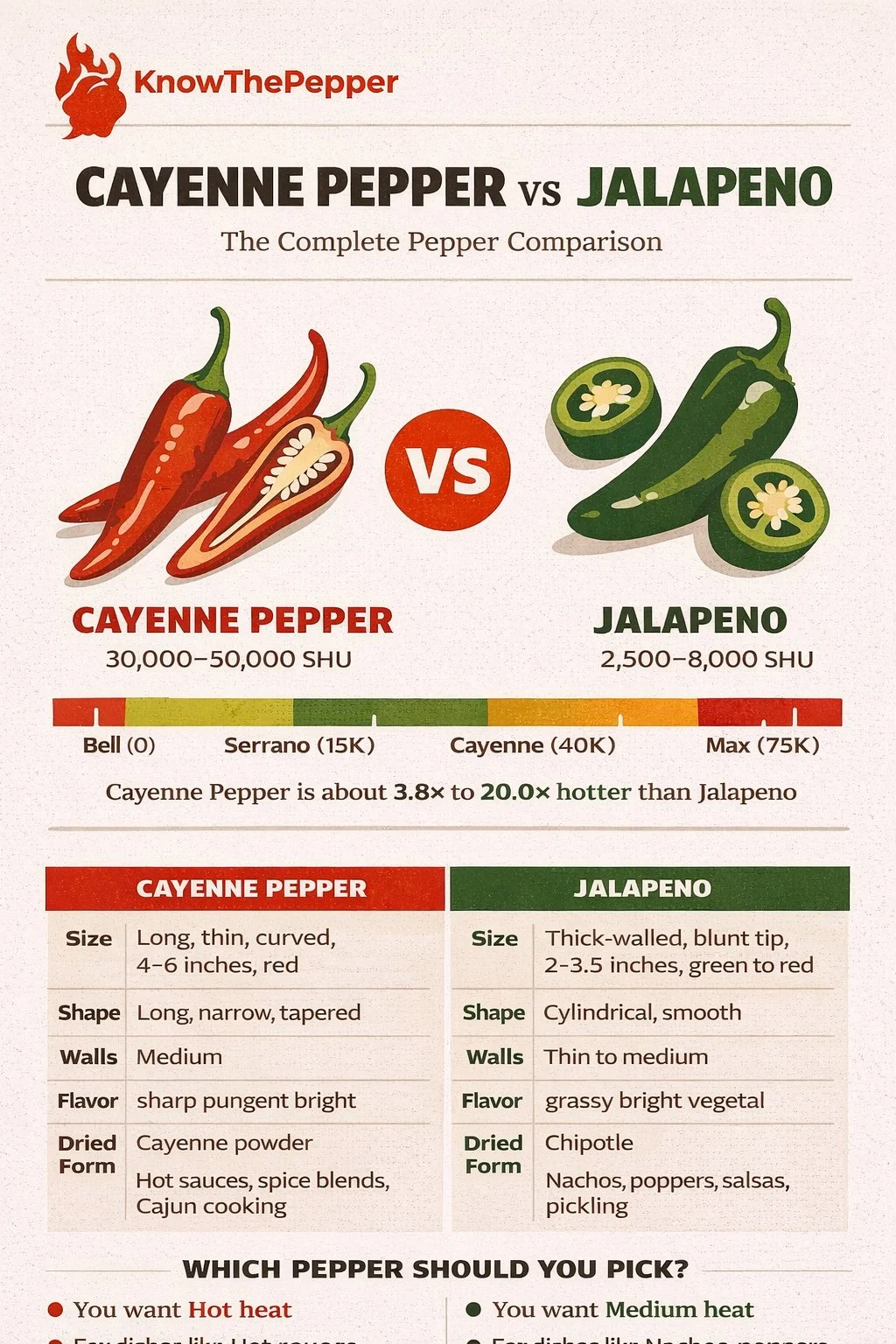
The heat gap between these two is significant. Jalapeños clock in at 2,500-8,000 SHU — firmly in the medium heat classification that most people can handle without much discomfort. Cayenne sits at 30,000-50,000 SHU, roughly 4 to 20 times hotter depending on where each pepper falls in its respective range.
For a useful comparison point: a dried chipotle typically measures around 2,500-8,000 SHU (essentially a smoked jalapeño), meaning cayenne can be anywhere from 4 to 20 times hotter than chipotle. That spread matters in cooking — a pinch of cayenne carries real firepower.
The capsaicin compounds responsible for this burn interact with TRPV1 receptors in your mouth; for a deeper look at that TRPV1 response and molecular structure, the mechanism explains why cayenne's heat feels sharper and more immediate than jalapeño's slower build. Jalapeño heat tends to settle on the front of the tongue and fade relatively quickly. Cayenne hits fast, spreads to the back of the throat, and lingers.
One practical note: jalapeño heat varies dramatically by growing conditions. A stressed plant with less water produces significantly hotter fruit — the 2,500-8,000 range is real, not theoretical. Supermarket jalapeños often land toward the mild end. Cayenne is more consistent, especially in dried and powdered form where moisture has been removed and capsaicin concentrates.
Flavor Profile Comparison
Few peppers have traveled as far or worked as hard as cayenne.
Few peppers have earned their reputation as thoroughly as the jalapeño.
Heat aside, these peppers taste quite different — and that distinction matters as much as the SHU gap for most cooking decisions.
Jalapeños have a bright, grassy flavor with mild vegetal sweetness. Fresh-cut jalapeño has an almost green-bell-pepper quality underneath the heat, which is why it works so well raw in pico de gallo or sliced onto nachos. The bright grassy character of fresh jalapeño holds up well to heat but softens during prolonged cooking, becoming slightly sweeter and less sharp.
Cayenne is a different animal. Fresh cayenne pods have a thin-walled, slightly fruity flavor, but the pepper is almost never used fresh in Western cooking. Dried and ground cayenne has an earthy, faintly fruity backbone beneath the dominant heat. There is less of the green, vegetal quality you get from jalapeño — cayenne powder is more one-dimensional in flavor, which is actually useful when you want pure heat without altering a dish's flavor profile significantly.
Aroma also differs. Sliced jalapeño releases a pungent, green, almost herbaceous smell. Cayenne powder has a dusty, warm aroma with subtle fruitiness — closer to a hot paprika than a fresh pepper. If you are comparing cayenne to milder dried options, the contrast between cayenne and sweet paprika illustrates how dramatically the drying and processing process can shift flavor alongside heat.
Culinary Uses for Cayenne Pepper and Jalapeño
These two peppers rarely substitute directly for each other, but knowing when to reach for each one is half the battle.
Jalapeños are a fresh-pepper workhorse. They hold their shape when roasted, pickle beautifully (the acidity tames the heat further), and work raw in salsas, guacamole, and relishes. Poppers, stuffed preparations, and sliced toppings all rely on the jalapeño's thick walls and structural integrity. Smoked and dried, they become chipotle — a flavor transformation that has nothing to do with cayenne.
For dishes rooted in Mexican pepper traditions, jalapeño is often the culturally correct choice. Using cayenne powder instead of fresh jalapeño in a salsa verde, for example, changes the character of the dish entirely — you lose the fresh green flavor and gain a different kind of heat.
Cayenne dominates in dry applications: spice rubs, hot sauces, chili powders, soups, and anything where you want heat distributed evenly through a liquid or fat. A quarter teaspoon of cayenne can bring a pot of soup from mild to assertive. It is also the backbone of many Louisiana-style hot sauces and a key spice in Cajun and Creole cooking.
Substitution ratios require care. If a recipe calls for 1 fresh jalapeño, you could use roughly 1/8 to 1/4 teaspoon of cayenne powder to approximate the heat — but you will lose all the fresh flavor. Going the other direction, replacing cayenne with jalapeño means using significantly more pepper and accepting a wetter, fresher result.
For recipes where you need cayenne's intensity but want something slightly fruitier, the head-to-head between cayenne and serrano is worth reading — serrano bridges some of the gap between these two in fresh applications. If you need cayenne substitute picks that keep heat levels in range, options like crushed red pepper or hot paprika are more practical swaps than jalapeño.
Which Should You Choose?
Jalapeño is the better choice when fresh texture, green flavor, and moderate heat are what a dish needs. It is approachable enough for heat-sensitive eaters, versatile enough to go raw or cooked, and deeply embedded in Mexican and Tex-Mex cooking traditions. The C. annuum botanical family includes both peppers, but jalapeño's thick walls and fresh character make it the more ingredient-forward choice.
Cayenne is the better choice when you need concentrated, consistent heat in a dry or liquid format — spice blends, hot sauces, soups, and rubs. Its 30,000-50,000 SHU range gives you real firepower in small quantities, and the dried form means it is always available regardless of season.
For those who want to explore where cayenne sits against genuinely hot peppers, the comparison between cayenne and habanero heat shows how much further the scale goes. These two peppers are not interchangeable — treat them as tools for different jobs.
Can You Substitute One for the Other?
Yes — direct substitution works. Cayenne Pepper and Jalapeño are close enough in heat to swap at roughly 1:1. The main difference will be flavor. For more swap options, explore ranked alternatives with conversion ratios.
Growing Cayenne Pepper vs Jalapeño
If you’re deciding which pepper to grow at home, consider your climate and patience level. Cayenne Pepper and Jalapeño have different maturation times and temperature preferences. Hotter varieties generally need a longer, warmer growing season to develop their full capsaicin content. Our zone-based planting date tool can pinpoint the best sowing window for your area.
Cayenne is one of the more forgiving hot peppers to grow, which explains its global reach. Start seeds indoors 8-10 weeks before last frost.
For practical guidance on growing cayenne from transplant to harvest, the key variables are consistent heat and full sun. Cayenne wants at least 6-8 hours of direct light daily and struggles in cool, wet summers.
Transplant outdoors once nighttime temps stay above 55°F. Space plants 18-24 inches apart.
Jalapeños are among the most forgiving hot peppers to grow, but they do have preferences worth knowing.
Start seeds indoors 8–10 weeks before your last frost date. Soil temperature for germination should stay between 75–85°F — a heat mat under the seed tray makes a real difference in germination speed and uniformity.
Transplant outdoors once nighttime temps stay consistently above 55°F. Jalapeños want full sun — at least 6 hours daily — and well-drained soil with a pH around **6.
History & Origin of Cayenne Pepper and Jalapeño
Both peppers carry centuries of culinary heritage. Cayenne Pepper traces its roots to French Guiana, while Jalapeño originates from Mexico. Understanding their backstory helps explain why each pepper developed its distinctive traits.
Buying & Storage
Whether you’re shopping for Cayenne Pepper or Jalapeño, the same quality indicators apply. Fresh peppers should feel firm and heavy for their size, with taut, glossy skin and no soft or wet spots. Minor stem cracks known as “corking” are perfectly normal and often indicate a mature, flavorful pod.
- Firm pods with taut skin and consistent color
- Should feel heavy relative to size
- Minor stem cracks (“corking”) are normal
- Avoid anything soft, shriveled, or with dark wet spots
- Fresh: Paper bag, crisper drawer — 1–2 weeks
- Frozen: Wash, dry, freeze on sheet pan — 6+ months
- Dried: Airtight, away from light — up to 1 year
The Verdict: Cayenne Pepper vs Jalapeño
Cayenne Pepper and Jalapeño occupy very different positions on the heat spectrum. Cayenne Pepper delivers 6× more heat with its distinctive neutral and peppery character. Jalapeño, with its bright and grassy profile, excels in everyday cooking.
Frequently Asked Questions
Related Comparisons
Sources pending verification.