Banana Pepper vs Pepperoncini: What's the Difference?
Banana peppers and pepperoncinis look nearly identical in a grocery store pickle jar, and most people use the names interchangeably — but they are two distinct peppers with different heat levels, flavor profiles, and best uses. Banana peppers register at 0 SHU, making them completely heat-free, while pepperoncinis carry 100-500 SHU of mild, tangy bite. The differences matter more than you'd expect once you start cooking with them intentionally.

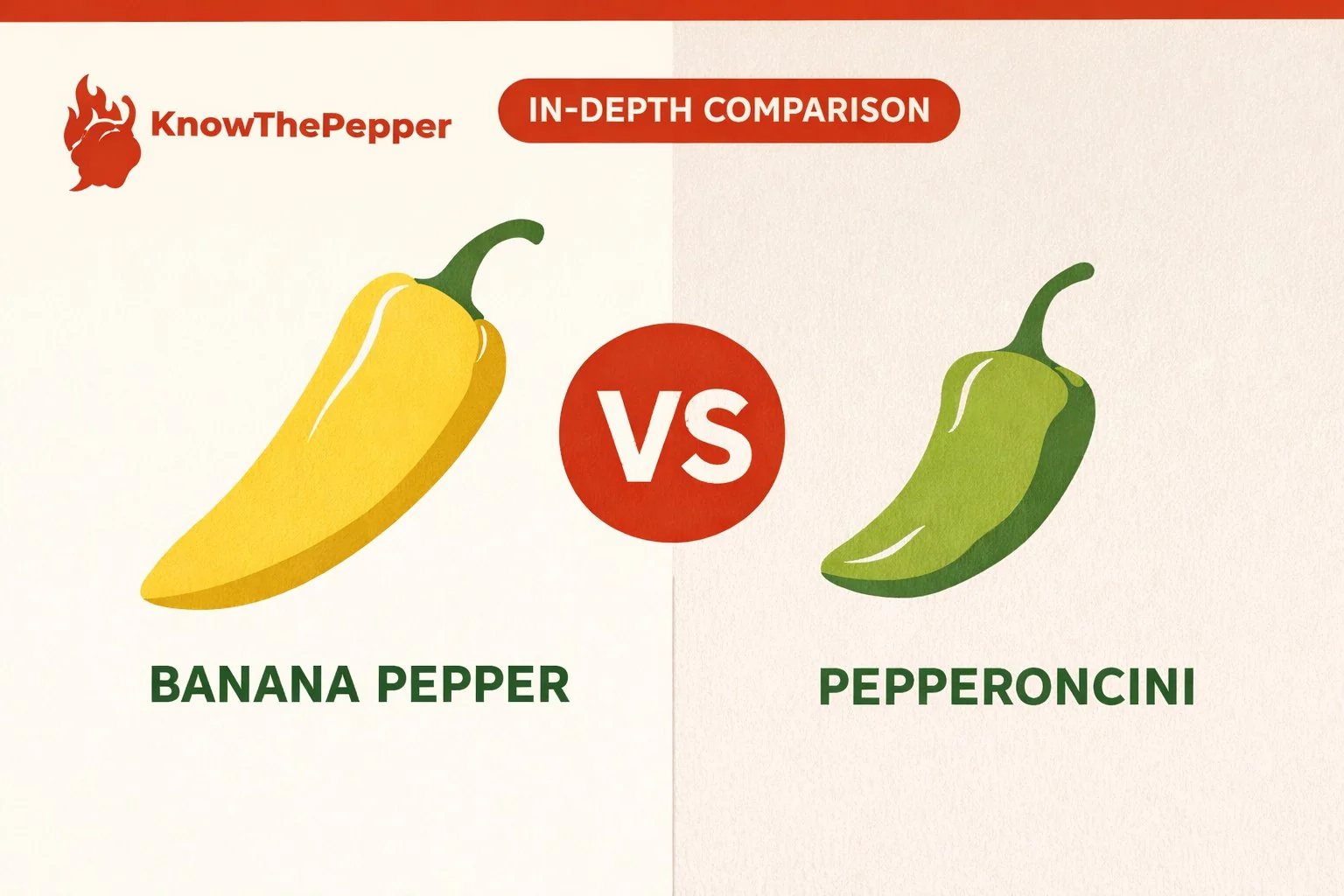
Banana Pepper measures 0–500 SHU while Pepperoncini registers 100–500 SHU — roughly equal in heat. Banana Pepper is known for its mild and tangy flavor (C. annuum), while Pepperoncini offers tangy and mild notes (C. annuum).
- Species: Both are C. annuum
- Best for: Banana Pepper excels in everyday cooking and salsas, Pepperoncini in fresh salsas and mild recipes
Banana Pepper vs Pepperoncini Comparison
Banana Pepper vs Pepperoncini Heat Levels
The first time I grabbed what I thought were banana peppers off a deli antipasto tray, that faint tingle caught me off guard. Turns out I had been eating pepperoncinis the whole time without realizing it.
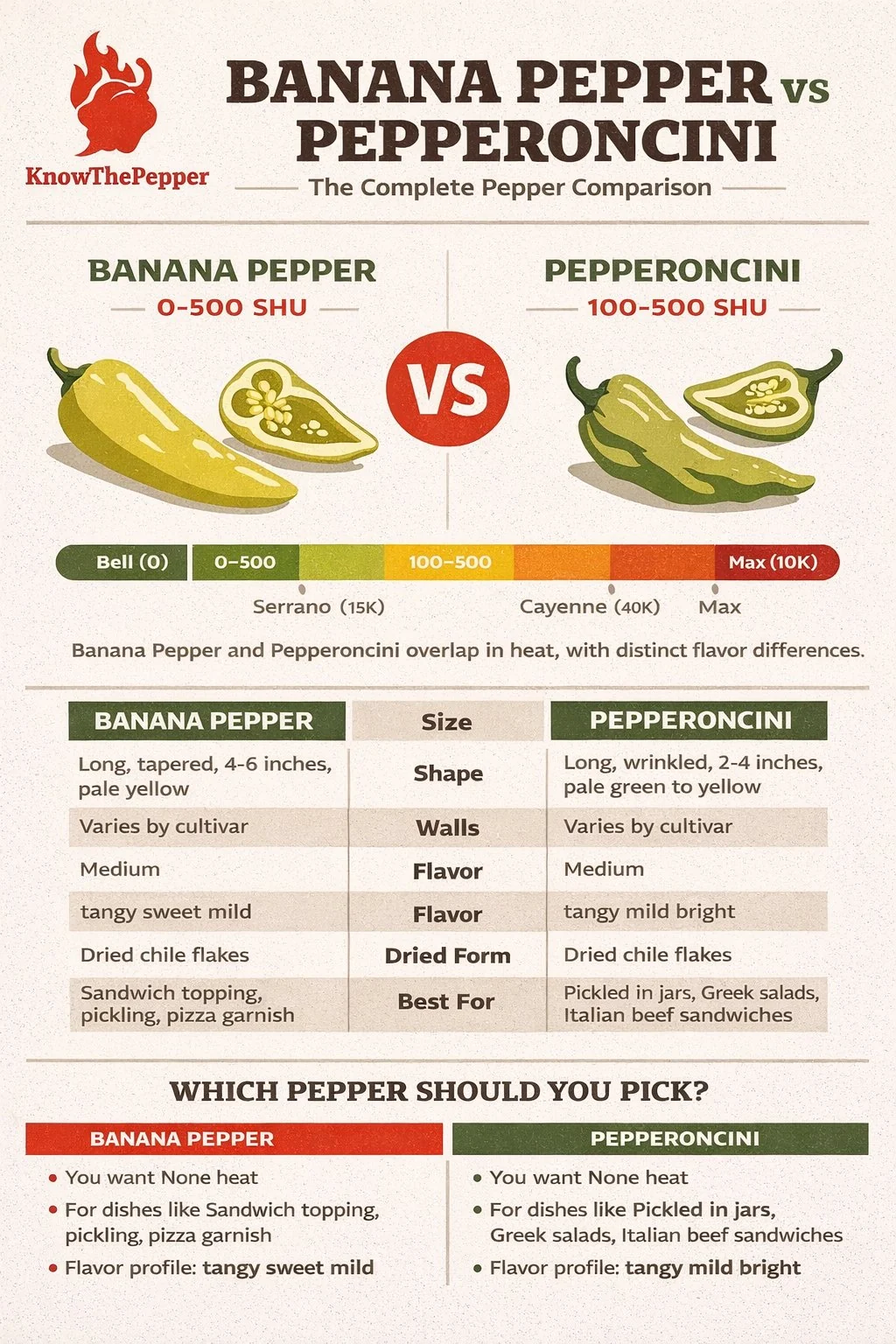
On the Scoville unit definition scale, banana peppers sit at exactly 0 SHU — zero measurable capsaicin. They are, by every technical measure, a non-hot pepper. Pepperoncinis range from 100 to 500 SHU, putting them at the very bottom of the mild pepper category but above zero. That gap is small in absolute terms but meaningful in practice.
For context, a guajillo pepper typically measures around 2,500-5,000 SHU. Pepperoncinis are roughly 5 to 50 times milder than a guajillo, and banana peppers don't register at all. Neither pepper will challenge anyone with moderate heat tolerance, but the pepperoncini's subtle warmth is detectable — especially in cold applications like salads or sandwiches where no cooking dilutes the capsaicin.
The heat in pepperoncinis is also slow-building and localized near the seed cavity and inner ribs. It's less of a burn and more of a gentle warmth that fades in under a minute. Banana peppers produce zero of that sensation, which makes them the safer choice for heat-sensitive eaters, kids, or dishes where any spice would be unwelcome.
Flavor Profile Comparison
The first time I bit into a raw banana pepper straight from the garden, the tanginess caught me off guard — more like a mild vinegar note than anything I expected from a fresh pepper.
Here's the thing nobody tells you: pepperoncini and banana peppers are not the same pepper.
Heat aside, these two peppers diverge in flavor in ways that matter for cooking. Banana peppers have a clean, sweet, slightly vegetal taste — mild enough that the pepper's natural sugar comes through clearly. Fresh banana peppers have a crisp, almost bell-pepper-adjacent flavor without the grassiness. Pickled, they pick up vinegar brightness while retaining that sweetness underneath.
Pepperoncinis are tangier by nature, even before pickling. The Italian variety — the form most Americans encounter — carries a characteristic mild bitterness and an acidic edge that's part of the pepper itself, not just the brine. Pickled pepperoncinis intensify that tang considerably, creating the sharp, briny flavor most people associate with Greek salads and sub sandwiches.
Aroma is another point of difference. Fresh banana peppers smell grassy and faintly sweet. Fresh pepperoncinis have a more complex nose — slightly fruity, slightly acidic — that hints at their Mediterranean pepper heritage.
In cooked applications, both peppers mellow significantly. Roasted banana peppers become almost jammy and sweet. Roasted pepperoncinis soften their tang into something richer and slightly savory. Neither pepper dominates a dish with heat, so flavor is doing all the work — and pepperoncinis bring more complexity to that job.
Culinary Uses for Banana Pepper and Pepperoncini
Banana peppers shine anywhere you want mild pepper flavor without heat or acidity. Fresh, they're excellent sliced into salads, stuffed with cream cheese or sausage, or layered onto sandwiches for crunch and sweetness. Their neutral profile makes them adaptable — they won't fight other flavors. Pickled banana peppers are a standard pizza topping and a reliable sandwich addition when you want mild brightness without the sharp tang of pepperoncinis.
Stuffed banana peppers are a classic preparation: halve them, remove seeds, fill with a mixture of ricotta, herbs, and Italian sausage, then bake at 375°F until tender. The pepper's sweetness balances rich fillings beautifully.
Pepperoncinis are the workhorse of antipasto platters, Greek salads, and Italian beef sandwiches. Their brine is genuinely useful — many slow cooker pot roast recipes call for a full jar of pepperoncinis (brine included) to tenderize beef and add depth. The acidity does real work in that context. Chopped pepperoncinis also fold well into vinaigrettes, grain salads, and olive-based spreads.
For substitution: swap banana peppers for pepperoncinis at a 1:1 ratio when you want less tang and zero heat. Going the other direction — pepperoncinis in place of banana peppers — works at 1:1 as well, but expect a tangier, slightly more assertive result. Neither substitution is dramatic, but it's worth knowing which direction you're moving flavor-wise.
For a broader look at how banana peppers compare across the sweet pepper spectrum, the banana pepper vs. cubanelle breakdown covers two peppers that often get confused in Italian-American cooking. If you're working with Italian frying peppers generally, the long hot Italian vs. banana pepper matchup is also worth a read.
Which Should You Choose?
Banana peppers are the right call when heat is off the table entirely — for kids, heat-sensitive guests, or dishes where sweetness needs to carry the flavor load. Their zero-SHU profile and clean sweetness make them genuinely versatile in both fresh and pickled applications.
Pepperoncinis are the better pick when you want complexity. That 100-500 SHU range isn't about heat so much as character — the tang, the mild bitterness, the brine affinity. They're the pepper that makes an Italian beef sandwich taste like an Italian beef sandwich.
For Greek salads, antipasto, or any dish where acidic brightness matters: pepperoncini. For stuffed preparations, pizza toppings, or anywhere you want mild pepper flavor without any edge: banana pepper. The two are close enough to swap in a pinch, but knowing which one you actually want produces noticeably better results.
Curious how pepperoncinis compare to their closest Italian relative? The friggitello vs. pepperoncini comparison breaks down two peppers that even Italian cooks sometimes conflate.
Can You Substitute One for the Other?
Yes — direct substitution works. Banana Pepper and Pepperoncini are close enough in heat to swap at roughly 1:1. The main difference will be flavor. For more swap options, explore ranked alternatives with conversion ratios.
Growing Banana Pepper vs Pepperoncini
If you’re deciding which pepper to grow at home, consider your climate and patience level. Banana Pepper and Pepperoncini have different maturation times and temperature preferences. Hotter varieties generally need a longer, warmer growing season to develop their full capsaicin content. Our zone-based planting date tool can pinpoint the best sowing window for your area.
Banana peppers are forgiving plants — a good starting point if you want a step-by-step growing guide to work from. They thrive in full sun with consistent moisture and warm soil, performing best where daytime temperatures stay between 70°F and 85°F.
Start seeds indoors 8 to 10 weeks before the last frost date. Transplant once nighttime temperatures stay reliably above 55°F — cold soil stunts early growth noticeably.
Fertilize at transplant with a balanced formula, then switch to a lower-nitrogen feed once flowering begins. Too much nitrogen pushes leafy growth at the expense of fruit set.
Pepperoncini are straightforward to grow, especially if you have experience with other C. annuum varieties.
Transplant outdoors after nighttime temperatures stay consistently above 55°F. Plants reach 18–24 inches tall and prefer full sun with well-drained soil.
Fruits set at 60–75 days after transplant and are typically harvested yellow-green for the classic pickled product. Left on the plant, they turn red and become slightly sweeter.
History & Origin of Banana Pepper and Pepperoncini
Both peppers carry centuries of culinary heritage. Banana Pepper traces its roots to USA, while Pepperoncini originates from Italy. Understanding their backstory helps explain why each pepper developed its distinctive traits.
Buying & Storage
Whether you’re shopping for Banana Pepper or Pepperoncini, the same quality indicators apply. Fresh peppers should feel firm and heavy for their size, with taut, glossy skin and no soft or wet spots. Minor stem cracks known as “corking” are perfectly normal and often indicate a mature, flavorful pod.
- Firm pods with taut skin and consistent color
- Should feel heavy relative to size
- Minor stem cracks (“corking”) are normal
- Avoid anything soft, shriveled, or with dark wet spots
- Fresh: Paper bag, crisper drawer — 1–2 weeks
- Frozen: Wash, dry, freeze on sheet pan — 6+ months
- Dried: Airtight, away from light — up to 1 year
The Verdict: Banana Pepper vs Pepperoncini
Banana Pepper and Pepperoncini sit in the same heat tier but serve different roles. Banana Pepper delivers its distinctive mild and tangy character. Pepperoncini, with its tangy and mild profile, excels in everyday cooking.
Frequently Asked Questions
Related Comparisons
Sources pending verification.