
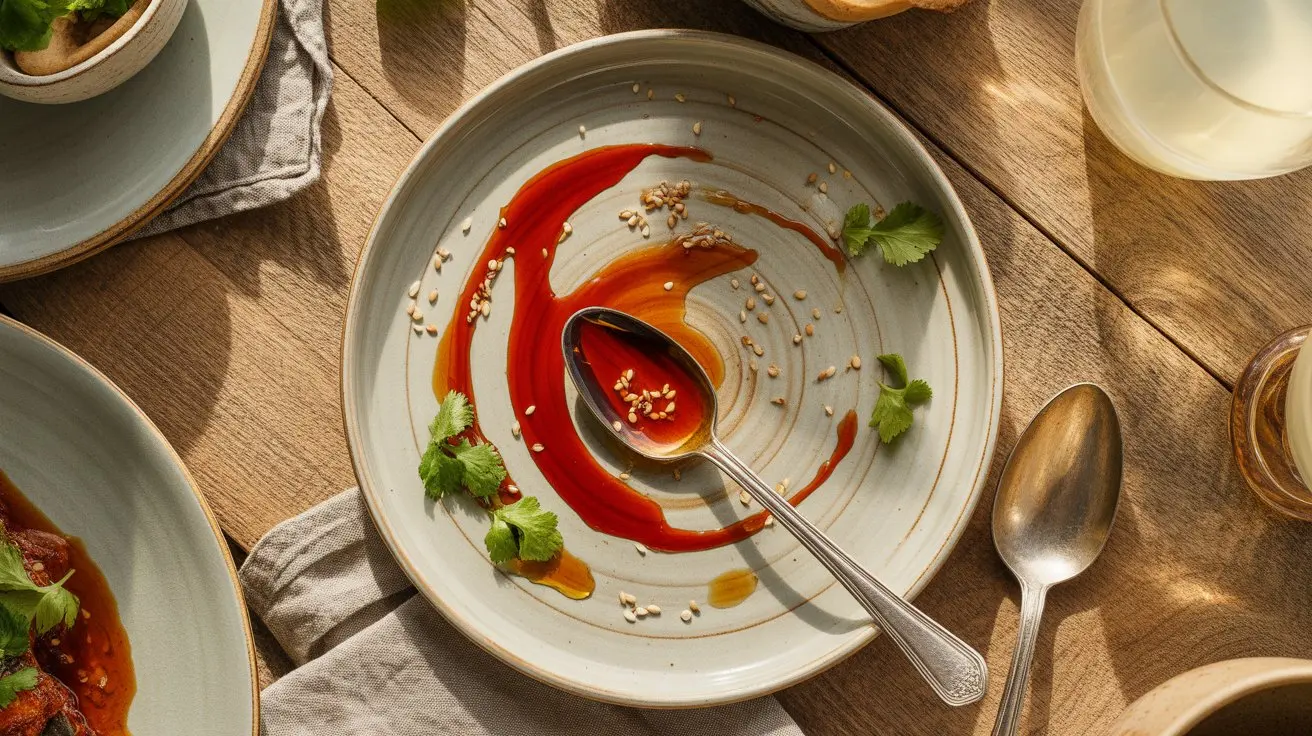
Chili Oil
Homemade Chinese chili oil with Sichuan peppercorns and red pepper flakes. Find your perfect heat level.

What Is Chili Oil?
Chili oil sits at the intersection of heat, fragrance, and fat — a condiment that does more work per teaspoon than almost anything else in the kitchen. The Chinese-style version, known as hong you or la jiao you, is built on a simple principle: hot oil extracts fat-soluble compounds from dried chiles, spices, and aromatics, creating something far more complex than any of its parts.
The heat here comes primarily from Chinese dried red chiles with their characteristic slow-building warmth, amplified by Sichuan peppercorns that add a distinct numbing, tingly quality called ma. That combination — spicy heat plus mouth-numbing tingle — is what separates a proper Sichuan-style chili oil from generic hot sauce.
Most store-bought versions rely on artificial flavoring or skip the aromatics entirely. Making it at home takes about 20 minutes and produces something genuinely better.
Heat Level Customization
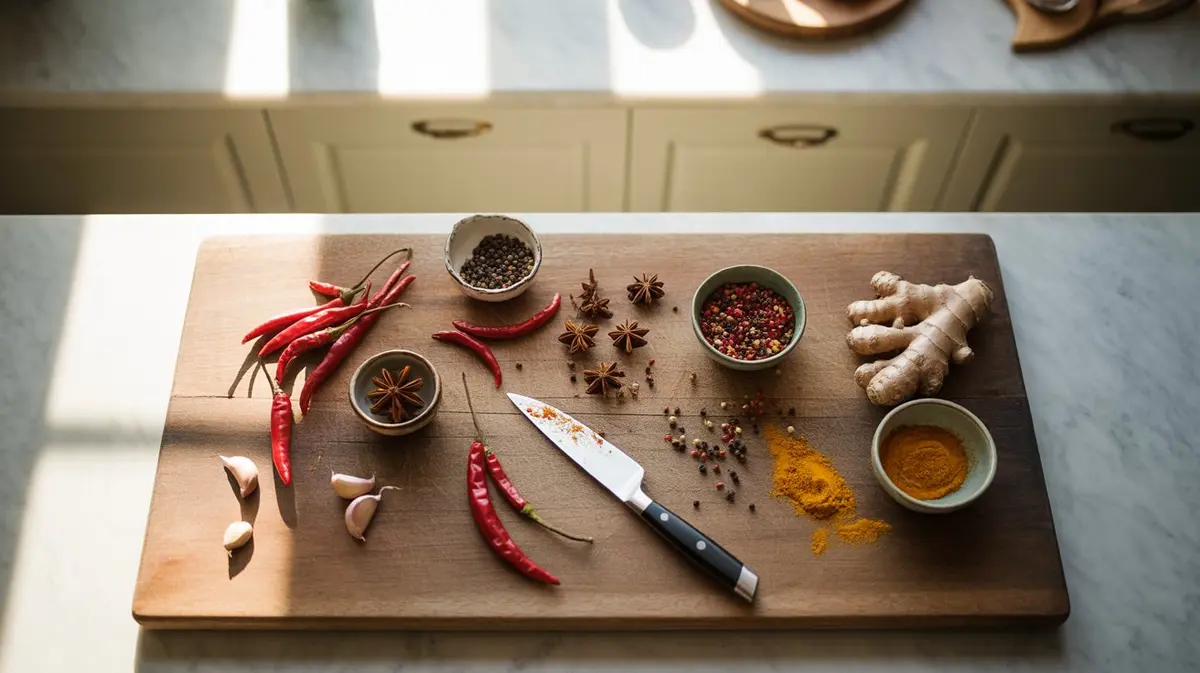
This recipe as written lands in a genuinely spicy range — noticeable heat that builds over 30-60 seconds, similar to eating a hot-tier pepper with sustained intensity. That said, the heat is entirely adjustable.
For milder oil: Reduce gochugaru to 1/4 cup and skip the dried whole chiles. The color will be lighter but the flavor remains complex. This version works well as a finishing oil for people who find full-heat chili oil too aggressive on dumplings.
For extra heat: Add 1-2 tsp of crushed chili de arbol to the flake base, or substitute half the gochugaru with a finer-ground Chinese red pepper. Extra-hot pepper territory starts around 100,000 SHU — adding even a small amount of something like habanero's fruity scorching heat to the base can push this oil into a different league entirely.
The Sichuan peppercorn quantity also affects perceived heat — more peppercorns amplify the numbing effect, which paradoxically makes the chile heat feel more intense because your mouth is already sensitized. Reduce to 1 tbsp for a more straightforward spicy oil without the tingly component.
Technique Tips
Don't skip the temperature rest. Pouring oil straight off peak heat will scorch the flakes. The 3-5 minute rest is what separates bright, fragrant chili oil from bitter, acrid chili oil.
A heavy-bottomed saucepan retains heat more evenly than thin stainless steel. Cast iron or enameled cast iron works well here, though any thick-bottomed pot will do.
If your gochugaru clumps in the bowl before the oil hits it, add 1 tbsp of cold water and stir — this prevents scorching by lowering the initial temperature spike when the hot oil arrives.
The two-stage pour technique used in some Sichuan recipes involves pouring half the oil at a higher temperature (around 300°F) for fragrance, then the remaining half at a lower temperature for color. This produces a more complex result but requires more precision.
For a crisper texture in the finished oil, add 2 tbsp of fried shallots to the dry mix before pouring the oil. They add crunch and a savory sweetness that pairs especially well with noodles.
Variations
The base recipe is a starting point. Once you understand the technique, the spice profile is yours to adjust.
- Doubanjiang-style: Add 2 tbsp of fermented black beans (douchi) to the dry mix for a savory, umami-forward version that works well with braised proteins.
- Extra aromatic: Swap the cinnamon stick for 1 tsp of five-spice powder added directly to the chile flake base. More fragrant, slightly sweeter.
- Thai-inspired: Replace half the gochugaru with Thai bird's eye chile's sharper, brighter burn and add 1 tsp of fish sauce to the finished oil. The Thai pepper tradition leans toward sharper, more immediate heat than the Sichuan version.
- Smoky version: Use 1 tbsp of smoked paprika in the flake base alongside the gochugaru. Works particularly well as a finishing oil on eggs or grilled vegetables.
- Korean-style: Increase gochugaru to 3/4 cup, skip the Sichuan peppercorns, and add 1 tbsp of soy sauce to the finished oil. The result is closer to a Korean gireum — less numbing, more deeply savory.
How to Use Chili Oil
Dan dan noodles are the canonical showcase for this condiment — the chili oil is not a garnish here but a structural component of the sauce, mixed with sesame paste, soy, and vinegar to coat wheat noodles. The oil's fat carries flavor into every strand in a way water-based sauces cannot.
Beyond noodles, a spoonful over fried eggs is one of the better breakfast upgrades available. The oil pools in the whites and crisps the edges while the yolk stays runny — the heat is immediate but not overwhelming at that quantity.
It works as a dipping sauce for homemade stuffed pepper dishes with just a splash of black vinegar added. Drizzled over cold tofu with scallions and soy sauce, it becomes a complete dish in under 5 minutes. Stir into hummus for a version that bears no resemblance to the original but is arguably better.
The oil component and the chile sediment behave differently — use the oil when you want heat and fragrance without texture, scoop from the bottom when you want visible flakes and maximum heat in the dish.
Storage
Store in a clean, airtight glass jar at room temperature for up to 2 weeks, or refrigerate for up to 3 months. The oil will solidify slightly in the fridge — this is normal. Let it come to room temperature for 10 minutes before using, or microwave for 10 seconds.
The flavor actually improves over the first 48 hours as the spices continue to infuse into the oil. Don't judge the final product immediately after making it.
Avoid introducing water into the jar — even a wet spoon can cause spoilage. Use a clean, dry utensil every time.
For longer shelf life, ensure the chile flakes are fully submerged in oil. Exposed flakes can develop mold over time, particularly in humid environments.
Chef's Tip: The Resting Period
Patience is an ingredient. After mixing, let the dish rest for 10–15 minutes before serving. This allows the flavours to meld and the seasoning to fully penetrate. If making ahead, refrigerate and bring to room temperature before serving.
Shopping List
-
1.5 cups neutral oil (grapeseedavocado, or refined peanut oil)
-
1/2 cup coarse Korean gochugaru or Chinese dried red pepper flakes
-
2 tbsp Sichuan peppercornslightly crushed
-
3 dried red chiles (chili de arbol or tianjin)whole
-
4 cloves garlicsmashed and peeled
-
2-inch piece fresh gingersliced thin
-
3 scallionscut into 2-inch pieces
-
2 star anise
-
1 cinnamon stick
-
2 tbsp toasted sesame seeds
-
1 tbsp toasted sesame oil
-
1 tsp kosher salt
-
1 tsp sugar
-
1 tsp MSG (optional but recommended)
Full Recipe Instructions
Combine gochugaru, sesame…
Combine gochugaru, sesame seeds, salt, sugar, and MSG (if using) in a large heatproof bowl. Set near the stove.
Pour neutral oil…
Pour neutral oil into a small saucepan. Add garlic, ginger, scallions, star anise, cinnamon stick, Sichuan peppercorns, and whole dried chiles.
Heat over medium-low,…
Heat over medium-low, stirring occasionally, until aromatics sizzle and turn lightly golden, about 8-12 minutes.
Increase heat to…
Increase heat to medium and cook until garlic reaches a deep golden color and oil smells intensely fragrant. Remove from heat.
Let oil cool…
Let oil cool 3-5 minutes until it reaches approximately 250 degrees F.
Strain the aromatics…
Strain the aromatics through a fine-mesh strainer and discard solids.
Slowly pour hot…
Slowly pour hot oil over the chile flake mixture in a steady stream, stirring constantly. The mixture will bubble vigorously.
Stir in toasted…
Stir in toasted sesame oil once bubbling subsides.
Let chili oil…
Let chili oil cool completely at room temperature before transferring to a jar. Flavor deepens over the next 12-24 hours.
Frequently Asked Questions
-
The oil was almost certainly too hot when it hit the chile flakes, scorching them. Let the oil cool to around 250 degrees F after straining before pouring - a 3-5 minute rest off heat is usually sufficient.
-
Standard crushed red pepper flakes work but produce a darker, less vibrant oil with a sharper heat profile. Gochugaru gives better color and a slightly sweeter, more complex flavor - it is worth sourcing if possible.
-
A Fresno chile sits around 2,500-10,000 SHU. This recipe using gochugaru lands in a similar range per spoonful, though the cumulative effect of eating a full dish dressed with the oil can feel significantly more intense.
-
No, but leaving them out changes the character of the oil significantly. Sichuan peppercorns provide the numbing, tingly ma quality that distinguishes this style from generic chili oil - without them, the result is spicy but one-dimensional.
-
Yes, for up to 2 weeks in a clean airtight jar, provided no water is introduced. The oil acts as a preservative for the dry ingredients - refrigeration extends shelf life to about 3 months.
More Recipes
View allFresh Salsa Recipe
Restaurant-quality fresh salsa in 10 minutes. Proper tomato prep, right jalapeño amount, and the secret to balanced flavor. Find your perfect heat level.
Jalapeno Poppers Recipe
Classic cream cheese stuffed jalapeño poppers that are crispy outside, creamy inside. Find your perfect heat level.
Pickled Jalapenos Recipe
Two methods: 10-minute quick pickle and proper fermented. Both stay crispy. Find your perfect heat level.
Stuffed Peppers Recipe
Classic stuffed peppers with rice and meat, plus vegetarian and Mexican variations. Covers bell peppers, poblanos, and which peppers stuff best.