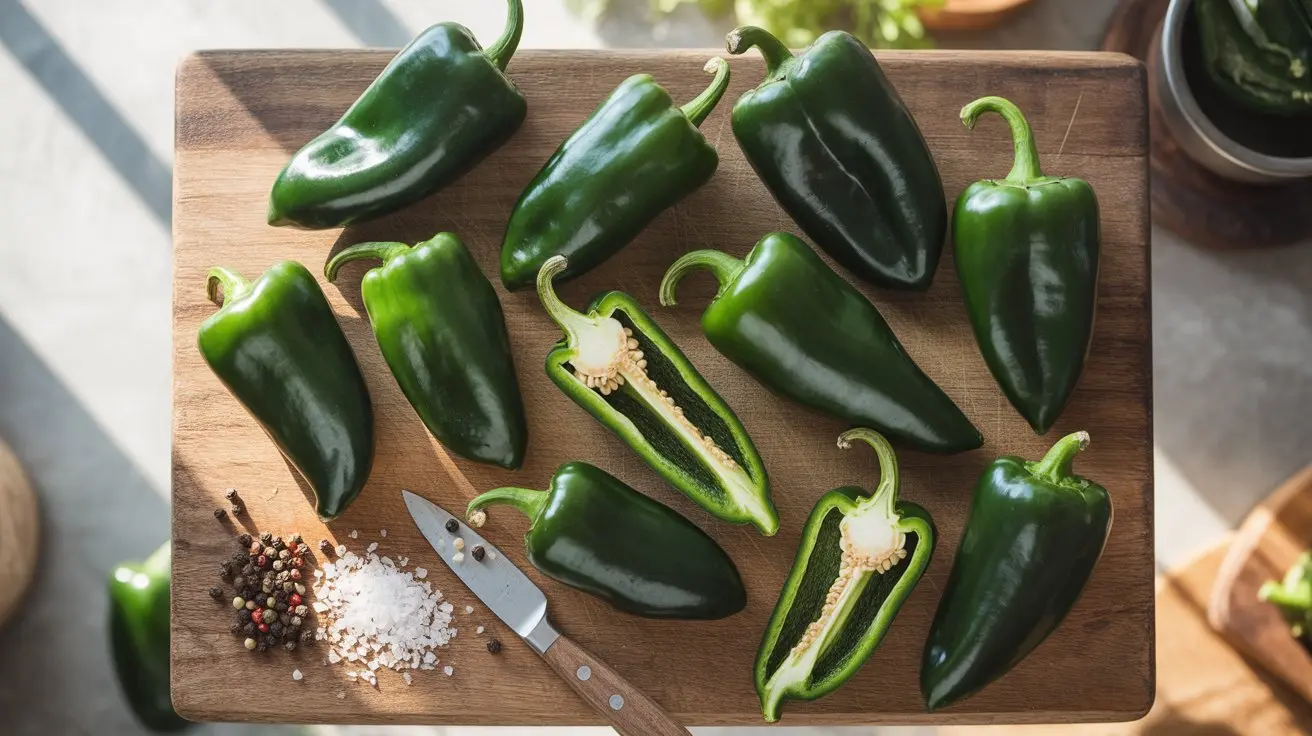
Poblano Pepper

The poblano pepper sits at 1,000-2,000 SHU — a gentle warmth that reads more as depth than fire. Heart-shaped, thick-walled, and deeply earthy, it's the go-to for chiles rellenos and roasted sauces. Dried, it becomes the ancho, transforming into something richer and more complex. A rewarding garden plant and a kitchen essential across Mexican cooking.
- Species: C. annuum
- Heat tier: Medium (1K–10K SHU)
What is Poblano Pepper?
Pick up a fresh poblano and the first thing you notice is the weight. These heart-shaped fruits are thick-walled and substantial — 3 to 6 inches long, dark green shading toward near-black as they mature. The heat sits in the medium SHU band, quiet enough that most people register it as warmth rather than burn.
Flavor is where poblanos earn their reputation. Earthy, slightly vegetal, with a richness that intensifies dramatically when roasted. The char from an open flame or broiler pulls out a smokiness that raw poblanos only hint at. That transformation — raw to roasted — is central to how Mexican cooks have used this pepper for centuries.
As a C. annuum species member, the poblano shares botanical lineage with bell peppers, jalapeños, and serranos, but its flavor profile sits apart. The thick flesh makes it ideal for stuffing, and that structure holds up beautifully under heat. Compared to a Fresno pepper's brighter, fruitier bite, poblanos run deeper and more savory.
Dried poblanos are sold as anchos — a separate ingredient category in its own right. The drying process concentrates sugars and shifts the flavor toward chocolate and dried fruit. Understanding that fresh and dried are treated as distinct ingredients is key to cooking with this pepper seriously.
History & Origin of Poblano Pepper
Poblanos take their name from Puebla, Mexico, the state where they've been cultivated for centuries. Archaeological evidence places chile cultivation in central Mexico as far back as 5000 BCE, and the poblano's thick, manageable flesh made it a practical staple for cooking traditions that prized stuffed and roasted preparations.
The pepper became synonymous with chiles en nogada, the dish created in Puebla around 1821 to honor Agustín de Iturbide — stuffed poblanos topped with walnut cream sauce and pomegranate seeds, the colors matching the Mexican flag. That dish cemented the poblano's cultural identity.
Spanish colonizers carried many Mexican pepper varieties to Europe, though the poblano remained most embedded in its home region. Today it's one of the most widely grown chiles in Mexico and has become a staple in American markets and gardens alike.
How Hot is Poblano Pepper? Heat Level & Flavor
The Poblano Pepper delivers 1K–2K Scoville Heat Units, placing it in the Medium tier (1K–10K SHU).
Flavor notes: earthy and rich.
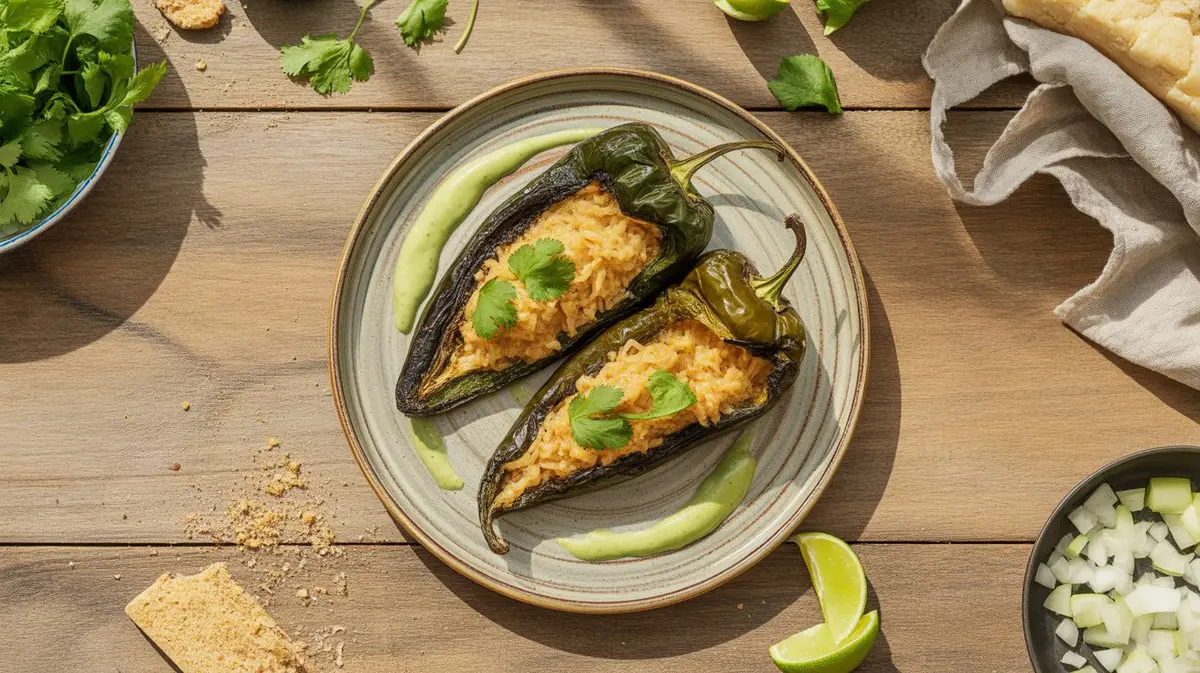
Poblano Pepper Nutrition Facts & Health Benefits
A 100-gram serving of raw poblano pepper delivers roughly 20 calories, 4.6g carbohydrates, 1.9g fiber, and 0.9g protein. Fat content is negligible.
Popblanos are a solid source of vitamin C — around 80mg per 100g — along with vitamin A, vitamin B6, and folate. The C. annuum botanical family tends toward higher antioxidant content as peppers ripen to red, and poblanos follow that pattern. Capsaicin levels are low given the 1,000-2,000 SHU range, but the compound is still present and contributes to the pepper's mild anti-inflammatory properties.
Best Ways to Cook with Poblano Peppers
Roasting is non-negotiable for most poblano applications. Hold one over a gas flame or run it under a broiler until the skin blisters black, then steam it in a covered bowl for 10 minutes. The skin peels away cleanly, leaving flesh that's silky, smoky, and deeply flavored.
Chiles rellenos — stuffed and fried poblanos — are the classic showcase. The thick walls hold cheese or meat fillings without collapsing, and the mild heat means the pepper itself is as much a vegetable as a spice. For stuffed poblano techniques, the roast-and-peel step is what separates a good result from a great one.
Rajas con crema, roasted poblano strips cooked with onions and cream, shows how the pepper functions as a main ingredient rather than a supporting flavor. Poblano soup, mole verde, and green rice all rely on the pepper's earthiness as a base note.
Dried into anchos, the flavor shifts toward rich, sweet dried-chile complexity — chocolate, raisin, and a deeper heat. The two forms are interchangeable only in the loosest sense; experienced cooks treat them as separate ingredients. For a side-by-side comparison against Anaheim — another mild, stuffable chile — the poblano wins on flavor depth every time.
Where to Buy Poblano Pepper & How to Store
Fresh poblanos should feel firm and heavy, with glossy, unblemished skin. Soft spots or wrinkled shoulders indicate age. At 1,000-2,000 SHU, heat levels can vary noticeably between individual fruits — darker green ones often run slightly hotter.
Store fresh poblanos unwashed in the crisper drawer for up to two weeks. Roasted and peeled poblanos freeze exceptionally well — lay them flat in a single layer before bagging. Dried anchos (the dried form) keep for months in a sealed container away from light. When buying dried, look for pliable flesh rather than brittle, dusty pods.
Best Poblano Pepper Substitutes & Alternatives
Whether you ran out of poblano pepper or just want to try something different, these peppers make solid stand-ins. We picked them based on heat range, flavor overlap, and how well they actually work in the same dishes.
Our top pick: Kashmiri Chili (1K–2K SHU). Same species (C. annuum) and nearly the same heat, so it swaps in at a 1:1 ratio without changing the character of the dish. The flavor leans mild and sweet, which is close enough that most people won’t notice the difference in a cooked recipe.
How to Grow Poblano Peppers
Poblanos are rewarding garden plants, but they need a long season. Start seeds indoors 10-12 weeks before your last frost date — this is one case where rushing transplant time costs you yield. Soil temperature for germination should sit at 80-85°F; a heat mat makes a real difference.
For a full breakdown of seed-starting methods and timing, the complete pepper growing guide covers everything from soil mix to hardening off. Poblanos specifically want consistent moisture — irregular watering leads to blossom end rot and cracked fruit.
Transplant into full sun once nighttime temps stay above 55°F. Space plants 18-24 inches apart; they can reach 3 feet tall with good conditions. Unlike Spanish varieties such as the elongated, thin-walled Guindilla, poblanos need staking as fruit weight increases.
Feed with a balanced fertilizer at transplant, then switch to a lower-nitrogen formula once flowering begins — too much nitrogen pushes leaf growth at the expense of fruit. Harvest at 65-80 days when fruits are dark green and firm. Leaving them on the plant until red deepens the flavor but softens the flesh. Dry red poblanos become anchos; that transition is worth planning for if you want both fresh and dried product from the same plants.
Frequently Asked Questions
-
Poblanos register 1,000-2,000 SHU, while Fresnos typically run 2,500-10,000 SHU — making a Fresno anywhere from slightly to several times hotter depending on the individual fruit. In practice, a poblano reads as mild warmth rather than noticeable heat, while a Fresno has a clear, sharp bite.
-
They're the same plant at different stages — a poblano is the fresh green fruit, while an ancho is the dried red version. Drying concentrates sugars and shifts the flavor from earthy-vegetal to something closer to chocolate and dried plum, so experienced cooks treat them as distinct ingredients rather than substitutes.
-
Yes — poblanos grow well in 5-gallon containers or larger, provided they get full sun and consistent moisture. Container plants dry out faster than in-ground ones, so daily watering checks during hot weather are essential to prevent blossom drop and fruit cracking.
-
They do — poblanos ripen from dark green to red given enough time on the plant, typically adding 2-3 weeks beyond the green harvest window. Red poblanos have a slightly sweeter, more complex flavor, and they're the ones traditionally dried into anchos.
-
Capsaicin production in C. annuum varieties responds to environmental stress — heat, drought, and irregular watering all push heat levels higher within the natural range. Two poblanos from the same plant can differ noticeably, which is why the 1,000-2,000 SHU range represents a spread rather than a fixed value.
- Chile Pepper Institute — New Mexico State University
- USDA FoodData Central — Peppers, poblano, raw
- University of California Cooperative Extension — Pepper Production
- Byers, M. — 'Chiles en Nogada and Mexican National Identity', Gastronomica, 2003
Species classification: C. annuum — based on published botanical taxonomy.