
Peppadew Pepper

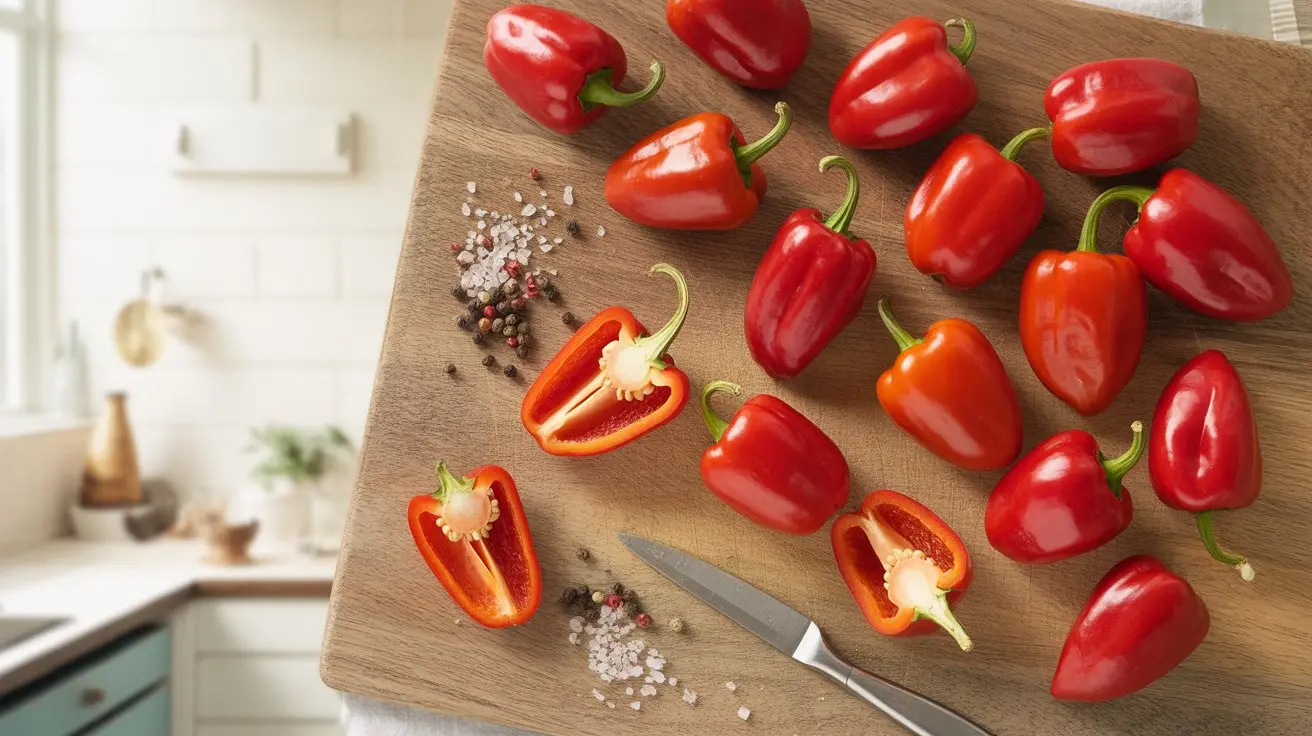
The Peppadew pepper delivers a flavor that catches people off guard - sweet, tangy, and only mildly warm at 1,100-1,200 SHU. This South African Capsicum baccatum rounds out at golf-ball size with a glossy red skin. Its brine-pickled form dominates deli counters worldwide, though it grows beautifully fresh. Noticeably gentler than a smoky dried morita's medium heat, it suits heat-averse cooks who still want brightness.
- Species: Capsicum baccatum
- Heat tier: Medium (1K–10K SHU)
What is Peppadew Pepper?
First time I tasted one was off a charcuterie board at a friend's place - I assumed it was just a decorative garnish. One bite changed that. The Peppadew hits with a wave of sweetness, then a citrusy tang, then the faintest tingle that clocks in at 1,100-1,200 SHU on the Scoville unit scale. Genuinely mild, sitting comfortably in the medium-low heat band - approachable for nearly anyone.
Botanically classified as Capsicum baccatum, the Peppadew is a trademarked variety originating from South Africa. The round, cherry-like fruits ripen to a vivid scarlet and reach roughly 1.5 inches in diameter. That distinctive shape concentrates sugars in the flesh while the thin walls allow pickling brine to penetrate quickly.
Compared to a pasilla's earthy, mild warmth, the Peppadew reads as brighter and fruitier - more like a sun-ripened tomato crossed with a sweet bell pepper that decided to have some personality. The heat is almost an afterthought, a finishing note rather than the main event.
Most consumers encounter Peppadew in its pickled form, jarred in sweet brine and sold at supermarket deli counters. That preparation amplifies the natural sweetness and tang while preserving the satisfying crunch of the flesh.
History & Origin of Peppadew Pepper
The Peppadew story begins in 1993 when Johan Steenkamp, a South African farmer, discovered an unusual pepper plant growing on his property in the Eastern Cape. The small, round fruits had a flavor profile unlike anything commercially available - intensely sweet with a tangy finish and modest heat.
Steenkamp spent years developing a proprietary pickling process and trademarked the name Peppadew in 1993. By 1999, the product had expanded internationally, reaching European and North American markets. The Peppadew brand is now owned by Peppadew International, a South African company.
Because it is a trademarked cultivar, the exact genetics are closely guarded. What is confirmed is its Capsicum baccatum classification, a species with deep roots in South American cultivation history - making its South African discovery an interesting geographical footnote in pepper breeding.
How Hot is Peppadew Pepper? Heat Level & Flavor
The Peppadew Pepper delivers 1K–1K Scoville Heat Units, placing it in the Medium tier (1K–10K SHU).
Flavor notes: sweet and tangy.
Peppadew Pepper Nutrition Facts & Health Benefits
A 100g serving of fresh Peppadew peppers provides approximately 30-35 calories, with the majority coming from natural sugars that contribute to its characteristic sweetness. The pepper is a solid source of vitamin C, delivering immune support alongside modest amounts of vitamin A from its red carotenoid pigments.
Pickled Peppadews will carry added sodium from brine - check labels if sodium intake is a concern. The fresh fruit contains dietary fiber, potassium, and small amounts of folate. Capsaicin content at 1,100-1,200 SHU is low, providing minimal thermogenic effect compared to hotter varieties in the medium heat category.
Best Ways to Cook with Peppadew Peppers
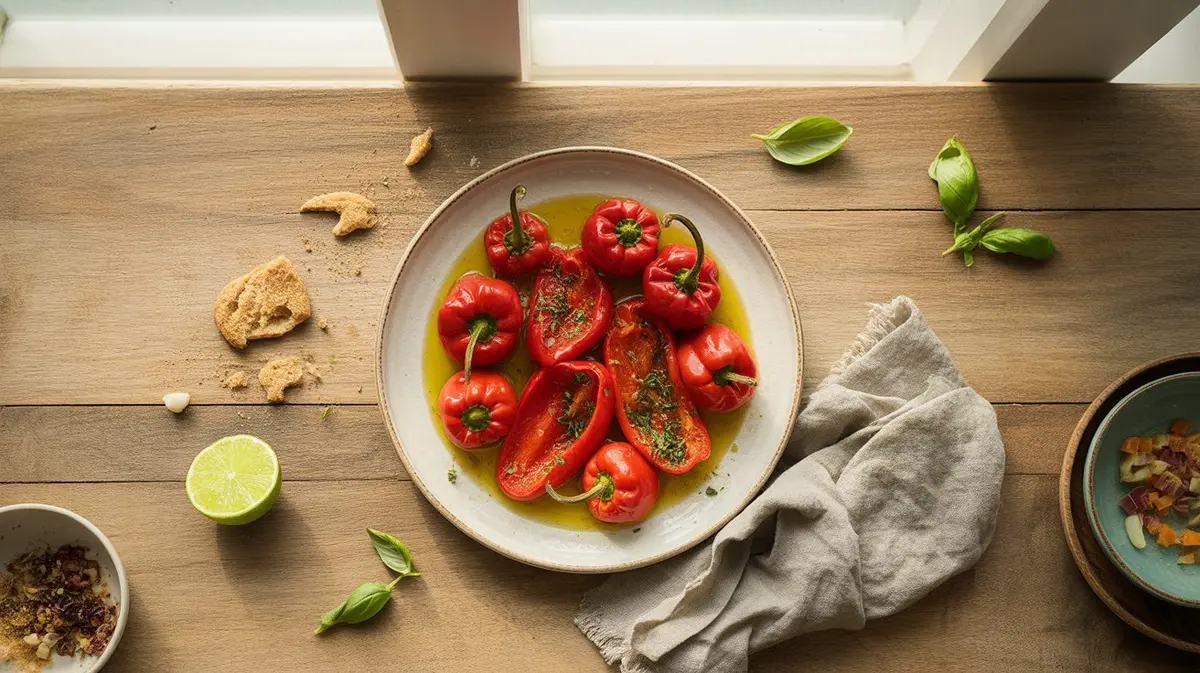
Pickled Peppadews are the most common form, and for good reason - that sweet brine amplifies the pepper's natural character beautifully. Stuffed with cream cheese or goat cheese, they function as effortless appetizers that disappear fast at any gathering.
Fresh Peppadews work well roasted whole, where the sugars caramelize and the tang deepens. Chop them into grain salads, fold into flatbreads, or layer onto pizza where their sweetness balances salty cured meats. The flavor profile also holds up well in salsas alongside the gentle Italian frying sweetness of cubanelle's Mediterranean roots.
For cooking substitutions, the Peppadew's sweet-tangy profile sits in different territory than most mild peppers. The subtle smokiness and mild warmth of pimentón won't replicate it, though both share approachable heat levels. Cherry peppers pickled in sweet brine come closest in a pinch.
Stuffing is where Peppadew truly shines. The round shape creates a natural cup, and the wall thickness holds up to fillings without tearing. Cream cheese, feta, or herbed ricotta all work. Wrap in prosciutto and broil for 3-4 minutes for a fast, crowd-pleasing bite.
Where to Buy Peppadew Pepper & How to Store
Jarred Peppadews are widely available at grocery store deli counters, olive bars, and in the pickle aisle. Look for Peppadew brand jars - both sweet and hot versions exist, with the sweet being the classic. Fresh Peppadews appear occasionally at specialty grocers or farmers markets.
Once opened, keep jarred Peppadews refrigerated and submerged in brine - they stay good for 4-6 weeks this way. Fresh peppers store in the refrigerator for up to 1 week. Avoid freezing pickled versions as the texture degrades. For fresh fruit, a cool, dry counter works for 2-3 days before refrigerating.
Best Peppadew Pepper Substitutes & Alternatives
Whether you ran out of peppadew pepper or just want to try something different, these peppers make solid stand-ins. We picked them based on heat range, flavor overlap, and how well they actually work in the same dishes.
Our top pick: Cubanelle Pepper (100–1K SHU). The heat level is close enough for a direct swap in salsas, sauces, and stir-fries. Flavor leans sweet and mild, so the taste will shift a bit — but the overall heat stays in the same range.
How to Grow Peppadew Peppers
Growing Peppadew from seed presents one challenge upfront: because it is a trademarked variety, certified seeds are difficult to source commercially. Seeds saved from fresh fruit (if you can find fresh Peppadews) may grow true to type as Capsicum baccatum, though results vary.
As a baccatum species, plants prefer warm temperatures between 70-85°F and full sun with at least 8 hours of direct light daily. Start seeds indoors 8-10 weeks before last frost. Transplant after soil temperatures stabilize above 60°F.
Plants grow to 24-36 inches tall and tend toward bushy, upright habits. Space them 18-24 inches apart. Capsicum baccatum varieties generally benefit from consistent moisture - water stress during fruit set leads to issues worth reading about in this practical guide on pepper blossom end rot.
If foliage starts curling during hot spells, the step-by-step guidance on pepper leaves curling covers the most common causes. Fruits mature from green to red in approximately 75-80 days from transplant. For a full step-by-step growing walkthrough covering soil prep through harvest, that resource covers baccatum varieties well.
Frequently Asked Questions
-
At 1,100-1,200 SHU, Peppadews register as very mild - far gentler than a jalapeño and roughly comparable to a guajillo's dried chile warmth at the lower end of that range. Most people experience them as sweet and tangy with only a faint background tingle.
-
Fresh Peppadews are entirely edible raw and quite pleasant - crisp, sweet, and mildly tangy. The pickled version most people know is a preservation choice, not a requirement for palatability.
-
Sweet cherry peppers pickled in brine come closest in shape, texture, and flavor balance. For raw applications, a mild, sweet Hungarian wax pepper can work when the tangy element is less critical.
-
Johan Steenkamp trademarked the name Peppadew after discovering and developing the cultivar on his South African farm in the early 1990s. The trademark covers both the variety name and the specific pickling process, which is why generic versions are marketed under different names.
-
The round, compact shape of the Alma Paprika makes it visually similar to the Peppadew, but the Alma Paprika is typically used dried or ground while Peppadews are almost always eaten whole. Flavor-wise, the Peppadew carries more pronounced sweetness and tang where Alma Paprika leans toward rich, fruity depth.
- Peppadew International - Brand History
- Chile Pepper Institute - Capsicum baccatum Species Overview
- USDA FoodData Central - Sweet Peppers Nutritional Data
Species classification: Capsicum baccatum — based on published botanical taxonomy.