Bell Pepper

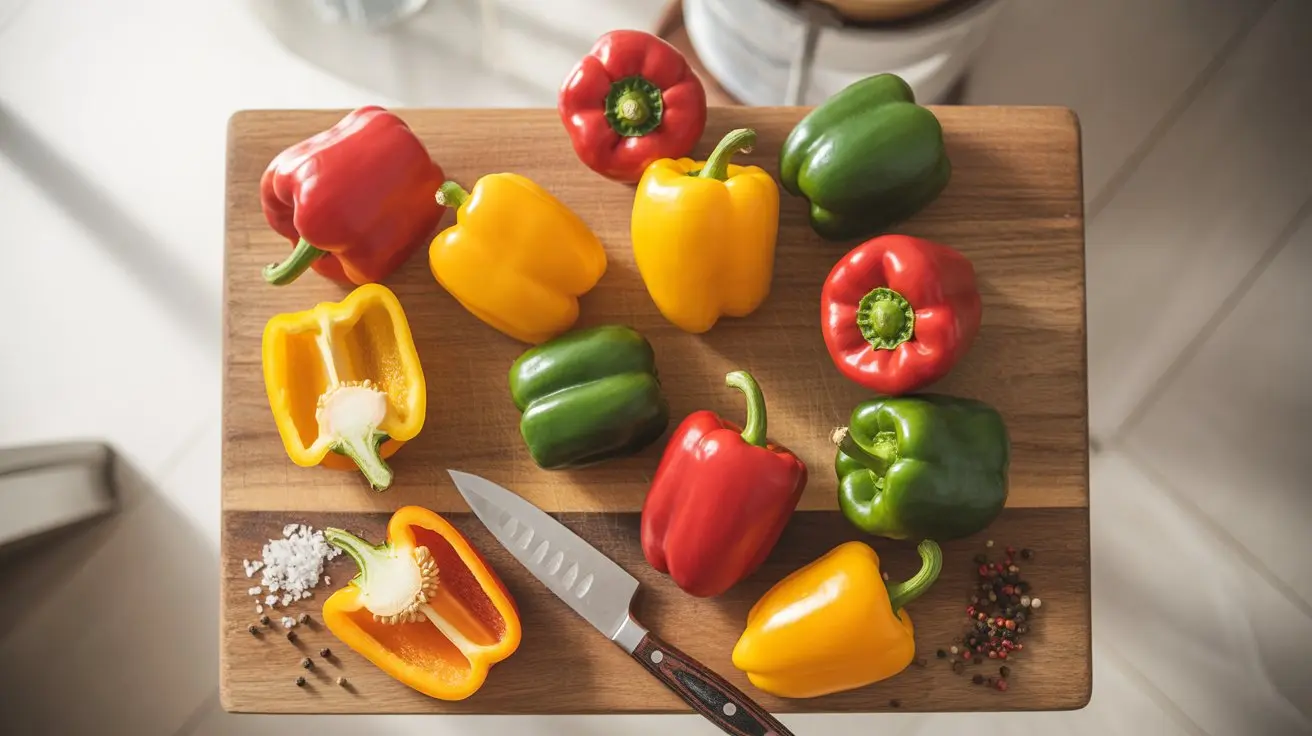
The bell pepper registers 0 SHU - no capsaicin, no heat, just thick walls, satisfying crunch, and natural sweetness that deepens as the fruit ripens from green through yellow to red. A staple of the mild pepper range and one of the most widely grown vegetables in home gardens worldwide, it rewards patient growers and flexible cooks alike.
- Species: C. annuum
- Heat tier: Mild (0–999 SHU)
What is Bell Pepper?
Bell peppers are the only members of C. annuum that produce no capsaicin at all, a recessive gene mutation that eliminates the heat entirely while preserving the variety's characteristic thick flesh and blocky four-lobed shape.
Color tells you a lot about what you're eating. Green bells are harvested early - slightly bitter, firmer, less sweet. Leave them on the plant and they transition through ivory, yellow, and orange before reaching full red ripeness, where sugar content peaks and the flavor becomes noticeably richer. Some varieties, like the deep purple 'Chocolate Beauty,' add a mild earthiness to that sweetness.
Size runs large by pepper standards: most mature fruits hit 3-4 inches wide and 3.5-4.5 inches tall, with walls thick enough to stuff, grill, or eat raw without falling apart. That structural integrity is part of what makes them so practical in the kitchen.
Originating in Mexico and Central America, they were domesticated thousands of years before Columbus brought them to Europe, where they became central to Spanish, Hungarian, and Mediterranean cuisines. Today they rank among the top five vegetables grown in American home gardens, valued as much for their productivity as their flavor.
For anyone building a pepper garden, bell peppers are a natural anchor crop - familiar, productive, and rewarding to grow from transplant through harvest.
History & Origin of Bell Pepper
Wild pepper ancestors spread across Mexico and Central America long before European contact, with domestication occurring at least 6,000 years ago based on archaeological evidence from Mesoamerican sites. Bell peppers, with their capsaicin-free genetics, likely emerged through selective cultivation by Indigenous farmers who favored larger, sweeter fruits.
Spanish explorers carried seeds back to Europe in the late 15th century, and the pepper spread rapidly through trade routes into Hungary, where it became foundational to paprika production, and into the Mediterranean basin, where it anchored dishes from Spain to Turkey.
By the 19th century, plant breeders in Europe and North America were actively selecting for larger fruit, thicker walls, and more uniform block shape. The modern four-lobed bell we recognize today is largely a 20th-century achievement, refined through commercial breeding programs that prioritized shelf life and shipping durability alongside flavor. The Central American pepper tradition gave the world a vegetable that now grows on every inhabited continent.
How Hot is Bell Pepper? Heat Level & Flavor
The Bell Pepper delivers 0 Scoville Heat Units, placing it in the Mild tier (0–999 SHU).
Flavor notes: sweet and crisp.
Bell Pepper Nutrition Facts & Health Benefits
A medium red bell pepper (119g) delivers roughly 37 calories, 7g carbohydrates, 2.5g fiber, and 1.2g protein. Red bells contain significantly more nutrition than green - 169mg vitamin C (188% DV) versus green's 95mg, plus 3700 IU beta-carotene that converts to vitamin A.
All bell peppers provide meaningful amounts of vitamin B6, folate, and potassium. The antioxidant profile includes lutein and zeaxanthin, which support eye health. Because they contain 0 SHU and no capsaicin, they lack the metabolic effects associated with hot peppers but compensate with one of the highest vitamin C concentrations of any common vegetable.
Best Ways to Cook with Bell Peppers
Stuffed bell peppers might be the dish that best showcases what this vegetable does structurally - the thick walls hold their shape through a full oven roast at 375°F, containing rice, meat, or grain fillings without collapsing. It's a technique that highlights the pepper's role as both ingredient and vessel.
Raw, red and yellow bells bring sweetness to salads and crudite platters without any competing heat. Green bells, with their slightly bitter edge, hold up better in cooked applications - stir-fries, fajitas, and braised dishes where their firmer texture and less sweet profile balances richer ingredients.
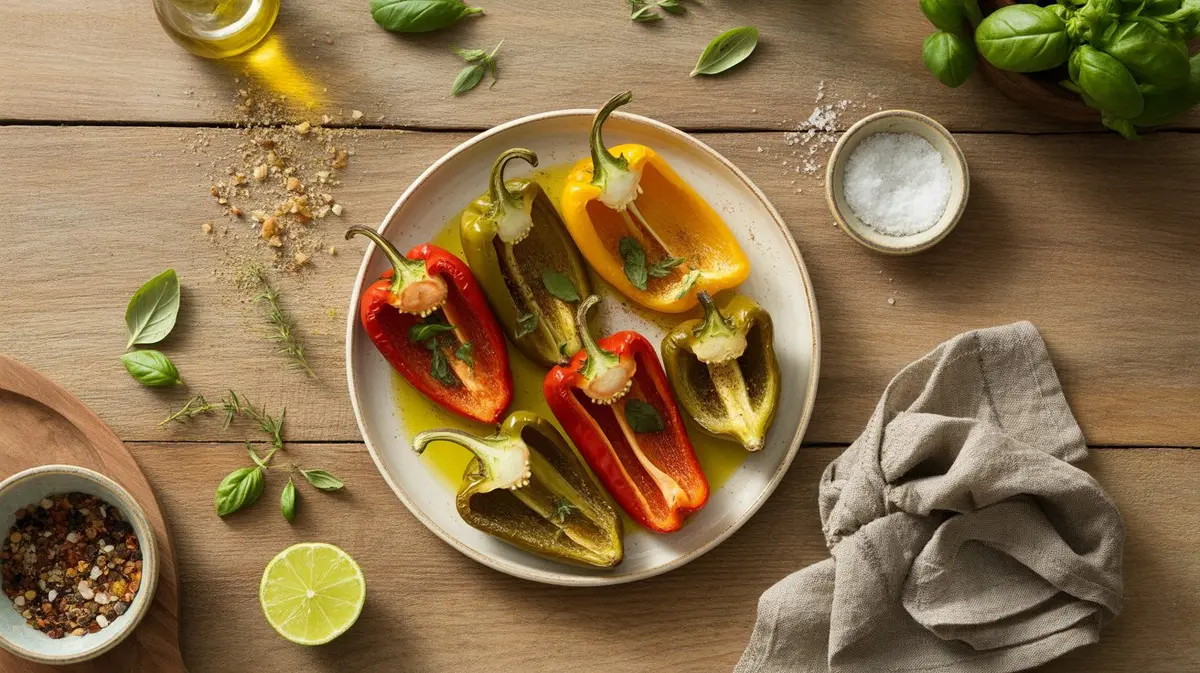
Roasting transforms them entirely. Charring under a broiler or over an open flame loosens the skin and concentrates the sugars into something almost jammy. Peeled roasted reds are the base for romesco sauce, muhammara, and countless Mediterranean spreads.
For cooks who want that habanero-style fruity sweetness without any burn, the heat-free cooking applications of the Habanada offer a useful comparison - both deliver fruit-forward flavor with zero capsaicin.
Bells also pair naturally alongside the mild, elongated sweetness of Italian frying peppers in antipasto and roasted vegetable dishes. Slice thin for pizza, dice for sofrito, or halve lengthwise for grilling - the bell adapts to nearly every technique.
Where to Buy Bell Pepper & How to Store
Choose bells that feel heavy for their size with taut, glossy skin and no soft spots or wrinkled patches. Stem should look fresh-cut, not dried out. Color consistency matters less than firmness.
Refrigerate in the crisper drawer unwashed and uncut - whole bells keep 1-2 weeks. Once cut, store in an airtight container and use within 3-4 days. For longer storage, roast and freeze in portions, or slice raw and freeze flat before bagging (texture softens but works fine for cooked applications). Avoid leaving cut peppers at room temperature for more than 2 hours.
Best Bell Pepper Substitutes & Alternatives
Whether you ran out of bell pepper or just want to try something different, these peppers make solid stand-ins. We picked them based on heat range, flavor overlap, and how well they actually work in the same dishes.
Our top pick: Sweet Italian Pepper (0–100 SHU). Same species (C. annuum) and nearly the same heat, so it swaps in at a 1:1 ratio without changing the character of the dish. The flavor leans sweet and mild, which is close enough that most people won’t notice the difference in a cooked recipe.
How to Grow Bell Peppers
Bell peppers are the most rewarding slow-burn crop in a kitchen garden, but they demand patience. Start seeds indoors 8-10 weeks before your last frost date - a full step-by-step walkthrough for timing transplants correctly makes a real difference in first-year results.
Germination needs warmth: soil temperature of 80-85°F is ideal, and a heat mat is worth the investment. Seedlings emerge in 10-14 days and grow slowly at first. Transplant outdoors only after nighttime temps stay consistently above 55°F - cold soil stalls growth dramatically.
In the garden, bells need full sun (6-8 hours minimum), consistent moisture, and well-draining soil amended with compost. Space plants 18-24 inches apart. Calcium deficiency causes blossom end rot - a common problem solved with consistent watering and occasional foliar calcium spray.
For anyone building out a full pepper garden, the comprehensive guide to growing bell peppers covers variety selection, soil prep, and common pest management. Companion planting with basil reportedly deters aphids, though results vary.
Green bells can be harvested at full size (typically 70-75 days from transplant) or left to ripen to red, yellow, or orange over another 2-3 weeks. Red bells require the longest season but deliver the sweetest flavor. The sweet, elongated Corno di Toro's productive growing habit makes a good companion planting choice for similar care requirements.
Frequently Asked Questions
-
Red bells are simply fully ripened green bells - left on the plant an additional 2-3 weeks, they convert chlorophyll to carotenoids and accumulate significantly more sugar. The same fruit that registers slightly bitter when harvested green becomes noticeably sweet and fruity at full red ripeness.
-
Start transplants early enough that fruits reach full green size by mid-summer, giving them the ripening window they need. In short-season climates, choosing a variety rated under 75 days to green and covering plants with row fabric during cool nights can extend the season by 2-3 weeks.
-
Yes - use a 5-gallon pot minimum per plant, filled with quality potting mix and a slow-release fertilizer. Container bells dry out faster than in-ground plants, so daily watering checks during summer heat are essential to prevent blossom drop.
-
Temperature is usually the culprit: blossoms drop when daytime temps exceed 90°F or nights fall below 55°F. Inconsistent watering and low calcium are secondary causes - address all three before assuming a pest or disease problem.
-
They're the same species - C. annuum - sharing botanical classification with jalapeños, serranos, and the mild, elongated NuMex Joe E. Parker's Anaheim-type profile. Bell peppers carry a recessive mutation called the Capsicum annuum 'blocky' trait that eliminates capsaicin production entirely, which is why they register 0 SHU while their relatives can reach tens of thousands.
- Chile Pepper Institute - New Mexico State University
- USDA FoodData Central - Sweet Red Pepper
- Perry, L. et al. (2007) - Starch Fossils and the Domestication of Chili Peppers, Science
- University of Minnesota Extension - Growing Peppers
- Bosland, P.W. & Votava, E.J. - Peppers: Vegetable and Spice Capsicums (CABI)
Species classification: C. annuum — based on published botanical taxonomy.