What to Do With Poblano Peppers for Tonight or Later
Use firm poblanos raw or sauteed for crisp or tender pieces, roast broad pods for stuffing and rajas, and blend irregular peppers into salsa, soup, or sauce. Freeze prepared extras by final form and dry sound red poblanos into ancho chiles.
Use firm poblanos raw or quickly sauteed when you want fresh bite, roast them when you want soft flesh and a removable skin, keep broad pods whole for stuffing, and blend irregular peppers into salsa, soup, or sauce.
Fully red, sound poblanos can be dried into ancho chiles.
Extra roasted peppers freeze best after you portion them in the form a later meal will use.
The useful decision comes before the heat source. Choose the finished texture first, then match the pod, cut, and cooking method to it.
Choose the result before you cut the poblano
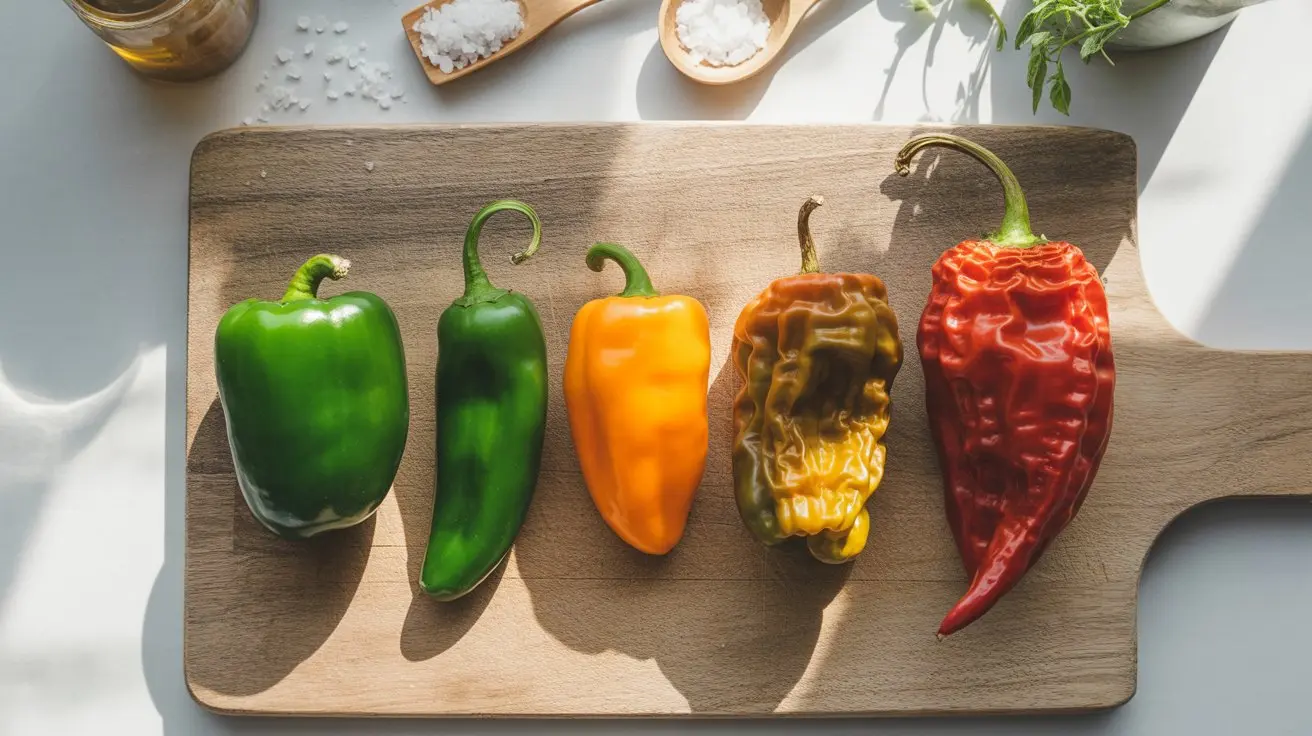
Sort the peppers by firmness, wall shape, and ripeness while they are still cold. New Mexico State University recommends mature chiles that feel heavy, smooth, fresh, and crisp, while pods with mold, soft spots, bruises, or shriveled skin are poor preservation candidates.
| What you have | Best next form | Reason |
|---|---|---|
| Wide, firm green pod with an intact wall | Whole shell | The wall can hold a slit and filling without tearing. |
| Firm green pod with an uneven shape | Raw slices, sauteed strips, or dice | Cut pieces do not depend on a symmetrical cavity. |
| Sound pod beginning to lose crispness | Sauce or soup today | Blending makes wall shape irrelevant, but the pepper still needs prompt use. |
| Fully red, sound poblano | Dry for ancho | Ripeness supplies the correct starting form for the dried chile. |
| Mold, wet decay, or an off odor | Discard | Cooking or drying does not turn spoiled produce into a sound ingredient. |
A small bruise can be trimmed when the surrounding flesh remains firm and the pepper will be cooked immediately. Wet decay, spreading softness, visible mold, or a fermented odor changes the decision from salvage to disposal.
Once condition is settled, use the texture map below as a shortcut rather than forcing every poblano through the same roasting routine.
Seed and thinly slice or dice the pepper for salsa, slaw, relish, sandwiches, or a crunchy topping.
Saute strips with onion for tacos, eggs, rice bowls, tortas, or a quick vegetable side.
Blister and peel broad walls for stuffed poblanos, chile rellenos, or rajas.
Dice or blend roasted flesh for soup, salsa, enchilada sauce, crema, or dip.
Can you eat poblano peppers raw?
You can eat a sound poblano raw. Purdue Extension lists raw preparation for hot peppers and identifies thick-skinned poblanos as especially suited to grilling or flame roasting, which means roasting is a texture choice rather than a prerequisite for eating the pepper.
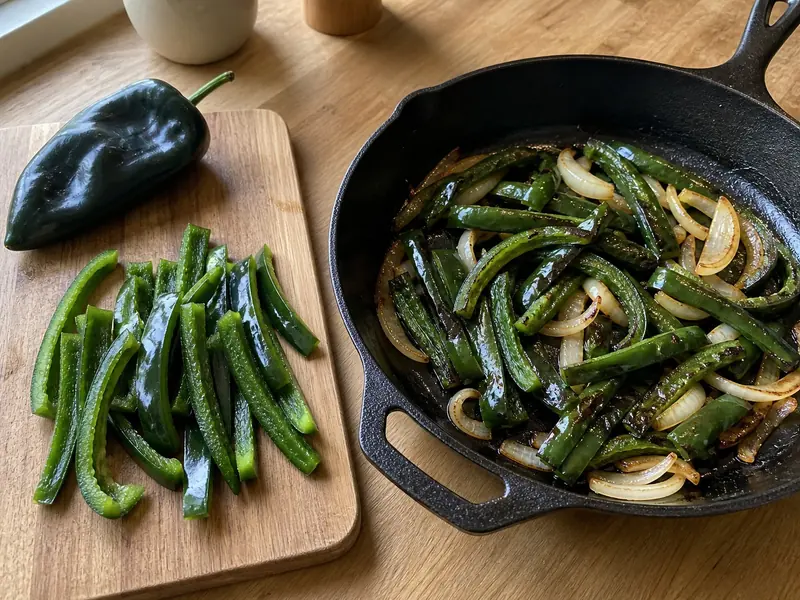
For raw use, remove the stem, seed core, and pale inner ribs, then cut across the walls into thin strips or a fine dice. Smaller pieces spread the pepper through tomato salsa, corn relish, cabbage slaw, avocado salad, or a sandwich without leaving a large patch of firm skin in one bite.
Taste one small piece before mixing the full bowl. Poblanos are usually mild, but one pod can carry more heat than another, and a raw preparation has no sauce or cooking liquid to distribute that difference.
A skillet gives you a middle path between raw crunch and fully roasted softness. Heat a little oil, add strips in one uncrowded layer, and cook until the edges brown while the centers still hold their shape.
The University of Kentucky's Community Supported Agriculture collection uses poblano strips sauteed for about 5 minutes before layering them with potato, corn, and cheese.
For a taco or egg filling, stop at the same tender stage and season in the pan rather than steaming the strips until limp.
Keep the skin on for thin raw pieces or a quick saute. Roast and peel when broad skin would remain noticeable in the finished dish.
Do you need to roast and peel poblanos?
Roasting earns the extra step when the poblano will stay whole, appear as broad strips, or become a smooth sauce. New Mexico State and Utah State University Extension both use intense heat to blister the tough outer skin before peeling it from the softer flesh.
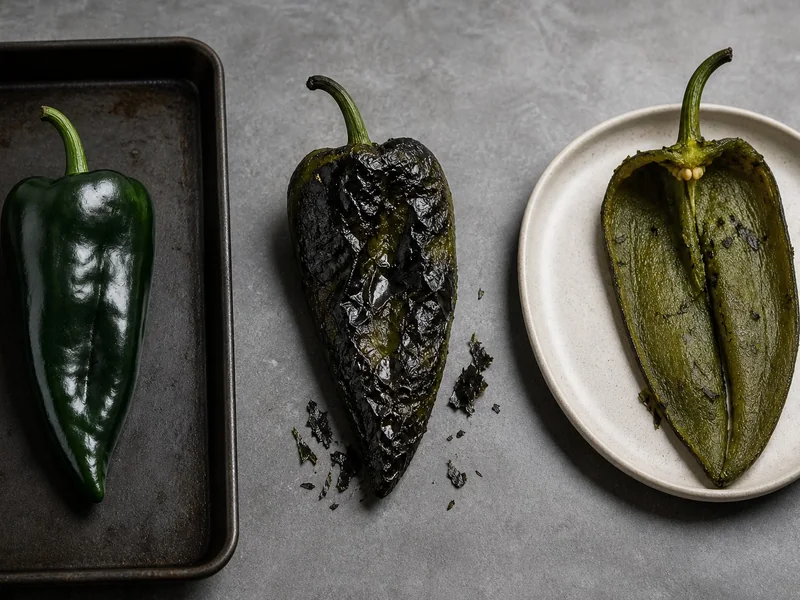
The target is blackened, loosened skin over flesh that still feels substantial. A pepper that has collapsed into its own juices will blend well, but it becomes harder to slit, fill, or cut into clean rajas.
- Wash and dry the poblanos so surface water does not slow blistering.
- Cut a small slit in each whole pod so steam can escape.
- Place the peppers in one layer near the broiler, over a burner, or on a hot grill.
- Turn each pod as the surface blackens so pale patches do not keep their skin.
- Rest the hot peppers in a covered heat-safe container, then peel when they are cool enough to handle.
A short covered rest traps steam and helps the skin release.
Pull stuffing pods first because a long rest softens the walls, while peppers headed for a blender can tolerate more cooking.
Do not chase every tiny fleck of skin with running water. Rubbing off the large loose patches preserves more roasted flavor and avoids waterlogging the flesh.
How do you prepare poblanos for stuffing?
A stuffing pod needs one controlled opening rather than a cut that divides the pepper into two pieces. Make a slit along one side, remove the seed core and pale inner ribs through that opening, and leave the stem attached as a handle and structural cap.
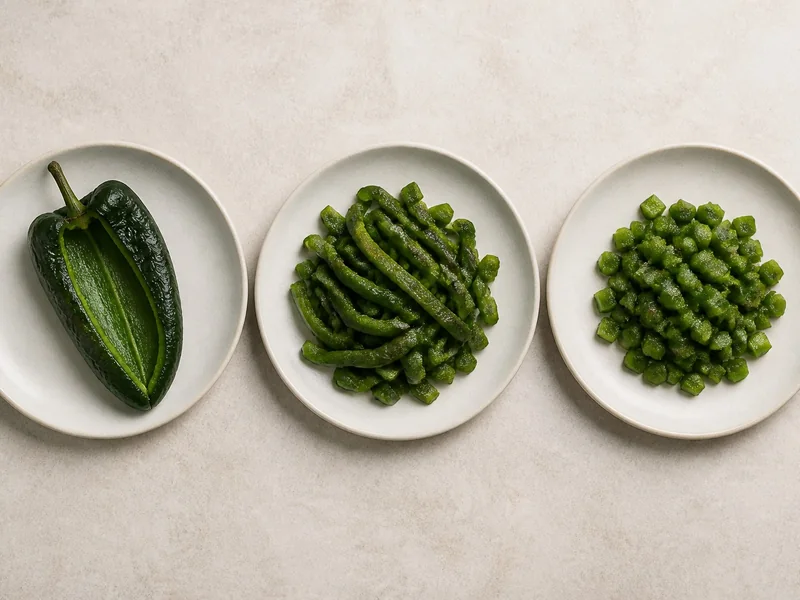
Utah State recommends retaining the stem for chile rellenos.
It also allows the peel to come off after freezing, which gives you another route when a hot freshly roasted pod feels too delicate to handle.
Use the broadest, most symmetrical poblanos for stuffed poblanos because their cavity accepts filling without forcing the slit wider. Narrow tips, torn walls, and peeled fragments belong in the skillet or blender instead of an awkward patch job.
A one-side slit supports an enclosed relleno shape that protects a soft filling during frying or saucing. Cutting the pod lengthwise into two open boats makes filling and baking easier, so choose that form when neat enclosure matters less than quick assembly.
If a peeled wall tears, stop widening the opening and change its job.
The same pepper still works as rajas, dice, or puree.
Turn roasted strips into rajas that fit the meal
Rajas keep roasted poblano recognizable in the finished dish. The strips bend around browned onion, corn, eggs, potatoes, tacos, or a creamy pan sauce while still giving each bite a distinct piece of chile.
Chef Rick Bayless cuts peeled poblanos into strips about 1/4 inch wide and 2 inches long for rajas with browned onion and crema. His published batch starts with three large poblanos weighing about one pound, a useful scale for turning several pods into a meal component.
Keep long strips for tacos, tortas, and side dishes where the poblano should stay visible. Shorten them for scrambled eggs, rice, quesadillas, or corn so one bite does not pull the filling away from the rest of the dish.
Crema is one finish, not the definition of rajas.
Roasted poblano and browned onion can remain dairy-free for tacos, then become rajas con crema only when the meal needs a coating sauce.
Build one neutral skillet first, then divide it. Finish one portion with crema, fold another into eggs, and refrigerate the remainder for tacos or rice instead of seasoning the whole batch for one meal.
Choose dice, coarse salsa, or smooth puree by texture
Once the skin is off, cut size decides whether poblano behaves as a vegetable, a seasoning, or the body of a sauce. Ask whether the eater should see and bite the pepper before reaching for the knife or blender.
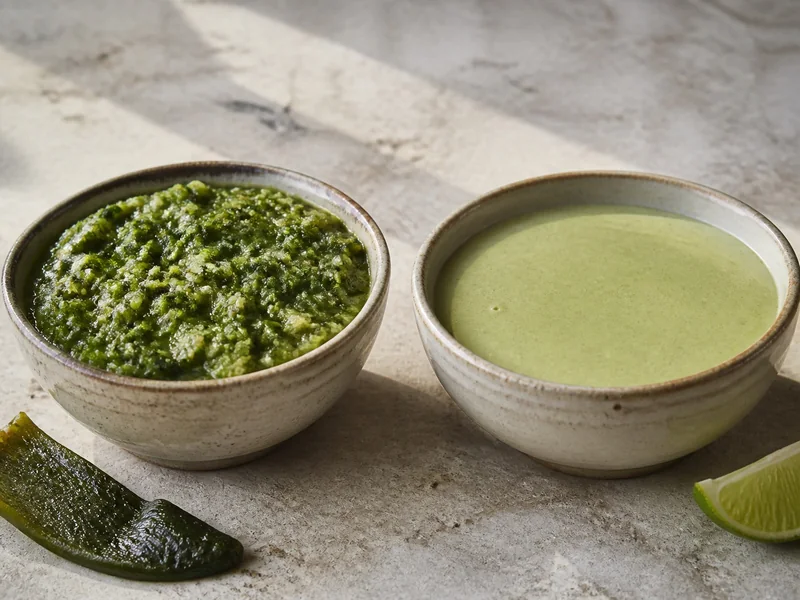
- Medium dice keeps soft pieces visible in rice, beans, cornbread batter, casseroles, and taco fillings.
- Fine dice spreads poblano through eggs, corn, potato, or a cheese filling without creating long strips.
- Coarse puree gives soup and salsa body while retaining roasted flecks and a spoonable texture.
- Smooth puree fits poblano crema, dip, or green enchilada sauce where loose skin and large fragments would be distracting.
Blend with only enough liquid to keep the blades moving, then thin the base for the final dish. Starting loose is difficult to reverse, while a thick puree can still be divided among soup, sauce, and freezer portions.
Tomatillo and lime pull a coarse green salsa toward a sharper finish.
Corn or potato gives soup weight, while dairy turns a smooth roasted base into a richer sauce.
Freeze the base without those final ingredients when you have not chosen the meal yet.
A neutral poblano puree can take acid for salsa, stock for soup, or crema after reheating without locking the whole batch into one direction.
How do you freeze roasted poblanos?
Divide roasted peppers into whole shells, strips, dice, or puree portions before freezing.
That prevents you from thawing more than the next meal needs and protects whole shells from being crushed under loose pieces.
Refrigerate roasted poblanos within 2 hours and cool them below 40°F before freezing. New Mexico State advises shallow packages because a deep container sheds heat slowly and can leave the center warm.
Roasted chiles kept in the refrigerator should be used or frozen within 3 days. Cool them completely, press excess air from freezer bags, and lay the bags flat until solid so portions stack without forming one dense block.
Whole unpeeled chiles can also be frozen.
New Mexico State and Utah State both note that blistered skin releases more easily from frozen flesh, so this route saves handling on roasting day.
Peeled strips and dice save more work on cooking day. Label each package by form rather than writing only “poblano” so you can reach for shells, rajas, or sauce base without opening the bag.
Freezing softens pepper tissue. Thawed poblano still works for cooked fillings, rajas, soup, sauce, and casseroles, while a crunchy garnish needs a fresh pod.
How do you turn red poblanos into ancho chiles?
A fully ripe red poblano becomes an ancho after drying, but the change is more than water loss.
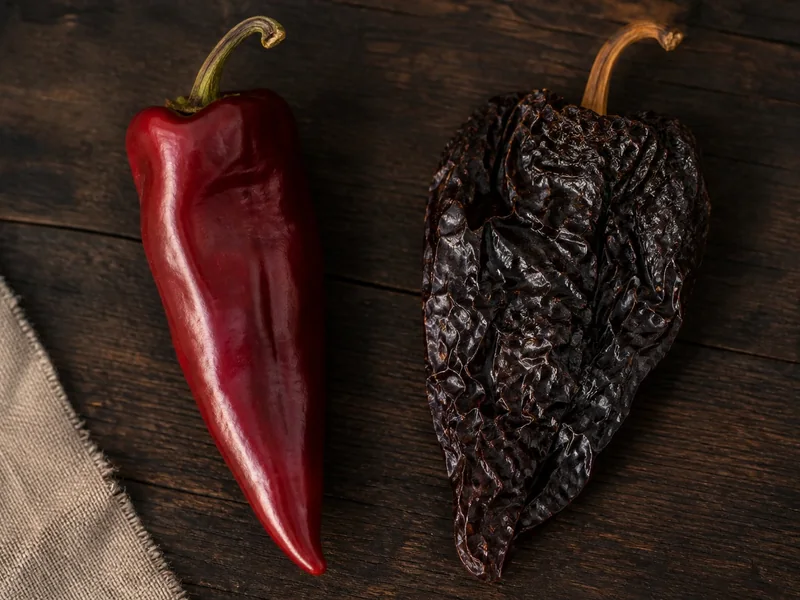
The University of California Master Food Preserver program explains that drying concentrates sugars, capsaicin, acids, and aroma compounds, giving the dried chile a separate kitchen identity.
Start with red pods that are firm and free of damage. Split the broad peppers, remove the stem and seed core, and use a dehydrator or a low oven at no more than 140°F.
UC guidance gives 8 to 12 hours as a typical dehydrator range for prepared peppers, while an oven often takes longer because airflow is weaker. Pod thickness and slice size change the timing, so the endpoint matters more than the clock.
The finished ancho should feel leathery to brittle with no cool, soft pocket inside the thick shoulder.
Let it cool before sealing it because residual warmth can create condensation against the lid.
Keep the dried pods whole when you want the most flexible pantry form.
A whole ancho can later be toasted, soaked, torn, or ground, while powder has already committed the full batch to one texture.
Can poblanos be canned for pantry storage?
Freezing and drying offer flexible ways to save extra poblanos, while room-temperature jars require a tested process.
Utah State specifies pressure canning for plain chiles and separates that method from tested acidified pepper recipes.
Room-temperature storage requires a tested canning process. Extra vinegar, a hot lid, or a layer of oil does not create a verified shelf-stable product.
Detailed refrigerator, freezer, and spoilage decisions belong in the dedicated poblano storage instructions.
Use that boundary when a batch needs preservation rather than changing a canning formula around the quantity on hand.
Poblanos are milder than many chiles, but capsaicin can still transfer from the inner ribs to hands and eyes.
Wear food-safe gloves when handling a large batch, keep fingers away from your face, and wash the knife, board, and gloves before touching other food.
- New Mexico State University, E-324: Processing Fresh Chile Peppers
- Utah State University Extension, How to Preserve Chiles
- UC Master Food Preserver Program, From Poblano to Ancho
- Rick Bayless, Roasted Poblano Rajas
- Purdue Extension FoodLink, Hot Pepper Preparation
- University of Kentucky CSA, Hot Peppers
- National Center for Home Food Preservation, Freezing Hot Peppers