What Is Schug? Ingredients, Flavor, Heat, and Uses
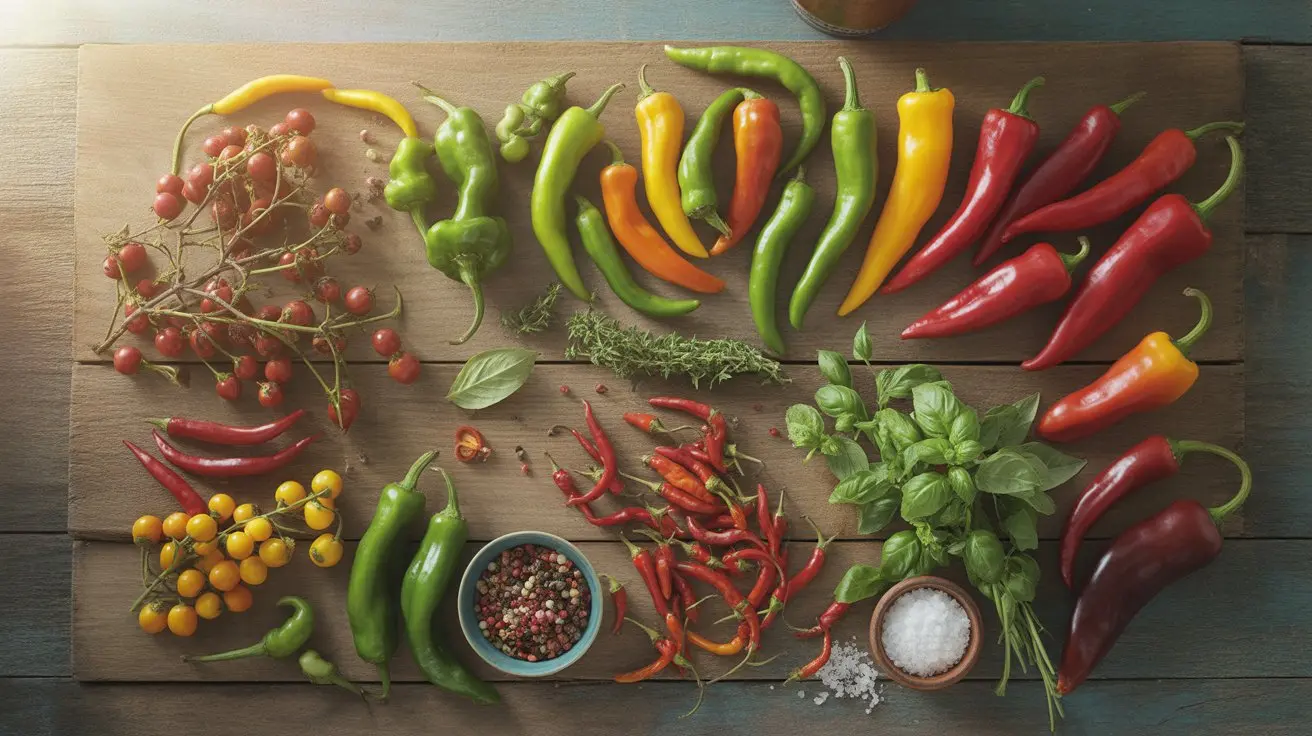
Schug is a fresh Yemeni chile condiment, often green with cilantro, garlic, spices, and hot peppers. Green and red versions vary in herbs, tomato, oil, and texture.
What exactly is schug?
Schug is a fresh Yemeni chile condiment made by crushing hot peppers with herbs, garlic, salt, and warm spices. It is thick enough to spoon, intensely aromatic, and usually served in small amounts beside or on top of food.
Green schug is the version many shoppers recognize, but red schug belongs to the same broad tradition. Neither color guarantees one fixed recipe or heat level.
The fastest way to recognize schug: look for visible chile and herb particles, a raw garlic aroma, and a cumin or coriander finish. It should taste fresher and less sweet than most bottled hot sauces.
The condiment began in Yemen and traveled with Yemeni Jewish communities to Israel, where it became common with falafel, hummus, breads, eggs, and soups. The Jewish Food Society documents both green and red family versions, which shows why one formula cannot define the entire category.
Schug is sometimes sold as a sauce, yet paste or relish describes its texture more accurately. It clings to a spoon and places concentrated chile, herbs, and spice in a single bite.
Why does schug have so many names?
Schug, zhug, zhoug, skhug, s'chug, zehug, and z'hug are transliterations rather than separate condiments. English writers represent sounds from Arabic or Hebrew differently, so spelling changes across cookbooks, restaurants, and brands.
Yemeni terms such as sahawiq or sahawiq-related spellings can describe a wider family of crushed chile preparations. Some include tomato or cheese, while the green herb version familiar abroad represents only one branch.
| Name on a recipe or jar | What it usually signals | What it does not guarantee |
|---|---|---|
| Schug or skhug | A spelling influenced by modern Hebrew usage | Green color, cilantro, or a specific chile |
| Zhug or zhoug | The same broad Yemeni chile condiment in English | A milder restaurant-style blend |
| Zehug or z'hug | Another transliteration found in recipes | A different sauce family |
| Sahawiq | A broader Yemeni crushed-chile context | The exact green paste sold in supermarkets |
The practical rule is simple. Read the ingredient list and color description instead of treating the spelling as a recipe standard.
What is schug made from?
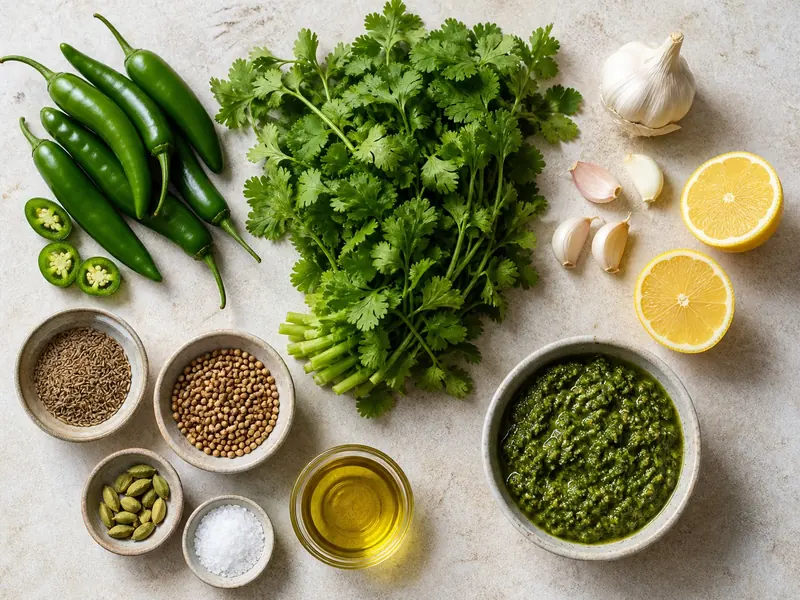
Most green schug starts with fresh green chiles, cilantro, garlic, and salt. Cumin, coriander seed, cardamom, black pepper, lemon, and oil can build warmth, brightness, and texture around that core.
| Ingredient | What it contributes | Why batches differ |
|---|---|---|
| Fresh chiles | Heat, moisture, green or red fruit flavor | Jalapeno, serrano, cayenne, and local peppers have different heat ranges |
| Cilantro or parsley | Leafy aroma, color, and body | Cilantro may dominate or share the blend with parsley |
| Garlic and salt | Pungency and seasoning | Raw garlic strength and sodium vary sharply |
| Cumin and coriander | Earthy, citrus-like warmth | Whole toasted seeds taste different from old ground spice |
| Cardamom and pepper | Floral lift and dry warmth | Some family recipes omit one or both |
| Lemon and oil | Brightness, flow, and aroma release | Traditional and commercial formulas use very different amounts |
The Middlebury College sauce study describes a green formula with serrano chiles, cilantro, parsley, garlic, cumin, coriander, cardamom, lemon, and olive oil. Jewish Food Society family recipes demonstrate a leaner green version and a red preparation built around dried red peppers.
Those examples establish a family resemblance rather than a legal definition. Tomato, clove, caraway, vinegar, and extra oil may appear, but sweetness is usually not the organizing flavor.
Should you pound or blend schug?
Pounding gives the cook the most control over texture because the mortar bruises ingredients gradually. A food processor is faster and can still make excellent schug if it runs in short pulses.
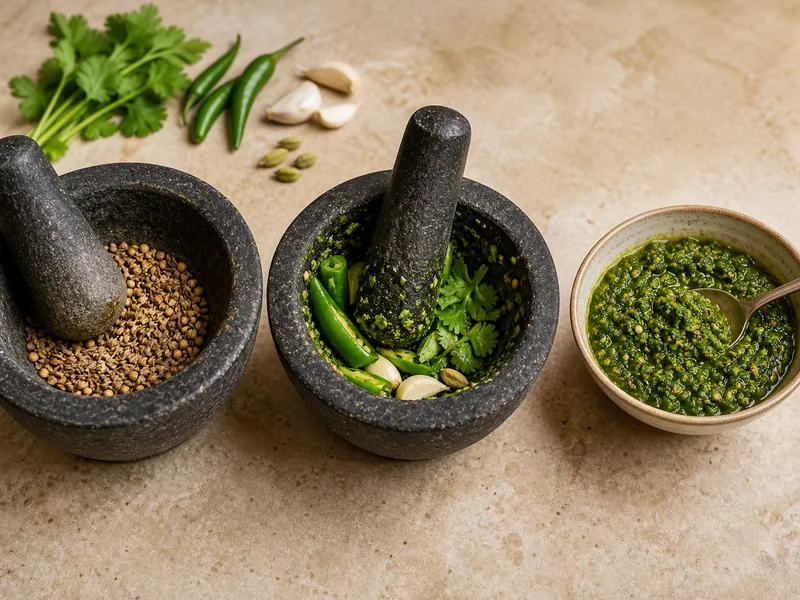
- Crush dry spices first. Breaking cumin and coriander seeds exposes aromatic oils before wet ingredients make them slippery.
- Add garlic, chile, and salt. Salt provides abrasion and helps turn the pieces into a rough paste.
- Work in the herbs. Add them in batches so stems and leaves break down without flooding the mortar.
- Adjust at the end. Lemon and oil should correct brightness and flow after the chile-herb balance is clear.
A processor needs a different sequence. Dry the washed herbs well, roughly chop bulky ingredients, pulse rather than run continuously, and scrape the bowl between pulses.
Long blending cuts herbs more finely, releases more water, and warms the mixture through friction. The result can become thin and uniformly green when the desired texture is moist, coarse, and flecked.
Texture test: drag a teaspoon across a plate. Properly coarse schug should leave a mound with visible chile and herb pieces instead of flowing into a smooth puddle.
What does schug taste like, and how hot is it?
Green schug usually opens with cilantro and fresh pepper, followed by raw garlic and the earthy warmth of cumin or coriander. Cardamom can add a floral note, while lemon makes the finish brighter.
The heat is direct because the chiles are not softened by sugar or long cooking. Oil can spread capsaicin across the mouth, so a rich blend may feel broader even when the chile itself is moderate.
There is no dependable Scoville number for schug because it is a mixed condiment. A cilantro-heavy batch based on jalapenos can feel moderate, while one packed with serrano peppers or hotter red chiles can be forceful.
| Clue | Likely effect | How to respond |
|---|---|---|
| Chile appears before herbs | More concentrated pepper heat | Start with a quarter teaspoon |
| Cilantro or parsley appears first | Greener flavor and more herb body | Use as a finishing condiment |
| Oil is high on the list | Softer texture and wider heat spread | Taste before adding more |
| Lemon or vinegar is prominent | Sharper, brighter finish | Pair with rich or fried food |
Green does not mean mild. Capsaicin is concentrated mainly in the pale inner tissue that holds the seeds, so simply seeing few seeds does not prove a batch will be gentle.
To test an unfamiliar jar, mix a small dab into plain yogurt or hummus before tasting it alone. The neutral base makes the heat easier to judge without hiding the herb and spice balance.
How are green and red schug different?
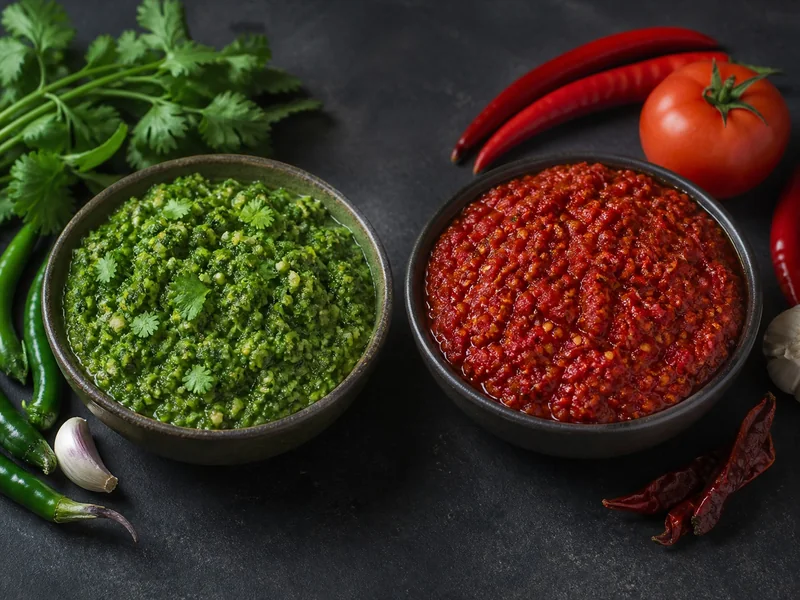
Green and red schug share crushed chile, garlic, salt, and spices, but the color often points to a real ingredient shift. Green versions emphasize fresh green chiles and leafy herbs, while red versions may use ripe fresh peppers, rehydrated dried chiles, tomato, or a combination.
What makes green schug taste fresh?
Fresh green chiles and abundant cilantro create a grassy, citrus-like first impression. Raw garlic and ground spices remain distinct because the mixture is served uncooked.
Parsley can soften cilantro's dominance without making the sauce mild. Lemon reinforces brightness, while too much oil can mute the leafy edge.
Why can red schug taste deeper?
Dried red peppers lose fresh green notes and develop concentrated fruit or earth tones. Rehydrating them also produces a denser paste than water-rich fresh chiles.
The Jewish Food Society's red schug includes dried red peppers, garlic, spices, and tomato. That tomato is one documented family choice, not a requirement for every red version.
| Feature | Green schug | Red schug |
|---|---|---|
| Main visual cue | Fresh herbs and green chiles | Ripe or dried red chiles |
| Typical aroma | Leafy, raw, bright | Fruity, earthy, sometimes tomato-rich |
| Texture risk | Watery if herbs are wet or overprocessed | Dense if dried chiles are under-hydrated |
| Useful pairing | Eggs, hummus, grilled vegetables | Beans, meat, stews, roasted vegetables |
What can you eat with schug?
Schug works best where concentrated heat and fresh aroma can change each bite. Serve it at the table, then let diners control the amount instead of seasoning an entire dish blindly.
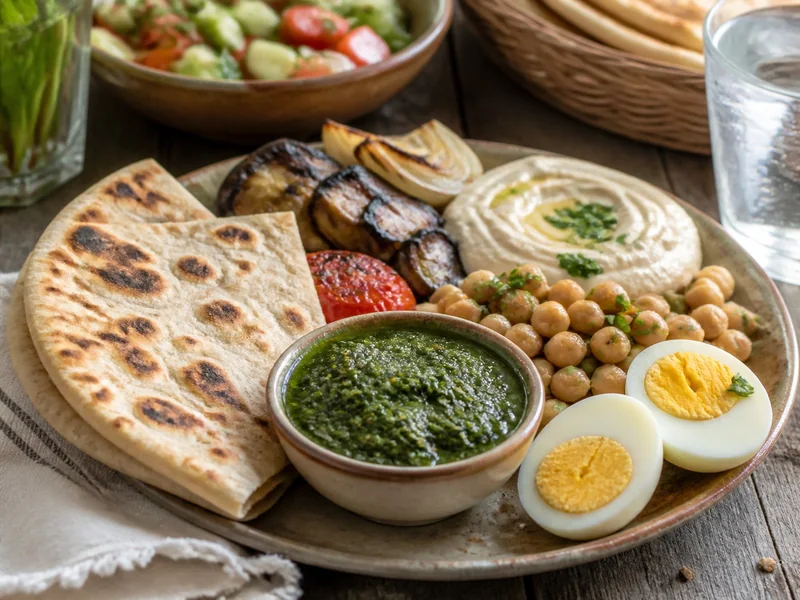
- Falafel, shawarma, and kebabs. Put schug beside the food so a crisp or rich bite gets a sharp chile-herb contrast.
- Hummus, tahini, labneh, and yogurt. Swirl in a small amount to spread the heat through a cool creamy base.
- Eggs and breads. Add a dab to each bite instead of coating the whole plate.
- Beans, lentils, rice, and soups. Stir it into an individual bowl after cooking.
- Fish and roasted vegetables. Spoon it over the finished food so the herbs stay vivid.
How much schug should you use?
Begin with about a quarter teaspoon per serving when the chile type is unknown. Move toward half a teaspoon or a full teaspoon only after tasting the food and checking its existing salt and acid.
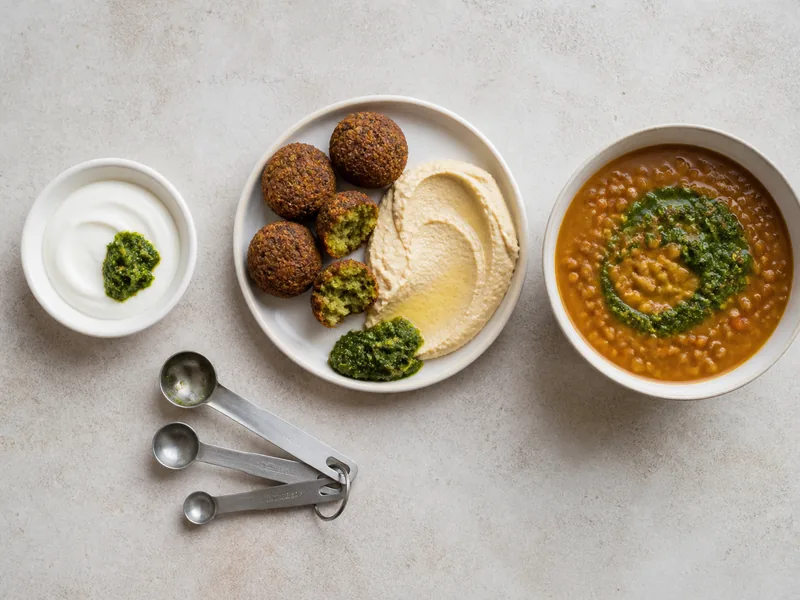
A thick spread gives a concentrated hit, while mixing the same amount through yogurt, tahini, or soup distributes it. This is why spoon size alone does not predict how intense the final bite will feel.
When should you add schug during cooking?
Add schug at the end when you want fresh cilantro, garlic, and chile to remain obvious. Early heat darkens the herbs and rounds off raw garlic.
For a cooked marinade or stew base, use a small amount first and accept that the flavor will shift toward spice and chile. Keep a fresh spoonful for the table if you also want its green aroma.
How is schug different from other sauces?
Schug sits where fresh herb sauces and chile pastes overlap. Its closest look-alikes can share a color or texture while doing a different job because vinegar, sweetness, nuts, cooked peppers, or another herb controls their flavor.
| Condiment | Dominant structure | Choose it when you want |
|---|---|---|
| Schug | Fresh hot chile, cilantro, garlic, warm spices | Raw herb aroma with direct heat |
| Chimichurri | Parsley, oregano, vinegar, oil | An acidic herb dressing with less chile focus |
| Harissa | Red chiles, garlic, spices, oil | Deeper red chile flavor for cooked food |
| Pesto | Basil, nuts, cheese, garlic, oil | A rich herb coating without chile as the core |
| Fermented hot sauce | Salt-fermented chiles, often vinegar | Tang, aged flavor, and a pourable texture |
Chimichurri is the easiest visual confusion because both can be green and herb-heavy. Chimichurri normally leads with parsley, oregano, vinegar, and oil, while schug leads with hot chile, cilantro, garlic, and warm spices.
Harissa is a closer functional substitute in a cooked dish, but it replaces leafy freshness with concentrated red-pepper depth. Pesto adds fat and herb aroma yet also brings nuts and cheese, which changes both flavor and allergen concerns.
Substitution rule: match the job before the color. Choose chimichurri for fresh acidity, harissa for cooked chile depth, and a fresh chile-herb blend when the dish specifically needs schug's raw aroma.
How do you choose and store schug?
Choose schug by reading ingredients in order. A chile-first jar brings more pepper concentration, a cilantro-first jar tastes greener, and an oil-heavy product spreads more easily but may feel less textured.
- Find the chile name. Jalapeno, serrano, cayenne, and unnamed blends cannot promise the same heat.
- Check the herb balance. Cilantro-heavy and parsley-supported blends taste noticeably different.
- Look for acid and oil. Lemon, vinegar, and oil change brightness, texture, and pairing.
- Compare sodium. A salty condiment can over-season hummus, soup, or grilled meat quickly.
- Read allergen and refrigeration statements. Flavored products and commercial facilities may introduce concerns not found in a basic formula.
Fresh homemade schug belongs in a clean, closed container in the refrigerator. Use a clean utensil each time, keep the surface free of crumbs, and make smaller batches if the herbs darken before you can finish them.
Commercial products may be shelf-stable before opening because their formulation and processing differ from a fresh recipe. After opening, follow the maker's label rather than transferring a homemade storage estimate to the jar.
Why does green schug turn dark?
Cut herbs darken as oxygen reaches damaged plant tissue. Heat, prolonged blending, and excess air space speed the visual change, while a snug container and cold storage slow it.
A darker green surface can be oxidation rather than spoilage, but appearance alone cannot prove safety. Discard schug with mold, gas production, an unexpectedly fermented odor, or a broken commercial seal.
Oil is not a room-temperature safety method. It can limit surface air contact, but fresh garlic and herbs still require the storage instructions appropriate to the preparation.