What Are Sweet Peppers? Types, Heat, and Best Uses
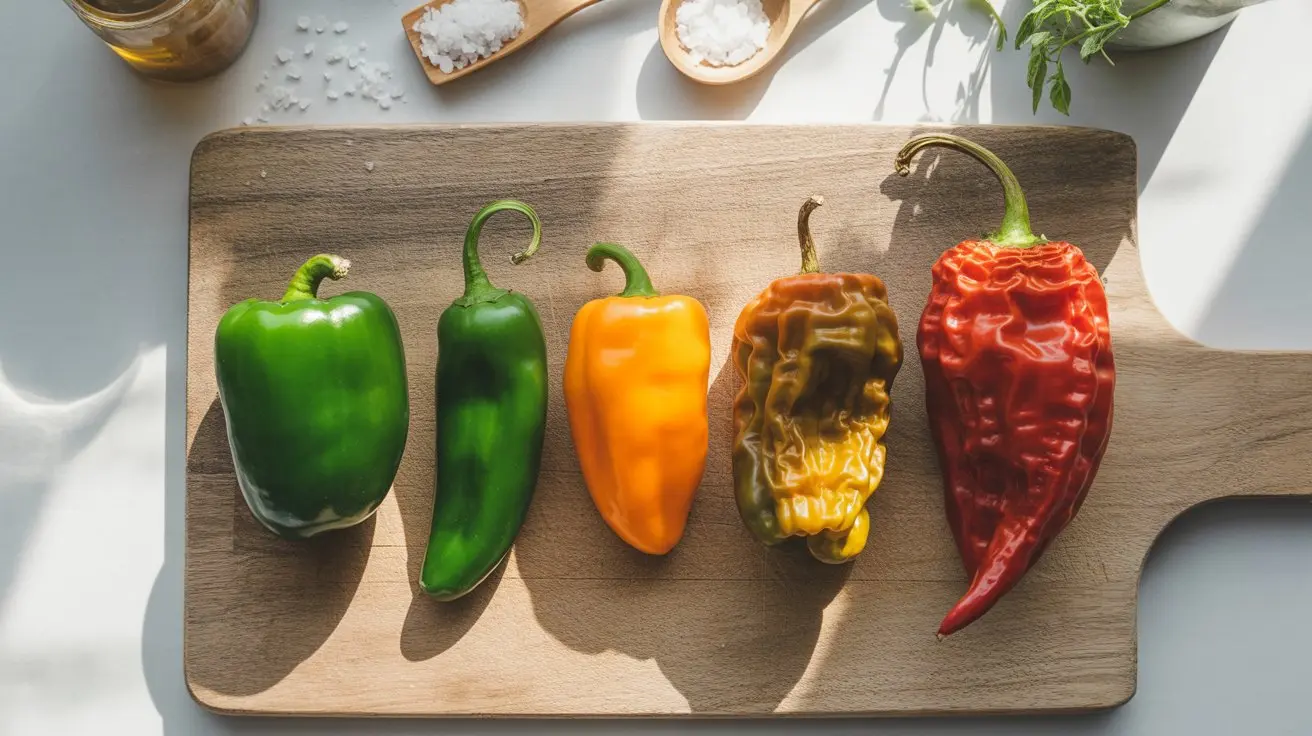
Sweet peppers are Capsicum cultivars grown and used for little or no pungency, often with more noticeable sweetness as they ripen. Bell peppers belong to the group, but the category also includes long frying peppers, banana types, pimientos, sweet cherry peppers, and other non-bell forms.
Sweet pepper is a broad kitchen category for Capsicum fruit with little or no pungency. Bell pepper is one member, not the definition.
The group spans blocky bells, tapered frying peppers, banana-shaped pods, heart-shaped pimientos, and small cherry forms. Their wall thickness, cavity, maturity, and cultivar matter more in a recipe than the word sweet by itself.
What Counts as a Sweet Pepper?
University crop guides separate peppers by pungency, fruit form, color, and use. Utah State University Extension lists bell, banana, and sweet non-bell types as different branches within the low-pungency side of the crop.
That boundary is practical rather than perfectly sharp. A zero-heat bell sits clearly inside it, while a mildly pungent Cubanelle or banana pepper may still be sold and cooked as a sweet pepper.
Sweet does not mean one sugar level or one SHU number. It tells you that sweetness and pepper flavor matter more than burn in the way the cultivar is sold and used.
Hot peppers can also taste fruity or sweet after ripening. They remain hot peppers because capsaicinoid pungency still drives the eating experience.
Are Bell Peppers the Only Sweet Peppers?
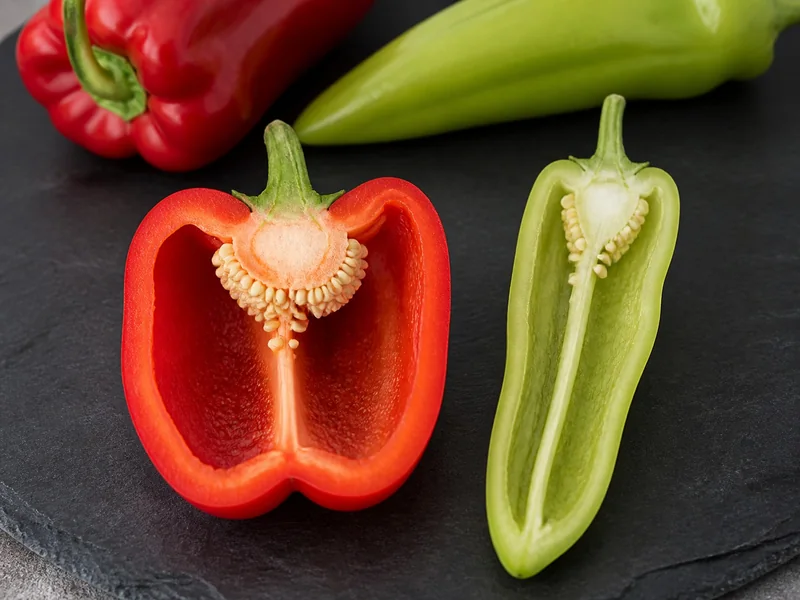
Bell peppers are the most familiar sweet type because their broad shoulders, hollow cavity, and thick walls work for raw slices and stuffing. They do not define the outer limit of the group.
Utah State Extension also places Cubanelle, Giant Marconi, pimiento, sweet cherry, and Sweet Hungarian cultivars among sweet non-bell peppers. Banana types sit in their own recognizable form group.
Blocky bells trade surface area for support
A bell's broad shoulders and thick walls create a stable cup for stuffing. Cut into panels, the same structure gives you wide raw strips or substantial pieces that keep some bite after roasting.
Long frying peppers put more wall against the pan
Italian sweet peppers and Cubanelles expose long sides to the cooking surface. Thin examples blister and collapse quickly, while a broader Marconi type retains more flesh for roasting or grilling.
Small pods solve portion and jar problems
Sweet banana peppers fit rings, pickles, and sandwiches without large pieces. Cherry and pimiento forms provide compact cavities for bite-size fillings, while mini sweets divide naturally into snack portions.
Mini sweet peppers are usually small elongated or miniature bell-shaped cultivars rather than immature full-size bells. Their compact cavity and snack size are useful traits, but the retailer's mixed bag may contain several cultivars.
Why Does Wall Thickness Matter More Than Color?
Wall thickness controls how quickly a pepper softens and how much structure it keeps after cooking. Choose the wall for the method, then choose a color and cultivar.
| Pod structure | What heat does to it | Strong starting uses |
|---|---|---|
| Thick wall, broad cavity Bell and many pimiento types | Softens slowly and can hold a filling or charred skin | Stuffing, roasting, raw strips, large dice |
| Medium wall, tapered pod Many Italian sweet types | Browns well while keeping some bite | Grilling, roasting, sandwiches, sheet-pan dishes |
| Thin wall, long pod Cubanelle and some frying types | Blisters and collapses quickly in a hot pan | Frying, sautéing, folding into eggs or rice |
| Small pod Sweet cherry and mini types | Cooks quickly, with cavity size limiting fillings | Pickling, snacks, small stuffed bites |
Oregon State Extension notes that cooks favor thick, rigid bell walls and a broad lobed form for stuffing. A thin Cubanelle can be filled, but it will relax faster and produce a flatter result.
Shape also changes prep time. A large bell yields broad panels and clean dice, while a long frying pepper creates strips with less seed-cavity trimming.
Are Green and Red Sweet Peppers the Same Pepper?
Many green sweet peppers are the unripe stage of a cultivar that will mature red, yellow, orange, brown, or another listed color. The packet or produce label tells you the cultivar's actual color path.
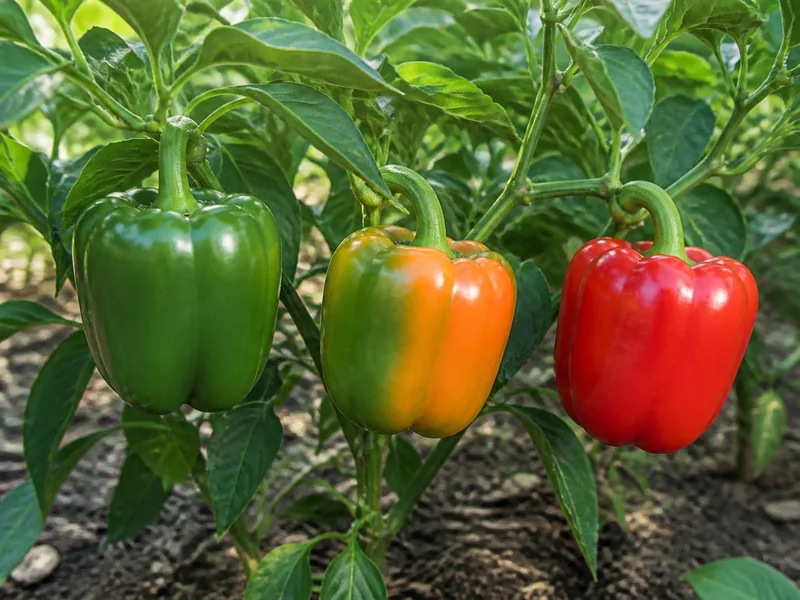
Oregon State Extension explains that flavor follows both genetics and fruit ripeness. A green fruit often tastes firmer and more grassy, while a fully colored fruit usually tastes softer and sweeter, but not every cultivar follows the same path.
Purple bells make the rule especially visible. Some begin purple and later lose that pigment as they ripen red, while white cultivars may stay pale.
- Choose green or early-stage fruit for firmer texture, sharper flavor, and dishes with long cooking.
- Choose fully colored fruit when raw sweetness, roasting, or a softer finish matters.
- Check the cultivar before assuming yellow or purple always means fully ripe.
The bumps on the bottom do not identify male and female peppers. Oregon State Extension traces lobe count to cultivar and growing conditions, not sex or a dependable sweetness test.
Can Sweet Peppers Be Hot?
Bell peppers are the clearest zero-pungency example, but the broader sweet category has a mild edge. Banana peppers, Cubanelles, sweet cherry peppers, and shishitos may carry detectable heat depending on cultivar and individual fruit.
A pepper can therefore taste sweet first and still register a small burn. That does not make it equivalent to a jalapeño or serrano.
| Buying description | What to expect | What to verify |
|---|---|---|
| Sweet bell | No intended pungency | Maturity color and wall thickness |
| Sweet banana or mild Cubanelle | Little to mild heat may occur | Cultivar name and seller's heat statement |
| Shishito or similar blistering type | Most pods may be mild, with occasional hotter fruit | Lot variability and diners' heat tolerance |
| Hungarian wax | Often clearly hotter despite a similar yellow shape | Do not substitute from appearance alone |
The often-repeated “one hot shishito in ten” line is a rough kitchen saying, not a guarantee for every cultivar, field, or package. Treat a shared blistered-pepper plate as variable when a diner needs strict zero heat.
Cross-pollination does not make this season's sweet fruit hot. Pollen can change the genetics inside saved seed, so different traits appear in plants grown from that seed the following season.
Which Sweet Pepper Shape Fits the Dish?
Start with the texture the dish needs, then narrow by flavor and mild heat. This avoids asking one pepper to behave like another simply because both sit in the sweet bin.
- For stuffing: A blocky bell offers the largest stable cavity. A pimiento works for smaller portions when its squat shape will sit securely.
- For fast frying: Cubanelle and long Italian sweet peppers expose thin walls to the pan and soften without a long roast.
- For roasting and peeling: Thick bells give broad skin panels and substantial flesh after charring.
- For pickling: Banana peppers create tidy rings, while cherry peppers fit whole or halved preparations.
- For raw crunch: Bells and mini sweet peppers provide firm walls and easy portions.
- For olive filling or cheese spreads: A ripe pimiento supplies soft red flesh and mild sweetness.
When substituting, match wall thickness before shape. A Cubanelle can replace a bell's mild flavor in a sauté, but it cannot provide the same rigid cup for a baked filling.
The reverse mismatch also matters. Thick bell strips need more time than a thin frying pepper and may stay bulky in eggs, rice, or a quick sandwich filling.
How Should You Buy and Store Sweet Peppers?
Choose firm fruit with taut skin and no wet collapse around the stem. Small scars may be cosmetic, while soft spots and leaking cuts shorten the usable window.
- Name the method. Stuffing needs a stable cavity, frying needs exposed wall area, and pickling needs a size that fits the jar.
- Check the cultivar or type. “Sweet pepper” alone does not tell you wall thickness or whether mild heat can occur.
- Use color deliberately. Buy green for a firmer, sharper result or the cultivar's mature color for more developed sweetness.
- Compare size within the type. Even pods make cooking times and stuffed portions easier to control.
- Keep whole fruit dry and cool. Refrigerate it unwashed, then rinse shortly before cutting.
Cut peppers lose moisture faster because their interior is exposed. Cover and refrigerate pieces promptly, then use texture rather than the calendar alone to decide whether they still suit a raw dish.
Wrinkled skin signals moisture loss, not automatic spoilage. A wrinkled but sound pepper can still work in a cooked sauce or sauté, while slime, mold, or a fermented odor means it should be discarded.
What Are Sweet Peppers? Types, Heat, and Best Uses FAQ
- Grow Your Own Peppers - Oregon State University Extension
- Varietal Selection for Peppers - Utah State University Extension
- Peppers in the Garden - Utah State University Extension
- Peppers: Mild Sweet Peppers - University of California Agriculture and Natural Resources
- Peppers - University of California Master Gardeners
- Are There Male and Female Peppers? - Oregon State University Extension
- Peppers - University of California Statewide IPM Program