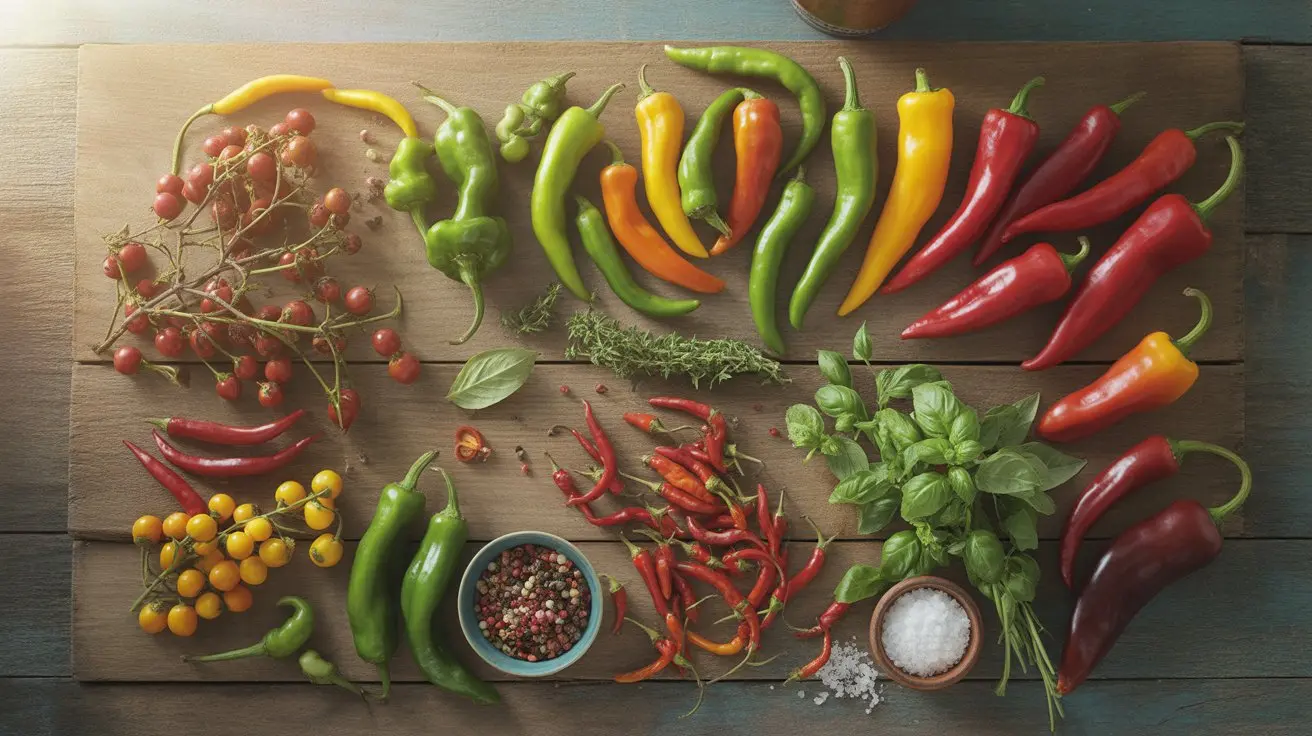
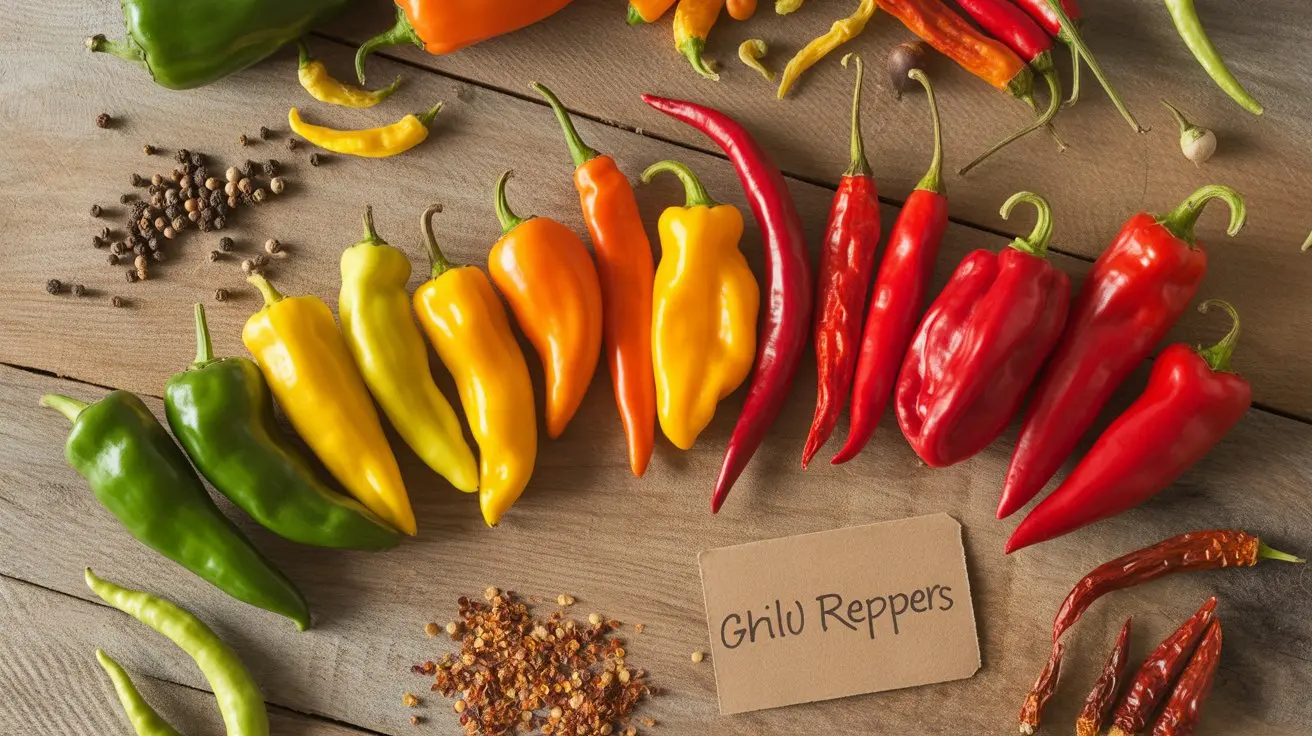
What Are Heirloom Peppers? Labels, Seeds, and Uses
An heirloom pepper is a named cultivar kept alive through repeated seed saving, usually with a documented link to a family, community, region, or historical period. The name describes continuity and provenance, but it does not guarantee superior flavor, yield, nutrition, or performance in your garden.
An heirloom pepper reaches you through a chain of people who saved and shared the same named cultivar. Its value lies in a traceable identity that survives across generations, not in age alone.
Most heirloom peppers are also open-pollinated, so carefully produced seed can grow plants with recognizable traits. You still need the cultivar's own heat, flavor, pod, and maturity information to decide whether it belongs in your kitchen or garden.
What Makes a Pepper Heirloom?
The USDA National Agricultural Library describes heirloom varieties as plants whose genetic material has been conserved by retaining and passing down seed or other propagating material. It also connects the term with a region, community, culture, or historical period.
No law gives every heirloom pepper the same birthday. Oregon State University Extension notes that heirloom cultivars are often 50 to 100 years old, while seed organizations use their own thresholds.
A date can support the story, but it cannot establish the identity by itself. A useful claim names the cultivar, identifies who maintained it or where it circulated, and supplies a record that another person can check.
The age of a seed is different from the age of its cultivar. Freshly harvested seed can belong to a century-old heirloom, while an old packet from a recent hybrid does not become heirloom through storage.
Continuity also does not mean every plant is genetically identical. An open-pollinated population can retain some variation while growers repeatedly select plants that match the cultivar's recognized pod, plant, and maturity traits.
How Do Heirloom, Open-Pollinated, Hybrid, and Organic Differ?
Heirloom, open-pollinated, hybrid, and organic often appear close together on seed listings. Each term describes a different part of the seed's history or production.
| Label | Question it answers | What it does not promise |
|---|---|---|
| Heirloom | Does this named cultivar have a history of preservation? | A universal age, better flavor, or better garden performance |
| Open-pollinated | Can controlled seed reproduce the cultivar's established traits? | An old history or protection from accidental crossing |
| F1 hybrid | Is this the first generation from a planned cross? | Genetic engineering or inferior eating quality |
| Organic | Was the seed produced under certified organic rules? | Heirloom status or a particular pod type |
Many heirlooms are open-pollinated, but a newly stabilized open-pollinated cultivar may have no historical claim. Certified organic seed can be heirloom, hybrid, or another eligible type because organic describes how it was produced.
An F1 hybrid can carry useful uniformity, maturity, or disease resistance. Seed saved from an F1 fruit may produce a varied second generation, so it is a poor choice when your main goal is to reproduce the named pepper reliably.
Where Do Heirloom Peppers Come From?
Provenance becomes clearer when you follow an actual seed. These three peppers survived through different communities, and their records preserve different kinds of information.
Fish pepper moved through a Black food tradition
Seed Savers Exchange describes Fish pepper as a 19th-century African American heirloom used in oyster and crab houses around Chesapeake Bay. Its green-and-white variegated foliage and striped immature pods also make the cultivar visually identifiable.
Horace Pippin passed seed to the Weaver family in the 1940s in exchange for bee-sting treatment. William Woys Weaver later shared it through Seed Savers Exchange, connecting a regional kitchen pepper with a modern seed network.
Beaver Dam carries a named family's migration story
The Joe Hussli family brought Beaver Dam pepper from Hungary to Beaver Dam, Wisconsin, in 1912. That named family, destination, and date give the pepper a checkable path rather than a vague claim of old-world origin.
The record also keeps practical details. Seed Savers Exchange notes its use as crisp rings in sandwiches and as a broad pepper for stuffed peppers, which links the cultivar's form to the way the family ate it.
Hinkelhatz survived through Pennsylvania Dutch preservation
Hinkelhatz means chicken heart, a reference to its small tapered pods. Seed Savers Exchange traces more than 150 years of preservation among Pennsylvania Dutch growers.
Traditional uses include pickles and hot sauce. Here, stewardship preserved a recognizable shape, a regional name, and a cooking role together.
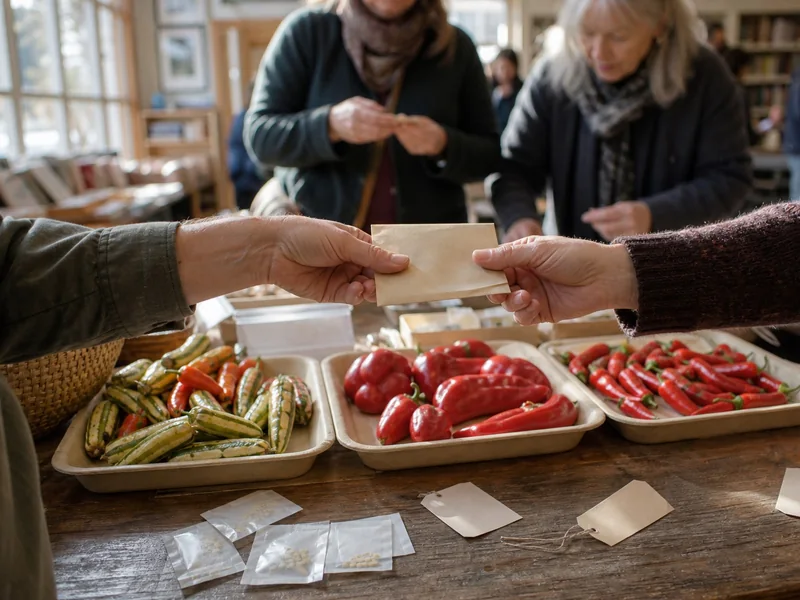
A legitimate heirloom does not need a dramatic anecdote, but its name and record should lead somewhere. A packet marked only rare heritage mix gives you no reliable way to know which cultivars it contains or whether the next generation will be consistent.
Do Heirloom Peppers Taste or Cook Better?
The heirloom label does not predict heat, sweetness, wall thickness, texture, or size. Those qualities belong to the individual cultivar, and they can also shift with ripeness and growing conditions.
Fish pepper provides a useful example. Its variegation and Chesapeake history explain why people preserve it, while its changing pod color and moderate heat explain how a cook might use it.
- For stuffing, check pod width, wall thickness, and the seller's stated heat.
- For pickling, look for firm pods with a size that fits the jar and a heat level the brine will not overpower.
- For drying or sauce, consider flesh thickness, mature flavor, and the amount of heat the recipe can carry.
- For eating fresh, use the cultivar description for sweetness, bitterness, juiciness, and texture.
This distinction protects you from buying a story when you need a specific ingredient. Start with the dish, then find a named pepper whose documented traits fit it.
Should You Choose Heirloom or Hybrid Pepper Seeds?
Choose an open-pollinated heirloom when preserving a named line, saving seed, or maintaining a regional food tradition matters. Choose a hybrid when its listed resistance, uniform fruit, or harvest window solves a more urgent garden problem.
Let the constraint choose the seed
Start with an heirloom when you want to save controlled seed, keep a particular regional trait, or maintain a named food tradition.
Start with an F1 hybrid when documented disease resistance, uniform pod size, or a predictable harvest window solves the harder problem.
Neither choice is automatically more flavorful. Oregon State University Extension advises gardeners to compare the cultivar's actual traits instead of treating one seed category as universally superior.
An old cultivar that thrived in one region is not automatically adapted to yours. Days to maturity, night temperature, plant size, humidity, disease pressure, and pod traits remain the better fit test.
How Can You Verify a Heirloom Pepper Claim?
A trustworthy seed description lets you verify identity and judge performance before you buy. Read past the word heirloom and look for concrete claims.
- Find the cultivar name. A stable name is more useful than a generic color, shape, or rarity claim.
- Trace the provenance. Look for a family, community, region, breeder, seed organization, or dated catalog.
- Confirm reproduction type. The listing should say open-pollinated directly when seed saving matters.
- Match practical traits. Compare maturity, pod dimensions, heat, wall thickness, plant habit, and disease notes with your intended use.
- Check who maintains the seed. A responsible seller describes the variety clearly and separates documented history from promotional language.
Price cannot prove provenance. A small, carefully maintained seed lot may cost more, but a higher price does not establish purity, flavor, or local adaptation.
Organic certification supplies separate evidence about production. If you want both attributes, verify the organic statement as well as the cultivar's heirloom and open-pollinated record.
Can You Save Heirloom Pepper Seeds True to Type?
Seed from an open-pollinated heirloom can reproduce the cultivar when the fruit is fully mature and unwanted pollen has been controlled. The packet label cannot stop an insect from carrying pollen between compatible pepper varieties.
Pepper flowers contain both pollen-producing and pollen-receiving parts, so they often pollinate themselves. Seed Savers Exchange still recommends 300 to 1,600 feet of separation when strict varietal purity matters because insects can move pollen between plants.
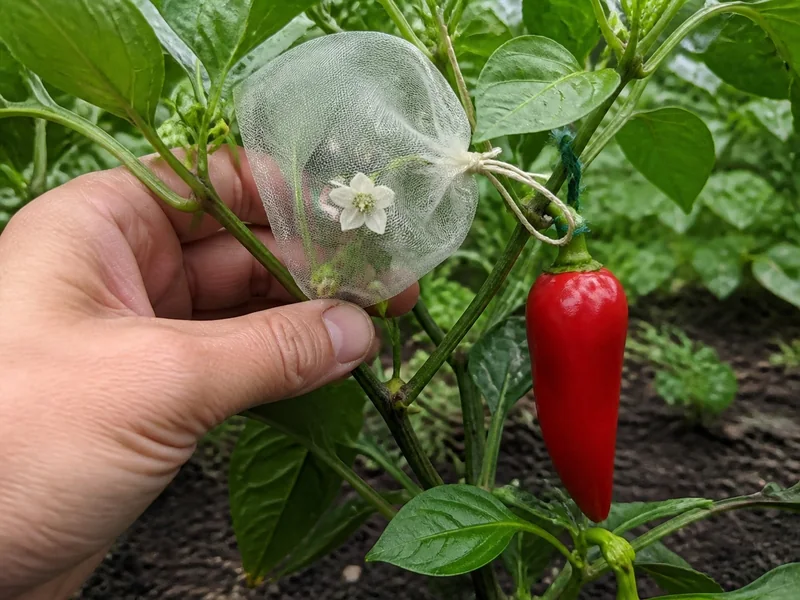
Most home gardens cannot provide the maximum distance. A fine mesh blossom bag, screened cage, controlled hand pollination, or growing only one variety of a compatible species can reduce the risk.
Seed maturity matters as much as isolation. A pepper harvested for eating may have reached its useful color before the seeds have completed development, so seed-saving fruit should remain on a healthy plant until fully mature.
Cross-pollination does not change the pod growing on the plant this season. It changes the genetic combination inside the seed, so unexpected traits appear only after that seed grows into a fruiting plant.
Seed from a market pepper carries an extra uncertainty because the seller may not know whether the fruit came from an F1 plant or an isolated open-pollinated line. You can still grow it as an experiment, but the heirloom name alone cannot promise a true-to-type result.
For the full process from selecting plants through drying and labeling, follow the saving pepper seeds method. Record the cultivar, harvest year, isolation method, and selected plant with every stored batch so the next grower receives both seed and evidence.
What Are Heirloom Peppers? Labels, Seeds, and Uses FAQ
- Heirloom Varieties Definition - USDA National Agricultural Library
- How to Read Seed Packets Before You Buy - Oregon State University Extension
- Hybrid and Open-Pollinated Varieties - Oregon State University Extension
- Seed Saving Basics - Penn State Extension
- What Is Organic? - USDA Agricultural Marketing Service
- Growing Guide: Peppers - Seed Savers Exchange
- Fish Pepper - Seed Savers Exchange
- Community Heirlooms - Seed Savers Exchange
- 2017 Seed Savers Exchange Catalog - Beaver Dam Pepper