
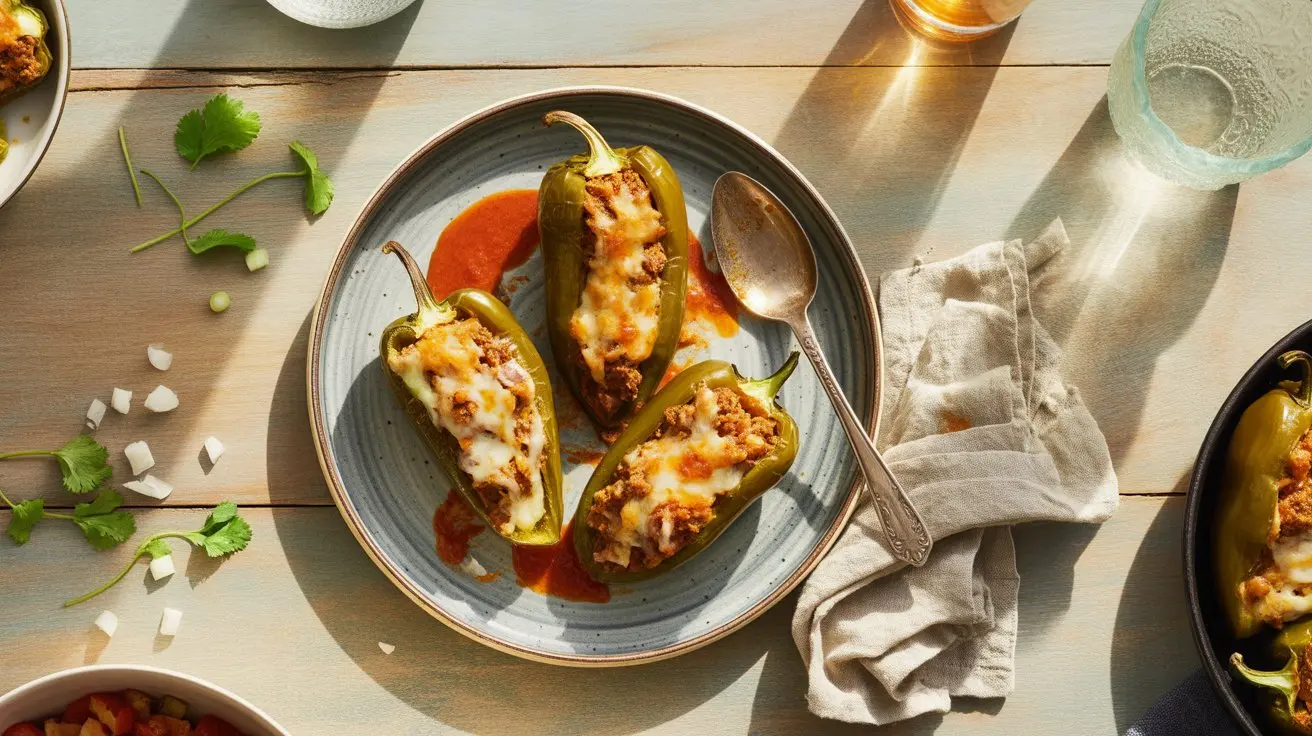
Stuffed Poblano Peppers
Roasted poblano peppers stuffed with seasoned rice, black beans, and melted cheese. A complete meal in 45 minutes. Find your perfect heat level.

Why Poblano Peppers Work So Well for Stuffing
The Mexican pepper tradition runs deep, and stuffed poblanos sit near the top of that canon. Their wide shoulders, thick walls, and mild-to-medium heat make them the ideal edible vessel - sturdy enough to hold a full filling, flavorful enough to carry the dish on their own.
Poblanos register between 1,000 and 2,000 SHU on the pepper heat index - roughly half the kick of a serrano, which lands around 10,000-23,000 SHU. That puts them firmly in the mild heat tier, where the pepper's earthy, slightly smoky flavor takes center stage without overwhelming the filling.
This recipe pairs roasted poblanos with seasoned rice, black beans, and a generous layer of melted cheese. Total time: 45 minutes. Serves 4.
Technique Notes
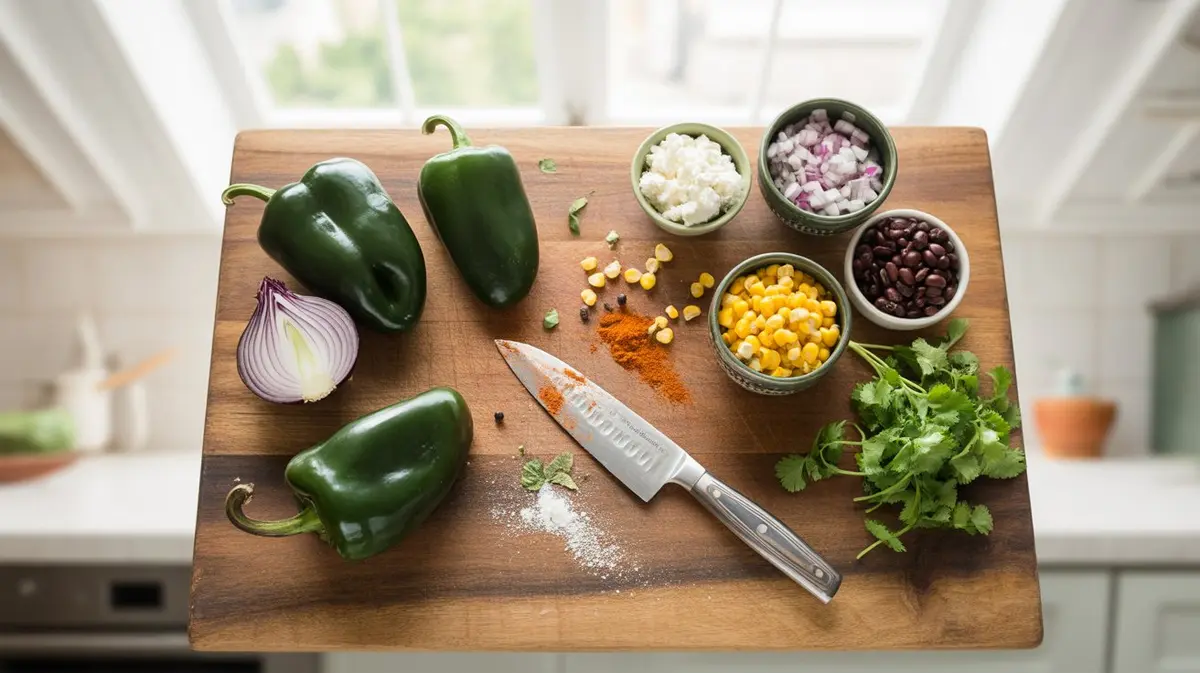
The two-stage roasting method - high heat first, then lower for the stuffed bake - is the key to avoiding soggy peppers. That initial blast at 425°F drives off surface moisture and concentrates the pepper's flavor before the filling goes in.
If your poblanos are particularly large, a quick press with a spatula after the first roast helps flatten the cut side, giving you a more stable base for stuffing. Small detail, big practical difference.
For the filling, the rice should be slightly undercooked before mixing - about 5 minutes less than the package directions. It finishes absorbing moisture from the salsa during the second bake, which keeps the texture from turning mushy.
Cheese selection matters more than people think. Monterey Jack melts clean and has a mild, buttery flavor that doesn't compete with the pepper. A Mexican blend works too. Avoid sharp cheddar alone - the oil tends to separate at high heat and pools around the filling.
Heat Level Variations
This recipe is designed around the poblano's naturally restrained heat, but it's easy to dial up or down. The Capsicum annuum species covers an enormous range - from sweet bells to serranos - so substitutions within the family are straightforward.
- Milder: Swap poblanos for large Anaheim peppers, which sit even lower on the mild end of the heat spectrum. Their thinner walls require 2-3 minutes less roasting time.
- Medium step-up: Add 1-2 minced serranos to the rice filling. Serranos bring a clean, bright heat that integrates well with cumin and black beans without changing the pepper vessel itself. For context on the heat gap between poblano and serrano, the difference is roughly tenfold.
- Hotter vessel: Anaheim peppers stuffed alongside a single Hatch green chile's roasted earthiness in the filling creates an interesting layered heat. Or use Hatch chiles as the vessel itself during late-summer season.
- Protein additions: Brown 1/2 lb ground beef or turkey with the spice blend before mixing into the rice. Reduce salsa to 1/2 cup to compensate for added moisture.
- Vegan version: The base recipe is already vegetarian. For vegan, use a plant-based cheese or skip cheese entirely and top with a drizzle of tangy salsa verde after baking.
Buying and Storing Poblanos
Poblanos peak from late summer through early fall - August through October is when you'll find the best specimens at farmers markets and well-stocked grocery stores. During peak season, they're affordable and widely available; outside of it, look to Latin grocery stores or larger supermarkets with a dedicated produce section.
Select peppers that feel heavy for their size with tight, glossy skin. Soft spots near the stem indicate age. A slight color variation from dark green to nearly black is normal and actually signals better flavor development - those darker patches tend to be sweeter and more complex after roasting.
Store unwashed poblanos in the crisper drawer for up to one week. Once roasted and stuffed, the assembled peppers keep well covered in the refrigerator for 3 days. Reheat at 350°F for 15 minutes, covered with foil to prevent the cheese from drying out.
For longer storage, freeze the stuffed peppers before the final bake. Wrap individually in plastic wrap, then foil. Bake from frozen at 375°F for 35-40 minutes, adding cheese in the last 10 minutes.
Serving and Pairing
These stuffed peppers are a complete meal on their own, but a few simple sides round things out. Mexican-style street corn, a crisp cabbage slaw with lime dressing, or a straightforward green salad all work without competing for attention.
For drinks, the pepper's earthiness pairs well with a cold lager, a light margarita, or - if you want to highlight the smokiness - a mezcal-based cocktail. The mild heat won't fight most wine pairings either; a dry rosé or a light-bodied red like Garnacha handles the spice without issue.
Leftovers make excellent lunch the next day. Slice the pepper halves into strips and reheat in a skillet over medium heat - the filling crisps slightly on the bottom and the whole thing takes on a different texture that's arguably better than the original bake.
Growing Your Own Poblanos
If you want to take this further, poblanos are one of the more rewarding peppers for home gardeners. They're productive, disease-resistant, and the fresh-picked flavor difference over store-bought is noticeable. The seed-starting and transplant guide covers the full process, but the short version: start seeds 8-10 weeks before last frost, transplant after soil reaches 60°F, and expect fruit in 65-80 days.
Poblanos prefer full sun and consistent moisture. In hot climates, afternoon shade helps prevent blossom drop. A single plant typically yields 6-10 peppers per harvest cycle, which means four plants covers this recipe twice over with some to spare for drying into dried ancho chile's deep, raisin-like complexity.
Worth noting: the same plant produces both green and red poblanos depending on when you harvest. Green poblanos (used here) have that characteristic earthiness. Left to ripen to red, they develop more sweetness and less vegetal bite - and that's what gets dried into anchos. Understanding how capsaicin chemistry shifts during ripening explains why the red stage often tests slightly hotter despite tasting sweeter.
Tips for Success
- Don't skip the initial high-heat roast - it's what separates this from a flat, watery result.
- Use day-old rice if possible. Freshly cooked rice holds more moisture and can make the filling loose.
- Mound the filling generously - it compacts during baking and a full pepper looks and eats better than a sparse one.
- If the cheese browns too fast, tent loosely with foil for the last 5 minutes.
- For cleaner presentation, use a sharp spoon or melon baller to remove seeds and membrane without tearing the pepper walls.
- The medium heat range starts around 2,500 SHU - if your poblanos taste hotter than expected, they may be on the upper end of their natural variation. Seeding thoroughly reduces heat by roughly 30-40%.
Chef's Tip: The Resting Period
Patience is an ingredient. After mixing, let the dish rest for 10–15 minutes before serving. This allows the flavours to meld and the seasoning to fully penetrate. If making ahead, refrigerate and bring to room temperature before serving.
Shopping List
-
4 large poblano peppershalved lengthwise, seeds removed
-
1 cup long-grain white ricecooked (about 3 cups cooked)
-
1 can (15 oz) black beansdrained and rinsed
-
1 cup corn kernelsfresh or frozen
-
1 cup chunky salsa
-
1 tsp ground cumin
-
1 tsp smoked paprika
-
1/2 tsp garlic powder
-
1/2 tsp onion powder
-
Salt and black pepper to taste
-
1.5 cups shredded Monterey Jack cheese (or Mexican blend)
-
2 tbsp olive oil
-
Fresh cilantrosour cream, lime wedges for serving
Full Recipe Instructions
Preheat oven to…
Preheat oven to 425°F (220°C). Line a large baking sheet with foil.
Rub poblano halves…
Rub poblano halves with 1 tbsp olive oil and place cut-side down on the baking sheet.
Roast for 15…
Roast for 15 minutes until skin blisters. Flip cut-side up and roast 5 more minutes. Remove from oven and reduce heat to 375°F (190°C).
Combine cooked rice,…
Combine cooked rice, black beans, corn, salsa, cumin, smoked paprika, garlic powder, and onion powder in a large bowl. Season with salt and pepper. Stir in 3/4 cup shredded cheese.
Arrange roasted poblano…
Arrange roasted poblano halves cut-side up in a baking dish. Drizzle remaining 1 tbsp olive oil around the base.
Spoon rice filling…
Spoon rice filling into each pepper half, mounding slightly above the rim. Press gently to compact.
Top each stuffed…
Top each stuffed pepper with the remaining 3/4 cup shredded cheese, divided evenly.
Bake at 375°F…
Bake at 375°F for 18-20 minutes until cheese is melted and beginning to brown at edges.
Rest 5 minutes…
Rest 5 minutes before serving. Finish with fresh cilantro, lime squeeze, and sour cream on the side.
Frequently Asked Questions
-
For this recipe, no - the skin softens enough during the two-stage roast that peeling is unnecessary. If you prefer a cleaner texture, you can peel after the first roast while the peppers are still warm.
-
Yes. Assemble fully, cover, and refrigerate up to 24 hours before the final bake. Add 5 minutes to the bake time if going straight from cold. The filling actually benefits from sitting overnight as the flavors meld.
-
Two common causes: freshly cooked rice (use day-old or slightly undercooked rice) and excess moisture in the salsa. Drain chunky salsa briefly through a strainer if it looks very liquid before mixing into the filling.
-
Poblanos range from 1,000 to 2,000 SHU - significantly milder than serranos at 10,000-23,000 SHU. Most people describe the heat as a gentle warmth rather than a
More Recipes
View allFresh Salsa Recipe
Restaurant-quality fresh salsa in 10 minutes. Proper tomato prep, right jalapeño amount, and the secret to balanced flavor. Find your perfect heat level.
Jalapeno Poppers Recipe
Classic cream cheese stuffed jalapeño poppers that are crispy outside, creamy inside. Find your perfect heat level.
Pickled Jalapenos Recipe
Two methods: 10-minute quick pickle and proper fermented. Both stay crispy. Find your perfect heat level.
Stuffed Peppers Recipe
Classic stuffed peppers with rice and meat, plus vegetarian and Mexican variations. Covers bell peppers, poblanos, and which peppers stuff best.