Growing Tabasco Peppers Without Stalled Plants or Thin Harvests
Tabasco peppers grow best when you treat them like a long-season warm-weather plant instead of a generic backyard chili. Start them early, wait for real warmth before transplanting, keep moisture steady, and let the small upright pods ripen deep red if your main goal is hot sauce flavor instead of just early heat.
Tabasco needs a warmer, longer season than most
Tabasco Pepper are small, hot, and productive, but the plant does not behave exactly like the average jalapeno or bell pepper you see in starter packs every spring. It belongs to Capsicum frutescens species, a species group that tends to stay more upright, carry smaller pods, and reward real heat more than cool-shoulder-season gambling.
That species difference matters in the garden. A jalapeno-growing can teach the general pepper workflow, but tabasco usually needs a cleaner heat runway to size up, flower steadily, and ripen a full crop to red.
If you rush it into cold soil, you often get a plant that survives but never really gets moving.
That is the whole job of this page: not how to grow peppers in general, but how to grow tabasco peppers well enough that the plant stays active through summer and gives you the narrow upright pods people actually want for mash, sauce, and vinegar-forward ferment projects.
| Trait | Tabasco pepper | Why it matters in the garden |
|---|---|---|
| Species | C. frutescens | Usually wants steadier heat than common annuum garden peppers |
| Heat level | Hot tier, roughly above jalapeno range | You may grow fewer pods than a mild pepper, but each fruit carries more punch |
| Fruit habit | Small pods held upright | Ripening is easy to monitor because color changes stay visible above the foliage |
| Best harvest use | Fully ripe red fruit for sauce and mash | Picking too early usually costs flavor depth more than it helps yield |
The swap test is simple: if the advice could fit a random Jalapeño after a name change, it is not specific enough for this page. Tabasco needs a long warm run, and the rest of the guide builds around that fact.
When should you start tabasco pepper seeds?
University of Minnesota Extension recommends starting pepper seeds indoors about eight weeks before planting outside. For tabasco peppers, that is the floor, not the ceiling, in many climates.
If your outdoor warm window is short, giving the seedlings a little more runway indoors is often the difference between a token crop and a useful one.
The main mistake is treating tabasco seed like tomato seed. Peppers germinate slower in cool media, and tabasco is not the variety to test your luck on a chilly windowsill.
Use a sterile seed-starting mix, sow shallowly, and keep the trays warm enough that germination does not stall halfway through the flat.
Once seedlings emerge, give them hard light and avoid overpotting too early. A small pepper plant sitting in a huge wet container wastes time building roots in cool mix instead of building a compact transplant.
Pot up only when the cells are filled and the seedlings are actively growing.
Best early-season habit: keep tabasco seedlings short, dark green, and moving steadily. A tall pale seedling is not ahead.
It is already telling you light or warmth was off.
If your starts pause for a week or two after first true leaves, do not just add fertilizer and hope. Check temperature first.
Slow peppers are more often under-heated or under-lit than under-fed, especially in late winter indoor setups.
When can tabasco seedlings go outside?
Tabasco peppers punish impatience. University of Minnesota Extension says to transplant peppers after nighttime lows are above 50 F. Ohioline guidance for home-garden peppers adds another useful boundary: soils should be above 55 F before transplants go out.
That is a stronger field rule than a hopeful calendar date.
If the forecast is technically frost-free but the soil is still cold and the nights keep dipping into the low 50s, wait. A tabasco plant set out too early often sits there with no obvious disaster, then loses two or three critical weeks of momentum.
That is how growers end up with plants that look alive in June but still seem stuck by midsummer.
South Dakota State Extension recommends spacing peppers 12 to 18 inches apart, and that range works here. Stay near the tighter end if you are growing a compact row and pruning nothing.
Move closer to 18 inches if the bed is rich, the season is long, or you want easier airflow around a dense fruiting canopy.
For cooler regions, Oregon State Extension explicitly recommends season-extension tools like row covers, plastic mulch, or greenhouse protection to provide enough warmth for peppers to mature. Tabasco is exactly the kind of pepper where that advice pays off.
Black plastic mulch or a warm raised bed is not cosmetic here.
It is one of the cleanest upstream fixes for slow establishment.
- Pick the hottest, sunniest bed you have, with at least eight hours of direct sun.
- Use black mulch or another soil-warming surface if spring heat is unreliable.
- Harden plants off gradually before transplanting so leaves do not scorch on day one.
- Plant at the same depth they held in the pot, not tomato-deep.
That last point matters. Pepper stems do not reward deep burying the way tomato stems can.
Keep the transplant simple, keep the root ball intact, and get the bed warm before chasing extra tricks.
How should you water tabasco pepper plants?
Once the plant is established, the target is steady growth with steady moisture. University of Minnesota Extension recommends black plastic mulch partly because it helps keep soil moisture more even.
That lines up with what tabasco plants seem to want in practice: not swampy soil, not hard drought swings, but a bed that stays evenly moist while the weather heats up.
If you already know the basic rules from watering pepper plants properly, the tabasco-specific adjustment is this: the pods are small, but the plant can carry a lot of them at once. When a loaded plant flips between very dry and very wet, fruit set and flavor quality both get messier.
Do not force lush top growth with heavy nitrogen once the plant is established. A tabasco pepper covered in soft leafy growth but sparse flowers is usually being pushed in the wrong direction.
After transplant recovery, you want a balanced feeding pattern that supports branching and bloom rather than wide foliage.
One useful read on the plant is color and posture. Healthy tabasco plants usually stay fairly upright.
If the plant looks stalled, tight, and dull green for too long, go back through the real causes in order: cold soil, weak sun, water swings, or a root-bound start.
A rescue fertilizer hit may green it temporarily, but it will not fix the upstream problem. If you are already in that situation, the broader diagnostic path in pepper plants not growing is the right next check.
Should you harvest tabasco peppers green or red?
Tabasco peppers are easier to read than many pendant peppers because the fruit stands upright above the foliage.
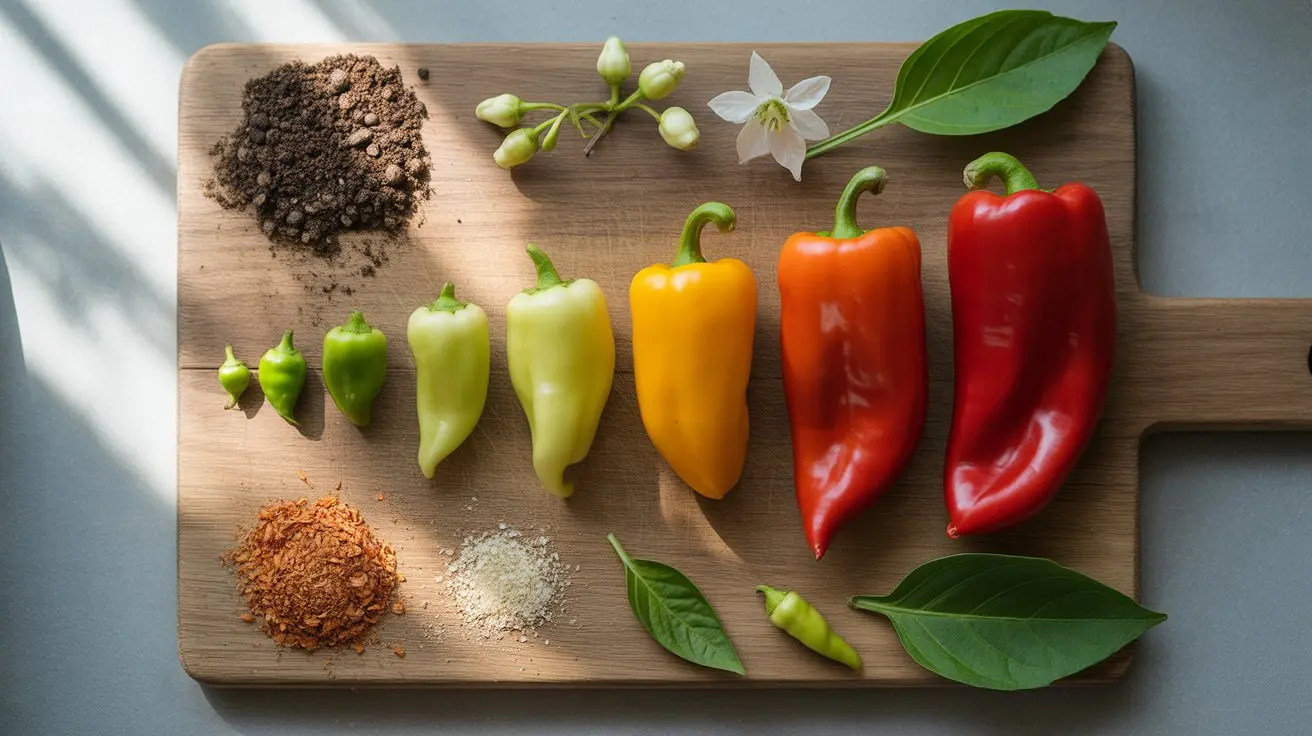
You can usually see green, yellow-orange, and red stages at the same time on one plant. That makes harvest timing less mysterious, but it still helps to know what you are picking for.
If you want fresh heat, you can pick pods before they are fully red.
If you want the classic tabasco direction for mash or vinegar-based sauce, waiting for mature red fruit usually gives a fuller result. The plant is famous because of sauce, not because people harvest it green at the first chance.
This is where the page overlaps slightly with when to pick peppers, but tabasco has a clearer clear answer: pick red for the deepest sauce identity, pick earlier only when you need the heat sooner or frost is closing in. A mixed harvest is normal near season end, but the best mash batches usually come from a majority-red pull.
Expect a long, rolling harvest instead of one giant dump.
Small hot peppers like tabasco often produce in waves once real summer heat arrives. Keep harvesting ripe fruit, keep watering evenly, and the plant usually keeps pushing new flowers and pods instead of shutting down after one flush.
Good harvest cue: upright fruit that has turned red but still feels firm is usually worth taking.
Waiting for softness is not extra ripeness. It is the start of decline.
Troubleshooting tabasco plants: what the symptom usually means
Most tabasco problems are not mysterious. They usually trace back to temperature, timing, or uneven moisture.
| If your plant does this | The likely cause | Best correction layer |
|---|---|---|
| Sits still for weeks after transplant | Cold soil or cool nights | Warm the bed, use mulch or cover, and stop expecting growth in marginal weather |
| Gets tall leaves but weak flowering | Too much nitrogen or too much shade | Back off feeding and verify full sun exposure |
| Drops blossoms during weather swings | Heat stress, moisture swings, or transplant setback | Stabilize watering and let the plant settle before pushing more feed |
| Sets pods late but ripens slowly | Season is too cool or started too late | Start earlier next cycle and use season extension sooner |
The big one is stalled early growth.
Gardeners often think tabasco is a low-vigor pepper because the plant stayed small in June. More often, the plant got introduced to the bed before the bed was actually ready.
By the time summer heat finally arrives, it is still rebuilding.
The second common miss is harvesting strategy. A plant that looks modest in July can still become a very useful sauce pepper in late summer if you let the red stage build.
That is why tabasco belongs closer to peppers for hot sauce logic than to a generic snack-pepper mindset.
If you keep the tabasco priorities straight, tabasco is not hard. It is just less forgiving of cool starts than the average backyard pepper.
Give it warmth early, real sun all season, and enough time to turn red, and the plant usually tells you the rest.