
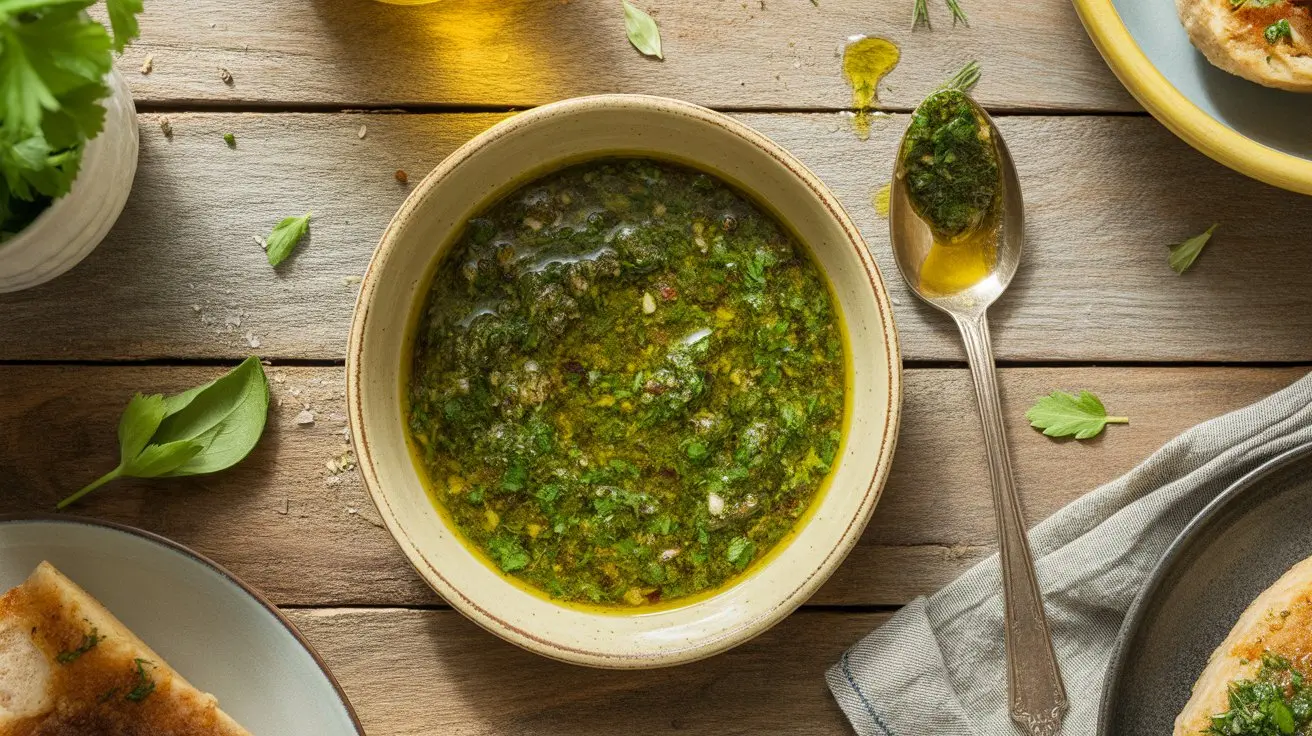
Chimichurri Sauce
Authentic Argentine chimichurri with fresh parsley, oregano, garlic, and red pepper flakes. Find your perfect heat level.

What Makes Chimichurri So Essential
Few condiments carry as much cultural weight as chimichurri - the bright, herb-forward sauce that has defined Argentine asado culture for generations. This is the sauce that appears at every parrilla, every family cookout, every Sunday roast from Buenos Aires to Mendoza.
Unlike sauces built around complexity or long cooking times, chimichurri earns its place through restraint. Fresh parsley, oregano, garlic, red pepper flakes, olive oil, and red wine vinegar - that is the entire framework, and it works because each ingredient pulls its weight.
The heat here is gentle and deliberate. Red pepper flakes typically land in the mild heat classification, adding warmth without overwhelming the herbal backbone. You can push it into medium territory by doubling the flakes, or pull back to nearly none if you want pure herb flavor. This flexibility is part of why chimichurri has spread far beyond South America.
Technique Notes
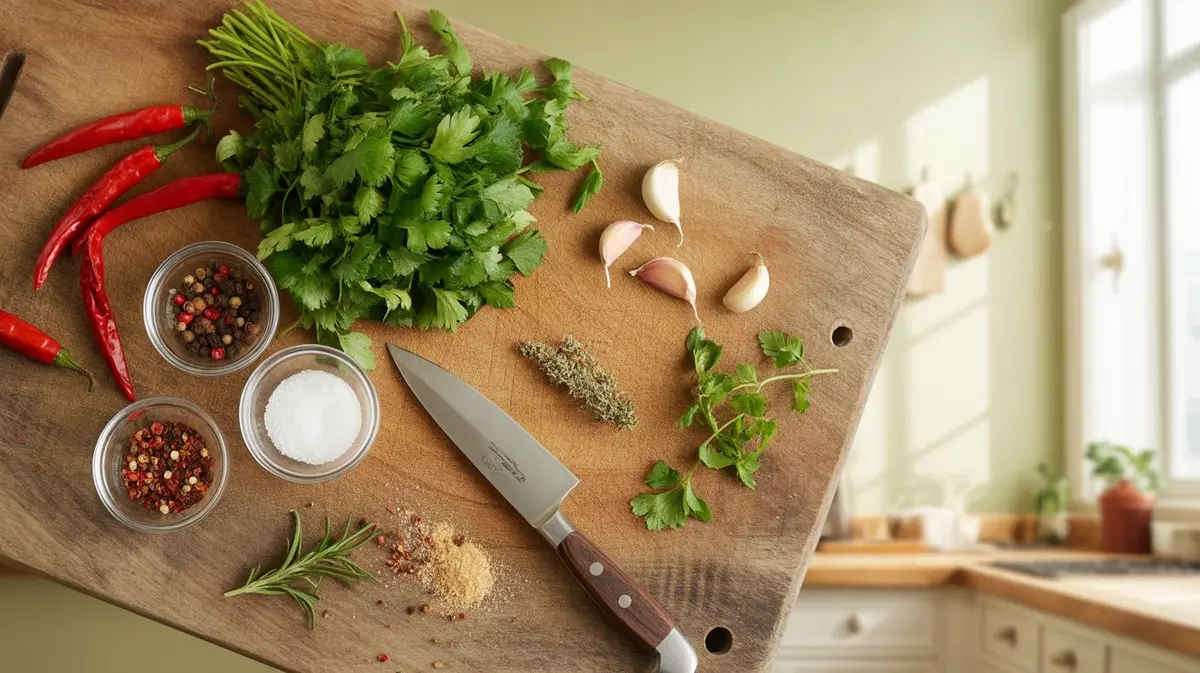
The hand-chopping versus food processor debate has a practical answer: use a food processor if you need to make a large batch quickly, but pulse it only 4-5 times at most. Over-processing turns the parsley dark and bruised, and the sauce loses its fresh color within an hour.
Garlic intensity is the variable that most affects the final flavor. Raw garlic is sharp and pungent; if you want a milder garlic presence, blanch the cloves in boiling water for 30 seconds before mincing. This takes the edge off without cooking away the flavor.
Red wine vinegar is traditional, but sherry vinegar produces a rounder, slightly nuttier result. White wine vinegar works in a pinch but lacks depth. Avoid balsamic - it changes the color and sweetness profile entirely.
Salt timing matters. Adding salt directly to the chopped herbs and letting it sit for a few minutes before adding oil draws moisture from the parsley, which helps the sauce come together more cohesively.
Heat Level and Pepper Variations
Standard chimichurri with 1/2 tsp red pepper flakes sits firmly in mild territory - noticeable warmth, nothing that challenges most palates. Here is how to adjust based on your heat preference:
- Mild (classic): 1/4 to 1/2 tsp red pepper flakes. Clean herb flavor with background warmth.
- Medium: 1 tsp red pepper flakes, or substitute one fresh medium-heat fresh chili like a Fresno, seeded and minced.
- Hot version: Add one fresh serrano or two dried arbol chiles, crumbled. This pushes the sauce into genuinely spicy territory while keeping the herbal character intact.
- Aji amarillo chimichurri: Stir in 1 tbsp aji amarillo paste - a nod to Peruvian pepper traditions that adds fruity heat and a golden color.
- Smoked chimichurri: Replace half the red pepper flakes with smoked paprika and add a pinch of chipotle powder. The smoke pairs exceptionally well with beef.
For anyone who wants to understand how pepper heat is measured before choosing their variation, the Scoville ranking method gives useful context on where common chiles fall relative to each other.
What to Serve With Chimichurri
The traditional pairing is grilled beef - skirt steak, flank steak, ribeye, or any cut coming off an Argentine-style wood-fire grill. The acid in the sauce cuts through fat, and the herbs refresh the palate between bites.
Beyond beef, chimichurri works on grilled chicken thighs, lamb chops, roasted vegetables, and as a marinade for shrimp. Spread it on toasted bread as a starter. Spoon it over fried eggs for a weekend breakfast that requires almost no effort.
It also serves as a solid base for comparing to other herb-forward sauces. The balance of oil, acid, and fresh herbs is similar in concept to Italian salsa verde - though the flavor profiles diverge significantly. If you enjoy chimichurri, the Italian pepper-based condiment tradition offers some interesting parallels worth exploring.
Regional Variations
Argentina and Uruguay both claim chimichurri, and both countries have regional versions worth knowing:
- Uruguayan chimichurri: Often includes more oregano relative to parsley, and sometimes adds a pinch of cumin. Slightly earthier than the Argentine standard.
- Chimichurri rojo: Adds tomato or roasted red pepper to the base, producing a thicker, redder sauce. More common in home kitchens than at traditional parrillas.
- Salmuera: Not technically chimichurri, but the Argentine basting liquid (salt water, garlic, herbs) is often confused with it. Salmuera goes on the meat during grilling; chimichurri goes on at the table.
- Cilantro chimichurri: Replace half the parsley with cilantro. This variation appears frequently in Mexican-American cooking and pairs well with chicken and fish. The Mexican chili tradition has influenced this version significantly.
Storage
Fresh chimichurri keeps in the refrigerator for up to 2 weeks in a sealed glass jar. The olive oil will solidify when cold - this is normal. Pull it out 15-20 minutes before serving and stir to recombine.
The flavor actually improves after the first 24 hours as the garlic mellows and the herbs fully infuse the oil. Day two or three is often the peak.
Freezing works reasonably well. Portion the sauce into ice cube trays, freeze solid, then transfer to a freezer bag. Frozen chimichurri keeps for 3 months. The texture changes slightly after thawing - it becomes a bit more emulsified - but the flavor holds up well enough for cooking applications.
Do not store chimichurri at room temperature for more than 2 hours. The combination of raw garlic and herbs in oil creates conditions where bacterial growth is possible if left out.
Common Mistakes
Using dried parsley is the single biggest error. Dried parsley has almost no flavor compared to fresh - the sauce will taste flat and dusty regardless of how good your olive oil is.
Skipping the resting period is a close second. Chimichurri made and served immediately tastes harsh and disconnected. The 30-minute minimum rest is not a suggestion.
Over-processing in a blender creates a smooth, homogeneous paste that loses the textural contrast between herbs, oil, and vinegar. If you use a food processor, treat it as a rough chop tool, not a puree machine.
Using too much vinegar without balancing with salt produces a sharp, one-dimensional sauce. Taste as you build - the vinegar should brighten the herbs, not dominate them.
Scaling the Recipe
This recipe scales cleanly. For a larger batch serving 10-12 people alongside grilled meat, triple all quantities. The ratios hold at any scale - just make sure your mixing bowl is large enough to stir without splashing.
For a smaller batch (2-3 servings), halve everything except the garlic. Garlic scales down awkwardly because one small clove still carries significant punch - use your judgment based on how garlic-forward you want the sauce.
Chef's Tip: The Resting Period
Patience is an ingredient. After mixing, let the dish rest for 10–15 minutes before serving. This allows the flavours to meld and the seasoning to fully penetrate. If making ahead, refrigerate and bring to room temperature before serving.
Shopping List
-
1 cup fresh flat-leaf parsleytightly packed
-
3 tbsp fresh oregano leaves (or 1 tbsp dried)
-
4 cloves garlicminced
-
1/2 tsp red pepper flakes (increase to 1 tsp for more heat)
-
1/2 cup extra-virgin olive oil
-
3 tbsp red wine vinegar
-
1/2 tsp fine sea salt
-
1/4 tsp freshly ground black pepper
-
2 tbsp warm water (to loosen if needed)
Full Recipe Instructions
Wash and thoroughly…
Wash and thoroughly dry the parsley. Pat dry with a kitchen towel or spin in a salad spinner.
Remove parsley leaves…
Remove parsley leaves from stems, discarding thick lower stems.
Finely chop the…
Finely chop the parsley and fresh oregano by hand to a rough mince, around 1/8 inch pieces.
Mince the garlic…
Mince the garlic as finely as possible, or grate on a Microplane for a smooth paste.
Combine parsley, oregano,…
Combine parsley, oregano, garlic, red pepper flakes, salt, and black pepper in a medium bowl.
Add the red…
Add the red wine vinegar and stir to combine. Let sit for 5 minutes.
Pour in the…
Pour in the olive oil in a slow stream, stirring as you go until glossy and combined.
Taste and adjust…
Taste and adjust seasoning. Add warm water one tablespoon at a time if the sauce is too thick.
Rest the sauce…
Rest the sauce for at least 30 minutes before serving. One hour or overnight in the refrigerator is ideal.
Frequently Asked Questions
-
Yes, but pulse only 4-5 times to keep the texture rough rather than smooth. Over-processing bruises the parsley, turns the sauce dark, and produces a paste instead of the traditional chunky consistency.
-
Up to 2 weeks in a sealed glass jar. The olive oil will solidify when cold, which is normal - let it come to room temperature for 15-20 minutes and stir before serving.
-
Both are herb-based oil sauces, but chimichurri uses red wine vinegar and red pepper flakes while Italian salsa verde typically includes capers and anchovies. The flavor profiles diverge significantly despite the structural similarity.
-
Absolutely - it works well as a marinade for chicken, shrimp, and lamb. Use it for 2-4 hours maximum; longer marinating with the vinegar can begin to break down proteins and affect texture.
-
Raw garlic and vinegar need time to mellow and integrate with the oil. The minimum 30-minute rest is essential - the sauce will taste sharp and disconnected if served immediately after mixing.
More Recipes
View allFresh Salsa Recipe
Restaurant-quality fresh salsa in 10 minutes. Proper tomato prep, right jalapeño amount, and the secret to balanced flavor. Find your perfect heat level.
Jalapeno Poppers Recipe
Classic cream cheese stuffed jalapeño poppers that are crispy outside, creamy inside. Find your perfect heat level.
Pickled Jalapenos Recipe
Two methods: 10-minute quick pickle and proper fermented. Both stay crispy. Find your perfect heat level.
Stuffed Peppers Recipe
Classic stuffed peppers with rice and meat, plus vegetarian and Mexican variations. Covers bell peppers, poblanos, and which peppers stuff best.