Ghost Pepper vs Habanero: Side-by-Side Pepper Comparison
The ghost pepper and habanero sit in completely different heat brackets — one defined a generation of extreme chili culture, the other remains a workhorse of hot sauces and Caribbean cooking. Both belong to C. chinense and share fruity aromatics, but their heat gap is staggering enough to change how you cook with each one entirely.

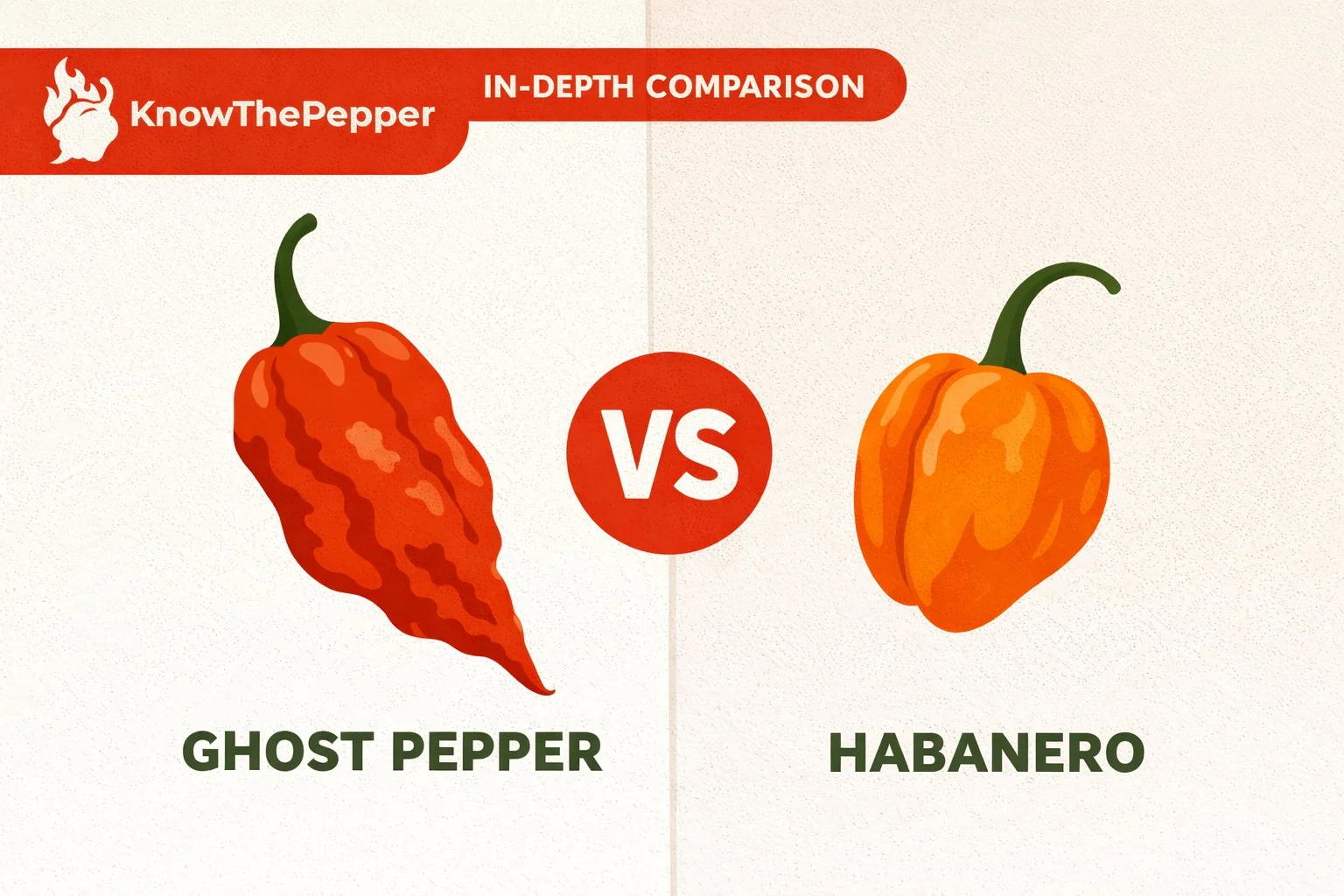
Ghost Pepper measures 855K–1M SHU while Habanero registers 100K–350K SHU — making Ghost Pepper 3× hotter. Ghost Pepper is known for its smoky and sweet flavor (C. chinense), while Habanero offers fruity and citrusy notes (C. chinense).
- Heat difference: Ghost Pepper is 3× hotter
- Species: Both are C. chinense
- Best for: Ghost Pepper excels in hot sauces and extreme dishes, Habanero in hot sauces and spicy dishes
Ghost Pepper
Super-HotHabanero
Extra-HotGhost Pepper vs Habanero Comparison
Ghost Pepper vs Habanero Heat Levels
The habanero registers at 100,000–350,000 SHU, placing it firmly in the extra-hot intensity bracket that most people consider the threshold of serious heat. That range puts a typical habanero at roughly 14–50 times hotter than a serrano, which sits around 7,000 SHU. Significant, but manageable for anyone who cooks with hot peppers regularly.
The ghost pepper (Bhut jolokia) is a different conversation. When it was measured by the Chile Pepper Institute at New Mexico State University in 2007, it clocked in at over 1,000,000 SHU — the first pepper to officially break that barrier. That means a ghost pepper can land 3 to 10 times hotter than a habanero depending on growing conditions, and anywhere from 140 to 200 times hotter than a serrano.
The burn character also differs. Habanero heat hits fast — you feel it on the front and sides of the tongue within seconds. Ghost pepper heat is slower to develop but climbs relentlessly, peaking minutes after contact and lingering far longer. The capsaicin receptor science behind that delayed escalation is worth understanding if you plan to cook with either; the chemistry of how capsaicin binds TRPV1 receptors explains why ghost pepper heat feels almost inescapable once it sets in.
For reference on where these two sit across the full spectrum, the Scoville rating methodology now uses high-performance liquid chromatography rather than the original taste-panel system, giving us more reliable numbers than earlier decades of measurement.
Flavor Profile Comparison
Long before it became a dare on YouTube, the ghost pepper was a staple of Naga cuisine in Assam, Nagaland, and Manipur — used in traditional pickles, meat preparations, and even as a topical remedy against arthritis.
Few peppers balance heat and flavor as well as the habanero.
Strip away the heat and both peppers share a genetic heritage that shows in their aroma: floral, fruity, with a brightness that distinguishes C. chinense varieties from the earthier C. annuum family. But the expression of those shared traits is quite different.
Habaneros lead with a pronounced citrus note — orange, apricot, sometimes a hint of tropical mango — that comes through clearly even in cooked applications. The fruitiness is assertive enough to actually complement food rather than just burn it. That flavor profile is why habanero-mango hot sauce became a genre unto itself, and why the pepper shows up in ceviches, marinades, and fruit salsas across Mexican and Yucatecan cooking.
The ghost pepper has fruity aromatics too, but they're more subdued relative to the heat — almost buried under the capsaicin load. When you smell a raw ghost pepper, there's a sweet, almost smoky quality. Tasted in tiny amounts (the only sensible approach), it has an earthy depth with hints of dried fruit. In cooking, though, the flavor tends to get overwhelmed by the sheer intensity of the burn, making it harder to use as a primary flavor contributor.
Habanero is genuinely a flavoring ingredient. Ghost pepper is more of a heat delivery system that happens to carry some flavor along with it. That distinction matters enormously when deciding which one belongs in a recipe. The fruity citrus heat of aji amarillo versus habanero is another useful comparison if you are trying to map the habanero's flavor range against close relatives.
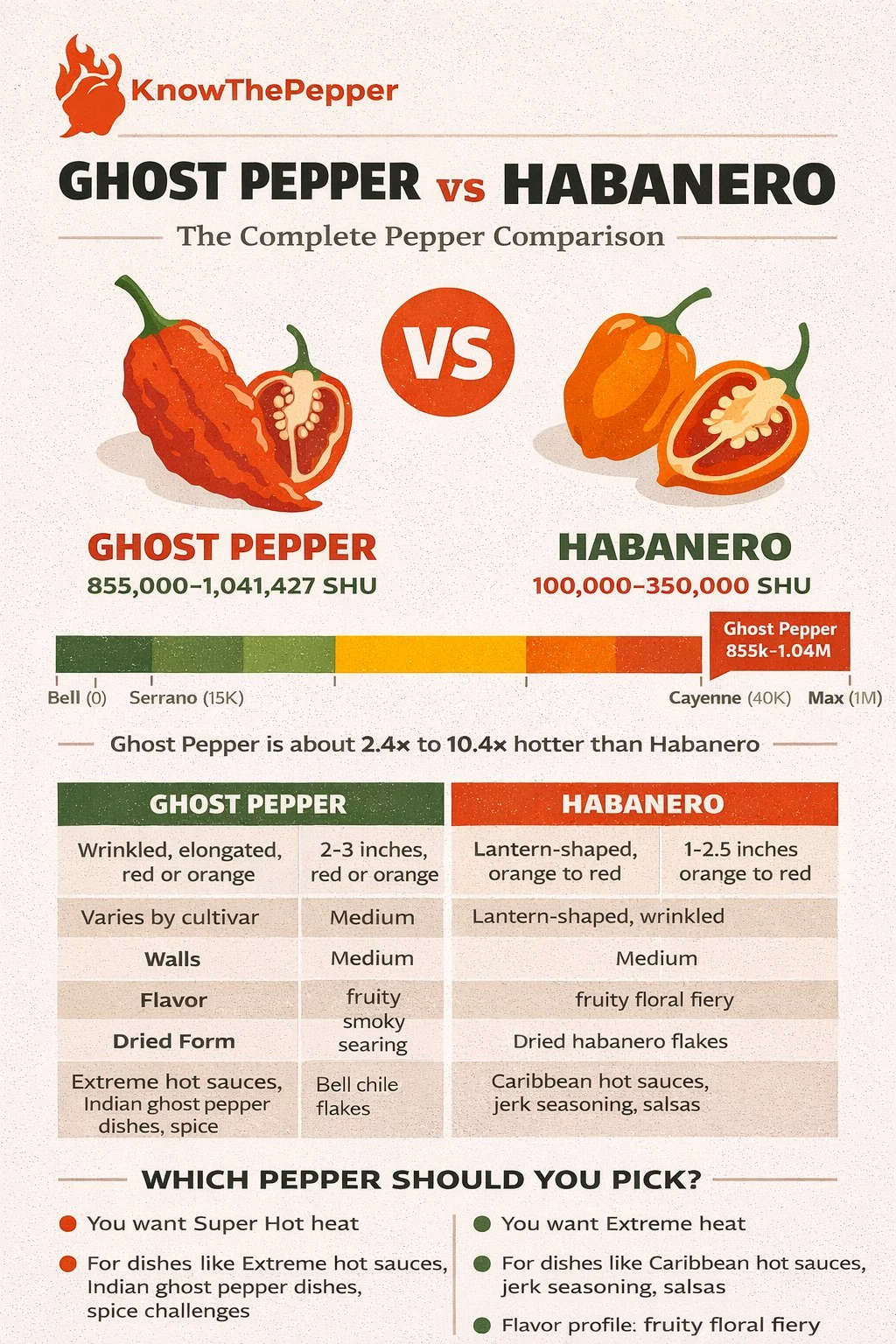
Culinary Uses for Ghost Pepper and Habanero
Habanero is one of the most versatile hot peppers in actual kitchen use. Its heat level is high enough to be exciting but controlled enough to dial in precisely. A single minced habanero in a pot of chili feeds 6–8 people with noticeable but not overwhelming heat. Two habaneros in a blended salsa keeps it firmly in the hot-but-edible range for most people who eat spicy food regularly.
Classic applications include Yucatan-style xni pec salsa, jerk seasoning blends, Caribbean pepper sauces, and fruit-forward hot sauces. The citrus notes make it a natural with seafood, pork, and anything mango or pineapple adjacent. Roasting or charring a habanero before blending mellows the sharp edges and deepens the fruit character considerably.
For the side-by-side flavor differences between habanero and Bulgarian carrot pepper, both share that fruity chinense character but diverge sharply on heat — useful context if you are building a pepper-forward sauce and want to control intensity.
Ghost pepper demands restraint. A single pod can adequately heat a large batch of hot sauce — we are talking 12–16 ounces of finished product from one pepper. Dried and powdered ghost pepper is arguably more practical than fresh; a quarter teaspoon of ghost pepper powder in a marinade for 2 pounds of meat delivers serious heat without overwhelming everything else.
Ghost pepper works well in applications where the heat itself is the point: extreme hot sauces, spice challenges, infused oils, and rubs where a tiny amount goes a long way. It also dehydrates and smokes beautifully, developing a deeper, more complex character that makes it genuinely interesting in small doses in BBQ rubs or mole-adjacent sauces.
If you need to swap one for the other, use roughly one-quarter of a ghost pepper anywhere a recipe calls for a full habanero. Going the other direction — substituting habanero for ghost pepper — means using 3–4 habaneros to approximate the heat of a single ghost pepper, though you will get considerably more habanero flavor in the process. The full germination and cultivation guide covers both varieties if you want to grow your own supply.
Which Should You Choose?
Choose habanero when flavor matters as much as heat. It is the better cooking pepper by a significant margin — fruity, aromatic, and hot enough to satisfy without requiring protective equipment to handle. It belongs in hot sauces, salsas, marinades, and anywhere you want C. chinense fruitiness with genuine firepower.
Choose ghost pepper when maximum heat is the explicit goal. It is not a flavor pepper in the traditional sense — the capsaicin load dominates — but for extreme hot sauces, spice challenges, or infusing serious heat into a large batch of something, nothing in the accessible pepper world delivers more efficiently at a lower price point than a ghost pepper.
The heat escalation from ghost pepper to Carolina Reaper is the logical next comparison if you are already comfortable with ghost pepper territory and wondering where the ceiling is. For most home cooks, habanero is the answer. For heat seekers specifically chasing intensity, ghost pepper earns its reputation.
Both belong to the botanical family C. chinense, which explains their shared aromatic DNA despite the enormous heat gap between them.
Can You Substitute One for the Other?
Proceed with caution. Ghost Pepper is 3× hotter than Habanero.
Need a different option altogether? Search for peppers that match your target heat and flavor with precise swap ratios.
Growing Ghost Pepper vs Habanero
If you’re deciding which pepper to grow at home, consider your climate and patience level. Ghost Pepper and Habanero have different maturation times and temperature preferences. Hotter varieties generally need a longer, warmer growing season to develop their full capsaicin content. Our zone-based planting date tool can pinpoint the best sowing window for your area.
The hardest part of growing ghost peppers isn't germination — it's maintaining the long, hot season they need to fully ripen. In most of North America, that means starting seeds indoors 10–12 weeks before last frost and providing supplemental heat throughout the season.
Soil quality matters enormously. Ghost peppers want well-draining, slightly acidic soil (pH **6.
Fertilize with a lower-nitrogen mix once flowering begins — too much nitrogen pushes leafy growth at the expense of pods. Consistent calcium (through gypite or foliar spray) helps prevent blossom end rot, which ghost peppers are prone to during dry spells.
Starting habaneros from seed requires patience. Germination takes 10–21 days at soil temperatures of 80–85°F — a heat mat is not optional, it's essential.
Transplant seedlings outdoors only after nighttime temperatures stay consistently above 55°F. Habaneros are frost-intolerant and will stall in cold soil.
Full sun — at least 6–8 hours daily — is non-negotiable. In containers, use a 5-gallon minimum; habaneros develop substantial root systems.
History & Origin of Ghost Pepper and Habanero
Both peppers carry centuries of culinary heritage. Ghost Pepper traces its roots to India, while Habanero originates from Mexico. Understanding their backstory helps explain why each pepper developed its distinctive traits.
Buying & Storage
Whether you’re shopping for Ghost Pepper or Habanero, the same quality indicators apply. Fresh peppers should feel firm and heavy for their size, with taut, glossy skin and no soft or wet spots. Minor stem cracks known as “corking” are perfectly normal and often indicate a mature, flavorful pod.
- Firm pods with taut skin and consistent color
- Should feel heavy relative to size
- Minor stem cracks (“corking”) are normal
- Avoid anything soft, shriveled, or with dark wet spots
- Fresh: Paper bag, crisper drawer — 1–2 weeks
- Frozen: Wash, dry, freeze on sheet pan — 6+ months
- Dried: Airtight, away from light — up to 1 year
The Verdict: Ghost Pepper vs Habanero
Ghost Pepper and Habanero occupy very different positions on the heat spectrum. Ghost Pepper delivers 3× more heat with its distinctive smoky and sweet character. Habanero, with its fruity and citrusy profile, excels in everyday cooking.
Frequently Asked Questions
Related Comparisons
Sources pending verification.