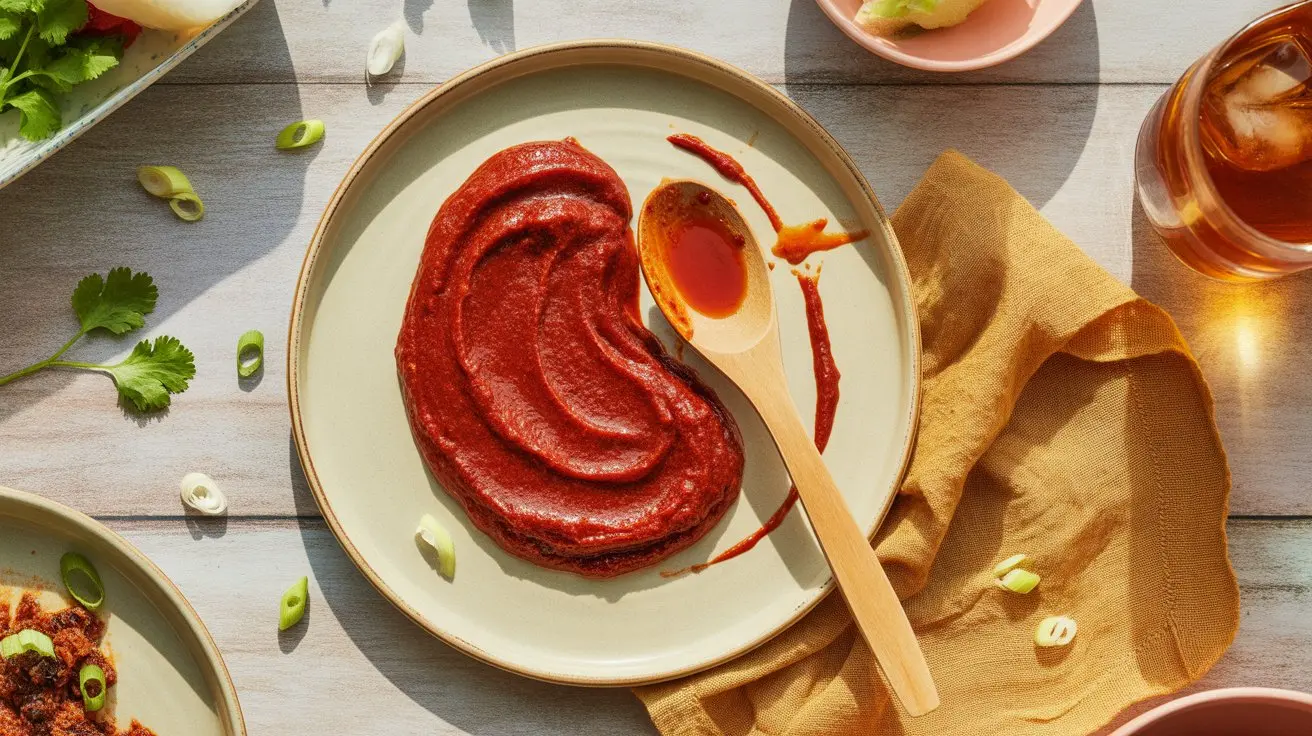
Thai Chili Paste
Make authentic Thai chili paste from dried Thai chiles, garlic, and shallots. Used in pad thai, tom yum, and stir-fries. Find your perfect heat level.

What Is Nam Prik Pao?
Nam prik pao is Thailand's essential roasted chili paste — a deeply savory, slightly sweet condiment built from charred shallots, garlic, dried chiles, and shrimp paste. It shows up in tom yum soup, stirred into pad thai, spread on toast, and folded into countless Thai dishes where it adds backbone without announcing itself.
Making it from scratch takes about 45 minutes and produces something that store-bought jars simply cannot replicate. The difference is in the roasting — that dry-charring of aromatics creates a smoky complexity that defines the paste.
The Chiles Behind the Heat
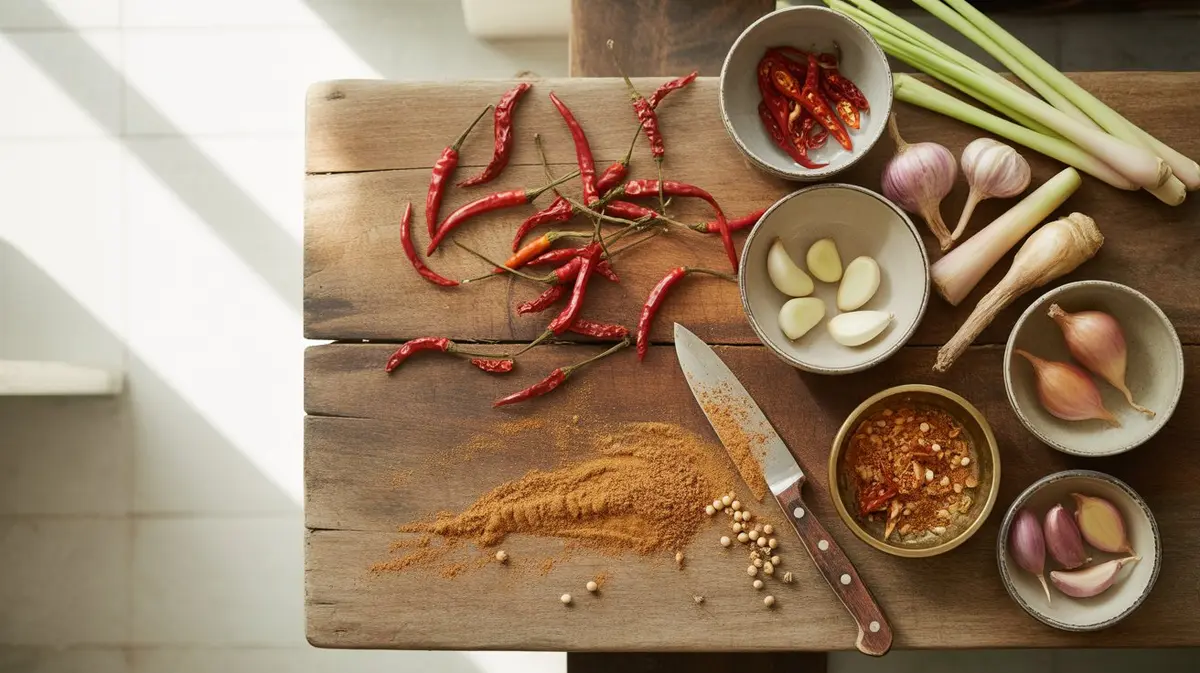
Traditional nam prik pao uses dried Thai bird's eye chiles (Capsicum frutescens), which register between 50,000 and 100,000 Scoville Heat Units on the standard organoleptic unit scale. That puts them comfortably in the hot pepper category — roughly 10 to 25 times more intense than a fresh Anaheim.
Many recipes also incorporate dried guajillo-style long red chiles for color and mild sweetness, balancing the bird's eye intensity. The ratio between these two determines your final heat level. You can explore the broader world of Thai pepper traditions and varieties to understand how regional cooks adjust this balance by province.
The capsaicin in these chiles binds to TRPV1 receptors, triggering the body's heat response — which is why the burn from Thai chiles feels sharper and more immediate than the slow warmth of dried anchos or pasillas.
Technique Notes
The dry charring step is non-negotiable. Roasting shallots and garlic in their skins protects the interior while the outside chars, creating a steamed-and-smoked effect simultaneously. Boiling or sauteing them first gives a completely different result.
When frying the paste, the oil separation signal matters. Once the oil pools visibly around the paste edges and the mixture stops steaming aggressively, it's ready. Undercooking leaves a raw garlic edge; overcooking pushes it bitter.
Mortar-and-pestle grinding produces a more textured, rustic paste with better aroma release than a food processor. If using a food processor, pulse in short bursts rather than running it continuously — heat from the blade dulls the volatile aromatics.
Palm sugar melts more evenly than granulated sugar and adds a faint caramel note that brown sugar approximates but doesn't fully match. If palm sugar isn't available, light brown sugar works as a practical substitute.
Variations
- Vegetarian version: Omit shrimp paste and dried shrimp. Replace fish sauce with soy sauce or tamari. The paste loses some umami depth but gains a cleaner, more chile-forward flavor. Add a strip of kombu to the soaking water to recover some of that savory base.
- Mild version: Use all large dried red chiles and skip the bird's eye chiles entirely. The result lands closer to the mild heat range — still flavorful with good smoke and sweetness, appropriate for heat-sensitive diners.
- Extra-hot version: Double the bird's eye chiles and add 2-3 dried prik kee noo suan (small Thai sun-dried chiles). For those who want to push further, a single dried pequin chile with its sharp, concentrated heat can substitute for two bird's eye chiles.
- Smoked version: Add 1/2 tsp smoked paprika at the frying stage for an additional layer of smokiness — useful when your stovetop charring doesn't go quite dark enough.
- Nam prik pao with peanuts: Stir in 3 tablespoons of finely ground roasted peanuts at the end of cooking. Common in northern Thai variations, this adds richness and transforms the paste into something closer to a satay-adjacent condiment.
How to Use Thai Chili Paste
Tom yum soup is the most famous application — one to two tablespoons stirred into the broth base before adding lemongrass and galangal. The paste dissolves into the liquid and provides the characteristic red-orange color and smoky depth that defines the dish.
For pad thai, a tablespoon of nam prik pao goes into the wok with the noodles during the final toss. It coats every strand with a layer of roasted chile flavor that the bottled sweet tamarind sauce alone never delivers.
Beyond Thai cooking, this paste works as a marinade base for grilled chicken or shrimp — mix two tablespoons with coconut milk and lime juice. It also functions as a finishing condiment, spooned directly onto steamed rice with a fried egg.
The paste integrates well into from-scratch chili paste preparations across Southeast Asian cuisines — Indonesian sambal and Malaysian belacan share similar construction logic, making this technique transferable.
Heat Level Notes
At full bird's eye chile intensity, this paste sits firmly in the hot tier. A single tablespoon stirred into a pot of soup will register as noticeably spicy but not punishing for most adults who eat chiles regularly.
The tamarind and palm sugar act as heat moderators — not by chemically reducing capsaicin, but by balancing perception. The sourness and sweetness redirect attention so the heat reads as one note among several rather than the dominant sensation.
For context, bird's eye chiles measure considerably hotter than the Anaheim's modest 500-2,500 SHU range. If you find the standard recipe too aggressive, reducing bird's eye chiles by half and increasing the large dried red chiles keeps the flavor profile intact while softening the burn considerably.
Storage
Transfer cooled paste to a clean glass jar. Pour a thin layer of neutral oil over the surface before sealing — this creates an oxygen barrier that extends shelf life. Refrigerated, the paste keeps for 3-4 weeks.
For longer storage, freeze in ice cube trays, then transfer frozen cubes to a zip-lock bag. Each cube equals roughly one tablespoon — convenient for pulling out exactly what you need. Frozen paste keeps for 3 months without meaningful flavor loss.
The oil in the paste will solidify in the refrigerator. This is normal — let the jar sit at room temperature for five minutes before scooping, or simply stir the cold paste directly into hot liquid where it will dissolve immediately.
Signs of spoilage: visible mold, off smell, or unusual color change beyond normal darkening. A properly made paste with adequate salt and sugar should not spoil within the refrigerator window.
Buying vs. Making
Commercial nam prik pao (Maesri and Pantainorasingh are the most widely distributed brands) is a legitimate shortcut for weeknight cooking. The flavor is flatter and sweeter than homemade, with less smoke and more sugar, but it works in a pinch.
Making your own pays off when you cook Thai food more than occasionally, want to control heat level precisely, or need a vegetarian version. The 45-minute investment yields roughly one cup of paste — the equivalent of two to three commercial jars — and the quality difference is significant enough that most cooks who make it once don't go back to store-bought for primary use.
Chef's Tip: The Resting Period
Patience is an ingredient. After mixing, let the dish rest for 10–15 minutes before serving. This allows the flavours to meld and the seasoning to fully penetrate. If making ahead, refrigerate and bring to room temperature before serving.
Shopping List
-
8-10 dried Thai bird's eye chilesstems removed
-
4 large dried red chiles (long red or New Mexico style)stems and seeds removed
-
6 medium shallotsunpeeled
-
8 cloves garlicunpeeled
-
2 tbsp dried shrimp (optional)
-
1 tbsp shrimp paste (kapi)
-
3 tbsp fish sauce
-
2 tbsp palm sugar (or light brown sugar)
-
3 tbsp tamarind concentrate
-
1/4 cup neutral oil (canola or rice bran)
-
1/2 tsp salt
Full Recipe Instructions
Heat a dry…
Heat a dry wok or cast iron skillet over medium-high heat. Char unpeeled shallots and garlic on all sides until skins are blackened and insides are soft, about 10-12 minutes. Remove and cool.
In the same…
In the same dry pan, toast dried Thai bird's eye chiles for 30-45 seconds per side until fragrant and slightly darkened. Remove immediately.
Toast large dried…
Toast large dried red chiles for 20-30 seconds per side. Set aside with bird's eye chiles.
If using dried…
If using dried shrimp, toast in dry pan for 1-2 minutes until golden. Remove and set aside.
Peel cooled shallots…
Peel cooled shallots and garlic, discarding charred skins.
Place toasted chiles…
Place toasted chiles in a bowl, cover with hot water, and soak for 15 minutes until pliable. Drain, reserving 2 tablespoons of soaking liquid.
In a mortar…
In a mortar and pestle or food processor, pound or blend rehydrated chiles into a rough paste. Add peeled shallots and garlic and continue until relatively smooth.
Add dried shrimp…
Add dried shrimp (if using) and shrimp paste. Pound or process until fully incorporated.
Heat neutral oil…
Heat neutral oil in a wok over medium heat. Add chile paste and fry, stirring constantly, for 5-7 minutes until paste darkens and oil separates around edges.
Add fish sauce,…
Add fish sauce, palm sugar, and tamarind concentrate. Stir to combine. Cook another 3-4 minutes, tasting and adjusting seasoning.
Add reserved chile…
Add reserved chile soaking liquid if paste is too thick. Season with salt as needed.
Cool completely before…
Cool completely before transferring to a sterilized jar. Cover surface with a thin layer of oil before sealing.
Frequently Asked Questions
-
Yes - omit both shrimp paste and dried shrimp, then replace fish sauce with soy sauce. The paste will be less complex in umami depth but still delivers strong smoky chile flavor. Adding a piece of kombu to the chile soaking water helps recover some savory base.
-
Bird's eye chiles measure 50,000-100,000 SHU, making this paste significantly hotter than sriracha (1,000-2,500 SHU) or sambal oelek (typically under 10,000 SHU). One tablespoon in a full pot of soup produces noticeable but manageable heat for most adults.
-
Over-toasting the dried chiles is the most common cause - they go from fragrant to acrid in seconds. The second culprit is burning the shallots and garlic past charred into fully carbonized. Char the exterior, but the interior should remain soft and caramelized.
-
Nam prik pao is specifically roasted - the charring of aromatics gives it a smoky depth that raw or sauteed chili pastes lack. It also contains
More Recipes
View allFresh Salsa Recipe
Restaurant-quality fresh salsa in 10 minutes. Proper tomato prep, right jalapeño amount, and the secret to balanced flavor. Find your perfect heat level.
Jalapeno Poppers Recipe
Classic cream cheese stuffed jalapeño poppers that are crispy outside, creamy inside. Find your perfect heat level.
Pickled Jalapenos Recipe
Two methods: 10-minute quick pickle and proper fermented. Both stay crispy. Find your perfect heat level.
Stuffed Peppers Recipe
Classic stuffed peppers with rice and meat, plus vegetarian and Mexican variations. Covers bell peppers, poblanos, and which peppers stuff best.